
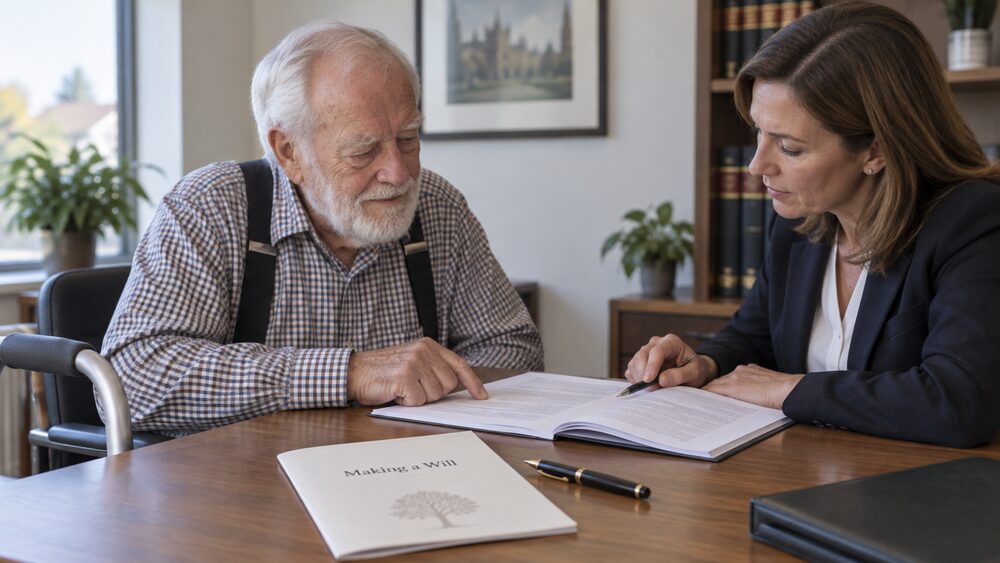
Making a will is one of the few financial tasks where the cheapest option, writing it yourself for nothing, is genuinely available and genuinely valid. A homemade will costs £0 to produce, and as long as it is written and signed correctly it carries the same legal weight as one a solicitor draws up. The catch is not validity but accuracy: a will that is witnessed wrongly, misses an asset, or names a witness as a beneficiary can fail or be challenged.
The alternative is paying for help. People who used a lawyer to write their will paid on average £328, according to a 2025 survey, though it can cost much more1. Will-writing firms start at around £100, and online services from around £801. A simple will drawn up by a solicitor typically starts at a minimum of £1503.
The choice depends less on budget than on complexity. If your affairs are very straightforward, a DIY will is workable. If you own a business, have property abroad, want to support a disabled relative, or expect inheritance tax to be due, professional advice is generally recommended1. This page sets out what each route costs, what it covers, where DIY goes wrong, and the free schemes that can help.
What a valid will needs in England and Wales
A will needs to be written and signed correctly in order to be valid2. In England, Wales and Northern Ireland, the specific requirement is that it must be signed in the presence of two independent witnesses who are 18 or over1. Both witnesses must be present when you sign, and they should not be beneficiaries of your estate, to avoid your will being challenged2.
There is a further rule that catches people out: witnesses cannot be named as beneficiaries, and if you leave anything to a witness in your will, the gift will be void1. So the neighbour who kindly signs your will cannot also be the person who receives your jewellery. The same applies to a codicil, which is an official alteration to a will: it must be witnessed and signed in the same way2.
Marriage and civil partnership have a powerful effect. Getting married or entering a civil partnership automatically revokes a will in England, Wales and Northern Ireland1. That means an existing will is cancelled the moment the ceremony takes place, and if no new one is made, the intestacy rules apply instead. Divorce works differently: it does not automatically invalidate a will, but your former spouse is treated as though they are deceased, so they cannot be named as an executor or beneficiary unless a new will is created4.
Writing your own will: what it costs and what it covers
Writing your own will costs nothing to produce, and basic templates can be bought for as little as £101. You can buy a will pack where you fill in a will yourself, but these are only suitable if your will is going to be very simple5. The DIY route is generally not advised and only suitable if your affairs are very straightforward1.
What a DIY will can cover is limited by what you know and what you remember to include. It is crucial that the document is witnessed correctly and includes all major assets1. A homemade will that omits a pension, a second property, or a business interest may leave that asset to be distributed under the intestacy rules instead. It also cannot easily set up trusts, which is one of the things a professionally drafted will can do5.
The cost comparison is stark. A DIY will costs £0 to £10. A will-writing service starts at around £80, rising to a few hundred pounds depending on the complexity of your estate2. A solicitor charges on average £328, with a simple will starting at a minimum of £1501. Some will-writing services offer wills with trusts, with prices starting from around £4505.
| Option | Typical cost | Suited to |
|---|---|---|
| Write it yourself | £0, templates from £101 | Very straightforward affairs |
| Will-writing firm | From around £80 to a few hundred pounds2 | Simple to moderately complex estates |
| Online service (e.g. Which? Wills) | From £992 | Simple wills, with solicitor supervision |
| Solicitor | Average £328; minimum £150 for a simple will1 | Complex estates, trusts, overseas assets |
Using a solicitor or professional will writer
It is generally recommended that you use a solicitor if your situation is complex1. The circumstances that point to professional advice include complex family circumstances, financial support for a disabled friend or relative, assets or property abroad, or inheritance tax due on your estate1. If you have a business, that is another reason to see a solicitor5. A will made in the UK may not deal with assets in a different country in the way that you wish, and some countries have different laws, so your will may not be automatically valid in those places6.
An accountant would not need to be involved in the drafting of your will, and a solicitor is better placed to advise on inheritance tax planning in most cases4. If your estate is complex, or there might be a conflict, then using a solicitor is definitely a good option, and it is worth understanding their likely charges for dealing with your estate4.
Professional will writers are an alternative. They tend to be cheaper than solicitors but are not regulated in the same way3. Will writing and estate planning are unregulated: if you write assets into a trust with an unregulated firm, you could be exposed5. Which? Wills, by contrast, is supervised by a solicitor regulated by the Solicitors Regulation Authority2. When choosing any will-writing service, it is worth checking who supervises the work and what redress you have if something goes wrong.
A solicitor will usually store your will for you for free1. They can also act as an executor if you wish, though you can appoint a solicitor as an executor without it being a requirement, and family or friends can be appointed instead and use a solicitor if needed, with legal fees paid by the estate4.
Where a DIY will is risky
The risks of a DIY will are not about legality but about the gaps and errors that only surface after death, when it is too late to correct them. The most common failures are witnessing errors, omitted assets, and gifts that fail because the beneficiary or witness rules were not followed.
A will that is not signed and formally witnessed correctly is not valid8. If the witnesses were not both present, or one was a beneficiary, the will or the gift can fail. A codicil that is not witnessed in the same way as the will is equally vulnerable2.
Foreign assets are a particular trap. A will made in the UK may not deal with assets in a different country in the way that you wish, and some countries have different laws, so your will may not be automatically valid in those places6. If you own property abroad, or have a permanent home outside the UK, a solicitor is generally recommended5.
Complex family circumstances are another risk area. If you want to provide financial support for a disabled friend or relative, a DIY will is unlikely to achieve what you intend. Trusts can be set up through a will, but they require legal advice, and you have to pay for it9. A solicitor who specialises in trust law will be able to advise if a trust is right for you and set one up properly, with prices typically starting at around £1,0005.
Free and low-cost ways to get a will written
There are several legitimate routes to a free or low-cost will, though they generally cover simple wills only.
Free Wills Month runs in the UK in March and October, when solicitors write simple wills for free if you are over 55, and in exchange ask you to leave something in your will to charity3. Will Aid month runs in November, when solicitors agree to write your will for free in exchange for a donation to charity3. If you are a supporter of a charity, you may be able to get a simple will written for free through the National Free Wills Network, providing the charity is one of those signed up to the network3.
Charity and support organisations also publish free guidance. Mencap's Wills and Trusts service does not write wills or set up trusts, and cannot be a trustee of a trust, but it does provide free Wills and Trusts guides10. This is useful for families of people with a learning disability who want to understand the options before paying for advice.
For straightforward affairs, a will pack or template is the cheapest paid option, at as little as £102. Online services sit in the middle: Which? Wills starts from £99 and is supervised by a solicitor regulated by the Solicitors Regulation Authority2. Which? Wills charges £39 per codicil if you need to alter an existing will2.
| Scheme | When | Who qualifies | What it covers |
|---|---|---|---|
| Free Wills Month | March and October3 | Over 553 | Simple wills, with a charity gift requested |
| Will Aid | November3 | Open to those who donate to charity3 | Simple wills |
| National Free Wills Network | Year-round3 | Supporters of participating charities3 | Simple wills |
| Mencap guides | Year-round10 | Anyone10 | Free guidance, not will writing |
Getting a homemade will signed and witnessed correctly
The signing and witnessing process is where most DIY wills fail, and it is entirely avoidable. In England, Wales and Northern Ireland your will must be signed in the presence of two independent witnesses who are 18 or over1. Both witnesses must be present at the same time, and they must see you sign.
Your witnesses should not be a beneficiary of your estate, to avoid your will being challenged2. If you leave anything to a witness in your will, the gift will be void1. This means the two people who sign as witnesses should be people who receive nothing under the will.
A codicil, which is an official alteration to a will, must be witnessed and signed in the same way2. If you need to update your will, you can either make a new one, which will cancel any previous will you have made, or alter the existing one by adding a codicil3. If the will does require updating, you will need to make a codicil or a new will2.
Keeping your will up to date and stored safely
Your will must be signed and formally witnessed, and it should also be kept in a safe place where others can find it8. It is not necessary to register your will with any authority, but it should be kept in a safe place and your executors told where it is4.
Storage options include your bank, your solicitor, a company that offers the storage of wills, or the HM Courts and Tribunals Service (HMCTS), and they may charge a fee to store it5. A solicitor will usually store it for you for free1. A secure, fireproof place in your home will do, but you could also consider leaving it with a solicitor or the Probate Service2. Your will should be securely bound, for example using a single staple in the top left hand corner, and staples should not be removed and paperclips avoided1.
You can register your will with the National Will Register for a £30 fee1. Registration is not a legal requirement, but it can help executors find the will when the time comes.
Reviewing your will matters as much as storing it. You may need a new will if you separate from a partner11. Getting married or entering a civil partnership automatically revokes a will in England, Wales and Northern Ireland, so a new one is needed1. Divorce does not automatically invalidate a will, but your former spouse is treated as though they are deceased, so they cannot be named as an executor or beneficiary unless a new will is created4. If you have a business, own property abroad, or your family circumstances change, it is worth reviewing whether your existing will still does what you intend5.
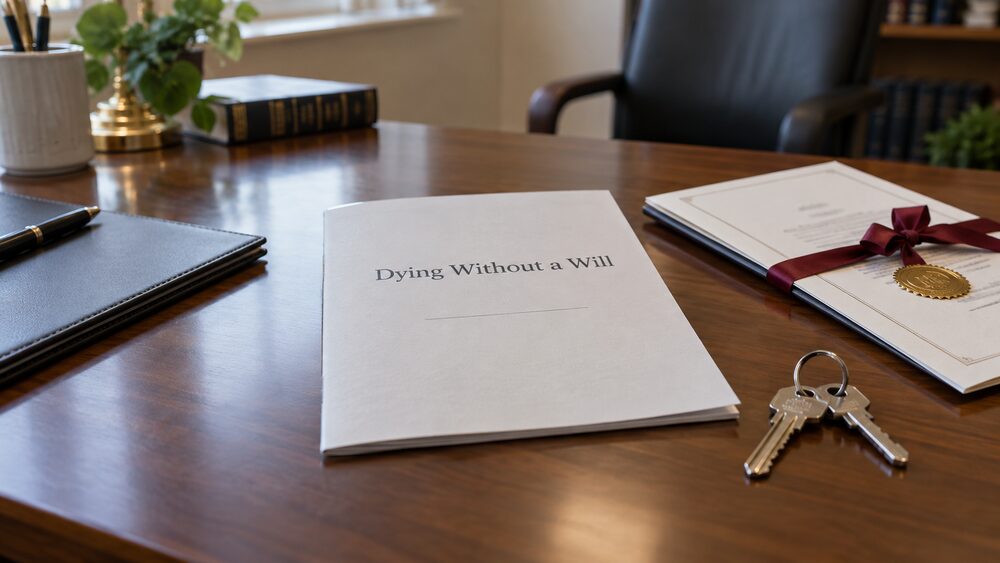
What happens if you die without a will
If you die without making a will, this is known as dying intestate, and the law of intestacy sets out who should inherit your estate8. A relative might need to apply to the court to get what is known as Letters of Administration, and your money and assets will go to your relatives in a set order of priority5. If there is no will, an administrator takes over, usually a relative or friend and/or a solicitor6. If you do not have a will or have not named an executor, the law decides who can fill the role12.
If you own a home and do not make a will, the home will pass to your closest relatives (next of kin) when you die7. This may not be who you would have chosen. Unmarried partners, for example, have no automatic right to inherit under the intestacy rules, however long you have lived together.
You may not need letters of administration if the value of the estate is small, property is held jointly, or the estate is insolvent13. As the executor of someone's will, you can deal with the probate process yourself without any need for a solicitor14. Lloyds Bank has confirmed that executors of a will are legally entitled to complete probate without a solicitor14.
Sources14 cited
- How to make a will Which?, 2026-02-26
- The six mistakes that could invalidate your will Which?, 2023-07-18
- Making a will Royal London, 2025-10-09
- Do I need a solicitor and accountant to write my will? Which?, 2026-02-02
- Will trusts and lifetime trusts Which?, 2026-03-23
- Debt when someone dies nidirect, 2026-06-26
- How to leave your home to a disabled family member Scope, 2026-09-08
- How do I make a will? Mental Health and Money Advice, 2024-02-13
- Dementia and managing money nidirect, 2026-09-03
- Mencap Wills and Trusts service Mencap, 2026
- Relationships and your money Independent Age, 2026-09-26
- Bank accounts and finances Marie Curie, 2023-12-20
- Intestacy rules Which?, 2026-07-28
- Lloyds Bank refuses to discuss my dad's mortgage after he died Which?, 2022-01-31



 MoneyHelperFree, impartial money and pensions guidance, set up by government
 Citizens AdviceFree advice on money, consumer and legal problems in England and Wales
 Turn2usFree benefits calculator and grants search from a charity
 GOV.UKOfficial information on tax, benefits and government services