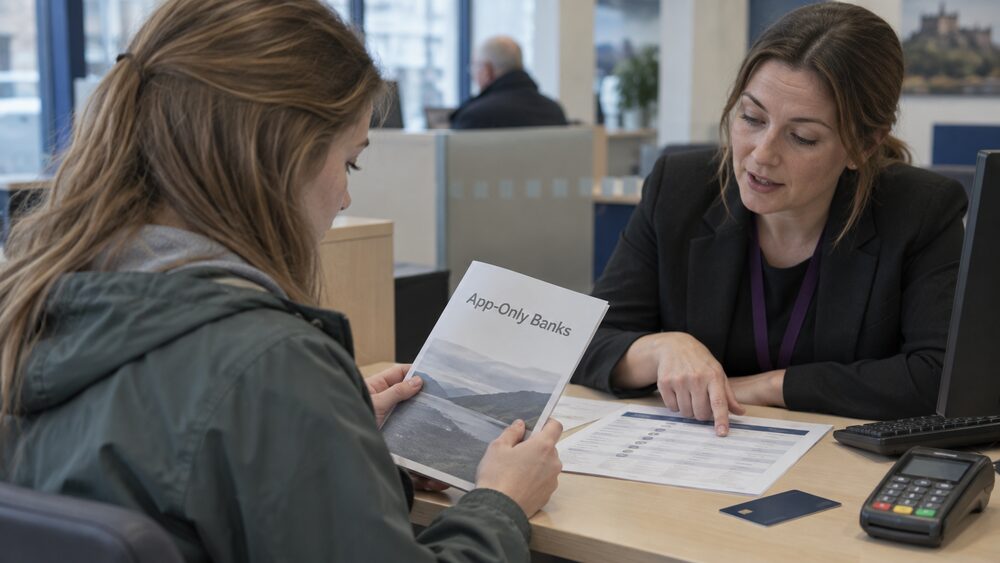
An app-only bank is a current account you run entirely through an app on your phone, with no branches to visit. Some of these providers are full banks with their own banking licence; others are e-money firms that hold your money in a different way, with different protection if things go wrong. That single difference, bank or e-money, changes more for you as a customer than anything else about these accounts, and it is the main thing to check before moving your main account.
What app-only banks offer is the everyday machinery of a current account: a debit card, direct debits and standing orders, payments in and out, and usually instant notifications every time money leaves the account. Some pay interest or cashback, and some have features aimed at budgeting or scam protection. What most of them do not have is a branch network, which matters if you need to pay in cash or speak to someone face to face.
What an app-only bank is and what it offers
An app-only bank delivers the whole current account through a smartphone app. There is no counter, no branch and usually no telephone banking in the traditional sense: everything from opening the account to freezing a card is done on screen. The core features are the ones any current account gives you. Guidance on fee-free basic accounts lists what that means in practice: set up direct debits and standing orders, use a debit card to pay for items and withdraw money from a cash point, have income paid into the account, and check your balance at a bank, cash machine or online7. App-only accounts cover the same ground, with the balance check done in the app rather than at a counter.
Getting paid into any bank account, app-only or otherwise, carries the same basic advantages. Official guidance from MoneyHelper notes that it saves you trips to the bank, is safer than carrying cash, and means you do not have to wait for a cheque to clear8. Those benefits apply whoever holds your account; the app is just the delivery method.
Some app-only providers go further than the basics. Santander's OneApp, for example, has introduced a feature designed to protect customers from scammers, though at the time of reporting it was only available to customers using the app on Apple iOS 18 and above, with an Android release to come9. Instant spending notifications, card freezing and spending categories are common across the market. Starling launched the first dedicated student current account from a UK digital bank in August 2026, with an interest-free overdraft and a tuition fee prize draw, which shows the range of accounts now available without a branch network.
What an app-only bank does not give you is a place to walk in. If you handle cash regularly, want documents stamped or witnessed, or simply prefer talking to a person across a desk, that absence matters. The dedicated guides on paying in cash and cheques and access to cash cover the alternatives, including the Post Office and banking hubs.
Bank or e-money account: why the difference matters
Some app-only providers are banks, authorised to take deposits. Others are e-money firms: they issue you a card and an account you can pay into, but they are not banks, and your money is held under safeguarding rules rather than as a bank deposit. The distinction is invisible day to day, because the app, the card and the direct debits all work the same way. It becomes visible only when something fails.
If a bank fails, the Financial Services Compensation Scheme steps in. FSCS protects deposits, current accounts and savings accounts, up to £120,000 per person or company, per authorised firm2. If a bank or building society fails, FSCS will automatically pay back customers' money within seven working days in most cases10. The Bank of England, which oversees the scheme, states these payments will typically be made within seven days of the firm failing, although complex claims may take longer5.
If an e-money firm fails, that machinery does not apply. FSCS states plainly that it cannot protect e-money or payment services firms2. Instead, the firm's safeguarding arrangements come into play: your money is supposed to have been kept apart from the firm's own funds, and it is returned to you through the firm's insolvency process. That can take longer than an FSCS payout and depends on how the wind-down goes. The Financial Ombudsman Service handles complaints about electronic money and sets firms a 35-day deadline to respond to them11.
There is a third case, and it is the one people most often miss. FSCS may protect safeguarded funds held by e-money providers if the bank holding the safeguarded funds were to fail12. In other words, if the e-money firm has put your money in a bank and that bank collapses, FSCS may be able to look through the payments firm and compensate its customers. But FSCS does not cover cases where the payments firm itself fails13. The failure of a UK payments firm in 2026 illustrated the point: the FCA confirmed that FSCS only applies to certain types of activity and does not cover payment services14.
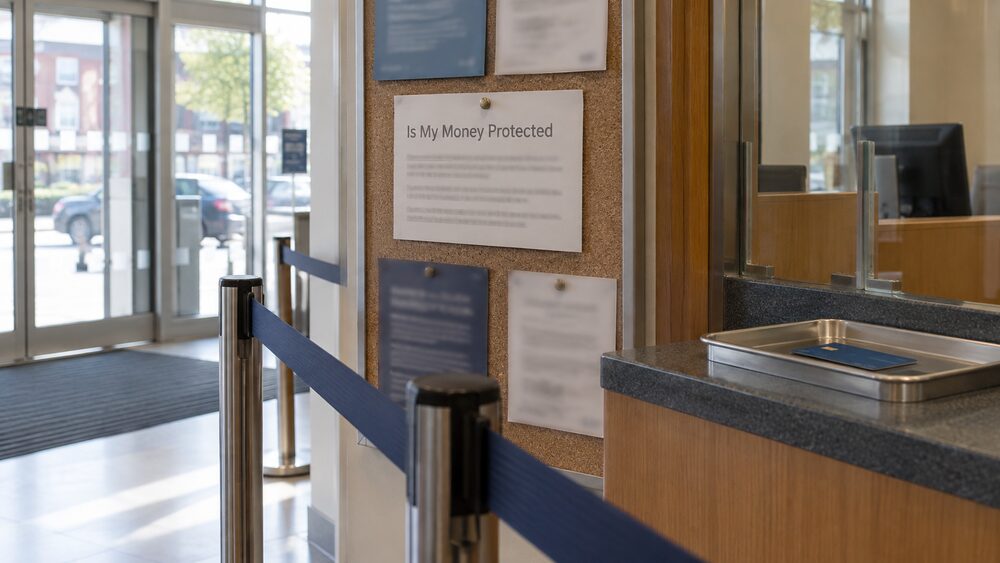
Before you move your main account, check which kind of firm you are dealing with. The FSCS has a protection checker on its website, and it also publishes a list of firms it cannot find or that are not covered, which is worth consulting if you have not heard of the provider16. The full detail is in is my current account protected?.
Fees, interest and cashback on app-only accounts
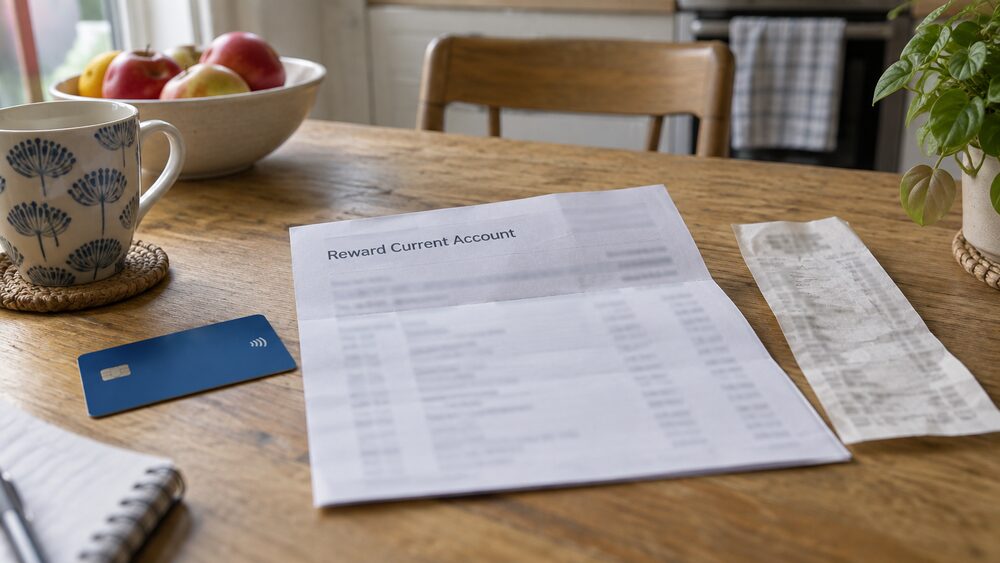
App-only accounts are often free of a monthly fee, but not always, and the extras vary widely. Which? reported in September 2024 that Chase, for example, does not charge a monthly fee and offers 1% cashback on debit card spending, capped at £15 a month, for a year17. Chase has since stated that customers on its Everyday Cashback offer will be able to earn 2% cashback from 1 July 2026. Cashback and reward features like these are covered in the guide to reward and cashback current accounts.
Where a current account pays interest, the conditions matter as much as the headline. Independent Age notes that there is often a cap on how much money you can earn interest on, and you might also have to pay in a minimum amount each month to qualify18. So an account that pays interest on the first few thousand pounds, and only if your salary lands in it, behaves very differently from one that pays on everything. How interest on current accounts is treated for tax is covered separately in interest on current accounts and how it is taxed.
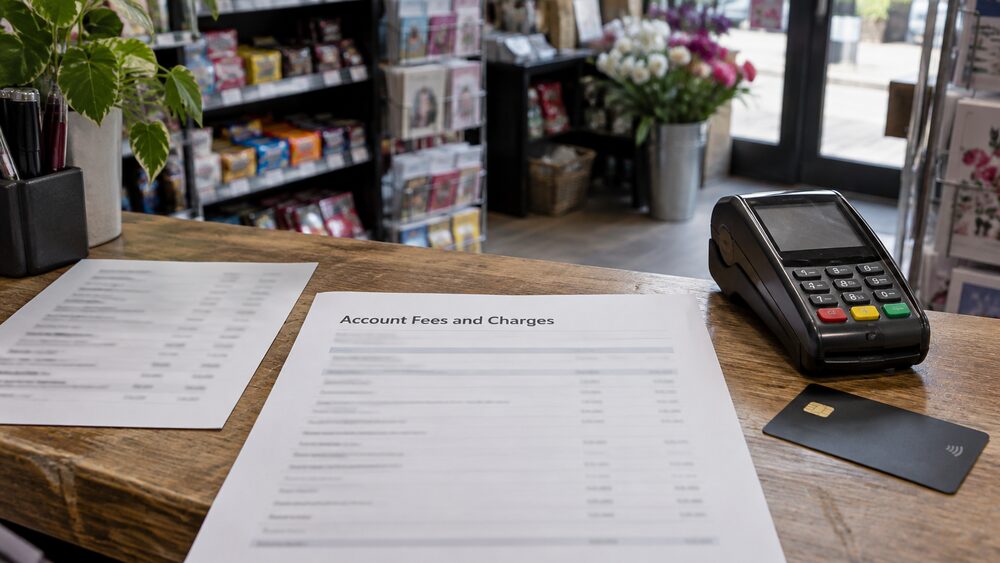
Fees to watch for on any current account, app-only or not, include charges for using the card abroad, charges for unpaid transactions because of a lack of funds, and overdraft charges. The general run of these is covered in current account fees and charges and how overdraft interest and charges work. Some app-only providers also charge for premium tiers of their app, which add features such as travel perks or higher withdrawal limits; those are subscription products and the fee is a monthly cost, not a one-off.
One structural point is worth making: an app-only current account and an instant access savings account are different products. The Consumer Council for Northern Ireland notes that instant access savings accounts pay interest and let you withdraw money whenever you need to19. Some app-only providers offer both, and moving money between them in the app can make it easy to forget that the savings account may be with a different firm, or under a different protection arrangement.
Spending and taking cash out abroad
Using a debit card abroad is where app-only accounts differ most from each other. The FCA's banking conduct rules treat a foreign cash withdrawal, the use of a debit card to withdraw money in a currency other than a UK currency from a machine or at an establishment outside the UK, as a specific regulated matter, which is why the charges for it must be disclosed to you20. In plain terms: the provider must tell you what it charges before you travel, and the charge is often listed as a percentage of the amount withdrawn.
The range across the market is wide. Which? found in September 2024 that Nationwide's FlexPlus packaged account was one of only three packaged accounts to offer fee-free cash withdrawals and spending abroad17. Some app-only providers advertise fee-free foreign spending as a core feature; others add an exchange fee or a flat charge per withdrawal. The only way to know is to check the provider's own terms, because the rules require disclosure rather than capping the charge.
A practical point on exchange rates: the rate you get is separate from any fee. A provider can charge no fee and still apply its own exchange margin, or pass through a card network's rate. Whichever applies, the amount you see in the app at the moment of payment is the amount that leaves your account, and app-only banks typically show it instantly, which makes it easier to spot a bad rate than it is on a monthly statement.
If you travel regularly or spend in foreign currencies often, the guides to money abroad and sending money in the UK and abroad cover the wider options, including specialist travel cards. For occasional trips, the main things to check on an app-only account are the foreign cash withdrawal fee, the foreign purchase fee, and whether the provider blocks card use abroad by default until you tell it you are travelling.
Who can open one and how the checks work
Opening an app-only account is the same legal process as opening any current account: you complete an application form, which Scope's guidance notes can be done online, in person or by phone, and for an app-only bank that means in the app21. The provider then runs identity checks and, for most accounts, credit checks. What ID you need is covered in what ID you need to open a bank account, and the wider process in how to open a current account.
Not everyone passes the checks. If you cannot open a bank account at all, there are fallbacks. Scope notes that the Payment Exception Service is only available if you cannot open a bank account21. Before that point, a basic bank account is the standard answer: MoneyHelper describes it as usually having all the same features as a current account apart from a cheque book or overdraft22. Basic accounts are covered in basic bank accounts explained, and the eligibility rules in who can get a basic bank account.
If your application is refused, you have rights. Under the payment account regulations, where an application is refused and the reason notified, the institution must advise you of its complaint procedure, your right to complain to the Financial Ombudsman Service, and its contact details23. Government figures on basic bank accounts confirm that in those circumstances the institution must also tell the customer how to complain to the institution and the Financial Ombudsman Service and provide the relevant contact details24. National Debtline adds that if you are turned down and not told why, or you feel you have been turned down unfairly, you may be able to complain to the Financial Ombudsman Service7. What to do next is covered in what to do if you're refused a basic bank account.
One group with a specific question is people who are bankrupt or insolvent: that is covered in can I open a bank account if I'm bankrupt?. Another is people with no fixed address, covered in opening a bank account with no fixed address.
Payments, cut-off times and direct debits
App-only accounts run on the same payment rails as every other UK current account: Faster Payments for instant transfers, Bacs for things like salaries and direct debits, and CHAPS for large same-day transfers. The differences between them, and the cut-off times after which a payment leaves the next working day, are covered in bank transfers: Faster Payments, Bacs and CHAPS. An app-only bank does not change those times; it just shows you the payment in the interface.
Direct debits and standing orders work the same way too. As the basic account feature list shows, you can set up direct debits and standing orders and have income paid into the account7. The mechanics are in Direct Debits and standing orders, and the protection that comes with them, including the Direct Debit Guarantee, in the Direct Debit Guarantee. If you switch to an app-only bank using the Current Account Switch Service, your direct debits move with you; that process is covered in the Current Account Switch Service and what happens to Direct Debits when you switch.
Two things are worth checking on an app-only account specifically. First, daily payment and cash withdrawal limits: app-only providers often set lower default limits than high street banks, and raising them can require extra verification. Those limits are covered in daily payment and cash withdrawal limits. Second, Confirmation of Payee, the name-checking service that warns you if the account name does not match the one you typed: it applies to app-only banks as it does to all UK banks, and is covered in Confirmation of Payee explained.
Opening an account and your 14-day cooling-off period
Once your application is approved, the account is opened and the app is activated. The process is usually fast, sometimes within minutes, because the identity checks are done electronically against passports, driving licences and credit and fraud databases.
If you change your mind, you have a cooling-off period. The standard, as set out in M&S Bank's savings account terms, is 14 days from the day after the provider confirms it has opened your account, for accounts opened by telephone or online25. That is a savings account's terms, but the same 14-day principle applies across accounts opened at a distance. The detail, including what happens to any overdraft you have used in that window, is covered in cancelling a new bank account within 14 days.
If you are moving your main account rather than just adding one, the switching process, including the guarantee that payments to your old account are redirected, is covered in the Current Account Switch Service. If you want to keep the old account open, partial switching explains the alternative. Switching incentives, and the conditions attached to them, are covered in how bank switching offers work and switch bonus not paid.
Scams, unauthorised payments and the 13-month deadline
App-only accounts are covered by the same fraud rules as every other UK account, and the rules have real teeth. Since 7 October 2024, banks and other payment firms have been required to reimburse victims of authorised push payment (APP) scams, where you are tricked into sending money yourself. The Payment Systems Regulator directed the 14 major banking groups in Great Britain and Northern Ireland to provide annual data on this26, and its consolidated policy statement sets the standards firms must meet27.
The timing works like this. The FCA states that money is usually returned within 5 working days, though it might take up to 35 working days4. The PSR's reimbursement dashboard bears that out: 82% of claims were closed within five business days, and 98% within 35 business days, between 7 October 2024 and 31 March 202628. The PSR reports that most APP fraud victims are now reimbursed within five business days29.
The deadline is the part people most often miss. The PSR's policy statements allow sending payment service providers to deny APP scam claims submitted more than 13 months after the final payment in a given claim3. The scheme rules put it the same way: the sending PSP must have been notified of the APP scam payment within 13 months of its occurrence30. The FCA gives the same 13-month limit for unauthorised payment refund claims, telling customers to get in touch with their bank within 13 months from the date of the payment4. In practice, report promptly: the PSR's rules expect consumers to report promptly to their PSP and, in any event, not more than 13 months after the last relevant payment was authorised27.
Not everything is covered. The mandatory reimbursement requirement covers UK bank transfers only, not payments to foreign accounts or other payment methods such as card payments9. Claims for payments made before 7 October 2024 fall outside the mandatory scheme. If you believe you have been scammed, the steps to take are covered in scams and fraud, and the refund rules for payments you did not authorise at all in unauthorised payments from your bank account.
When a provider changes terms or closes your account
Providers change their terms, and app-only providers do it through the app rather than by letter. When they do, the rules on notice apply: what a bank must tell you before changing terms is covered in notice banks must give before changes. A real example of terms changing wholesale: Monese's new UK personal terms took effect in September 2026 as Monese became the e-money issuer and card issuer, with sort code, account number and EUR IBAN changing as part of a change of banking partner. Customers' account details changed, which is the kind of shift that can break salary payments and direct debits if not acted on.
Closure is more tightly regulated than it might seem. Under the payment account regulations, a designated credit institution may only close an account where a listed condition is met, including illegal use of the account, no transaction for more than 24 consecutive months, incorrect application information, the consumer no longer legally resident in the United Kingdom, or access to another qualifying account23. Government guidance on basic bank accounts says the same: a basic bank account opened under the PARs may only be closed without the consumer's consent in limited circumstances, for example if a consumer has knowingly used, or attempted to use, the account for illegal purposes, or if there has been no transaction on the account for more than 24 consecutive months24. On 12 June 2025 the government amended the regulations to require firms to provide customers with a sufficiently detailed and specific reason for closure24.
If your account is closed and you disagree, the routes are in when your bank closes your account, including the specific case of accounts closed over immigration status. If you simply want to close it yourself, the steps are in how to close a bank account.
Protecting your money: FSCS cover or safeguarding
This is the section that decides whether an app-only account can safely be your main account. The rules were set out above, but they bear repeating in one place, because they are the whole answer to "are online banks safe".
FSCS can only protect money held by UK branches of authorised banks and building societies and credit unions16. Coverage includes deposits, current accounts and savings accounts2. The limit is £120,000 per person or company, per authorised firm1. If you are a sole trader, your company is not treated as a separate entity, so FSCS can protect up to £120,000 in total across all your personal and business accounts with that firm10. Money in accounts with different authorised firms counts separately, which is why spreading large balances across providers can matter; that is covered in can you have more than one current account?.
E-money accounts sit outside this. FSCS cannot protect e-money or payment services firms2, a point the FCA repeated when Premier Payment Solutions entered liquidation14. Safeguarded money should come back to you through the insolvency, but there is no seven-day guarantee and no £120,000 cap in the same sense. FSCS may protect safeguarded funds held by e-money providers if the bank holding the safeguarded funds were to fail12, but it does not cover cases where the payments firm itself fails13.
To check any provider, use the FSCS protection checker2 and its list of firms it cannot find16. The full picture, including how joint accounts and temporary high balances are treated, is in is my current account protected?.
Complaints and free help
If something goes wrong with an app-only account, the route is the same as for any bank. First complain to the provider. The Financial Ombudsman Service only looks at complaints the business has had an opportunity to deal with first, and you can come to the Ombudsman if you are unhappy with the decision or the business does not respond within the time limits31. The Ombudsman can look at complaints from individual customers, or customers who share a financial product or service, for example a shared bank account or joint mortgage33.
Time limits matter at this stage too. A business has only 15 days to consider complaints about fraud and scams, payment services such as bank transfers or direct debits, and electronic money, for example online money transfers, Apple Pay or travel money cards6. For e-money complaints specifically, the Ombudsman notes that firms then have to send you a response within 35 days11. How to bring a complaint is covered in how to complain to the Ombudsman directly, and the Ombudsman's own guidance sets out the process6.
The Ombudsman's scope has limits worth knowing. It can only investigate complaints against regulated firms33, and it can only look at complaints about services that are regulated by the FCA34. Its jurisdiction covers bank accounts, loans and credit cards, but not things like council tax, utility bills, court fines or mobile phone contracts35. If a complaint is about something the provider is not responsible for, the Ombudsman cannot help with that part36.
Free, impartial help is available at every stage. MoneyHelper offers free guidance on choosing and using accounts, including which account suits a benefit payment such as Universal Credit22. National Debtline's guidance on safe bank accounts is aimed at people worried about creditors or financial abuse7. Scope's guidance covers managing your own money if you are disabled or have a long-term condition21. And if the worst has happened and the account holder has died, nidirect notes that if the account was in the person's sole name, no one will be able to touch the money until the estate is sorted out37, and the government's Tell Us Once service explains which organisations need to be told38. That process is covered in what happens to a bank account when someone dies.
Sources38 cited
- FSCS protected website leaflet, February 2026 FSCS, 2026-02
- Check your money is protected FSCS, 2026-09-25
- APP fraud reimbursement policy statement, June 2023 Payment Systems Regulator, 2023-06
- Fraudulent payments Financial Conduct Authority, 2016-04-16
- What is the Financial Services Compensation Scheme? Bank of England, 2025-12-01
- How to complain Financial Ombudsman Service, 2026-09-25
- Safe bank accounts National Debtline, 2026-09-25
- Make your money easier to manage by yourself MoneyHelper, 2026-09-25
- Santander's new app Blur feature: how it could save you from scammers Which?, 2025-08-28
- Deposit protection for banks FSCS, 2026-09-25
- Electronic money complaints Financial Ombudsman Service, 2026-09-26
- What if my bank just exists online? FSCS, 2020-09-17
- Policy Statement PS25/12 Financial Conduct Authority, 2025-08
- Premier Payment Solutions Ltd enters liquidation Financial Conduct Authority, 2026-09-14
- FSCS protected leaflet FSCS, 2026-02
- Can't find your provider? FSCS, 2026-09-25
- Current account fee changes: what you need to know Which?, 2024-09-11
- Making the most of your bank account Independent Age, 2026-09-26
- Savings accounts Consumer Council for Northern Ireland, 2026
- BCOBS 7.5.5R FCA Handbook, 2018
- Managing your own money Scope, 2025-08-18
- Choosing a bank account for your Universal Credit payment MoneyHelper, 2026-09-25
- The Payment Accounts Regulations 2015, as amended legislation.gov.uk, 2015-12-15
- Basic bank accounts, July 2023 to June 2024 HM Treasury, 2025-11-05
- M&S Everyday Savings Account terms and conditions M&S Bank, 2026-07-06
- Publication of 2024 APP scams data Payment Systems Regulator, 2025-03
- APP scams reimbursement consolidated policy statement, May 2025 Payment Systems Regulator, 2025-05
- APP scams reimbursement dashboard Payment Systems Regulator, 2026
- Our work on APP scams Payment Systems Regulator, 2026-09-26
- APP Reimbursement Scheme Rules for FPS, Schedule 4 Payment Systems Regulator, 2023-09
- Electronic money services complaints Financial Ombudsman Service, 2026-09-27
- Supporting customers in vulnerable situations Financial Ombudsman Service, 2026-09-26
- Who we can help: consumer video transcript Financial Ombudsman Service, 2026-09-28
- Vehicle breakdown cover complaints Financial Ombudsman Service, 2022-05-25
- Debt collection complaints Financial Ombudsman Service, 2026-09-27
- Gradual damage complaints Financial Ombudsman Service, 2026-09-27
- Debt when someone dies nidirect, 2026-06-26
- Report a death and Tell Us Once GOV.UK, 2026-09-28


 MoneyHelperFree, impartial money and pensions guidance, set up by government
 FSCSProtects your money if a bank, insurer or investment firm fails
 Financial Ombudsman ServiceFree, independent help when a complaint about a firm is not put right
 Citizens AdviceFree advice on money, consumer and legal problems in England and Wales