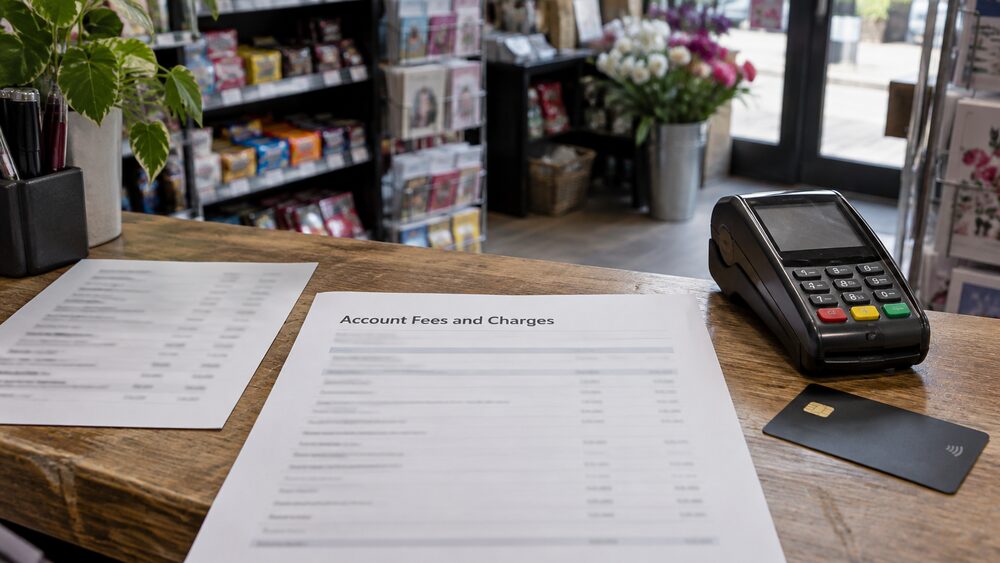
Most current accounts in the UK cost nothing to run month to month. Santander's Everyday account states there is no monthly account fee1, Metro Bank says you will not pay any monthly account fees for its current account2, and Monzo states its current accounts are free with no monthly fees3. The same is true of student accounts from Lloyds4 and Halifax5, and of Bank of Ireland UK's Clear Account, which has a £0 monthly fee for maintaining the account6.
Fees do appear, but usually for specific services rather than for holding the account. A CHAPS payment, the same-day high-value transfer system, typically costs around £20, with most banks charging between £15 and £25 per payment. Packaged and premier accounts charge a monthly fee in exchange for extras such as insurance, and prepaid card accounts can charge up to £20 a month7. Banks must also give you at least two months' notice before changing the terms and fees of your account8, and every bank publishes a fees and charges document listing everything it can charge you.
Most everyday current accounts: £0 monthly fee
The standard current account in the UK is free to hold. Across the major brands, the pattern is consistent: Santander's Everyday Current Account states there is no monthly account fee1, its 123 Mini Current Account for children states there is no monthly fee to maintain the account13, and Halifax's Student Current Account lists a £0 monthly fee5. Lloyds' student account states there is no monthly account fee4, UBL's ACE Current Account offers free everyday banking as long as you stay in credit14, and Bank of Ireland UK states there are no daily or monthly fees for using your account15.
HSBC's own guidance on choosing a bank account notes that standard accounts should not have any monthly account maintenance fees, though interest rates tend to be low11. Metro Bank states you will not pay any monthly account fees for its current account2, and Monzo states its current accounts are free, with no monthly fees or hidden costs3.
Where a monthly fee does appear on an ordinary account, it is usually tied to a condition. StepChange notes that with some accounts you might have to pay a certain amount of money into the account each month, or pay a monthly fee16. MoneyHelper makes the same point about credit union current accounts, which are run by not-for-profit organisations but may charge a monthly fee to open one17. MoneyHelper's guide to credit union accounts adds that you will often need to pay a monthly account fee for a debit card, for setting up regular payments such as Direct Debits, and for overdraft access18. A University of Bristol study found credit unions typically charged £3 to £5 a month for their current accounts19.
Two other account types sit outside the free mainstream. Prepaid card accounts, which StepChange describes as an option after bankruptcy, can have a monthly fee of up to £207. MoneyHelper lists the credit union current account and the prepaid card account as the main alternatives to a basic bank account, noting the credit union option may carry a monthly fee20. If a standard account is not available, a basic bank account is fee-free by design.
Sending money: CHAPS payments can cost around £20
CHAPS is the payment system used for large, same-day transfers, most often house purchases. It is the one everyday banking service where a fee is close to universal. Citizens Advice notes that if you pay by CHAPS there will be a charge, and that the amount is set by each bank21.
The charge varies by bank, but most sit in a narrow band around £20 to £25:
| Provider | CHAPS charge | Notes |
|---|---|---|
| Santander | £25 | Charge to make a CHAPS payment9 |
| Bank of Scotland | £25 | Fee of £25 per payment22 |
| Virgin Money | £25 | Charge for sending money by CHAPS23 |
| SBI UK | £25.00 | £25.00 or €40.00 per CHAPS payment25 |
| Cater Allen | £25 | £25 for sterling, €29 or US$40 depending on account currency26 |
| Virgin Money Flexible Repay and Rapid Repay | £25.00 | CHAPS outward payment27 |
| Starling | £20 | High-value payments using CHAPS, £20 per payment10 |
| Nottingham Building Society | £17 | Sending a CHAPS payment from a savings account28 |
| AlRayan Bank | £15 | Charge for using CHAPS, paid by you |
The fee is normally taken directly from the account making the payment. Virgin Money's savings terms state the £25 charge is taken from the account or paid by cheque23. Because the charge is deducted from the account, it matters that the money is there: a CHAPS fee that pushes an account overdrawn can trigger overdraft charges on top. The mechanics of the payment system itself, and how CHAPS compares with Faster Payments and Bacs, are covered in the guide to bank transfers.
For most everyday payments, none of this applies. Faster Payments and Bacs transfers between UK accounts are normally free, and standing orders and Direct Debits carry no charge on standard accounts. CHAPS is the exception, reserved for high-value or time-critical transfers where same-day certainty is needed.
Premier and packaged accounts: what a monthly fee buys
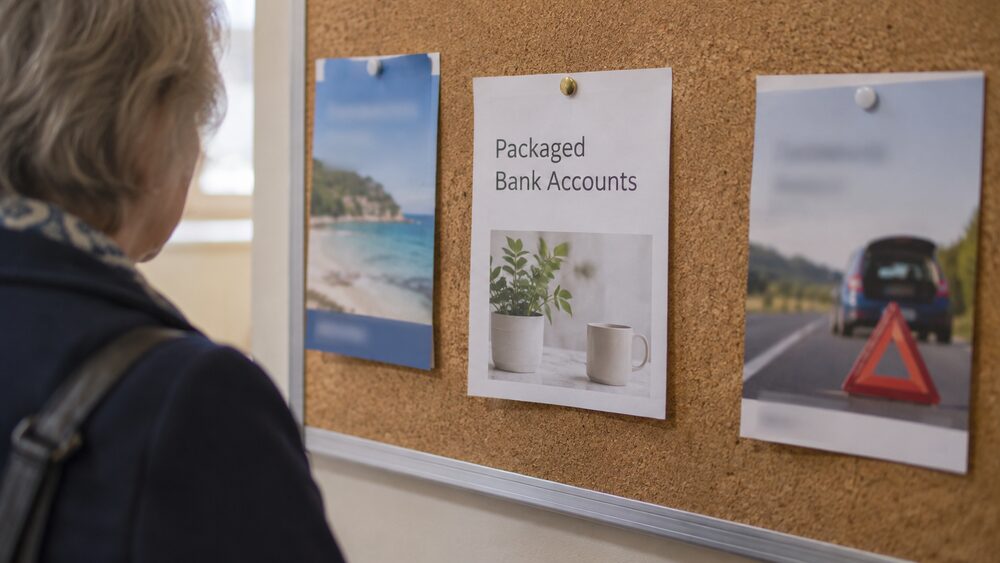
A packaged current account bundles extras into a monthly fee. HSBC's guidance describes the model: for a monthly fee, you may be able to benefit from a range of added extras that do not come with a standard account, sometimes including breakdown cover, mobile insurance, retail discounts and an interest-free arranged overdraft facility11. HSBC states that fees for these accounts typically range from £2 to £20 a month11.
Whether the fee is worth paying depends on whether you would otherwise buy the extras separately. A Which? examination of premium accounts found Barclays Premier customers could add a Travel pack at £10.50, and that Barclays Premier accounts allow daily cash withdrawals of up to £1,00029. The same article reported figures of £10.50 and £15.50 for Barclays Premier monthly costs, and the two figures disagree, so treat the exact amount as uncertain and check the bank's own current tariff29.
The risk with packaged accounts is paying repeatedly for cover you never use or cannot claim on. Insurance bundled into an account often has eligibility conditions and claim limits in the same way standalone policies do, and the account fee continues whether or not you claim. The comparison between packaged bank accounts and buying insurance separately sets out how to weigh the two, and the guide to packaged bank accounts covers the accounts themselves.
There is also a live question about whether free everyday banking survives. In 2020, Which? reported that HSBC could start charging for current accounts, with any change affecting its non-basic accounts such as Advance and Premier, which were then free to UK customers30. No source confirms that charges were introduced, but the episode shows that a monthly fee can arrive on an account that has always been free, which is one reason the notice rules in the next section matter.
Switching offers: cash incentives and their deadlines
Banks pay cash to attract switchers. Independent Age notes that many banks offer a one-off cash payment if you switch to them, ranging from £50 to £200, and that some banks may ask you to deposit a minimum amount when you switch31. Which? has tracked offers at the top of that range and beyond: a £240 switching bonus on Santander's Everyday account12, and earlier offers of £200 from HSBC and £185 from M&S Bank, both of which required a full switch to benefit32.
Offers have deadlines. The £240 Santander Everyday switch offer, which is tied to saving £200 in a Santander Regular Saver, ends on 7 October 2026. Lloyds is running a £200 incentive for switching to a new Club Lloyds Silver account or a new Premier account via the Current Account Switch Service, with switches to be started by 9 December 2026 to qualify.
The steps a typical switch offer requires before the bonus is paid.
The switch itself is free. Which? confirms the Current Account Switch Service is free to use, and that you can choose and agree your switch date with the new bank12. MoneyHelper explains that if you already have an account, you can ask your new provider to transfer your balance and all your incoming and outgoing payments35. Citizens Advice describes the service as one that can automatically switch your current account to another bank or building society36.
The service also carries protections if something goes wrong. Which? states the new bank must refund you for any charges incurred as a result of a Direct Debit or standing order not having been successfully transferred to the new account12. Citizens Advice makes the broader point that if there are mistakes or delays in the transfer process which lead to bank charges, you do not have to pay for them36. The guide to how bank switching offers work covers the conditions in more detail, and if a bonus you were promised never arrives, there is a dedicated page on what to do when a switch bonus is not paid.
Two months' notice before a bank changes its account terms and fees
A bank cannot quietly change what your account costs. Citizens Advice states that the bank or building society should tell you about any changes to terms and conditions at least two months before the changes are made8. The notice is normally given in writing, and it sets out what is changing and from when.
The sequence from a bank's notice of a fee change to the change taking effect.
The two months matter because they give you time to act. If you do not accept the new terms, you can close the account or switch to another bank before the change takes effect, using the free Current Account Switch Service. The guide to the notice banks must give before changes covers the rules in detail, and how to close a bank account covers the exit itself.
Changes happen in practice, and not only to fees. Royal Bank of Scotland states its current account terms and conditions are changing from 1 October 2026, across its reward and premier accounts. A terms change is not the same as a fee rise, but the notice rules apply to the terms of the account generally, so read the notice rather than assuming it is routine.
One separate notice rule is worth knowing if you receive Student Finance England payments: it requires four working days' notice to change your bank details so that the payment is made to your new account38. That is a deadline for you rather than for the bank, and missing it can delay a payment.
Reading a bank's fees and charges document
Every bank publishes a fees and charges document, sometimes called a banking tariff, for each account. It lists every charge the bank can make, what triggers each one, and the amount. Citizens Advice states that when you open a current, basic or instant access savings account, you are given the terms and conditions, interest rates, details of all charges, how information will be given to you, any spending limits, and what to do if things go wrong36.
The document is where you check anything you are unsure about. Citizens Advice notes that some banks will let you cash a current account personal cheque or use your cash card at the Post Office free of charge, and suggests asking your local post office8. MoneyHelper lists what a bank account usually lets you do: receive benefits and wages, spend in shops, withdraw cash, manage the account online or by mobile app, and set up Direct Debits and standing orders35. Which of these carries a charge, and how much, is set out in the tariff.
There are rules behind the document. The regulations covering current account agreements state that where an account allows you to overdraw without a pre-arranged overdraft, information about the applicable charges must be included in the agreement, and information on the cost must be updated at least annually39. So the tariff you were given when you opened the account may not be the current one: check the bank's website or app for the latest version before relying on an old figure.
Charges for the account itself are treated distinctly in the credit rules. FCA rules on the total cost of credit state that where opening or maintaining an account is obligatory to obtain credit, the total cost must include the costs of opening and maintaining that account, using a means of payment for transactions and drawdowns, and other costs relating to payment transactions40. Separately, the legislation excludes from the total charge for credit the charges for money transmission services relating to a current account arrangement, being charges which vary with the use you make of the arrangement39. In plain terms: ordinary transaction charges are not part of the cost of credit, but account costs that are a condition of getting credit are.
Access to the account is also protected in one respect. The government's Cash Access Policy Statement covers access to cash deposit and withdrawal services for relevant personal and business current accounts across the UK41. That is about reaching your money rather than what it costs, but it is the reason a branch closure does not remove your right to basic cash services, as the guide to access to cash explains.
Disputing a fee and where to get help
If a charge appears on your account that you do not recognise or believe is wrong, the first step is to check it against the bank's own fees document, then complain to the bank through its complaints process. The Financial Ombudsman Service is free to use if the bank's final answer is not acceptable, and it can order refunds and compensation.
The route from spotting a charge to taking it to the ombudsman.
The ombudsman does uphold these complaints. In one published decision about a current account, case 85/7, the ombudsman told the bank to refund all the charges and interest it had deducted from the customer's account, and to pay £150 for distress and inconvenience42. That case shows the remedy is not limited to the charge itself: interest taken alongside it and compensation for the trouble can both be part of the outcome.
Some disputes are better aimed at the company that took the payment than at the bank. Citizens Advice advises that where a company has overcharged you under an existing contract, you can contact the company to dispute the extra charges, and if they do not help you, contact your bank43. This applies to recurring card payments and subscription-style charges as much as to one-off bills.
If the underlying problem is debt rather than a single disputed charge, free help exists. Turn2us advises that if you are struggling with debt payments, free, confidential debt advice is available44. StepChange, whose guidance appears throughout this page, provides that advice, and the debt section of this site sets out the options. If a dispute ends up in court and the court fee is unaffordable, Business Debtline notes you can apply for help with court fees online at www.gov.uk/help-with-court-fees45. Overdraft charges specifically are covered in the guide to how overdraft interest and charges work, and the page on reclaiming unfair bank charges covers the process in full.
Sources45 cited
- Santander Everyday Current Account Santander UK, 2026-04-28
- Metro Bank Current Account Metro Bank, 2026-09-25
- Monzo salary sorter Monzo, 2026-09-25
- Lloyds Bank student accounts Lloyds Bank, 2026-09-27
- Halifax current accounts Halifax, 2026-09-27
- Bank of Ireland UK Clear Account rates Bank of Ireland UK, 2026-09-25
- Bank accounts after bankruptcy StepChange Debt Charity, 2026-09-25
- Getting a bank account in Scotland Citizens Advice Scotland, 2026-09-26
- CHAPS payments Santander UK, 2026
- Starling personal account schedule Starling Bank, 2026-05-31
- HSBC choosing a bank account HSBC UK, 2026
- How to switch your bank account Which?, 2026-09-07
- Santander 123 Mini Current Account Santander UK, 2026-04-28
- UBL ACE Current Account UBL UK, 2026-09-25
- Bank of Ireland UK unarranged overdraft charges Bank of Ireland UK, 2026-09-25
- Overdraft debt StepChange Debt Charity, 2026-09-25
- How to choose the right bank account MoneyHelper, 2026-09-25
- Credit union current accounts MoneyHelper, 2026-09-25
- Credit unions and current accounts research University of Bristol, 2012
- Basic bank accounts MoneyHelper, 2026-09-25
- Buying a used car Citizens Advice, 2026-09-25
- Pay by CHAPS Bank of Scotland, 2026-09-27
- Virgin Money savings terms Virgin Money, 2026-04
- Virgin Money terms and conditions Virgin Money, 2026
- SBI UK current account overview SBI UK, 2026-09-25
- Cater Allen banking tariff Cater Allen, 2026
- Virgin Money Flexible Repay and Rapid Repay Virgin Money, 2026
- Savings fees and charges Nottingham Building Society, 2026-09-25
- Should you ever open a premium bank account Which?, 2018-04-26
- HSBC could start charging for current accounts Which?, 2020-10-30
- Making the most of your bank account Independent Age, 2026-09-26
- How do I switch current account without closing my existing account Which?, 2017-11-10
- Switching current accounts HSBC, 2026
- Switch to Ulster Bank Ulster Bank
- Choosing a bank account for your Universal Credit payment MoneyHelper, 2026-09-25
- Getting a bank account Citizens Advice, 2026-09-25
- Personal current account terms and conditions Bank of Ireland UK, 2026
- Student Finance England how-to guide GOV.UK, 2022-06-24
- Current account agreement regulations legislation.gov.uk, 2010
- FCA Handbook MCOB 10A.1.2 Financial Conduct Authority, 2016-03-21
- Cash Access Policy Statement GOV.UK, 2023-08-18
- Financial Ombudsman decision, case 85/7 Financial Ombudsman Service, 2010-04
- Your payment card was used without your permission Citizens Advice, 2026-09-25
- Benefits not enough to meet my needs Turn2us, 2026-09-26
- Help with court fees Business Debtline, 2026-09-26



 MoneyHelperFree, impartial money and pensions guidance, set up by government
 FSCSProtects your money if a bank, insurer or investment firm fails
 Financial Ombudsman ServiceFree, independent help when a complaint about a firm is not put right
 Citizens AdviceFree advice on money, consumer and legal problems in England and Wales