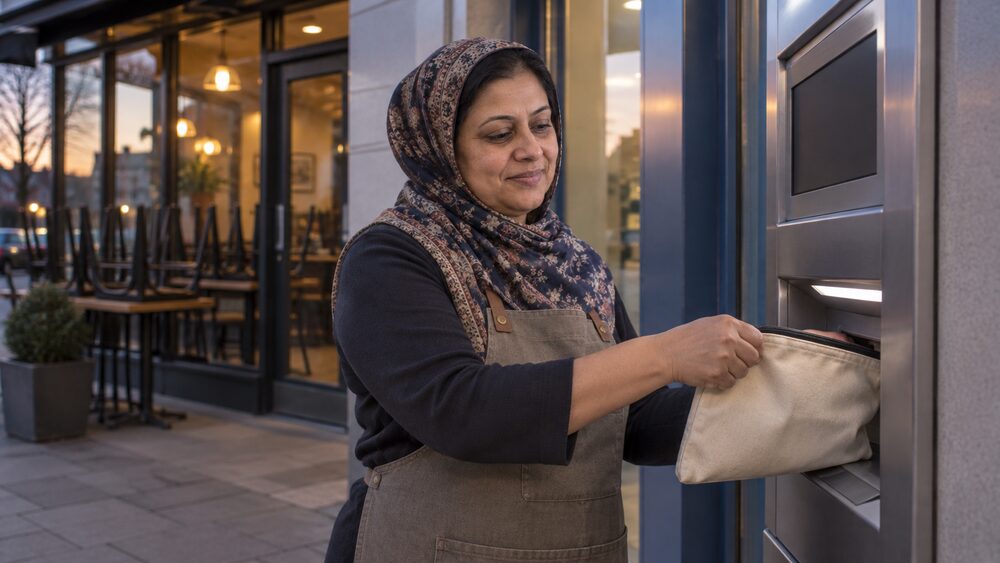
Most people now have several ways to pay cash or a cheque into a current account, and most of them no longer depend on having a bank branch nearby. You can photograph a cheque in your bank's app, use a branch counter or a cheque deposit machine, go to a banking hub, or hand it in at a Post Office counter. The Post Office's own guidance notes that some banking apps let you upload a photo of a cheque from your smartphone to act as a deposit, usually with a limit on the amount1, and the Post Office network covers the customers of nearly all UK banks for paying in2.
The rules that matter most are simple ones. A cheque is valid for six months from the date written on it1. At Barclays, a cheque deposited in the app by 3.59pm on a weekday is credited by 11.59pm the next weekday at the latest3. And the government's cash access policy covers deposit and withdrawal services for relevant personal and business current accounts across the whole of the UK4, so a bank that closes a branch is expected to leave workable alternatives in place.
Ways to pay cash and cheques into your account
The main routes are the banking app, a bank branch counter, a deposit machine, a banking hub, and a Post Office counter. Which of these you can use depends on who you bank with, because each bank decides which channels it supports and on what terms. HSBC UK, for example, lets customers pay in cheques by taking a picture in its mobile banking app, and also keeps branch and cheque deposit machine options6. first direct, which has no branch network of its own, lists an HSBC UK branch with a counter, a Multi-Bank ATM deposit machine, and the Post Office as its cheque paying-in locations7.
The range of methods is wider than many people expect. TSB describes paying in cash and cheques in branch using the counter, Immediate Deposit Machines, cash machines, or pay-in boxes, as well as banking at any Post Office in the UK8. Savings accounts often accept the same routes: Marsden Building Society's branch-based accounts accept payments in cash, by cheque or by debit card up to £1,000, alongside electronic payments and standing orders9, and its notice account works the same way10. Furness Building Society's Triple Access Saver accepts faster payments and standing orders, cash or cheque at a branch or on the mobile app, or a cheque by post, provided it comes from an account in your own name11.
Cash and cheques remain a real part of how money reaches people. Guidance for people with a learning disability notes that money can be paid to you by bank transfer, cash or cheque12, so a person who receives wages or benefits in physical form still needs a reliable way to get them into an account. For anyone worried about access, the government's Cash Access Policy Statement sets out its policy on access to cash deposit and withdrawal services for relevant personal and business current accounts across the UK4. The dedicated pages on access to cash and banking at the Post Office go into those arrangements in more detail.
Mobile cheque deposits: sterling cheques under 6 months old
Paying in a cheque by app is the quickest route for most people. first direct describes it as the quickest and easiest way to pay in a cheque, using the camera on your phone7. HSBC UK offers the same service through its mobile banking app6. Bank of Scotland sets out the conditions clearly: make sure the cheque is less than 6 months old and the recipient name is right, then enter the amount on the cheque13.
The conditions that recur across banks are worth checking before you start:
- Age: the cheque must be less than six months old, because cheques are valid for six months from the date written on them1.
- Currency: the cheque should be in British pounds and pence13.
- Name: the name on the cheque must match the account holder, spelled correctly13.
- Amount limit: banking apps that accept cheque photos usually place a limit on how much you can deposit this way1.
If any of these is wrong, the deposit can be rejected even after the image has been uploaded, which is one reason to keep the paper cheque until the money is safely in your account. A cheque that fails the app checks can usually still be paid in at a branch counter, a banking hub or a Post Office, where a member of staff can look at it, though the six-month validity rule still applies wherever you take it1.
When a mobile cheque deposit reaches your account
The timing depends on your bank's own cut-off. Barclays sets out its rules in its mobile banking terms: cheques deposited using the service by 3.59pm on a weekday will be processed and credited to your Barclays account by 11.59pm the next weekday at the latest, with weekdays running Monday to Friday and excluding bank holidays3. Deposits made after the cut-off, or on a weekend or bank holiday, start the clock on the next weekday.
Credited is not quite the same as usable. A bank may show the money in your balance before it has fully cleared and before it lets you withdraw it, and the rules on availability differ between banks. The narrow page on cheque clearing times covers that distinction in detail. As a point of comparison from outside banking apps, StepChange Debt Charity allows up to five working days where a creditor has asked to be paid by cheque14, which reflects how much slower paper can be once it leaves the digital route.
Paying in at a branch or banking hub
Where a bank has closed its branch, a banking hub is often what replaces it. Banking hubs offer personal banking services where you can pay cash or cheques into your account, take out money and check your available balance, and business services including paying in cash or cheques, withdrawing money and getting change15. The counter in a banking hub is provided by the Post Office16, so the paying-in experience is much like a Post Office counter, with the banks' own staff available on set days for matters the counter cannot handle.
Santander's guidance for customers using a banking hub describes the counter services in the same terms: pay in or take out cash, see your balance, and pay in cheques for current accounts only16. That last condition matters: some banks route cheque deposits through their current account range, so a cheque intended for a savings account may need to go to the savings provider directly, by branch or post, as Furness Building Society's terms illustrate11.
Research into the impact of bank branch closures in Northern Ireland, published in July 2026, found that depositing cash or cheques was the most common use of banking hubs among business users, at 97%17. Among consumers who were customers of a bank servicing in a banking hub, 46% believed that cash and cheque deposits met their needs17. That figure is a reminder that shared facilities work well for many but not for everyone, and the pages on bank branch closures and Post Office banking versus banking hubs compare what each offers.
Shared cash deposit services run by Cash Access UK, described by Ulster Bank, let personal and business customers perform cash deposits up to their NatWest limits, and charges apply for business customers only5. To use the service you need to bring the chip and PIN card associated with your account5, so a debit card is effectively your ticket to a deposit machine even when you are paying in cash rather than spending it.
Post Office counters: cash and cheques for most banks
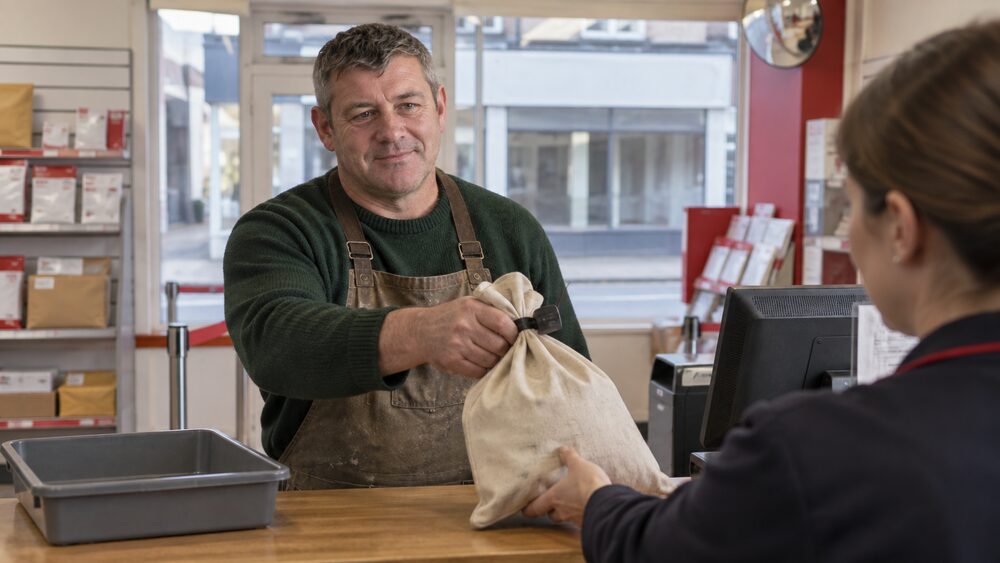
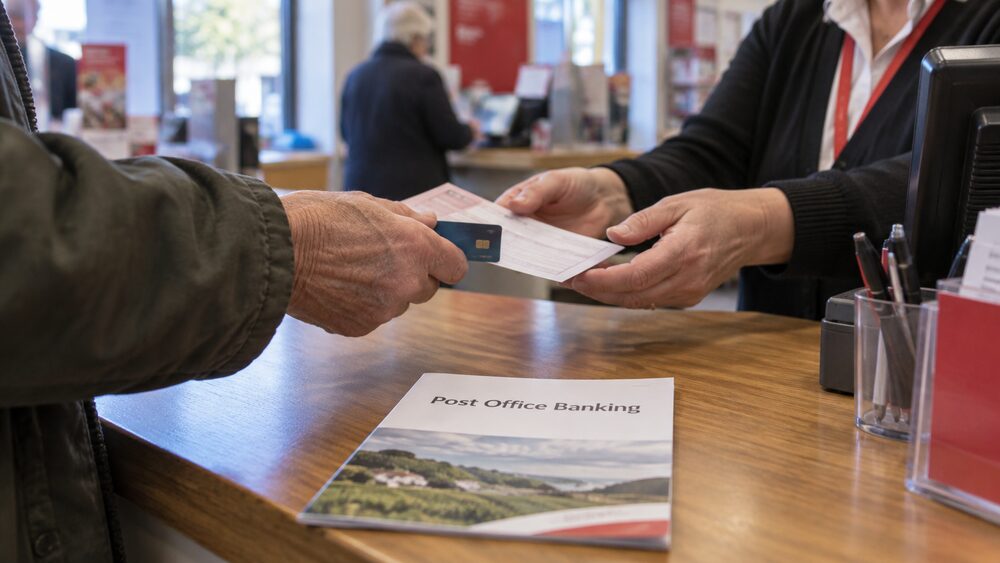
The Post Office is the single widest network for paying in. Its own guide states you can deposit cheques, as well as cash, into personal and business accounts at thousands of Post Office branches, and that the service is available for most major UK banks1. Over the counter you can pay in cash and cheques, withdraw money and check your balance15. The Post Office Banking Framework Agreement allows the customers of 28 banks to withdraw and deposit cash, deposit cheques and check balances18, and Post Office banking services are available to personal and business customers at branches within the UK2.
What you can do at the counter depends on who you bank with. Independent Age notes that Post Office services include withdrawing cash, paying in cheques, checking your balance or paying bills, depending on who you bank with19. The Consumer Council for Northern Ireland makes the same point: Post Offices offer simple banking facilities such as withdrawing and depositing cash and cheques for customers of nearly all banks20. Citizens Advice adds that some banks let you cash a current account personal cheque or use your cash card at the Post Office free of charge, and suggests asking your local post office what is available21, with the same advice in its Scottish guidance22.
The Post Office route matters most for people who would otherwise be cut off. Research by Consumer Scotland found that 41% of consumers in Scotland had used the Post Office for withdrawing or paying in cash in the past year23. Macmillan lists withdrawing money, paying in cash and cheques, and checking your balance among the services Post Offices provide for people managing money during cancer treatment24. Credit union members can also cash a cheque at a local Post Office, alongside withdrawing from a local credit union office or receiving payment directly into a bank account25.
Basic bank accounts, which are covered in full on the basic bank accounts page, generally include the Post Office route. Citizens Advice notes that basic bank account holders can pay in wages, salary, benefits, cheques and cash, pay bills by direct debit and withdraw from cash machines, though without a cheque book or overdraft21. A person who opened a basic account as an ex-pat was told they could also deposit money and withdraw cash over the counter at any Post Office or bank branch, on the same terms as other personal current account customers26. Older research on basic accounts found all of them offered cash withdrawals at a local Post Office, though nine accounts allowed withdrawals there but not deposits27, a gap worth checking with your own bank before relying on the counter.
Accounts that do not accept cash or cheques
Not every account accepts every method, and a few accept none of them. Chase is the clearest example: its terms state you can only pay money into your account by making a payment from another account you hold with Chase or directly from another UK bank in pounds sterling28. The same terms confirm no cheque books are provided and that money can only be sent within the UK in pounds sterling via the app29. So a cheque made out to someone whose only account is with Chase cannot be paid in anywhere: it would need to go into a different account first, or be replaced by a bank transfer.
Some savings accounts also exclude cheques. Triodos states that its Online Cash ISA and Fixed Rate Cash ISAs do not accept cheque payments30. A saver who receives a cheque and wants it in a Triodos cash ISA would need to pay it into a current account and transfer it electronically instead.
Basic bank accounts sit in a middle position. They accept cheques and cash paid in21, but they do not come with a cheque book of their own, and they cannot go overdrawn21. Debt advice charities describe the same features: set up direct debits and standing orders, use a debit card to pay for items and withdraw from a cash point, have income paid into the account, and check your balance at a bank, cash machine or online31. The comparison of basic versus standard accounts sets out the differences in full.
Fees, charges and where to get help
For personal accounts, paying in is normally free. Cater Allen's banking tariff lists making payments by cheque as carrying no charge33, and the shared cash deposit services state that charges apply to business customers only5. Where a bank does charge for counter activity, the charge must appear in its published tariff, and the page on current account fees and charges explains how to find and read yours.
If something goes wrong with a deposit, a cheque is rejected, or you cannot access any way to pay in, free help exists. Citizens Advice can advise on banking problems generally21, and its Scottish service does the same for Scotland22. Independent Age offers advice on making the most of your bank account for people in later life19. Macmillan supports people managing money when they have cancer, including with bank and building society accounts24. For debt problems specifically, Business Debtline31 and National Debtline32 publish guidance on safe bank accounts, and StepChange Debt Charity sets out ways to pay a debt management plan, including the extra time allowed when a creditor asks to be paid by cheque14.
The wider picture is that paying in remains protected as branch networks shrink. The government's policy statement covers access to cash deposit and withdrawal services for relevant personal and business current accounts across the UK4, and a consultation on everyday finances has examined what people still need from cash and banking services18. If your local branch closes, the pages on how much notice a bank must give and what replaces a closed branch explain what your bank is expected to provide, and the Current Account Switch Service page covers moving to a bank whose channels suit you better.
Sources33 cited
- Where can I pay in cheques Post Office, 2026-06-24
- Closure of high street banks: impact on local communities House of Lords Library, 2024-01
- Mobile banking app terms and conditions Barclays, 2025-10
- Cash access policy statement HM Government, 2023-08-18
- Standing orders Ulster Bank, 2026-09-25
- Cheque imaging HSBC UK, 2026
- Ways to bank first direct, 2026
- EU cash account TSB, 2026
- Branch Cash ISA 120 (Issue 8) Marsden Building Society, 2026-09-25
- Branch Saver 120 (Issue 13) Marsden Building Society, 2026-09-25
- Triple Access Saver (Issue 2) Furness Building Society, 2026-09-25
- Money Mencap, 2026
- Cheque deposits Bank of Scotland, 2026-09-27
- Ways to pay your plan StepChange Debt Charity, 2026-09-26
- Banking hubs Post Office, 2026
- Managing your account at a banking hub Santander, 2026
- Impact of bank branch closure research report Consumer Council for Northern Ireland, 2026-07
- Everyday finances call for insight Which?, 2019-11
- Making the most of your bank account Independent Age, 2026-09-26
- Ways to bank Consumer Council for Northern Ireland, 2026
- Getting a bank account Citizens Advice, 2026-09-25
- Getting a bank account (Scotland) Citizens Advice Scotland, 2026-09-26
- MSP briefing: access to cash and banking facilities Consumer Scotland, 2025-12-05
- Bank and building society accounts Macmillan Cancer Support, 2022-11-01
- Credit unions Building Societies Association, 2026-09-15
- Ask an expert: struggling to open a UK bank account Which?, 2017-08-11
- Personal Finance Research Centre report on basic bank accounts University of Bristol, 2012
- General terms and conditions Chase, 2026-08-24
- General account terms and conditions Chase, 2026
- Investments help Triodos Bank, 2026-09-26
- Safe bank accounts Business Debtline, 2026-09-26
- Safe bank accounts National Debtline, 2026-09-25
- Banking tariff Cater Allen, 2026

 MoneyHelperFree, impartial money and pensions guidance, set up by government
 FSCSProtects your money if a bank, insurer or investment firm fails
 Financial Ombudsman ServiceFree, independent help when a complaint about a firm is not put right
 Citizens AdviceFree advice on money, consumer and legal problems in England and Wales