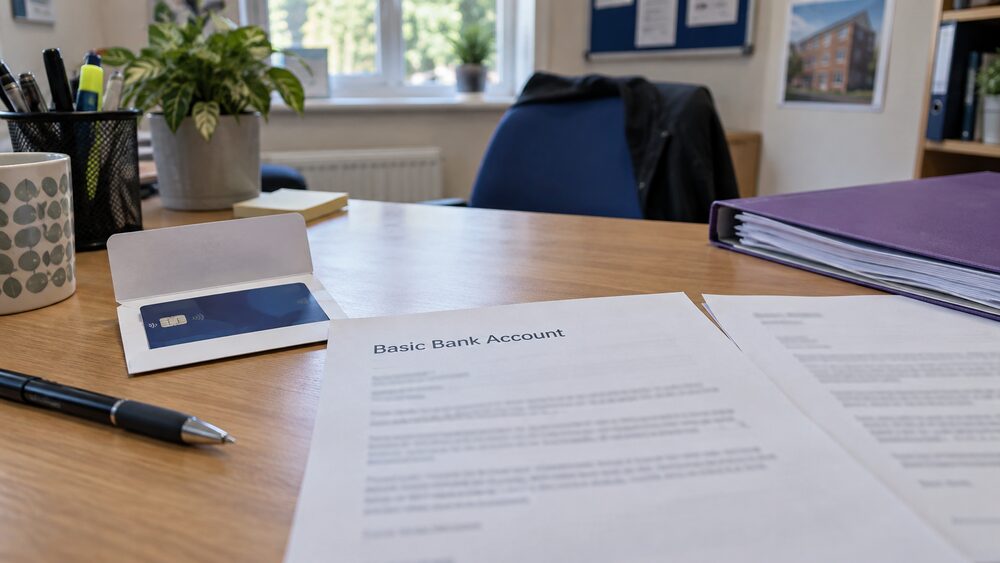
Yes, you can open a bank account without a fixed address. A basic bank account is free to set up and use, and you do not have to pass a credit check to get one1. Banks that run schemes for people with no fixed address ask a local homeless charity or organisation to confirm your identity instead of the usual paperwork2.
Yes, you can open a bank account without a fixed address. A basic bank account is free to set up and use, and you do not have to pass a credit check to get one1. Banks that run schemes for people with no fixed address ask a local homeless charity or organisation to confirm your identity instead of the usual paperwork2.
The practical route is a basic bank account, offered by the nine largest banks and building societies in the UK to people who have no account, who want to change provider, or who are in financial difficulty and need a working account3. If you have no passport, no driving licence and no utility bill in your name, a letter from a responsible person such as a GP, teacher, social worker or probation officer is usually accepted instead4.
What follows is what banks ask for, how the homeless schemes work, what a basic account costs, what to do if you are refused, and where free help is available.
You can open a basic bank account without a fixed address
A basic bank account is the standard answer for anyone who cannot get a normal current account, whether because of a poor credit history, a low income, or no fixed address. You can apply if you have a low income or a poor credit history and think you might have trouble opening a bank account7. The account is free to set up and use1, and the main advantage is that there are no costs and no opportunity for fees to arise8.
The nine largest banks and building societies in the UK have agreed to offer basic bank accounts with no monthly fees to three groups: people with no bank account at all, people who have an account elsewhere but want to change provider, and people who have an account but are in financial difficulty and want their bank to open a new, functional account for them3. The official definition is broad: a basic bank account counts as open even if no transactions have taken place on it, and it still counts as open if a decision has been taken to close it but it has not yet closed5.
Basic bank accounts are not available to businesses, though charities can use the industry body UK Finance's guide on opening a charity bank account9. If you are opening an account while you already owe money to a bank, it is worth choosing a bank you have no existing debt with, which strengthens your position if you later have difficulty paying your existing bank debts10.
Who can get an account and what banks usually ask for
Basic bank accounts are for customers who are legally resident in the United Kingdom and either do not have a bank account or are not eligible for a standard current account5. You can usually open a bank account if you have leave to remain or a valid visa2. For ordinary current accounts, banks typically require you to be aged 18 or over and a UK resident9.
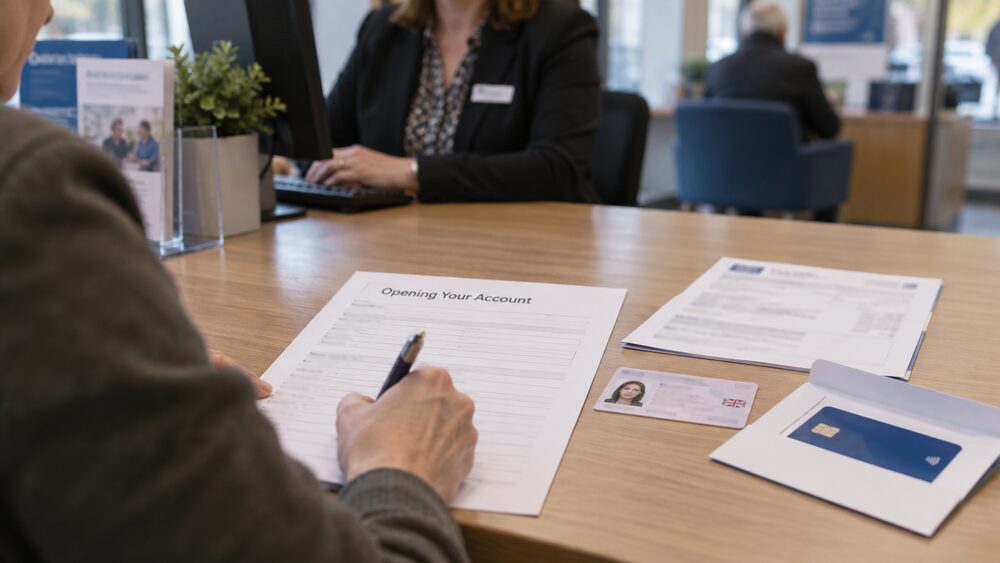
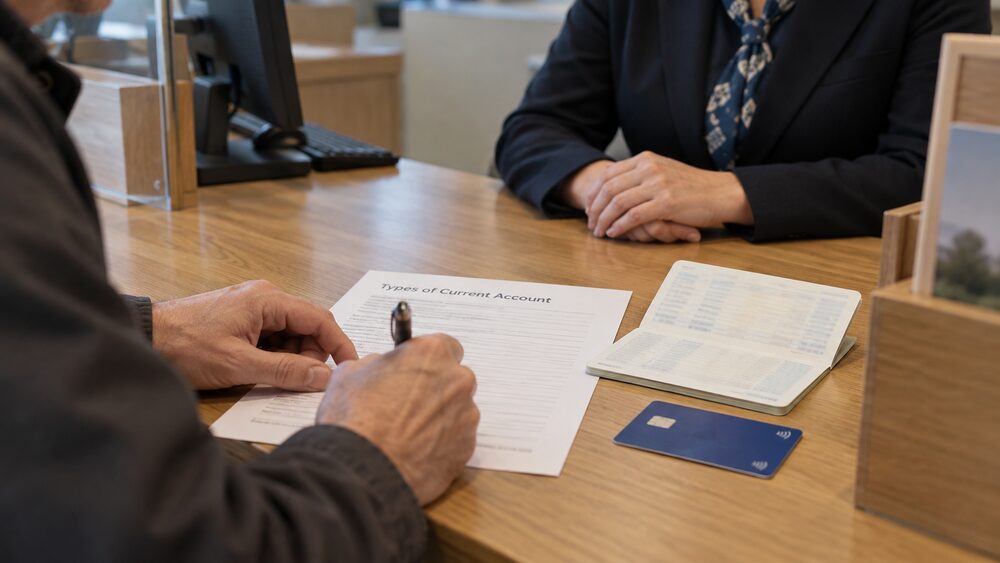
The application itself is straightforward. You usually fill in an application form in a branch, online, or sometimes over the phone, and provide proof of identity including your full name, date of birth and address4. Depending on the account, you can usually apply online, using an app, over the phone or in person9. One quirk of basic accounts is that you will often need to apply for one of the bank's other accounts first, such as their standard current account, and be offered the basic account if you do not qualify1.
A bank or building society can refuse to open an account, and it does not always have to give a reason4. That is a real limit, and it is why the complaint route below matters. But a refusal has to be handled through the bank's own process, and there are free services that will help you challenge it.
Proving your identity when you have no address
The usual rule is two separate documents: one proving who you are, such as a passport, and one proving where you live, such as a recent bill4. If you have neither, the fallback is a letter from a responsible person such as a GP, teacher, social worker or probation officer4. Banks that offer accounts for people with no fixed address take a different approach: they ask a local homeless charity or organisation to confirm your identity2.
Some providers go further. Suits Me, a credit union card account, states that no verified proof of address is required, subject to anti-money-laundering requirements at account opening12. Monese states that you can open an account with no credit checks, proof of address or a fixed income13. These are the providers' own descriptions of their products, and the terms attached to them are worth reading before you rely on them.
If you are a Homes for Ukraine guest, you can apply for an account in person at a branch (you may need an appointment), over the phone, online, or using a bank's mobile app14. If you are claiming benefits, you do not need a fixed address or a bank account to claim in the first place15, and Income Support does not require a permanent address16.
Bank schemes for people with no fixed address
Some banks have schemes for people with no fixed address2. The best known is HSBC's No Fixed Address Account, a specialist service available in selected branches to help people without a fixed home address open a bank account17. It is run in partnership with Shelter and other UK charities18.
To use it, you must be experiencing homelessness or housing difficulties and receive support from a charity or organisation registered with Shelter's Breaking the Cycle programme19. The process runs through the charity rather than the branch: at the appropriate time, a caseworker from the charity contacts your local participating HSBC branch to arrange an appointment to open an account17. The account provides essential banking features such as receiving payments, paying bills and setting up standing orders or Direct Debits, managed online or through mobile banking19.
TSB runs a separate scheme for people who have experienced domestic or financial abuse, letting them open an account without the usual ID in Alloa, Dundee, Galashiels, Norwich, Swindon, Walsall and Wolverhampton2. Barclays, for its part, lets customers request a non-geographical sort code for bank accounts, helps victims open new accounts with limited documentation, offers an option to be called back when it is safe to talk, and can help separate joint bank accounts20. TSB also helps people open accounts in their sole name with a non-location sort code21. Allied Irish Bank can open a personal account in your sole name even if you do not have access to standard forms of identification22.
What a basic or current account costs
Basic bank accounts are free to set up and use1, and you do not have to pay any fees11. You usually do not need any money to open one4. The main advantage is that you can have an account with no costs and no opportunity for fees to arise8, and a basic bank account has no fees10.
The trade-off is features. A fee-free basic account will usually have fewer features than a current account, though you can still receive payments and set up Direct Debits10. Basic bank accounts do not have an overdraft facility5, and one provider's basic current account pays no credit interest24. That absence of an overdraft is the reason the account cannot generate charges: there is no borrowing to charge interest on.
If a basic account does not suit, there are alternatives. A credit union current account is run by a not-for-profit organisation, but you might pay a monthly fee to get one1. A prepaid card account usually does not require ID, but you cannot usually set up payments from it1. Both are worth weighing against a free basic account, particularly if you need Direct Debits for bills.
| Account type | What it costs | Overdraft | Main limit |
|---|---|---|---|
| Basic bank account | Free to set up and use1 | None5 | Fewer features than a current account10 |
| Credit union current account | May charge a monthly fee1 | Not stated | Run by a not-for-profit1 |
| Prepaid card account | Not stated | None | ID not usually required, but payments usually cannot be set up1 |
Will the bank run a credit check if I have no fixed address?
Usually yes, but for a basic bank account you do not have to pass one. Banks use the credit check to check your identity, not to decide whether you can borrow1. That distinction matters: a thin credit file, a poor credit history or no history at all should not by itself stop you getting a basic account.
For ordinary current accounts the position is different. The bank will usually run a credit check to see your credit history, including whether you have had problems paying money back9. That is one reason a basic account is often the better fit if your credit history is unsettled.
Some providers state that they run no credit check at all. Monese says you can open an account with no credit checks, proof of address or a fixed income13. Where a provider makes that claim, it is the provider's own description of its product, and the account may not be a bank account in the protected sense, so check what protection applies.
Can I use a hostel, charity or friend's address for a bank account?
Yes. A hostel, a charity, a day centre or a friend's address can serve as a care-of address for correspondence. What the bank needs is a way to reach you and a way to confirm who you are, and a care-of address does both.
The identity side is where the schemes come in. Banks that offer accounts for people with no fixed address ask a local homeless charity or organisation to confirm your identity2. Where no scheme operates locally, the letter from a responsible person is the usual substitute: a GP, teacher, social worker or probation officer4.
If you already have an account and become homeless, the account does not have to go with the address. Your bank cannot close your account or cancel your card just because you are homeless6. In Scotland, you may be able to open a bank account without a permanent address25. If you are moving between addresses, National Savings and Investments lets unregistered customers change their address or contact details online without creating an account26, and you can cash in Fixed Interest Savings Certificates online without creating an account28. NS&I also lets you make deposits through its website without entering card details or reference numbers, approving each payment through your own bank's app or website29.
Problems opening an account and where to get help
If you cannot open a basic bank account, the bank should tell you why you have been turned down30. Start there: ask for the reason in writing, then use the bank's formal complaints procedure. If the response does not resolve it, the Financial Ombudsman Service can look at the complaint free of charge.
Free and impartial help is available while you sort it out. Citizens Advice and MoneyHelper both publish guidance on getting a bank account and on what to do when an application is refused4. If you are in financial difficulty, the debt advice charities can help with both the account and the debts: Business Debtline advises contacting it for advice if you have difficulty setting up a bank account10.
If you are opening an account to protect yourself from someone else, banks have specific tools. Barclays can help victims open new accounts with limited documentation, offer a callback when it is safe to talk, and help separate joint bank accounts20. TSB helps people open accounts in their sole name with a non-location sort code21. Allied Irish Bank can open a personal account in your sole name even without standard identification22. These are worth asking about directly, because the standard application process is not designed around them.
Is my money protected if I have no fixed address?
Protection follows the bank, not your address. Money held with a bank or building society authorised in the UK is covered by the Financial Services Compensation Scheme up to the limit that applies to that licence, whatever address the account is registered at. Nothing about having no fixed address changes that.
The exception to watch for is accounts that are not bank accounts. Some app-based and card accounts are provided by e-money firms rather than banks, and the protection that applies to them is different. Monese, for example, describes its instant account as having no credit checks, proof of address or fixed income requirement13, and Suits Me describes a card account with no verified proof of address required, subject to anti-money-laundering requirements12. Both are the providers' own descriptions. Before relying on an account of this kind to hold money you cannot afford to lose, check what protection applies to it.
Sources31 cited
- Basic bank accounts MoneyHelper, 2026-09-25
- How to open a bank account Shelter, 2024-07-16
- How to open a bank account online Which?, 2026-04-23
- Getting a bank account Citizens Advice, 2026-09-26
- Basic bank accounts: July 2023 to June 2024 HM Treasury, 2025-11-05
- Keeping a bank account Shelter, 2025-01-23
- Make your money easier to manage by yourself MoneyHelper, 2026-09-25
- Basic bank accounts Advice NI, 2026
- How to open, switch or close your bank account MoneyHelper, 2026-09-25
- Safe bank accounts Business Debtline, 2026-09-26
- Getting a bank account (Scotland) Citizens Advice Scotland, 2026-09-26
- Suits Me card Grampian Credit Union, 2025-12-12
- Instant account Monese, 2026
- Supporting guests to open a bank account: Homes for Ukraine GOV.UK, 2025-09-15
- Claiming benefits when homeless on the streets Shelter, 2025-10-01
- Can I claim welfare benefits if I'm living with a mental illness? Mental Health and Money Advice, 2025-07-23
- No Fixed Address Account HSBC UK, 2026
- Money worries HSBC UK, 2026
- Banks join scheme to help homeless people open bank accounts Which?, 2025-11-14
- How your bank can help protect you from financial abuse Which?, 2023-06-14
- Supporting you: domestic or financial abuse TSB, 2026
- How banks can help Surviving Economic Abuse, 2023-11
- Save money on your social life StepChange, 2026-09-25
- 123 Current Account Santander, 2026
- Benefits and working Shelter Scotland, 2024-03-27
- Change personal details NS&I, 2022-07-04
- Looking after a child's savings NS&I, 2023-11-13
- Fixed Rate Savings Certificates NS&I, 2024-05-15
- Ways to pay NS&I, 2023-07-06
- Safe bank accounts National Debtline, 2026-09-25
- Basic bank accounts Advice NI, 2026

 MoneyHelperFree, impartial money and pensions guidance, set up by government
 FSCSProtects your money if a bank, insurer or investment firm fails
 Financial Ombudsman ServiceFree, independent help when a complaint about a firm is not put right
 Citizens AdviceFree advice on money, consumer and legal problems in England and Wales