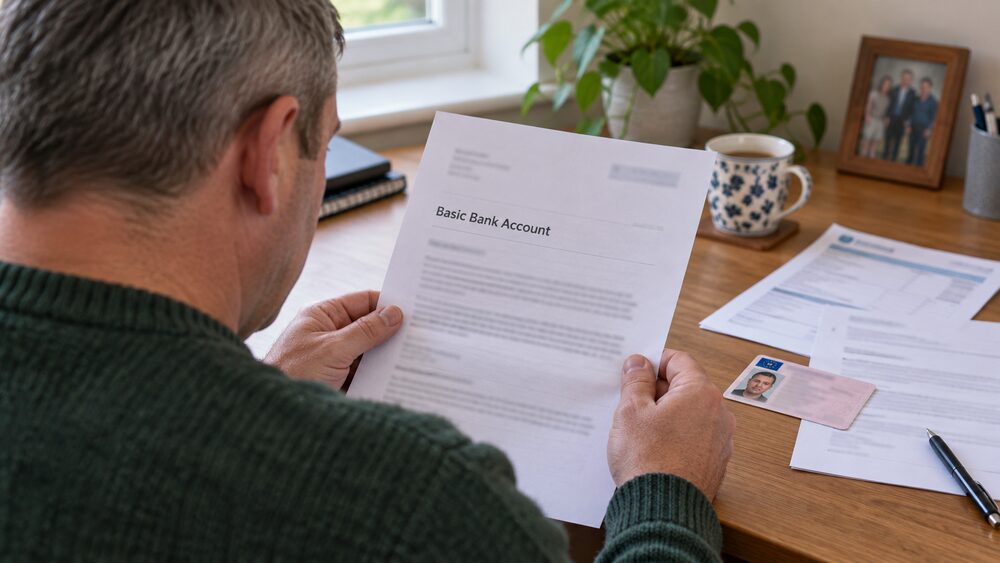
If you have been turned down for a basic bank account, the first thing to know is that the bank should tell you why. Under the Payment Accounts Regulations, where an application is refused the institution must, without delay, inform the customer in writing and free of charge of the reason for the refusal if it may lawfully do so, and the reason must be sufficiently detailed and specific to enable the consumer to understand why the application has been refused1. Independent guidance puts it more simply: if you cannot open a basic bank account, the bank should tell you why you have been turned down3.
If you have been turned down for a basic bank account, the first thing to know is that the bank should tell you why. Under the Payment Accounts Regulations, where an application is refused the institution must, without delay, inform the customer in writing and free of charge of the reason for the refusal if it may lawfully do so, and the reason must be sufficiently detailed and specific to enable the consumer to understand why the application has been refused1. Independent guidance puts it more simply: if you cannot open a basic bank account, the bank should tell you why you have been turned down3.
The second thing to know is that a poor credit history is rarely the reason. Basic bank accounts are normally available if you do not qualify for a bank's standard current account, including where you have a bad credit history, an IVA, a debt management plan, a debt relief order or a bankruptcy4. You do not have to pass a credit check to be offered one, although banks use a credit check to confirm your identity4. Refusals more often turn on identity, immigration status or a fraud record.
The third is that some refusals are not discretionary. A designated credit institution must refuse to open a payment account with basic features where it would be unlawful for it to do so, including where opening it would be contrary to the Fraud Act 2006, the Money Laundering Regulations 2007, section 40 of the Immigration Act 2014, or an FCA requirement preventing it from accepting new customers5. If that is your situation, applying to another bank will not change the outcome.
The bank should tell you why you have been turned down
The duty to explain is the most useful thing you have, because it tells you whether the problem is fixable. The regulations require the reason to be specific enough for you to understand it, unless providing that information would be unlawful2. Official statistics on the basic bank account scheme repeat the same rule: the institution must inform the customer in writing and free of charge of the reason for the refusal if it may lawfully do so1.
There are limits. MoneyHelper says the bank should tell you why you have been turned down unless it suspects fraud or money laundering4. Citizens Advice says a bank or building society can refuse to open an account and does not always have to give a reason9. Under the Payment Accounts Regulations, a refusal notice must be sufficiently detailed and specific for the consumer to understand why the application was refused, unless providing that information would be unlawful10. In practice, a refusal with no explanation usually means the bank is treating the application as a financial crime or identity risk, and that is the point at which a complaint is worth making.
If the refusal relates to a frozen account or a blocked payment rather than a new application, the Financial Ombudsman Service sees cases where banks have acted because of unusual or suspicious activity on the account, or doubts about whether the customer had authorised a payment or other activity11. The ombudsman can look at whether the bank handled that properly.
Common reasons for refusal: identity, residency and credit checks
Refusals cluster around three areas, and only one of them is about money.
Identity. Failing an identity check is one of the grounds on which a basic bank account application is refused12. This is a documentary problem more often than a factual one, and it is the easiest to fix.
Residency and immigration status. Basic bank accounts are offered to customers who are legally resident in the United Kingdom and do not have a bank account, or who are not eligible for a standard current account1. A bank or building society is not allowed to open an account for someone who needs leave under the Immigration Rules but does not have it, and that person cannot be a joint account holder, a signatory or a beneficiary; banks carry out status checks9. Failing an immigration check is a listed ground for refusal12.
Credit and conduct. Banks often check your credit rating when you open a current account and can refuse an application based on credit history13. For a standard current account the bank will usually run a credit check to see your credit history, including whether you have had problems paying money back7. The common reasons people are turned down for credit include identity and address not being confirmed, insufficient credit history, late or missed payments, defaults or county court judgments, an IVA or debt management plan, several applications in a short space of time, a mistake on the form, a financial association with someone with a bad credit history, not being the lender's target customer, employment history, and information missing from the credit report14.
One reason deserves separate treatment. Banks will normally stop you having an account if there is a record of fraud on your credit file8. The ombudsman describes the consequences of a fraud marker bluntly: customers may find they cannot open a bank account, their bank account is closed and they cannot open another one, or their mortgage application is rejected15.
Documents that can help if you apply again
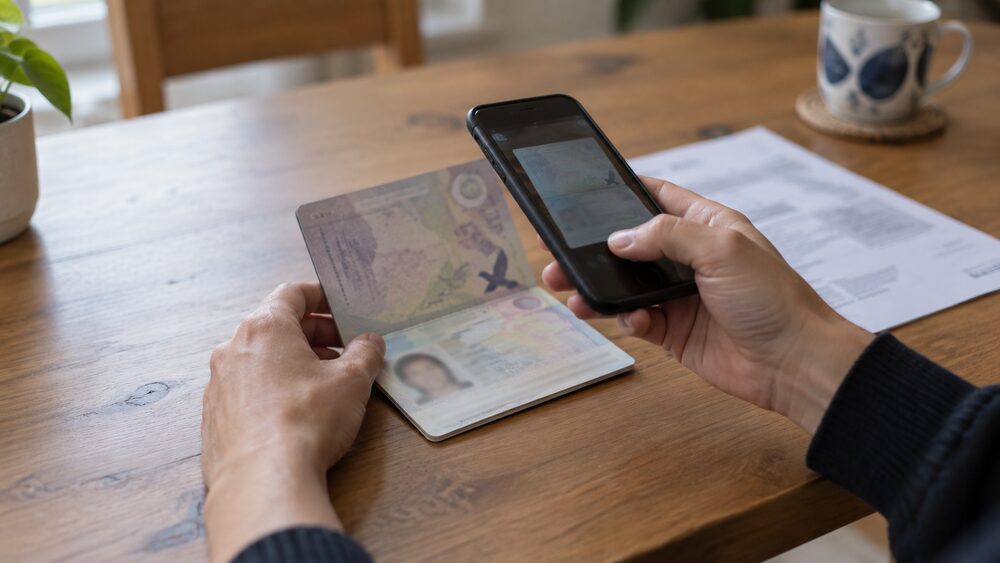
When opening an account you will need to show proof of who you are and your address, and if you do not have the right documents, the bank can be asked what it will accept instead17. That conversation is the single most useful step after a refusal.
Most banks will ask for a driving licence or passport to prove your identity, or a photo of these if you are applying online, often along with a selfie7. If you have neither, MoneyHelper lists other documents that may be accepted: letters from the Department for Work and Pensions, HMRC, Jobcentre Plus, your local council, a GP, a minister of religion, a social landlord, an armed services officer, a warden, a care home manager, an employer, a college or a training provider4. You will usually need ID to prove your identity, such as a driving licence, passport, recent bills or official documents18.
For proof of address, the same principle applies: ask first, then gather. If you have no fixed address, that is a recognised difficulty with its own routes, and banks have joined schemes to help people who are homeless open accounts19.
Other ways to apply: online, app, phone or in person
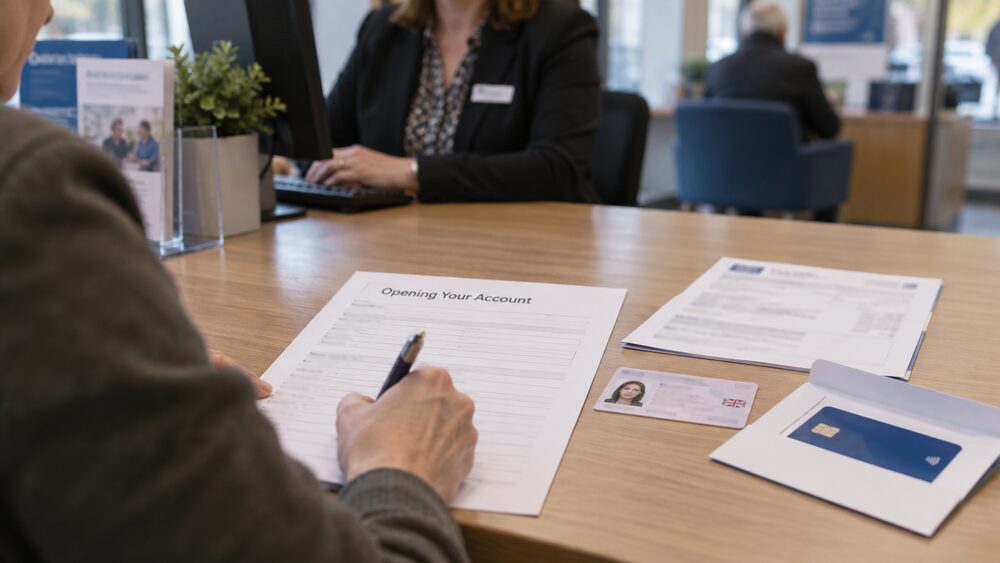
Depending on the account you have chosen, you can usually apply online, using an app, over the phone or in person7. An application form can be completed online, in person or by phone20. Which routes are open to you depends on the bank, and for basic accounts the branch route is often the one that works.
The differences matter when your documents are unusual. Lloyds Banking Group's basic account can be applied for in branch or over the phone, not online, and is typically offered after being declined for another current account19. NatWest's Foundation Account can be applied for in branch, online, through the mobile app or by phone19. For a Barclays basic account you need to book an appointment at a Barclays branch or Barclays Local to discuss alternative ID and proof of address, and you must first apply for the Barclays Bank Account and be offered the basic account if you are not eligible19. At the other end of the market, OakNorth says you can apply through its website or mobile app and it does not accept applications by phone, post or in person21.
The pattern is that branch-based applications exist precisely for people whose paperwork does not fit an online form. If you have been refused once, an in-person appointment where you can show alternative documents is often the more productive route.
How to complain: eight weeks for a final response
If the bank will not explain its decision, or the refusal is disputed, there is a set route. Contact customer services, then make a formal complaint; the bank has eight weeks to investigate and give a final response7. If it is about anything other than a payment, the bank has eight weeks4. The bank is given at least eight weeks to try to resolve the complaint, and it should then send a final decision letter telling the customer how to contact the Financial Ombudsman Service22.
If the bank does not send you a final response letter within eight weeks, or you are unhappy with its response, you can bring the complaint to the ombudsman23. The same eight-week rule applies across financial complaints: if the business does not reply within eight weeks, or you are unhappy with its response, the ombudsman can take it on24. The service is free to consumers.
Current account complaints are a large part of the ombudsman's caseload: it opened 8,945 current account complaints in the first quarter of 2026/2725. That is context rather than comfort, but it does mean the process is well trodden.
What the account will and will not do
It is worth knowing what you are applying for, because a basic bank account is deliberately narrower than a standard one. You will not be able to have a cheque book or go overdrawn, you might be charged if a Direct Debit fails for lack of money, and not all basic bank accounts can be accessed at the Post Office26. There is usually no money needed to open the account9.
On the other side, there are protections specific to these accounts. There are rules for basic bank accounts that mean banks are more restricted in the grounds on which a basic account can be closed27. The scheme rules confirm that the information duty applies to basic bank accounts, but only if the firm offers a basic bank account and the customer meets the firm's eligibility criteria for such an account28.
For everyday use, the ordinary cautions apply. A bank transfer is harder to reverse than a card payment, and you have much less protection if something goes wrong29. If you are paid Universal Credit, the account needs to accept the payment, which is a practical consideration when choosing between providers18.
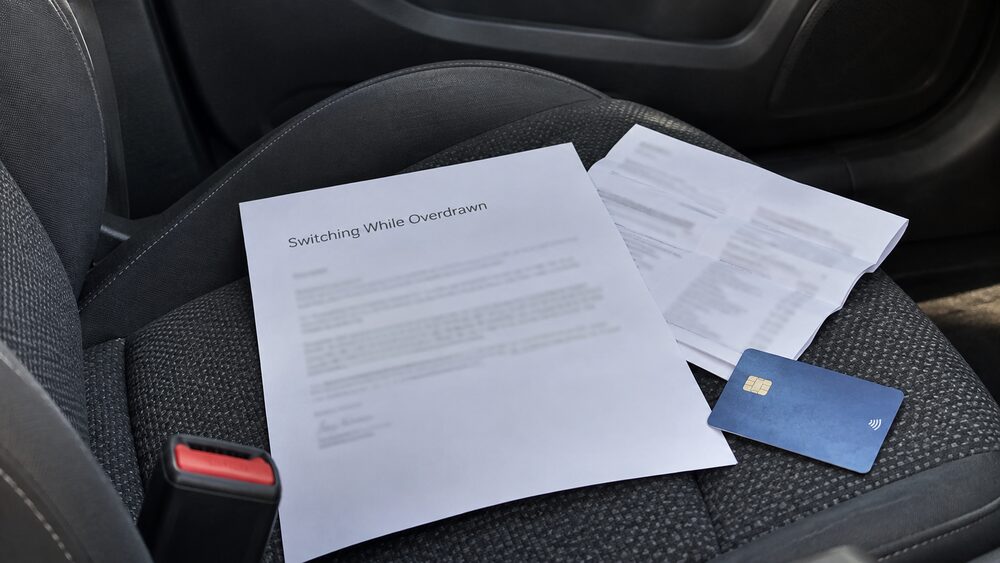
Once the account is open, the money in it is protected in the same way as any other deposit at the same licensed firm, so accounts held with brands sharing one licence count together towards a single limit. If you later want to move, the switching process has its own rules, including what happens if you are overdrawn: if the new account's overdraft covers what you owe, the funds are sent to your old bank and you owe the balance on the new account instead, and if it is a lower amount, or you cannot get one, you need to arrange to pay off the remainder separately before you can switch or close your old account7.
Where to get free help
Several organisations give free, impartial help with a refused account or a complaint. MoneyHelper explains basic bank accounts, what ID banks accept and how to open, switch or close an account4. Citizens Advice covers getting a bank account and what a bank can and cannot do9. The Financial Ombudsman Service takes complaints once the bank has had eight weeks or has given a final response23. StepChange covers basic bank accounts and overdraft debt8. If a refusal has left you without a way to receive money, a credit union may be an alternative, and they operate on different eligibility rules from banks.
Sources29 cited
- Basic bank accounts: July 2023 to June 2024 GOV.UK, 2025
- The Payment Accounts Regulations 2025 legislation.gov.uk, 2025
- Basic bank accounts Advice NI, 2026
- Basic bank accounts MoneyHelper, 2026
- The Payment Accounts Regulations 2015 legislation.gov.uk, 2015
- Basic bank accounts with no credit check Shelter England, 2025
- How to open, switch or close your bank account MoneyHelper, 2026
- Basic bank account StepChange, 2026
- Getting a bank account Citizens Advice, 2026
- Managing your own money Scope, 2025
- Frozen accounts and blocked payments Financial Ombudsman Service, 2026
- Refused credit Experian, 2026
- Identity theft Information Commissioner's Office, 2026
- Fraud markers Financial Ombudsman Service, 2026
- Make your money easier to manage by yourself MoneyHelper, 2026
- BCOBS 4.1 FCA Handbook, 2026
- Banks join scheme to help homeless people open bank accounts Which?, 2025
- Opening an account OakNorth Bank, 2025
- Joint accounts MoneyHelper, 2026
- Overdrafts and other bank debts nidirect, 2025
- Current account MoneyHelper, 2026
- Debt collecting Financial Ombudsman Service, 2026
- Choosing a bank account for your Universal Credit payment MoneyHelper, 2026
- Financial difficulties with mortgages Financial Ombudsman Service, 2026
- Quarterly complaints data Q1 2026/27 Financial Ombudsman Service, 2026
- Getting a bank account (Scotland) Citizens Advice Scotland, 2026
- Basic bank accounts House of Commons Library, 2026
- Payment accounts: reporting requirements FCA, 2016
- Shop safely online MoneyHelper, 2026

 MoneyHelperFree, impartial money and pensions guidance, set up by government
 FSCSProtects your money if a bank, insurer or investment firm fails
 Financial Ombudsman ServiceFree, independent help when a complaint about a firm is not put right
 Citizens AdviceFree advice on money, consumer and legal problems in England and Wales