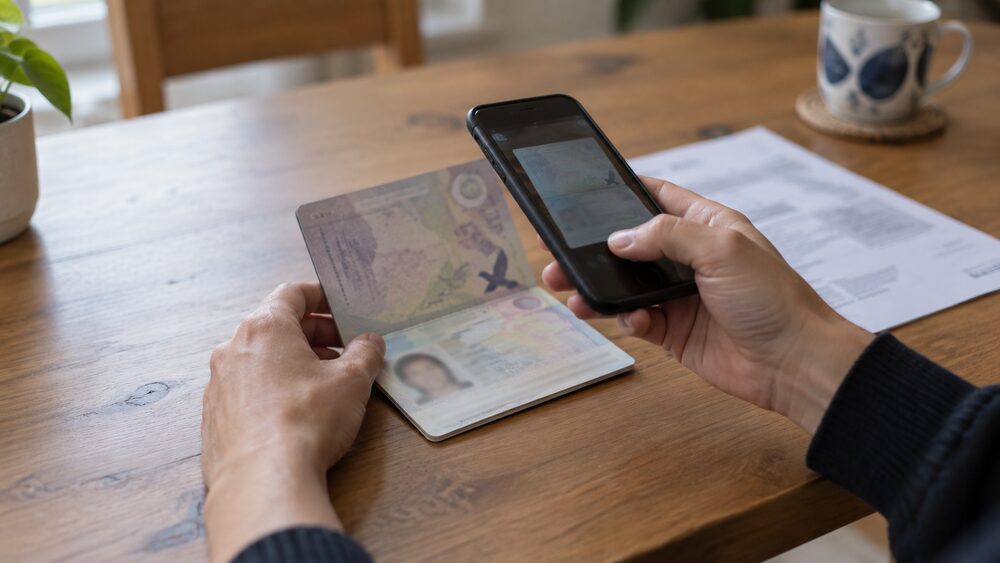
Opening a current account is something most UK banks let you do online, in an app, over the phone, in a branch, and in some cases by post1. What you need is proof of who you are and, usually, proof of where you live. Most banks ask for a driving licence or passport to prove your identity, or a photo of these if you are applying online, often along with a selfie1. Opening an account from scratch online takes around ten minutes2.
The checks behind the application can take longer than the form itself. A savings provider such as NS&I aims to open an account in 7 to 10 working days, and longer if identity documents are needed3. For basic bank accounts, the rules set a maximum: the bank must open the account or refuse it no later than 10 business days from receiving a completed application4.
Banks can refuse to open an account, and they do not always have to give a reason5. If that happens there are alternatives, including basic bank accounts, credit unions and, in some cases, accounts opened with help from a bank's specialist teams. This page walks through each way of applying, the documents that count, what happens when a bank asks for more, and what to do if you are refused.
Ways to apply: app, online, branch, phone or post
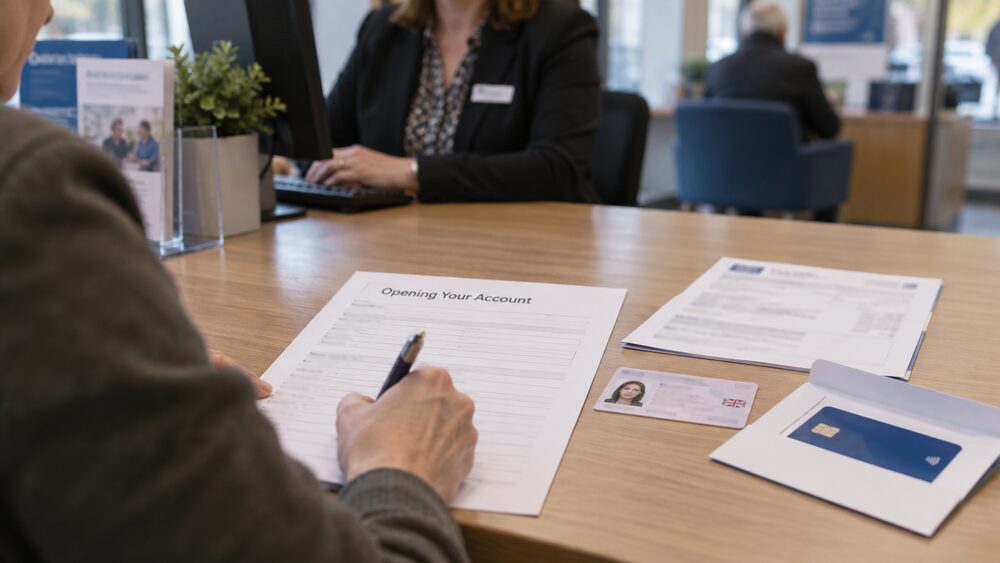
Depending on the account you have chosen, you can usually apply online, using an app, over the phone or in person1. In Scotland, as elsewhere, you usually fill in an application form in a branch, online, or sometimes over the phone, and provide proof of identity including your full name, date of birth and address8.
The regulator requires banks to publish, for each type of personal and business current account, whether it is possible to open the account without visiting a branch; where a branch visit is required, without an appointment; on the basis of documents and information supplied in electronic form; and by post9. So before you choose an account, the bank's own website has to tell you which routes are open to you, and you can check this rather than guessing.
Not every account can be applied for directly. For basic bank accounts, you often need to apply for one of the bank's other accounts first, such as its standard current account, and the basic account is offered if that application is not suitable. You can usually apply online, by phone or in a branch10. Some banks work this way in practice: Barclays asks you to book an appointment at a branch or Barclays Local to discuss alternative ID and proof of address for its Basic Current Account, and you can start in the Barclays app but must first apply for the Barclays Bank Account, with the basic account offered if you are not eligible. NatWest's Foundation Account can be applied for in branch, online, through the mobile app or by phone, but you cannot apply for it directly: it is offered when another application is more suitable11.
If you live abroad, some routes still exist. Lloyds allows you to open its Basic account with proof of ID and your EU address, which can be sent by mail and is returned securely once the account has been opened. For its international account, you have a call with the bank while abroad, send proof of address and ID by email, and, if approved, the account should be open within 3 to 5 working days12.
The channel you use can matter for other reasons too. Some switching offers are only available if you open the account through the app or online: HSBC states you cannot be eligible for its offer if you open the account via other channels such as branch or telephone banking12. If a perk or offer attached to an account matters to you, check which application channel it requires before you start.
Applying in an app: around ten minutes with ID and a selfie
If you are opening an account from scratch, you can open an account online in around ten minutes2. Most banks ask for a driving licence or passport to prove your identity, or a photo of these if you are applying online, often along with a selfie1. The selfie is matched against the photo on your ID as part of the bank's identity checks.
The steps after the application itself follow a familiar pattern. You register online via your bank's website, entering your personal details, answering identity verification questions, entering an activation code sent by post or text, and setting up a username and a secure password or passcode13. So even a fast application usually has a second stage before you can actually use the account.
How an app or online application usually runs, step by step.
How long the whole thing takes varies by provider. NS&I, for example, aims to open a Direct Saver account in 7 to 10 working days, and longer if identity documents are needed3. For basic bank accounts the law sets an outer limit: the account must be opened, or the application refused, no later than 10 business days from receipt of the completed application4.
Proof of identity: a valid, in-date photo ID
The starting point for identity is photo ID. You will usually need ID to prove your identity, like a driving licence, passport, recent bills or official documents14. The same documents come up when you apply for a copy of your credit report: photo ID such as a passport, driving licence or birth certificate, or bills or bank statements dated within the last three months15.
The ID needs to be valid and in date. A passport or driving licence is what most banks ask for first, but it is not the only route. Most banks will also accept other documents, such as letters from the DWP, HMRC, JobCentre Plus, your local council, a GP, a minister of religion, a social landlord, an armed services officer, a warden, a care home manager, an employer, or a college or training provider10. This matters if you do not have a passport or driving licence, or if yours has expired: the bank's first-choice document is a preference, not always a requirement.
If you cannot produce standard identification at all, some banks have routes for this. Surviving Economic Abuse notes that some banks can open a personal account in your sole name even if you do not have access to standard forms of identification6. Allied Irish Bank (AIB) is one bank named as able to do this16. These routes usually involve talking to the bank rather than applying through the standard online form, so a branch appointment or a phone call is the practical way in.
Proof of address: which documents count and how recent they must be
You usually have to show the bank two separate documents: one that proves who you are, for example your passport, and one that proves where you live, for example a recent bill. If you cannot, a letter from a responsible person such as a GP, teacher, social worker or probation officer may be accepted5.
Which documents count as proof of address varies somewhat between banks, but the same few appear on most lists:
| Document | Usually accepted if |
|---|---|
| Bank, building society or credit card statement | Issued within the last three months, including where you are a joint account holder6 |
| UK utility bill (gas, electricity, water, telephone landline) | Issued within the last three months6 |
| UK, EU or EEA mortgage statement | Issued within the last 12 months6 |
| Tenancy agreement from a local council or housing association | Issued within the last 12 months6 |
| Recent utility bill, rental contract, benefits or state pension letter | Issued within the past 12 months2 |
| Recent gas or electricity bill, or a TV licence | As proof of your address17 |
The three-month rule is the common one for statements and bills, while some documents get a longer window. A council tax bill is widely used as evidence of occupancy elsewhere in financial services, for example as accepted evidence for a property tax repayment in Scotland18, and a copy of your annual council tax bill, or a bank statement showing the payment going out dated in the last three months, is what one debt advice provider asks for when you set up a repayment plan19. Official bodies apply the same logic: the Court Funds Office asks for a copy of a bank statement or a letter from your bank dated within the last 3 months to confirm your account details20.
Credit unions, which offer current accounts as an alternative to banks, usually ask for two recent documents to prove your identity and address, and their list is broader: a passport, driving licence, student or work ID card, bus pass, birth certificate, bank statement or energy bill21. If your documents are thin on the ground, a credit union can be a realistic route, and their accounts are covered in more depth in the guide to credit unions.
If you have no proof of address at all, the page on opening a bank account without proof of address covers the routes that exist, and the guide to what ID you need goes deeper into the documents themselves.
Students, teenagers and people new to the UK
Age sets the first rules. From age 11, you can have a bank account in your own name, but you need your parents' permission to open one. From age 16, you can open a bank account without asking your parents, and you will need to show ID and proof of your address if you are 16 or over7. For basic bank accounts, you need to be at least 16, or over 18 for some banks10. The guide to children's and teenagers' bank accounts covers these accounts in full.
Student bank accounts have their own conditions. HSBC states you need to be a UK resident, aged 18 or over, and to provide proof of acceptance onto a further education course, a valid ID and proof of your UK address22. Before applying, it helps to have your National Insurance Number and passport details to hand, since Student Finance England asks for these, along with bank details including the 8-digit account number and 6-digit sort code, when students apply for finance23. The guide to student bank accounts explains what these accounts offer.
If you are new to the UK, banks may accept a letter from a university or employer as proof of address2. Your immigration status matters too: you can usually open a bank account if you have leave to remain or a valid visa24. Banks usually ask for ID documents, for example a passport or driving licence, alongside this24. For people who have moved to the UK from abroad and are struggling, some banks allow applications from overseas: Lloyds lets EU residents open its Basic account with proof of ID and their EU address, sent by mail and returned securely once the account is open12.
Photographing and uploading your documents
When a bank asks you to upload documents, there are two ways to do it: by taking a photo of them or by using a scanner to scan them25. That guidance comes from the FSCS claims process, but the same principle applies to bank applications: a clear photo or scan is what the bank's checking team needs.
A usable photo or scan usually means the document is flat, all four corners are visible, nothing is cropped out, and the text and your name are readable. Glare from a laminated card, a folded bill or a photo taken at an angle are the common reasons a document is rejected and has to be sent again, which slows the application down. If the bank asks for a selfie as well, it is being matched against the photo on your ID, so the same care applies: plain background, good light and a clear view of your face.
When a bank asks for more: extra checks and further documents
Banks publish a minimum list of the documents they need, but the rules allow them to go beyond it. FCA rules state that a firm may request additional information or documents in individual cases26. So a bank asking for something not on its published list is not acting unusually: the list is a minimum, not a ceiling, and the extra request usually means the standard checks could not confirm something about you.
Some situations predictably trigger extra checks:
- You have recently moved address. When applying for your credit report, people who have recently moved may be asked for further documents, such as photo ID or bills and bank statements dated within the last three months15.
- You are opening or managing an account for someone else. The bank will ask for proof of your name and address, evidence of your authority to act for the account holder, and proof of the account holder's name and address if it does not already hold it27. The guide to power of attorney and third party access covers this in full.
- You have no fixed address. Banks usually ask for ID documents, for example a passport or driving licence, and you can usually open a bank account if you have leave to remain or a valid visa24. Banks have joined a scheme to help homeless people open bank accounts11.
- Your existing account has been closed or you cannot access it. You might need to apply for a new account if your account was closed, if you cannot access your current bank account, or if you need your own account after a relationship breakdown or domestic abuse28.
- You are fleeing economic abuse. Surviving Economic Abuse sets out how to open a new bank account safely, including which documents are usually accepted and how a code word can be added so the bank will not speak to anyone unless the code word is given6. The page on banking help after domestic abuse covers this.
Banks also have specialist help for people in difficult situations. They can help victims open new accounts with limited documentation, offer a call-back option when it is safe to talk, help separate joint bank accounts, and provide a non-geographical sort code so the account is not linked to a local branch29. Some banks can open a personal account in your sole name even without standard identification16.
One trap to know about before you apply: if you have an overdraft or other debts on your current account and you open a basic bank account at the same bank, the bank may use the money in the new basic account to pay off the debts in the old overdrawn account. If you get benefits, tax credits or a state pension, MoneyHelper suggests opening the basic account at a different bank8. This is the bank's right of set-off, explained in the guide to the right of set-off. When you apply for a new account after money trouble, the bank will usually check whether you are eligible for its current account first and is likely to offer that if you are30.
Refused a bank account: reasons and alternatives
A bank or building society can refuse to open an account for you, and it does not always have to give you a reason5. For basic bank accounts, the common reasons for refusal are not agreeing to a credit check, failing the ID check, suspected unlawful or fraudulent use, or being threatening, abusive or violent towards staff. The reason is given unless the bank suspects fraud or money laundering10.
The most useful thing to know is that a refusal from one bank is not the end of the road. If you do not meet the opening criteria for a standard account, which might include a credit check, you will usually be offered a basic bank account14. Large banks have to offer a basic bank account to individuals31. These accounts, often called fee-free accounts, are designed for people who may not be able to open a standard current account, with no overdraft and no charges for being overdrawn16. They are available to customers who are legally resident in the United Kingdom and who do not have a bank account, or who are not eligible for a standard current account32.
A basic bank account is considered open even if no transactions have taken place on it, and it is still considered open if a decision has been taken to close it but the account has not yet closed32. Banks must provide information about basic bank accounts, but only if the firm offers one and you meet its eligibility criteria34.
If a poor credit history is the obstacle, a basic bank account is the standard answer: people who have had lots of debts in the past and found it difficult to open a current account should still be able to open a basic bank account because it does not involve a credit check36. The page on bank accounts with no credit check and the guide to basic bank accounts cover these in detail, and the page on what to do if you are refused a basic bank account covers the next step if even that is refused.
Beyond banks, credit unions offer current accounts and accept a broader list of identity documents21. For people with no fixed address, the page on opening a bank account with no fixed address sets out the routes, and banks have joined a scheme specifically to help homeless people open accounts11. People who are bankrupt have their own route, covered in can I open a bank account if I'm bankrupt?.
Business and sole trader accounts need proof of trading
A personal current account is not the right home for business money, and the documents are different too. If you are self-employed, it is important to set up a business bank account: this helps keep your business income and outgoings separate from your household income and outgoings37. TaxAid gives the same advice: if possible, have a separate business bank account and use it only for business expenses, and if you have expenses that are partly for business and partly private, keep a clear record of this38. If you run a limited company, you will need a separate bank account right from the start39.
The record-keeping duty starts on day one. When you start trading you must keep records40, and you will need to know what business activities you are doing or will do40. If you claim Universal Credit while self-employed, you may need to show your accounts for the last financial year or, if you have been trading for less than six months, a summary of your trading records so far17. If you trade through a limited company, the rules require you to report yourself as self-employed for Universal Credit purposes41.
The rules on what a bank must publish apply to business current accounts as well as personal ones: for each type of business current account, a firm must publish either a list of the minimum information and documents required to open an account for a new customer, or a statement that it does not publish such a list9. As with personal accounts, the bank may request additional information or documents in individual cases26. Business Debtline's guidance on business and household budgets is a free starting point for anyone mixing personal and business money for the first time37.
Where to get free help
Several free, independent services can help with opening a bank account, and none of them charges:
- MoneyHelper, the government-backed money guidance service, explains how to open, switch or close a bank account, how basic bank accounts work, and how to choose an account for a Universal Credit payment1.
- Citizens Advice covers getting a bank account, including what to do if you are refused, and its Scotland site covers the same ground for Scottish readers5.
- Shelter has specific guidance on opening and keeping a bank account if you are homeless or have no fixed address24.
- National Debtline explains safe bank accounts for people in debt, including why the bank checks your eligibility for its standard account first30.
- StepChange and Business Debtline help with debt and with separating business from household money19.
- Surviving Economic Abuse explains how to open a new account safely, which documents are accepted, and how banks can help, including code words and limited-documentation routes6.
- TaxAid advises on business accounts and record-keeping for self-employed people38.
If a complaint about a bank's handling of your application is not resolved by the bank itself, the Financial Ombudsman Service is the next step, and the guide to consumer protection in UK financial services explains how it works. The guide to how current accounts work and the current accounts section cover what comes after the account is open.
Sources41 cited
- How to open, switch or close your bank account MoneyHelper, 2026-09-25
- How to open a bank account online Which?, 2026-04-23
- Direct Saver NS&I, 2026-09-04
- The Payment Accounts Regulations 2015 legislation.gov.uk, 2015-12-15
- Getting a bank account Citizens Advice, 2026-09-25
- Opening a new bank account safely Surviving Economic Abuse, 2023-11
- Managing your own money Scope, 2025-08-18
- Getting a bank account (Scotland) Citizens Advice Scotland, 2026-09-26
- BCOBS 7.3: information needed to open a current account FCA Handbook, 2017-12-07
- Basic bank accounts MoneyHelper, 2026-09-25
- Banks join scheme to help homeless people open bank accounts Which?, 2025-11-14
- Ask an expert: I'm an ex-pat and struggling to open a UK bank account Which?, 2017-08-11
- Online banking Age UK, 2026-03-23
- Choosing a bank account for your Universal Credit payment MoneyHelper, 2026-09-25
- Your credit report Surviving Economic Abuse, 2025-02
- How banks can help Surviving Economic Abuse, 2023-11
- Evidence requirements entitledto, 2026-09-26
- How to claim a repayment of Additional Dwelling Supplement Revenue Scotland, 2025-10-02
- DPP setup StepChange, 2026-09-25
- Get court funds money when you turn 18 GOV.UK, 2026-09-27
- Credit union current accounts MoneyHelper, 2026-09-25
- Understanding your student overdraft HSBC, 2026-08-06
- SLC opens application service for 26/27 academic year GOV.UK, 2026-03-23
- How to open a bank account Shelter, 2024-07-16
- Sending documents to FSCS FSCS, 2026-09-25
- BCOBS 7 Annex 1 FCA Handbook, 2020-04-06
- Manage a bank account for someone else GOV.UK, 2023-05-02
- Keeping a bank account Shelter, 2025-01-23
- How your bank can help protect you from financial abuse Which?, 2023-06-14
- Safe bank accounts National Debtline, 2026-09-25
- Access to banking services and cash House of Commons Library, 2026-09-26
- Basic bank accounts July 2023 to June 2024 GOV.UK, 2025-11-05
- Research briefing CBP-8574 House of Commons Library, 2026-09-26
- BCOBS 4.1.1 FCA Handbook, 2026-09-26
- BCOBS 4 FCA Handbook, 2018
- Bank accounts and mental health Mental Health and Money Advice, 2018-10-19
- Your business and household budget Business Debtline, 2026-09-26
- An introduction to income and expenses TaxAid, 2026-06-05
- Universal Credit for the self-employed GOV.UK, 2024-04-09
- Check what taxes may apply to you as a sole trader GOV.UK, 2024-07-31
- Applying for a mortgage (self-employed) Which?, 2026-05-20

 MoneyHelperFree, impartial money and pensions guidance, set up by government
 FSCSProtects your money if a bank, insurer or investment firm fails
 Financial Ombudsman ServiceFree, independent help when a complaint about a firm is not put right
 Citizens AdviceFree advice on money, consumer and legal problems in England and Wales