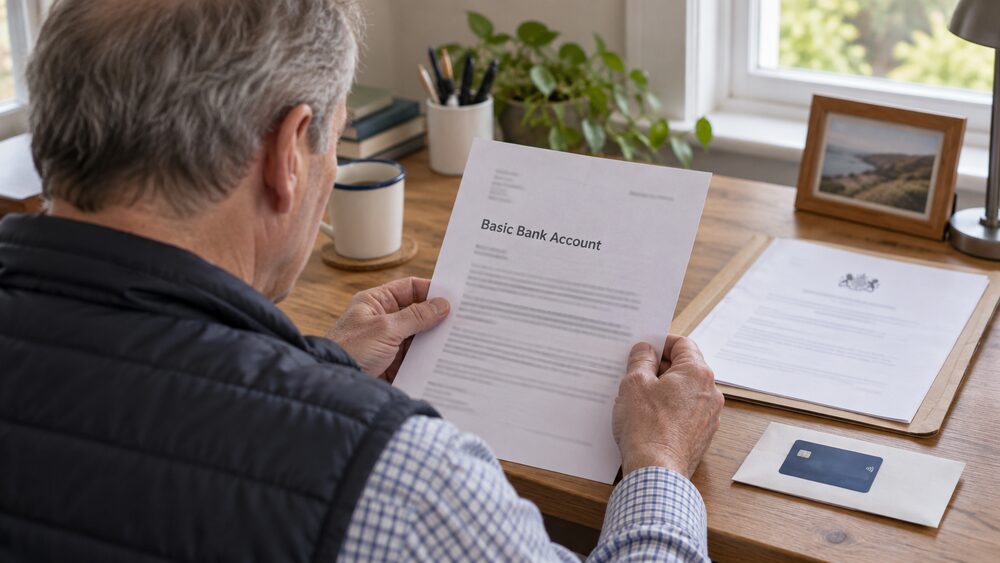
Bankruptcy does not close the door on banking. You can still have a bank account if you have been made bankrupt, but it would be a basic account1. Banks should let you open a basic bank account after you go bankrupt2, and the main banks should allow you to open one with them, providing you did not owe them a debt included in your bankruptcy3.
Bankruptcy does not close the door on banking. You can still have a bank account if you have been made bankrupt, but it would be a basic account1. Banks should let you open a basic bank account after you go bankrupt2, and the main banks should allow you to open one with them, providing you did not owe them a debt included in your bankruptcy3.
The account you are most likely to be offered is a basic bank account. It is free to set up and use, it does not offer an overdraft, and it usually needs no money to open4. All high street banks offer bankruptcy-friendly basic bank accounts2. What changes is not whether you can bank, but which account you can hold and what it will and will not do.
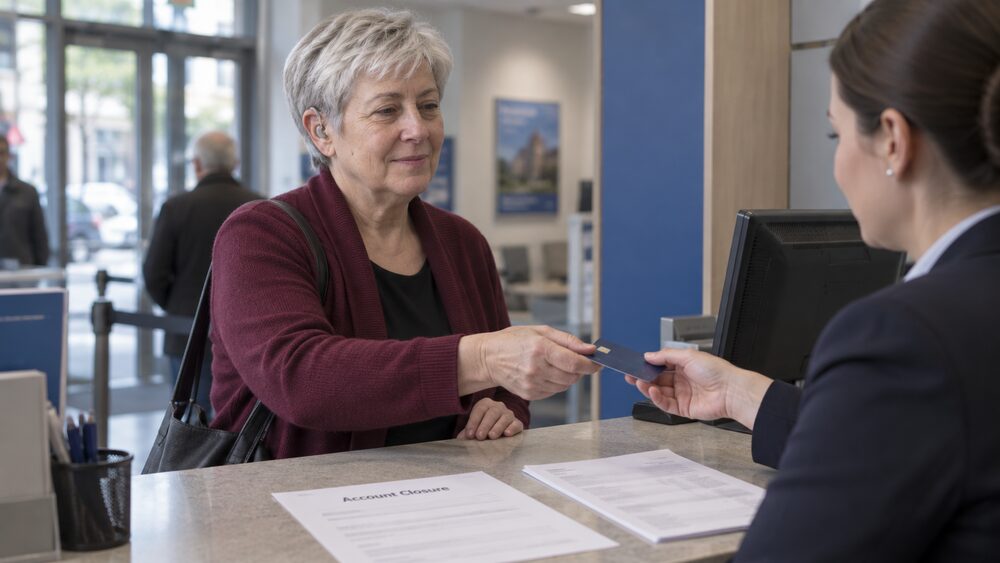
The timing matters as much as the eligibility. The effective date of your bankruptcy, the day your bankruptcy order is granted, is the point after which a new basic bank account can be opened, because accounts open before that date may be frozen6. Your existing bank account usually closes after bankruptcy, and a new account with a different bank is the usual route7.
A basic bank account is still open to you if you're bankrupt
The rule that matters is simple. If you are bankrupt or have a poor credit rating, you may be able to open a basic bank account10. Banks should let you open one after you go bankrupt2. The main banks should allow you to open a basic bank account with them, providing you did not owe them a debt included in your bankruptcy3.
That last condition is the one that catches people out. If your bankruptcy included a debt to the bank you are now asking, that bank is unlikely to take you on. The practical answer is to apply somewhere you did not owe money. Setting up an account with a bank you have no existing debt with also strengthens your position if you later have difficulty paying existing bank debts12.
Basic bank accounts exist precisely for people who may not otherwise meet the minimum requirements to open a bank account because they have no credit history or a poor credit history2. A bankruptcy fits that description, which is why the account type, rather than the bankruptcy itself, decides the outcome.
There is a timing trap. The effective date of your bankruptcy is the point after which a new basic bank account can be opened, because accounts open before this date may be frozen6. An account opened too early can find itself caught up in the bankruptcy.
Bankruptcy has serious consequences beyond banking. It will affect your credit rating and make it difficult for you to get credit in future, and it can affect your employment or future employment13. Your bank may freeze or close your bank accounts13. Knowing that in advance is part of planning the account move properly.
What a basic bank account offers and what it costs
A basic bank account is a stripped-back current account. Basic bank accounts are free to set up and use4. If you are turned down for a standard account you might be offered a basic bank account instead, and these do not charge fees or offer overdrafts5. The main advantage is that you can have an account with no costs and no opportunity for fees to arise11.
You usually do not have to have any money to put in the account to open it10. That matters if your bankruptcy has left you with nothing spare.
What you get is a place for money to arrive and leave: wages, benefits, pensions and payments out. What you do not get is borrowing. A basic bank account will not let you go overdrawn14. That is the trade-off that makes the account acceptable to a bank after bankruptcy.
| Feature | Basic bank account |
|---|---|
| Set-up and monthly cost | Free to set up and use4 |
| Minimum opening deposit | Usually none needed10 |
| Overdraft | Not offered; will not let you go overdrawn5 |
| Fees | No costs and no opportunity for fees to arise11 |
| Availability | All high street banks offer bankruptcy-friendly basic accounts2 |
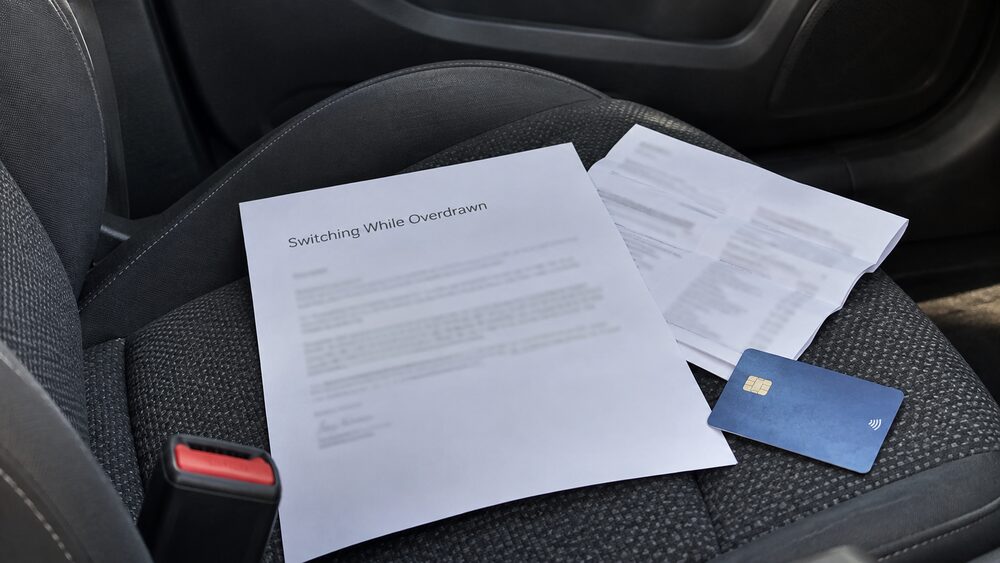
If you have an overdraft or other debts on your current account and you open a basic bank account at the same bank, the bank may use the money in the new basic account to pay off the debts in the old overdrawn account. If you get benefits, tax credits or a state pension, it is worth considering opening at a different bank6. The bank's right to take money from one account to cover a debt on another is a separate subject worth understanding before you choose where to apply.
Telling the bank you're bankrupt: conditions and limits it may set
Opening a basic account does not usually require a formal declaration of bankruptcy, because the account carries no borrowing. The disclosure duties bite when you apply to borrow.
In Scotland, if you want to borrow £2,000 or more while bankrupt, you must tell the lender that you are bankrupt9. The same guidance sets a second trigger: you must tell a lender you are bankrupt if you apply to borrow more than £2,000 on your own or with someone else, or borrow any amount and already have £1,000 of new debt since your bankruptcy15.
Insurance works differently. You only need to tell the insurer about bankruptcy when they ask, if the total you need to pay back is less than £500 or you pay your insurance all at once16.
There is one disclosure duty that applies regardless of borrowing. If you have already made a motor finance mis-selling claim, you must tell your lender about your bankruptcy17. If you enlist in the police or armed forces, you must notify the recruiting officer that you are an undischarged bankrupt18.
Will the bank run a credit check if I'm bankrupt?
Banks will credit check you, and they may be unwilling to give you an account where you could get into debt because of a recent bankruptcy7. That is the mechanism behind the whole subject: the check is not there to punish the bankruptcy, it is there to decide whether the bank is willing to carry the risk of lending to you.
A basic bank account removes that risk, because there is nothing to lend. That is why the account type is the answer rather than a workaround.
A bankruptcy stays on your record and affects your credit rating, making it difficult to get credit in future13. A debt relief order has a similar effect on access: after a DRO has been approved, your bank may stop letting you use your current bank account20. The Insolvency Service will never ask a bank to stop providing banking services in relation to a DRO20.
If you are refused, the reason is usually the account type you applied for rather than bankruptcy itself. Applying for a basic account, at a bank you do not owe money to, is the route that fits the rules.
Can a bank refuse me an account because of a fraud record?
Yes. If you are bankrupt or have a record of fraud, you will not usually be allowed to open a bank account6. A poor credit rating may lead to refusal for a current account, but you may still be able to open a basic bank account10.
A fraud marker is a flag on your record, and its consequences go beyond one application. Customers may find they cannot open a bank account, their bank account is closed and they cannot open another one, or their mortgage application is rejected21. If you believe a marker is wrong, the Financial Ombudsman Service sets out how to complain about fraud markers21.
Bankruptcy and a fraud record are treated differently in practice. Bankruptcy points you towards a basic account. A fraud record can close off banking altogether until the marker is resolved.
How to apply: ID, credit checks and where to apply
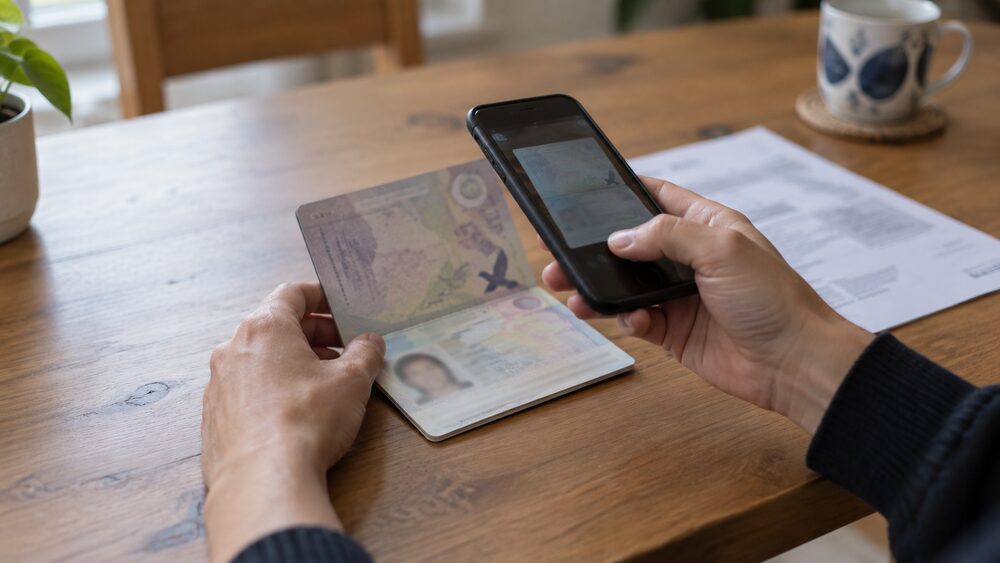
You will usually need ID to prove your identity, like a driving licence, passport, recent bills or official documents22. When opening an account, you will need to show proof of who you are and your address, and if you do not have the right documents you can ask the bank what they will accept instead23.
Most banks will ask for a driving licence or passport to prove your identity, or a photo of these if you are applying online, often with a selfie4. Other documents may be accepted, including letters from the DWP, HMRC, JobCentre+, your local council, a GP, a minister of religion, a social landlord, an armed services officer, a warden, a care home manager, an employer, a college or a training provider4.
You can complete an application form online, in person or by phone24. If you are opening a joint basic account, you can open one with someone you trust if you both qualify4.
The steps, in order:
- Check you are past the effective date of your bankruptcy, so a new account will not be frozen6.
- Choose a bank you did not owe money to in the bankruptcy3.
- Gather proof of identity and address, or ask the bank what it will accept instead23.
- Apply online, in person or by phone24.
- Move your income across, then deal with the old account.
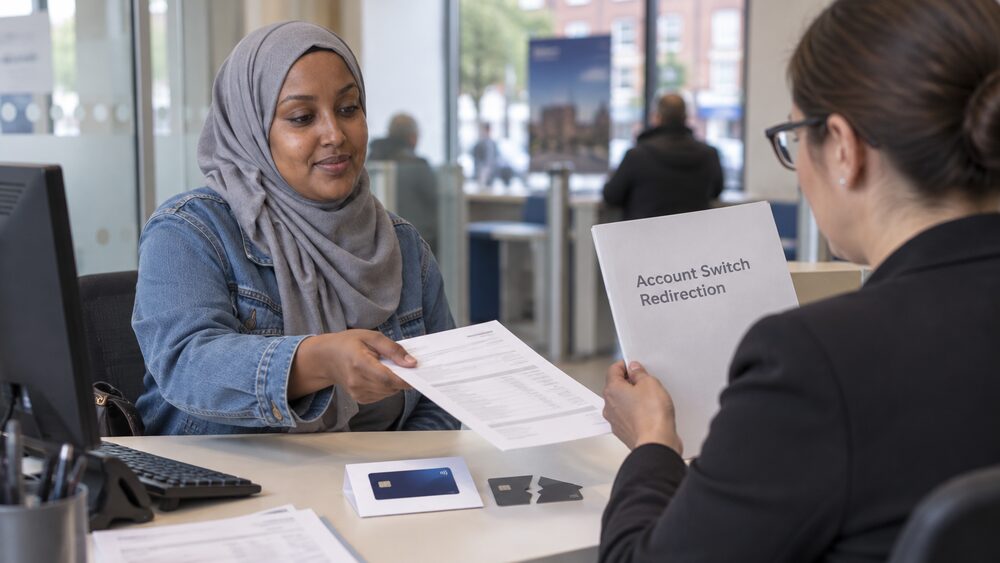
If you are switching rather than opening fresh, open a new account before closing your old one, cancel or move standing orders and direct debits, return unused cheques and cards cut into pieces, and leave enough money to cover uncleared cheques if you are transferring a balance6. The full switch process is a separate subject, and it is worth reading up on before you start.
Using an account responsibly to rebuild your credit history
A basic account is a tool for rebuilding, not just for holding money. The first duty is to stop using the accounts caught by the bankruptcy: stop using your bank and building society accounts, credit cards and similar accounts straight away25.
A joint account is one of the few ways a basic account can affect your credit file. Opening a joint account adds a financial link to the other person, so companies look at both credit histories, and a poor history might lower your chances of acceptance26. Only consider opening a joint bank account with someone you trust, as it could damage your credit score if they have poor credit, and you could be responsible if they run up debt22. If you had a joint account in the past, this could affect your credit file and make it harder to open a bank account and borrow money27.
Keeping the account in good order, with no missed payments and no attempt to go overdrawn, is what the account is for. The account itself does not build a credit history in the way a credit card does, but it keeps your banking stable while the bankruptcy works through.
If you're refused or something goes wrong: complaints and FSCS protection up to £120,000
If a bank refuses you a basic account, the first thing to check is whether you owed that bank money in the bankruptcy. If you did, applying elsewhere is the practical answer. If you did not, and you believe the refusal is wrong, you can complain to the bank and then take the complaint to the Financial Ombudsman Service.
Money in a basic bank account is protected. The Financial Services Compensation Scheme protects your money up to £120,000 for all banks, building societies and credit unions that are authorised by the Prudential Regulation Authority and the Financial Conduct Authority8. The scheme can pay back any money you hold with a failed bank or building society, up to its compensation limit of £120,000 per person28. It gives automatic protection up to £120,000 if your bank, building society or credit union fails29.
The limit is per person, per banking licence, not per account. For bank, building society and credit union failures the maximum compensation limit is £120,000 per person, per banking licence30. That means money held in several brands sharing one licence counts together towards a single £120,000 limit. If your business is a separate legal entity, such as a limited company or LLP, you could claim up to £120,000 for each account31.
Basic accounts also carry stronger closure protection than standard ones. There are rules for basic bank accounts that mean banks are more restricted in the grounds on which a basic account can be closed33. A basic bank account opened under these rules may only be closed without the consumer's consent in limited circumstances, for example if a consumer has knowingly used, or attempted to use, the account for illegal purposes, or if there has been no transaction on the account for more than 24 consecutive months34.
Does the same rule apply in Northern Ireland?
The banking rules are the same across the UK, but the insolvency process is not. The process to become bankrupt is different if you live in Scotland or Northern Ireland35. Bankruptcy in Northern Ireland is a form of insolvency available to those resident there36, and the bankruptcy deposit always has to be paid37.
In Scotland the equivalent process is sequestration, and you apply for bankruptcy through an approved money adviser or insolvency practitioner38. The borrowing disclosure rule described above, the £2,000 threshold, comes from Scottish guidance9.
For a basic bank account, the practical position is the same in all four nations: the main banks should allow you to open one, providing you did not owe them a debt included in your bankruptcy3. What differs is how you got to bankruptcy, not what you can do about banking afterwards.
Where to get free help
Free, impartial help is available. MoneyHelper explains basic bank accounts and how to open, switch or close an account4. Citizens Advice covers getting a bank account and the rules on refusal10. Step Change covers bank accounts after bankruptcy and what happens after bankruptcy2. Advice NI covers basic bank accounts and bankruptcy in Northern Ireland11. The Insolvency Service publishes guidance on becoming bankrupt and on the restrictions that follow35.
If you are homeless or have no fixed address, Shelter explains what to do about keeping a bank account27. If you have a disability or a health condition, MoneyHelper and Scope both cover making money easier to manage23.
Sources39 cited
- Bankruptcy Mental Health and Money Advice, 2025-09-08
- Bank accounts after bankruptcy StepChange, 2026-09-25
- Basic bank accounts Advice NI, 2026-09-26
- Basic bank accounts MoneyHelper, 2026-09-25
- How to open, switch or close your bank account MoneyHelper, 2026-09-25
- Getting a bank account Citizens Advice Scotland, 2026-09-26
- After bankruptcy StepChange, 2026-09-25
- FSCS protection for banks, building societies and credit unions Financial Services Compensation Scheme, 2026-09-25
- Bankruptcy information document Accountant in Bankruptcy, 2026
- Getting a bank account Citizens Advice, 2026-09-25
- Basic bank accounts Advice NI, 2026
- Your business and household budget Business Debtline, 2026-09-26
- Debt advice and information package Accountant in Bankruptcy, 2024-02-09
- Save money on your social life StepChange, 2026-09-25
- Sequestration in Scotland StepChange, 2026-09-25
- Bankruptcy and insurance StepChange, 2026-09-25
- Motor vehicle finance mis-selling: the position of the Official Receiver GOV.UK, 2026-07-08
- Restrictions following a bankruptcy order GOV.UK, 2022-05-03
- Minimal assets process StepChange, 2026-09-25
- Once you have a debt relief order GOV.UK, 2023-12-19
- Fraud markers Financial Ombudsman Service, 2026-09-26
- Choosing a bank account for your Universal Credit payment MoneyHelper, 2026-09-25
- Make your money easier to manage by yourself MoneyHelper, 2026-09-25
- Managing your own money Scope, 2025-08-18
- Making yourself bankrupt Department for the Economy, 2023-04-18
- Joint accounts MoneyHelper, 2026-09-25
- Keeping a bank account Shelter, 2025-01-23
- Deposit protection for banks Financial Services Compensation Scheme, 2026-09-25
- FSCS protected leaflet Financial Services Compensation Scheme, 2026-02
- Scams: what to look for Financial Services Compensation Scheme, 2026-05-05
- What we cover: banks, building societies and credit unions Financial Services Compensation Scheme, 2026-09-25
- Where will my money be safe? Which?, 2025-08-04
- Basic bank accounts House of Commons Library, 2026-09-26
- Basic bank accounts: July 2023 to June 2024 HM Treasury, 2025-11-05
- Becoming bankrupt GOV.UK, 2026-09-26
- Options for dealing with debt Advice NI, 2026
- Bankruptcy costs and fees StepChange, 2026-09-25
- How do I apply for bankruptcy? Accountant in Bankruptcy, 2026-07-15
- Bankruptcy court hearing StepChange, 2026-09-25


 MoneyHelperFree, impartial money and pensions guidance, set up by government
 FSCSProtects your money if a bank, insurer or investment firm fails
 Financial Ombudsman ServiceFree, independent help when a complaint about a firm is not put right
 Citizens AdviceFree advice on money, consumer and legal problems in England and Wales