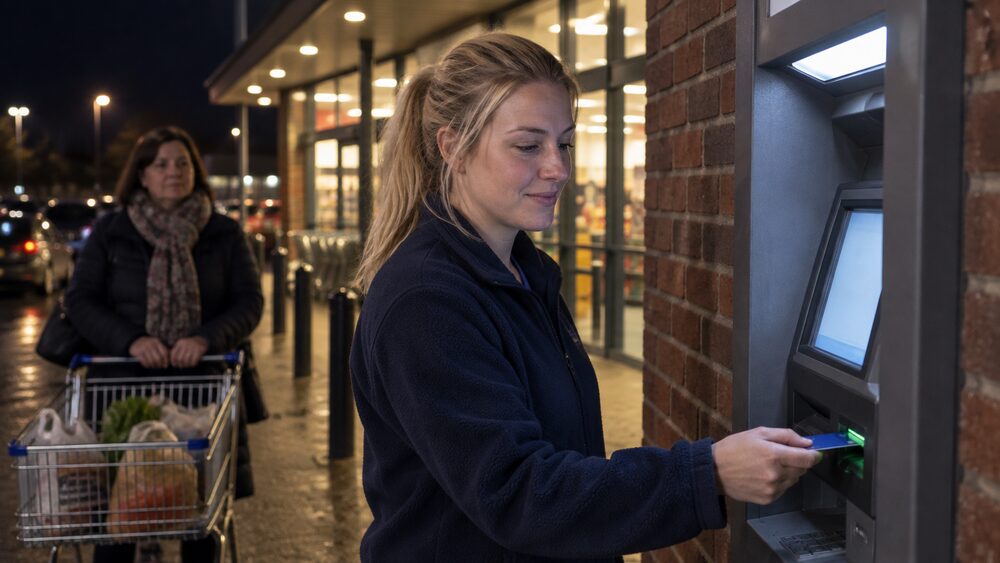
There is no single daily payment limit in UK banking. Each bank sets its own, and the figure changes depending on how you send the money. Several banks put the online and app limit at £25,000 a day, while a branch payment can go much higher: Halifax states up to £250,000 a day by Faster Payments in branch, and Virgin Money's Essential Current Account states a £100,000 maximum in branch1.
There is no single daily payment limit in UK banking. Each bank sets its own, and the figure changes depending on how you send the money. Several banks put the online and app limit at £25,000 a day, while a branch payment can go much higher: Halifax states up to £250,000 a day by Faster Payments in branch, and Virgin Money's Essential Current Account states a £100,000 maximum in branch1.
Cash is separate and usually much lower.
If a payment turns out to be a scam, the rules that protect you are the same whatever your limit is. Banks and other payment firms must reimburse victims of authorised push payment scams sent by Faster Payments up to a maximum of £85,000 per claim8.
Why banks set daily payment limits
A daily limit is a cap on how much the bank will let leave your account in a day through a given channel. It exists for two reasons: to limit the bank's exposure if someone gets into your account, and to slow down payments that a fraudster is pushing you to make. The limit is not a rule imposed by a regulator; it is a commercial decision, and Open Banking works the same way, with each bank applying its own daily payment limit13.
The limits also interact with what happens when money is not there. Banks charge a fee to cover payments where there is not enough money in your account, and if a payment takes you over an agreed overdraft limit you may pay a further fee, with some banks applying a charge for every day you are over14. That is one reason limits are set per channel rather than per account: a branch payment is checked by a person, an app payment is not.
Limits are not the same as the balance in your account. You can have £50,000 saved and still be unable to send more than £25,000 in a day through your app. The limit applies to the amount sent, not to what you hold.
Online and app payment limits: often around £25,000 a day
The most common figure for payments made in an app or through online banking is £25,000 a day. Lloyds Bank states £25,000 a day for payments in the app or online banking, Bank of Scotland states the same, and Danske Bank states £25,000 per day total payments via desktop eBanking1. Metro Bank's app states a daily payment limit of £21,0004.
Not every bank sits at that level. Nationwide states that you can generally make payments of up to £100,000 per transaction, up to a £100,000 overall daily limit, online via app, internet bank or Open Banking2. Halifax states up to £100,000 a day through Online Banking15. RBS states a daily maximum limit of £20,000 on its mobile app16.
Nationwide's own guidance gives both a £100,000 overall daily limit and a £25,000 per day figure in different places, and the two have not been reconciled2. Lloyds Bank's guidance gives both £25,000 a day online and £250,000 a day by Faster Payments in branch1. Where a bank publishes two figures, the channel is usually the difference: the lower one applies to the app, the higher one to a branch or a card reader.
Paying more than your online limit: branch payments and higher-value options
When a payment is larger than the online limit, the usual route is a branch. Danske Bank states that payments exceeding the daily limit can only be done in branch, and its eBanking guidance says the same5. Halifax states that if you want to send up to £250,000 in a day, you can do this by Faster Payments in branch6. Virgin Money's Essential Current Account states a £100,000 maximum for sending money within the UK by Faster Payments in branch7.
The trade-off is time and access. A branch payment depends on a branch being open and staff being available, which matters more in areas where branches have closed. It also means the payment is made with a person checking it, which is part of why the limit is higher.
There is a second route for very large sums: CHAPS, the same-day sterling system used for house purchases and other high-value payments. It is a separate service from Faster Payments and is priced separately by each bank.
Cash withdrawal limits: from £300 to £2,500 a day
Cash limits are lower than payment limits and vary more widely. Lloyds Bank states cash machines or cashback up to £8001. Starling allows up to six cash withdrawals per day, with a daily limit of £300, regardless of the currency being withdrawn, and First Direct has a daily cash withdrawal limit of £500 or the foreign currency equivalent18.
Savings accounts often allow more, but through a branch rather than a machine. Notice 90 Cash ISA, Access-One Saver and Regular Saver Issue 1 each state that cash withdrawals and closures are limited to £2,500 per day19. Nationwide savings wallet accounts allow up to £500 each day when withdrawing from a Nationwide cash machine22.
Some banks let you lower your own limit. HSBC UK states that you can reduce the amount you can withdraw each day from a cash machine by setting a limit, done in branch or over the telephone, which may help you manage your money23. Basic bank accounts can carry tighter rules: HSBC states there may be restrictions on how much you can withdraw from cash machines in a single day, and that its basic account has no chequebook or arranged overdraft facility24.
| Where the cash comes from | Typical daily limit | Source |
|---|---|---|
| Cash machine or cashback (Lloyds Bank) | Up to £800 | 1 |
| Cash machine (Starling) | £300, up to six withdrawals | 18 |
| Cash machine (First Direct) | £500, or foreign currency equivalent | 18 |
| Savings account cash withdrawal (several accounts) | £2,500 | 19 |
| Nationwide savings wallet at a Nationwide cash machine | £500 | 22 |
Limits on new payees, biometrics and younger customers
The first payment to someone new is treated more cautiously than a payment to a saved payee. At RBS, a new payee via the mobile app without biometrics registered is limited to £750, with a maximum of 5 payments totalling £750 per day, while a new or saved payee via Digital Banking using a card reader, without biometrics, has a daily limit of £20,00011. Once biometrics are registered, RBS customers can use the mobile app or Digital Banking to pay new and saved payees up to a daily limit of £20,000.00 GBP11.
The same pattern appears across RBS's own pages: customers not registered for biometrics who are paying someone new are limited to 5 payments a day and a £750 daily total12. Royal Bank Premier Reward states a maximum of 5 payments totalling £1,000 per day without a card reader, and requires the customer to be aged 16 or over25.
Age matters in other ways. Younger customers are usually offered accounts with tighter limits and no overdraft, and the account type itself sets the ceiling. If you are paying someone new for the first time, your bank will check the name you give against the account details through Confirmation of Payee before the payment goes through.
Scam protection on Faster Payments: up to £85,000
Faster Payments are near immediate electronic transfers sent directly from your bank account, and they are how most authorised push payment fraud happens: the Payment Systems Regulator states that currently the majority of APP fraud is enacted with a Faster Payment26.
The reimbursement rules that apply to those payments set a maximum of £85,000 per claim. The regulator states: "We have set the maximum level for Faster Payments at £85,000"8. The same figure appears in the policy statement confirming the requirement, which reduced the maximum that payment firms must reimburse victims of Faster Payments APP scams to £85,000 per claim9. Before that change, the maximum had been set at £415,000 per claim, in line with the Financial Ombudsman maximum, and the regulator consulted on reducing it10.
The protection has edges. It applies to UK Faster Payments only and does not apply to international transfers, debit card, credit card or crypto payments28. Claims must be made within 13 months, and the rules apply to payments sent on or after 7 October 20249.
If a bank refuses a claim, the Financial Ombudsman Service can look at complaints about scams where you were tricked into making a payment29. Free, impartial debt advice is available from National Debtline and Business Debtline if a scam has left you struggling with debts30.
Sources31 cited
- Payment limits Lloyds Bank, 2026-09-27
- Transfer limits and timescales Nationwide, 2026
- Pay someone new Bank of Scotland, 2026-09-27
- Mobile banking Metro Bank, 2026-09-25
- eBanking Danske Bank, 2026-09-25
- Pay by CHAPS Halifax, 2026-09-27
- Essential Current Account Virgin Money, 2026
- APP scams reimbursement consolidated policy statement Payment Systems Regulator, 2025-05
- Faster Payments APP scams reimbursement requirement: confirming the maximum level of reimbursement Payment Systems Regulator, 2024-10-07
- Faster Payments APP scams: changing the maximum level of reimbursement Payment Systems Regulator, 2024-09
- Send money abroad Royal Bank of Scotland, 2026-09-25
- Making payments Royal Bank of Scotland, 2026-09-25
- Open Banking Tandem, 2026
- Payday loan calculator StepChange, 2026-09-25
- Pay someone new Lloyds Bank, 2026-09-27
- RBS mobile app payment limits Royal Bank of Scotland, 2026-09-25
- Payments Danske Bank, 2026-09-25
- Spending abroad: the 4 dos and 5 don'ts Which?, 2024-07-26
- Notice 90 Cash ISA SRBS, 2026-06
- Access-One Saver SRBS, 2026-09
- Regular Saver SRBS, 2026-06
- Ways to withdraw Nationwide, 2026
- Living with dementia HSBC UK, 2026
- Choosing a bank account HSBC UK, 2026
- Premier Reward Royal Bank of Scotland, 2026-09-26
- Fraud victims who pay the wrong way could be left with nothing Which?, 2024-10-16
- Fighting authorised push payment fraud: a new reimbursement requirement Payment Systems Regulator, 2026-09-26
- What to do if you're the victim of a bank transfer app scam Which?, 2026-05-12
- Scams you've been tricked into making a payment Financial Ombudsman Service, 2026-09-27
- Dealing with fraud (Scotland) National Debtline, 2026-09-25
- Dealing with fraud Business Debtline, 2026-09-26



 MoneyHelperFree, impartial money and pensions guidance, set up by government
 FSCSProtects your money if a bank, insurer or investment firm fails
 Financial Ombudsman ServiceFree, independent help when a complaint about a firm is not put right
 Citizens AdviceFree advice on money, consumer and legal problems in England and Wales