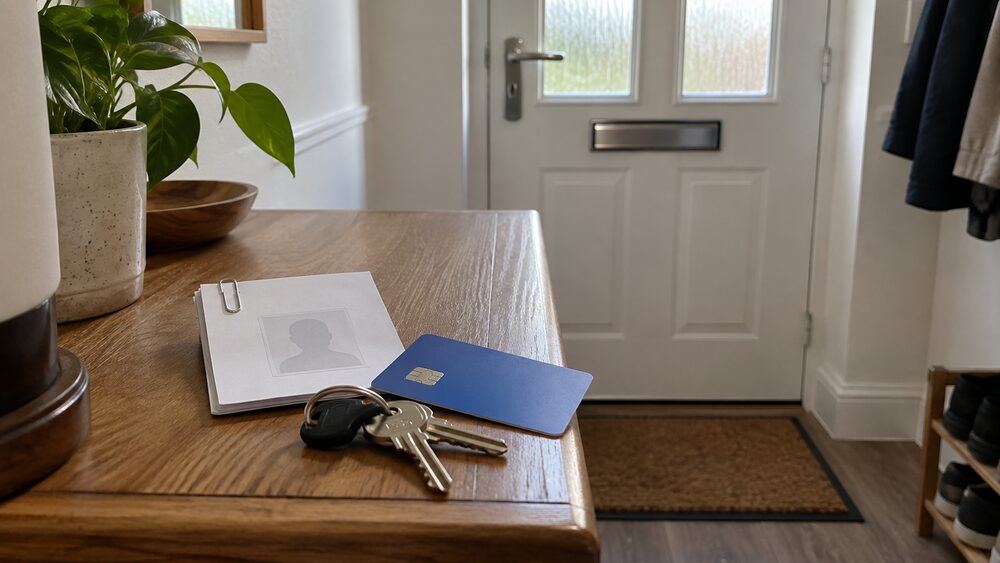
A basic bank account is a simple current account with the borrowing taken out. It lets you receive money, pay bills and withdraw cash, but it comes with no overdraft and usually no cheque book, so you cannot spend more than you have1. Basic bank accounts are free to set up and free to use for everyday banking in sterling1, and the nine largest personal current account providers in the UK are required to offer one to people who qualify2.
A basic bank account is a transactional account which is fee-free for standard operations3. As of 30 June 2024, there were 7,039,100 basic bank accounts open at the nine designated institutions2. People commonly open one because a poor credit history, bankruptcy or other money problems make a standard account hard to get, but the accounts are also used simply as a straightforward, no-cost way to manage everyday money.
What a basic bank account is and what you can do with it
A basic bank account works much like any other bank account for the everyday things. You can have wages, salary, benefits and tax credits paid directly into it, pay in cheques and cash, pay bills by direct debit, and withdraw money from cash machines5. Most basic accounts also let you set up standing orders as well as direct debits6, and you can use a debit card to pay for items in shops, online and at cash points, and check your balance at a bank, at a cash machine or online7.
Where a basic account differs is in what it leaves out. It does not offer the extras that come with many standard accounts: no overdraft, no cashback, no interest and no other rewards or benefits8. A basic account will generally have fewer features than a regular current account9. For someone who wants a plain account for receiving income and paying bills, that difference matters little; for someone who wanted an overdraft buffer or interest on their balance, it matters a lot.
Basic accounts are offered by most high street banks and some building societies10. You do not usually need any money to open one5, and you do not need to pass a credit check1. That combination, no credit check and no minimum deposit, is what makes them available to people whom standard accounts shut out, including people who are bankrupt, have a poor credit rating11 or are homeless12.
No overdraft and no cheque book
The defining feature of a basic bank account is what it does not do. It works like any bank or current account but without options to borrow money: no cheque book and no overdraft, so you cannot spend more than you have1. StepChange puts the same point plainly:
"These accounts do not have an overdraft or a cheque book. This means you cannot spend more money than you have."
Because there is no overdraft facility, you will not be charged interest on the account, and there are no fees for returned direct debits or standing orders13. A payment that cannot be met simply fails, rather than pushing the account into borrowing. Some accounts described as basic have included a small buffer zone, but no overdraft or credit facility is provided beyond that14.
The named basic accounts from the big banks follow this pattern. Lloyds Banking Group's Basic Account offers no interest, no arranged overdraft and no cheque book; Barclays' Basic Current Account includes no overdraft or cheque book but does provide text alerts and regular statements; HSBC's No Fixed Address Account offers no overdraft, credit facilities or cheque book; and Nationwide's FlexBasic has no arranged overdraft or cheque book15. A basic account does still come with a debit card and standard banking facilities16.
The practical effect is that a basic account cannot be used to borrow, even briefly. If a direct debit leaves the account short of funds, the payment may fail, and you might be charged by the company you were paying, though not by the bank for the failed direct debit itself5. If you think you need an overdraft, a basic account will not provide one; the guide to overdrafts explains how arranged borrowing on standard accounts works instead.
Fees and charges: free for everyday banking in sterling
Basic bank accounts must be fee-free for standard operations when provided in sterling2. They are free to set up and use1, and the nine largest banks and building societies have agreed to offer them with no monthly fees17. There are usually no fees at all, but charges can apply in a few situations: using a debit card overseas or in a foreign currency, ordering copies of statements, and special payments such as same-day CHAPS payments1.
Because there is no overdraft, there is no opportunity for overdraft interest or overdraft charges to arise13. That is the main advantage debt charities point to: an account with no costs and no way for fees to build up18. For someone who has been caught in a cycle of overdraft charges, this is the point of the product.
Two cautions apply. First, the fee-free guarantee covers standard operations in sterling, so anything outside that, such as foreign currency use, can be charged1. Second, some providers charge for accessing other banks' cash machines14, so it is worth checking the terms if you rely on cash machines that are not your bank's own. The guide to current account fees and charges covers the charges that apply to standard accounts for comparison.
Who can open a basic bank account
The largest banks must offer basic bank accounts to customers who are legally resident in the United Kingdom and who either do not have a bank account or are not eligible for a standard current account2. The nine largest banks and building societies have agreed to offer fee-free basic accounts to three groups: people with no bank account; people who have an account elsewhere but want to change provider; and people who have an account but are in financial difficulty and want their bank to open a new, functional account for them17.
In practice, many providers only make a basic account available to people who fail to qualify for a standard account19. So while the headline rule is broad, the experience at a particular bank may be that you are offered the basic account only after being declined for the standard one. Lloyds Banking Group's Basic Account, for example, is typically offered after being declined for another current account15.
A basic bank account is aimed at people who do not qualify for a standard current account: those with no bank account, those who have one elsewhere but want to change provider, and those in financial difficulty who want their bank to open a new, functional account for them20. Many providers only make basic accounts available to people who fail to qualify for standard accounts21. Barclays and the Co-operative Bank have a basic bank account that is available to people regardless of their credit record11. People who are bankrupt or who have a poor credit rating may be able to open a basic bank account11.
Age limits mirror standard accounts. You will usually need to be at least 16, or over 18 for some banks1. High street banks set a minimum age of 16 or 18 for standard accounts too17, and from age 16 you can open a bank account without asking your parents22. Some banks let you open a basic account jointly with someone you trust, if you both qualify1; the guide to joint bank accounts explains how joint accounts work and the credit link they create.
Basic bank accounts are not available to businesses4. Some banks provide a separate basic account for business banking if you do not qualify for their business current account, but not all banks offer one and some may charge fees7.
The nine designated providers
The legal basis for these accounts is the Payment Accounts Regulations 2015, known as the PARs. Under them, HM Treasury has designated the nine largest personal current account providers in the UK to offer basic bank accounts that comply with the regulations3. The nine designated institutions are Barclays UK, The Co-operative Bank, HSBC UK, Lloyds Banking Group (including the Halifax and Bank of Scotland brands), Nationwide Building Society, NatWest Group (including the RBS and Ulster brands), Santander UK, TSB and Virgin Money (formerly Clydesdale & Yorkshire Bank)3.
The designation is about obligation, not exclusivity. Basic bank accounts are offered by most high street banks and some building societies10, so providers beyond the nine also offer them. But only the designated nine must do so, and only they are bound by the PARs' specific rules on refusal and closure. The designated providers must continue to offer sterling services for free on a payment account with basic features23.
There is no target for how many accounts the nine must open. Designated institutions are not required to reach or exceed any particular number of basic bank accounts, and there is no upper or lower limit on the number they can open or hold2. A basic bank account is considered open even if no transactions have taken place on it, and even if a decision has been taken to close it but the account has not yet closed2. The banks report their data to the Treasury each year for publication3.
How to apply and the ID you need
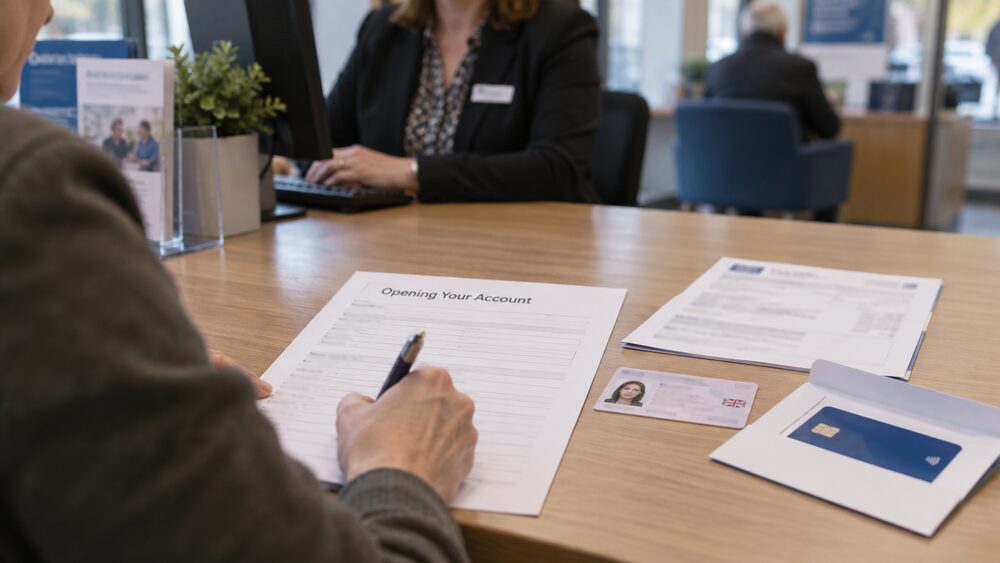
Opening a basic account follows the same process as any account: you fill in an application form, in a branch, online or sometimes over the phone, and provide proof of identity including your full name, date of birth and address5. You will usually need ID such as a driving licence, passport, recent bills or official documents16.
Most banks ask for a driving licence or passport to prove your identity, or a photo of these if you are applying online, often with a selfie. If you do not have either, banks may accept other documents, including letters from the DWP, HMRC, JobCentre Plus, a local council, a GP, a minister of religion, a social landlord, an armed services officer, a warden, a care home manager, an employer, or a college or training provider1. If you do not have the documents a bank normally asks for, ask it what it will accept instead20.
The application route varies by bank. Lloyds Banking Group's Basic Account can be applied for in-branch or over the phone, but not online15. Barclays' Basic Current Account requires an appointment at a branch or Barclays Local to discuss alternative ID and proof of address; you can start in the Barclays app, but you must first apply for the Barclays Bank Account and be offered the basic account if you are not eligible15. Lloyds also allows EU residents applying from abroad to open its Basic Account with proof of ID and an EU address, which can be sent by mail and returned securely once the account is open24.
You do not need to pass a credit check to get a basic bank account10. The bank may make a soft search of your credit file, with your permission, to check your identity, and this does not affect your credit score10. The guide to what ID you need to open a bank account covers the documents in more detail.
Opening an account without a fixed address, after bankruptcy or with past debts
No fixed address
A basic bank account is available to people who are homeless12. Some banks have special schemes for people with no fixed address and will work with a local homeless charity to help confirm identity1. In Scotland, it is possible to open a bank account without a permanent address25. HSBC's No Fixed Address Account is one example of a scheme of this kind, offered with no overdraft, credit facilities or cheque book15.
After bankruptcy
Banks are expected to let people open a basic bank account after they go bankrupt26. The main banks are expected to allow this, provided the person did not owe them a debt that was included in the bankruptcy18. Timing matters: accounts open before the effective date of the bankruptcy, the day the bankruptcy order is granted by the court, may be frozen, so a new basic account opened after that date avoids this27. In Northern Ireland, after the bankruptcy order a person may open a new bank or building society account but must tell them they are bankrupt; the bank may impose conditions and limitations28. HSBC and Nationwide must let undischarged bankrupts open a basic bank account29.
With past debts, or debts at your current bank
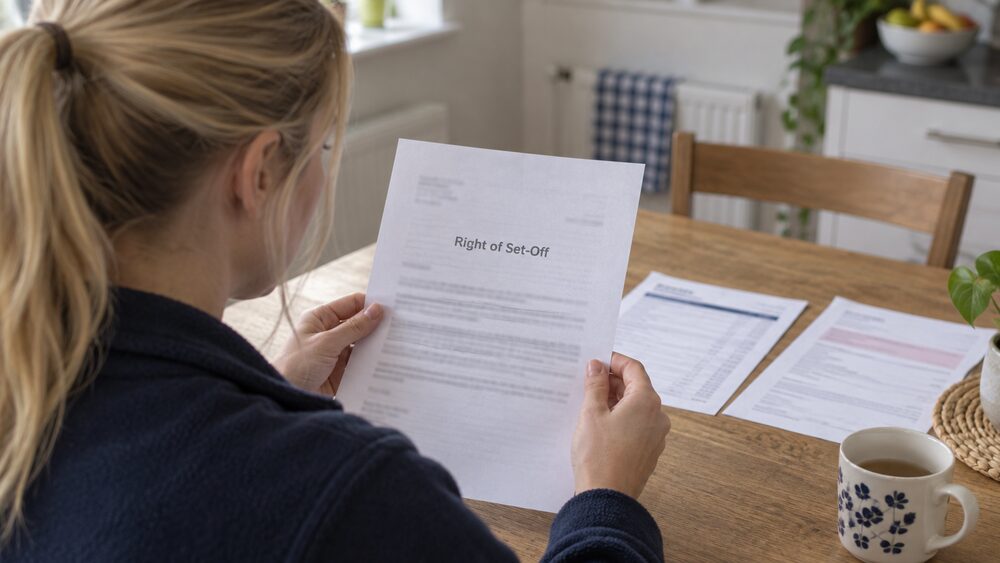
If you have an overdraft or other debts on your current account and you open a basic account at the same bank, the bank may use the money in the new account to pay off the debts in the old one. If you get benefits, tax credits or a state pension, consider opening the basic account at a different bank5. More generally, set up any new account with a bank you do not have existing debt with; this strengthens your position if you later have difficulty paying your existing bank debts30. The guide to the bank's right of set-off explains this rule in full.
If you have a record of fraud, you will not usually be allowed to open a bank account5. Fraud markers on your file can mean you cannot open an account, your account is closed and you cannot open another one, or your mortgage application is rejected31. People entering a debt solution, such as bankruptcy or an individual voluntary arrangement, often need a basic account at a new bank as part of putting their finances in order32.
Why a bank can refuse you and how to challenge it
A bank can refuse to open a basic account, but only on limited grounds. The recognised reasons are: not agreeing to the identity check, failing the identity check or an immigration check, suspected unlawful or fraudulent use, or being threatening, abusive or violent towards staff1. Under the Payment Accounts Regulations, designated institutions must refuse to open a basic bank account where it would be unlawful for them to do so2, and regulation 25 of the PARs sets out the prescribed grounds on which a designated institution must or may refuse33.
If an application is refused, the bank is expected to tell the applicant why they have been turned down27. The regulations require the institution to inform the customer, without delay, in writing and free of charge, of the reason for the refusal where it may lawfully do so2. The one exception is where the bank suspects fraud or money laundering: the reason is not given in those circumstances1. There, the institution must also tell the customer how to complain to it and to the Financial Ombudsman Service, and provide the relevant contact details2.
If the bank does not give a reason, or you believe you have been turned down unfairly, you may be able to complain to the Financial Ombudsman Service29. The ombudsman also looks at how banks behave once an account is open: in one published case study, a bank was found to have acted irresponsibly in its handling of a customer's account after a high volume of gambling transactions, where the account's own terms allowed immediate closure34. The narrow guide to what to do if you're refused a basic bank account sets out the steps in order.
When a bank can close a basic account: at least 90 days' notice
The rules restrict the grounds on which a bank can close a basic account, more tightly than for a standard account4. A basic bank account opened under the PARs may only be closed without your consent in limited circumstances: for example, if you have knowingly used, or attempted to use, the account for illegal purposes, or if there has been no transaction on the account for more than 24 consecutive months2.
How much notice the bank must give depends on when you opened the account. For accounts opened on or after 28 April 2026, banks must provide at least 90 days' notice before terminating an account, and must give a clear reason for the action4. The government amended the PARs to extend the minimum notice period of termination from two months to 90 days for contracts entered into on or after that date, and to require firms to give a sufficiently detailed and specific reason for closing a basic bank account2. For accounts opened before 28 April 2026, banks have to provide at least two months' notice, and they have no obligation to give a reason4.
MoneyHelper lists the kinds of breach that can lead to closure: opening another UK bank account, not using the account for over two years, moving abroad, fraudulent use, or abuse towards staff. If this happens, the bank will give you at least two months' notice1. The general guide to when your bank closes your account covers the wider rules for standard accounts.
Can I use a basic account at the Post Office?
Most banks offer some banking services through local post offices, alongside a branch, telephone, online or mobile banking10. The Post Office network can handle the large majority of everyday personal banking needs: a parliamentary report put it at 99% of personal banking needs, and 95% of business banking needs36.
However, not all basic bank accounts can be accessed at the Post Office5. If being able to pay in cash and withdraw at a post office matters to you, check with the bank before opening. The guide to banking at the Post Office explains which services are available and how they work.
Moving from a basic account to a standard current account
A basic account is not a dead end. If your circumstances improve and you qualify for a standard account, you can move across, and you can ask your new provider to transfer your balance and all your incoming and outgoing payments16. The Current Account Switch Service is a free service that can automatically switch your current account to another bank or building society11; the guide to how switching works covers it step by step.
A person turned down for a standard account might be offered a basic account instead; these do not charge fees or offer overdrafts37. Some people keep a basic account alongside a standard one for budgeting, and a bank can treat opening another UK bank account as a ground for closing a basic account1. The comparison page on basic vs standard accounts sets the two side by side.
Where free, impartial help is available: MoneyHelper explains basic bank accounts and how to open, switch or close a bank account1, debt charities including StepChange and National Debtline advise on safe accounts when you owe money6, and the Financial Ombudsman Service handles complaints about refusals and closures2.
Sources37 cited
- Basic bank accounts MoneyHelper, 2026-09-25
- Basic bank accounts: July 2023 to June 2024 HM Treasury, 2025-11-05
- Basic bank accounts: July 2023 to June 2024 HM Treasury, 2025-11-05
- Access to banking services and cash House of Commons Library, 2026-09-26
- Getting a bank account Citizens Advice Scotland, 2026-09-26
- Overdraft debt StepChange, 2026-09-25
- Safe bank accounts Business Debtline, 2026-09-26
- Summary report on payments and basic bank accounts Financial Services Consumer Panel, 2024-08
- Bankruptcy advice: basic bank accounts Advice NI, 2026
- Basic bank accounts with no credit check Shelter England, 2025-03-27
- Getting a bank account Citizens Advice, 2026-09-25
- How to open a bank account Shelter England, 2024-07-16
- Safe bank accounts National Debtline, 2026-09-26
- Fair and affordable finance Responsible Finance, 2026-09-26
- Banks join scheme to help homeless people open bank accounts Which?, 2025-11-14
- Choosing a bank account for your Universal Credit payment MoneyHelper, 2026-09-25
- How to open a bank account online Which?, 2026-04-23
- Basic bank accounts: savings Advice NI, 2026-09-26
- HSBC could start charging for current accounts Which?, 2020-10-30
- Make your money easier to manage by yourself MoneyHelper, 2026-09-25
- Managing your own money Scope, 2025-08-18
- Managing money with mental health problems Mental Health and Money Advice, 2018-10-19
- Payment Accounts Regulations 2015: designated current account providers legislation.gov.uk, 2022
- Ask an expert: struggling to open a UK bank account as an ex-pat Which?, 2017-08-11
- Benefits and working when homeless Shelter Scotland, 2024-03-27
- Bank accounts after bankruptcy StepChange, 2026-09-25
- Bankruptcy advice: basic bank accounts Advice NI, 2026
- Bankruptcy restrictions Northern Ireland Department for the Economy, 2019-05-02
- Safe bank accounts National Debtline, 2026-09-25
- Your business and household budget Business Debtline, 2026-09-26
- Fraud markers Financial Ombudsman Service, 2026-09-26
- Bankruptcy advice Advice NI, 2026-09-26
- Payment Accounts Regulations amendment 2025 legislation.gov.uk, 2025
- Consumer complains their bank acted irresponsibly after gambling transactions Financial Ombudsman Service, 2026-09-26
- Bank account closures briefing House of Commons Library
- Scottish Affairs Committee report on Post Office banking UK Parliament, 2022-07-11
- How to open, switch or close your bank account MoneyHelper, 2026-09-25

 MoneyHelperFree, impartial money and pensions guidance, set up by government
 FSCSProtects your money if a bank, insurer or investment firm fails
 Financial Ombudsman ServiceFree, independent help when a complaint about a firm is not put right
 Citizens AdviceFree advice on money, consumer and legal problems in England and Wales