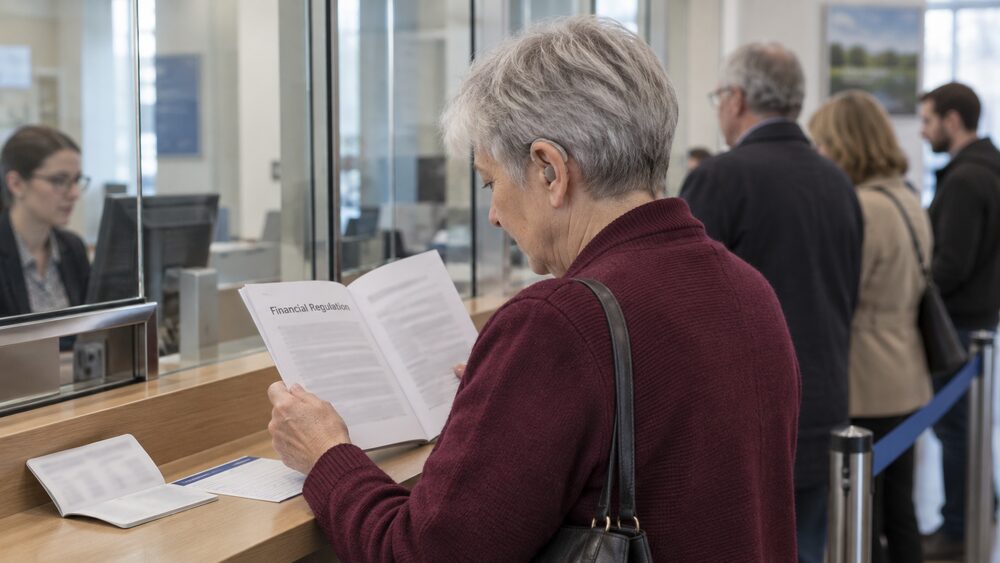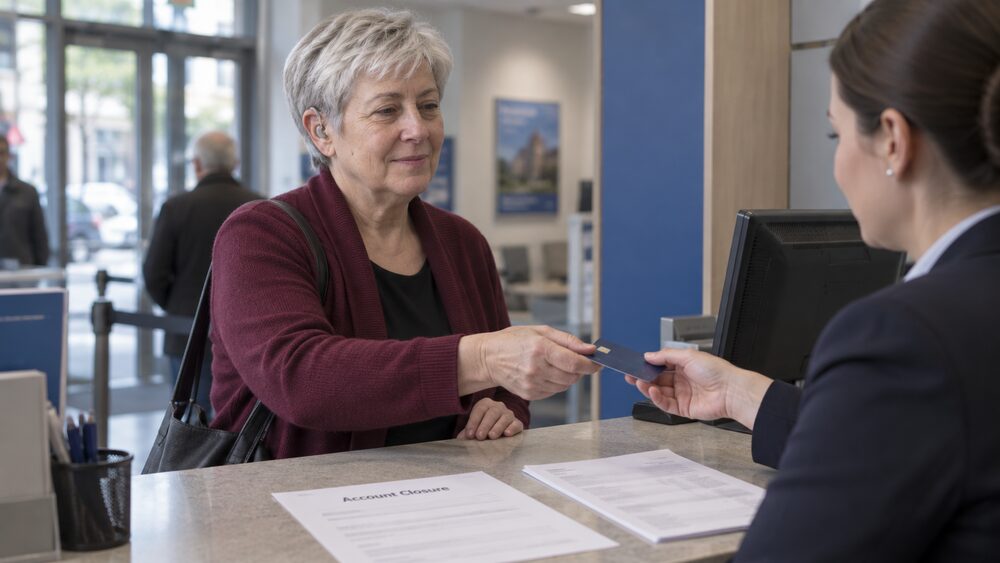
Closing a bank account is something you can do yourself at any time, and in most cases it costs nothing. Banks generally let you close an account through their app, online banking, over the phone, in a branch, and some accept instructions by post1. The practical work is not the closure itself but what surrounds it: clearing any overdraft, moving your Direct Debits and standing orders, and downloading statements before you lose access to them1.
Before a bank will close an account you generally need a nil balance, and some banks accept £5 or less2. If you are overdrawn, the overdraft has to be repaid first1. If your aim is to move banks rather than simply finish with an account, the Current Account Switch Service can do the closure for you as part of a free, automatic switch3.
Ways to close a bank account: app, online, phone, branch or post
Banks offer several routes for closing an account, and which ones are open to you depends on the bank and the account. MoneyHelper sets out the same channels for managing an account as for opening one: online, using an app, over the phone, or in person1. Citizens Advice describes the standard process in similar terms: the closure is usually handled through an application or instruction in a branch, online, or sometimes over the phone3. Some banks also accept a written instruction by post, though this is the slowest route, and each bank states which methods it accepts for its own accounts.
The steps are broadly the same whichever channel you use:
- Move any money out of the account, or leave no more than the balance the bank requires.
- Cancel or move your standing orders and Direct Debits.
- Download or print the statements you may need later.
- Tell the bank you want the account closed, and ask for confirmation in writing.
- Return or destroy your unused cheque books and cards; Citizens Advice Scotland advises cutting cards into pieces and returning unused cheques, and leaving enough money to cover any uncleared cheques if you are transferring a balance6.
App-only banks are a special case. With a digital bank, all banking is done through the app and there is no branch to visit, so closure is handled in the app or by message in the app7. If you bank with a traditional provider whose local branch has shut, phone and online routes still work, and banking hubs and Post Office counters can help with everyday banking, though the closure instruction itself goes to your bank.
How the main banks let you close an account
Each bank sets its own process, but the pattern across the market is consistent: contact the bank through any channel it offers, clear the balance, and ask for closure. Which? notes that when closing an account without switching, you generally need a nil balance, and some banks say £5 or less2.
Where this section matters most is when the bank, not you, decides the account should end. Banks have to close accounts when they cannot complete the "know your customer" checks required by money laundering regulations, or when they are concerned an account may be being used for financial crime8. They must also close or refuse accounts in some immigration-related circumstances: banks and building societies must not open a new current account for you, or add you to an existing account, if you are disqualified under the Immigration Act 2014 rules9.
When a bank closes your account, notice rules apply. For accounts opened before 28 April 2026, banks must give at least two months' notice, and they have no obligation to give a reason. For accounts opened on or after 28 April 2026, banks must provide at least 90 days' notice and a clear reason for the action5. The notice period matters because it gives you time to open a replacement account and move your payments. Shelter notes that a bank could close or freeze your account if you owe money to the bank, are bankrupt or have a debt relief order, or have not used the account for a long time7.
The terms of your particular account also count. In one Financial Ombudsman case study, the terms and conditions of a customer's account said the bank could close the account immediately for a number of specified reasons, and the bank gave 60 days' notice10. Read your account terms before assuming a long notice period applies.
Switching instead of closing: the Current Account Switch Service
If you are closing an account because you are moving to a new bank, the Current Account Switch Service (CASS) is usually the simpler route. Most banks have agreed to use the service11, and it is free12. You open the new account, then ask the new bank to switch your old account across. You provide your account and debit card details and choose a date for the switch to complete1.
CASS then handles the closure work for you: it transfers your Direct Debits and standing orders, moves your balance, redirects incoming payments such as benefits or salary, and closes your old account1. This removes the main risk of closing an account yourself, which is a missed payment after closure.
If you would rather keep the old account open, a partial switch moves your payments without closing it, and the dedicated pages on the Current Account Switch Service and partial switching cover that in detail. If you are not switching and simply closing, Citizens Advice Scotland advises opening the new account before closing the old one, cancelling standing orders and Direct Debits, and returning unused cheques and cut-up cards6. The page on payments to your old account after switching explains what happens if money arrives after closure.
Closing a joint account
A joint account can be closed at any time, but any overdraft on it must be repaid first13. Who can close it depends on the bank: some need permission from all account holders, while others let one person close it unless a dispute has been registered13. Guidance for banks supporting customers separating from an abuser states the position plainly: "Normally, both parties must agree for a joint bank account to be closed."14
If the holders cannot agree, you can ask the bank to register a dispute and "cancel the mandate", which freezes the account until everyone agrees how to split the money13. This is the standard protection where one holder might otherwise empty the account, since each account holder can withdraw money without asking the other person15.
Two further points matter for anyone leaving a joint account:
- The credit link survives closure. Closing a joint account will not remove the link to the other person from your credit file. If you have no other financial connection with them, you can write to the credit reference agencies and request a "notice of disassociation"16.
- Open the new account at a different bank. Guidance for banks warns against linking a new account to a joint account previously held with an abuser, as this may make the customer's details visible to them; opening an account with a different bank avoids that risk14.
The pages on joint bank accounts, closing a joint account and freezing a joint account after separation cover these rules in full.
Closing a savings account
Savings accounts are closed in much the same way as current accounts: you contact the provider and ask for the closure. Recognise Bank, for example, asks customers to close a personal savings account by phone, email or secure message17. NS&I gives its customers at least two months' written notice when it closes an account, and may close immediately in specified situations such as false information, illegal use, ineligibility or a breach of the agreement18.
Check the account terms before asking for closure, because some savings accounts carry notice periods or conditions on withdrawal. Where eligibility rules exist, they can affect reopening later: NS&I states that you are not eligible to open an account if you are an undischarged bankrupt or do not have legal capacity18, and the same restriction appears in its Junior ISA terms19.
One rule worth knowing is that a nil balance does not always mean an account closes itself. The Help-to-Save regulations state that there is no requirement to maintain a minimum credit balance, with the result that an account with a nil balance is not automatically closed20. Do not assume an empty savings account has gone away: ask the provider to close it if that is what you want. The savings accounts guide covers savings products generally.
The 14-day right to cancel a new account
When you open a new bank account, you have a legal right to change your mind. Under the FCA's banking conduct rules, a banking customer has the right to cancel a contract for a retail banking service, including a cash deposit ISA but excluding a cash-only lifetime ISA, within 14 calendar days4. The right starts when the contract is concluded, and exercising it means you withdraw from the contract and the contract is terminated4.
The bank must tell you about this right in good time, or immediately after you are bound, in a durable medium: the existence of the right, its duration, the conditions for exercising it, any amount you may have to pay, the consequences of not exercising it, and practical instructions including the address for notification4.
Money and charges work in a defined way on cancellation. The bank must return any sums you paid, without undue delay and within 30 calendar days of receiving your cancellation notice4. It can only require payment for the service actually provided, the amount must be in proportion to the service already provided, and it must not be such that it could be construed as a penalty. In no case may the bank require payment if it started providing the service before the cancellation period expired without your prior request4. Citizens Advice puts the general position for services cancelled in the cooling-off period in similar terms: if you paid up front or made a deposit, you are entitled to receive all of the money back, unless services were provided at your request during the period21.
If there is a dispute about when you sent the notice, the bank should treat the date you cite as the date it was dispatched, unless there is clear written evidence to the contrary4. The deadline is met if the notification is dispatched before the period expires4. The page on cancelling a new bank account within 14 days covers the mechanics in detail.
Where the right to cancel does not apply
The 14-day right is broad but not universal, and the FCA handbook sets out where it stops. There is no right to cancel a contract where the rate of interest payable on the deposit is fixed for a period of time following the conclusion of the contract, other than a cash deposit ISA4. There is also no right to cancel a contract whose price depends on fluctuations in the financial market outside the firm's control that may occur during the cancellation period4.
The equivalent rules for credit agreements have their own exclusions. Under CONC 11.1, there is no right to cancel in respect of regulated consumer credit agreements to which section 66A of the Consumer Credit Act applies, agreements secured by a legal mortgage on land, agreements cancelled under other specified regulations, and restricted-use credit agreements to finance the purchase of land or bridging loans22. For home finance, a consumer has no right to cancel a home finance transaction concluded with a firm, though they may have a right to cancel a distance contract for the provision of an intermediary's services23. Insurance contracts have their own connected-contract rules, under which the right to cancel does not apply to a connected contract which is not a distance contract24.
A firm may offer longer or additional cancellation rights voluntarily, but if it does, these should be on terms at least as favourable to you as the handbook rules, unless the differences are clearly explained4. Banks must keep records of cancellations for at least three years4.
Getting your statements after the account is closed
This is the detail people most often regret missing. MoneyHelper warns that when you close an account, you lose access to statements, so copies of anything needed later have to be kept before closure1. Statements can matter for years afterwards: tax claims, benefit disputes, immigration applications and disputes with traders often need old bank records.
Download or print what you might need before you ask for the closure, not after. Once the account is closed, online and app access typically ends with it. If you need statements later, you can ask the bank, but expect to pay an administration fee and to wait; the practical answer is to save the files first.
If you closed the account as part of settling a debt, the record on your credit file matters too. National Debtline explains that after a full and final settlement you can expect to see the account showing as closed, with the balance changed to zero25. Keep the closure confirmation and final statements alongside any settlement letter, since the credit file entry and your own records are what you will rely on if the debt is queried later. The page on bank statements explains what the entries on them mean.
A closed account cannot be reopened
Once a bank has closed your account, it cannot be reopened. If you need an account again, you apply for a new one, and the application is assessed afresh. Banks often check your credit rating when you open a current account and can refuse an application based on credit history26. Citizens Advice notes that people who are bankrupt or have a record of fraud will not usually be allowed to open a bank account, and a poor credit rating may lead to refusal for a current account3.
Fraud markers are a particular trap. The Financial Ombudsman warns of the consequences: customers may find they cannot open a bank account, their bank account is closed and they cannot open another one, or their mortgage application is rejected27. If a marker is wrong, the route is to challenge it through the bank and, if unresolved, the Financial Ombudsman.
Some closures are outside your control entirely. If your account was closed, you cannot access it, or you need your own account after a relationship breakdown or domestic abuse, you may need to apply for a new account7. After bankruptcy, your bank account usually closes and you need to open a new account with a different bank28; the same applies to the minimal asset process in Scotland, where the bank can close your account if there is a form of credit attached, like an overdraft29. Banks are required to provide a basic bank account if they fully close your account in these circumstances30, and the main banks should allow you to open a basic bank account with them provided you did not owe them a debt included in your bankruptcy31, though banks will normally stop you having an account while you are an undischarged bankrupt32. In Northern Ireland, a bankrupt person must stop using their bank and building society accounts straight away33. The pages on basic bank accounts and opening an account if you are bankrupt cover the options.
How closing an account affects your credit score
Closing a current account does not, by itself, damage your credit file. A well-run account that is closed simply shows as closed, and for a settled debt the balance changes to zero25. Lenders are more interested in how the account was run than in the fact it ended.
The joint account case is different. Closing a joint account will not remove the link to the other person from your credit file13. That link means their credit history can continue to affect how lenders assess you. The remedy is a notice of disassociation: when a joint account is closed, you can write to the credit reference agencies and request a disassociation from that individual, provided there is no other financial connection between you16.
Circumstances around closure can affect your file more than the closure itself. Bankruptcy affects your credit rating and makes it difficult to get credit in future, and your bank may freeze or close your accounts34. Overdraft debt sits behind many closures: banks can refuse a current account application based on credit history26, and an overdraft has to be repaid before an account can close1. If the overdraft is the reason you are stuck, the guides on overdrafts, overdraft charges and struggling to repay an overdraft set out the options, and free debt advice is available from charities such as StepChange and National Debtline. The page on how current accounts affect your credit file covers the whole picture.
If a bank has closed your account and you think it was handled wrongly, complain to the bank first and then to the Financial Ombudsman Service, which can look at how the closure was carried out. Free, impartial help is available from MoneyHelper on 0800 138 7777 or at moneyhelper.org.uk.
Sources34 cited
- How to open, switch or close your bank account MoneyHelper, 2026
- How to open a bank account online Which?, 2026
- Getting a bank account Citizens Advice, 2026
- BCOBS 6: Cancellation Financial Conduct Authority, 2017
- Access to banking services and closure notice rules House of Commons Library, 2026
- Getting a bank account (Scotland) Citizens Advice Scotland, 2026
- Keeping a bank account when homeless Shelter England, 2025
- Access to banking services and cash House of Commons Library, 2026
- Current account closed or refused based on immigration status GOV.UK, 2017
- Ombudsman case study: account closure after gambling transactions Financial Ombudsman Service, 2026
- HSBC could start charging for current accounts Which?, 2020
- How to switch your bank account Which?, 2026
- Joint accounts MoneyHelper, 2026
- Supporting customers separating finances from an abuser Surviving Economic Abuse, 2022
- Dementia and managing money nidirect, 2026
- Credit: your rights Information Commissioner's Office, 2026
- Personal savings accounts Recognise Bank, 2026
- Direct Saver brochure NS&I, 2024
- Junior ISA brochure NS&I, 2024
- The Help-to-Save Account Regulations 2018 legislation.gov.uk, 2018
- Cancelling a service you've arranged Citizens Advice, 2026
- CONC 11.1: The right to cancel Financial Conduct Authority, 2016
- MCOB 4.6.1: no cancellation right for home finance transactions Financial Conduct Authority, 2010
- ICOBS 7: cancellation rights Financial Conduct Authority, 2016
- Full and final settlement offers National Debtline, 2026
- Overdraft debt StepChange, 2026
- Fraud markers Financial Ombudsman Service, 2026
- Bank accounts after bankruptcy StepChange, 2026
- Minimal asset process bankruptcy StepChange, 2026
- Minimal assets process StepChange, 2026
- Basic bank accounts after bankruptcy (Northern Ireland) Advice NI, 2026
- Basic bank accounts StepChange, 2026
- Making yourself bankrupt Department for the Economy Northern Ireland, 2023
- Debt advice and information package Accountant in Bankruptcy, 2024


 MoneyHelperFree, impartial money and pensions guidance, set up by government
 FSCSProtects your money if a bank, insurer or investment firm fails
 Financial Ombudsman ServiceFree, independent help when a complaint about a firm is not put right
 Citizens AdviceFree advice on money, consumer and legal problems in England and Wales