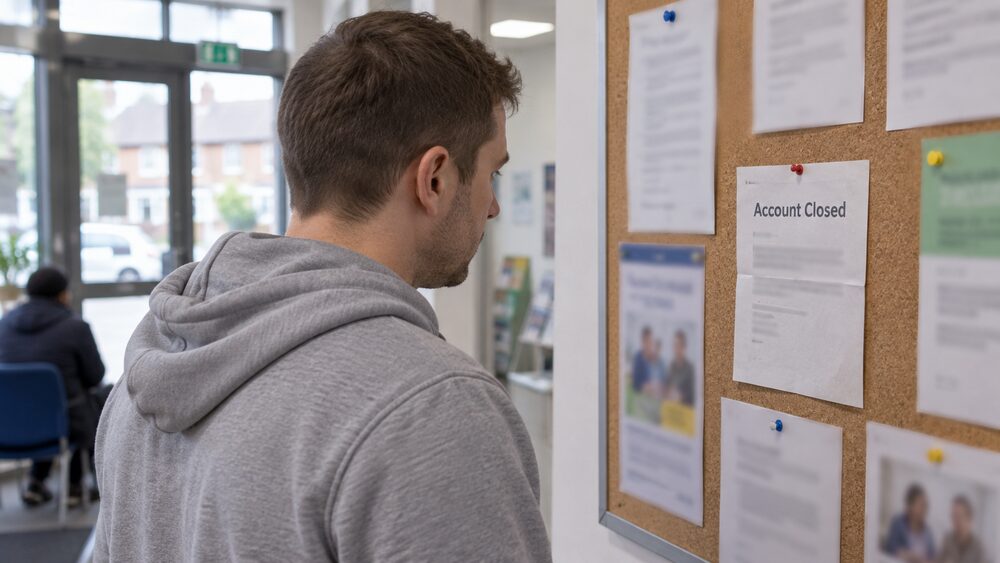
A bank can close your account because of your immigration status, but only within rules that set out how much notice you get and what you are told. Banks are not allowed to open accounts for some people because of immigration law, and they can check a Home Office list1. They must also close accounts when they cannot complete the "know your customer" checks required by money laundering regulations2.
A bank can close your account because of your immigration status, but only within rules that set out how much notice you get and what you are told. Banks are not allowed to open accounts for some people because of immigration law, and they can check a Home Office list1. They must also close accounts when they cannot complete the "know your customer" checks required by money laundering regulations2.
The notice you get depends on when you opened the account. For accounts opened on or after 28 April 2026, banks must provide at least 90 days' notice before terminating an account and provide a clear reason behind the action3. For accounts opened before that date, banks have to provide at least 2 months' notice, and they have no obligation to give a reason3.
If your account is closed, any money left in it is refunded to you, no matter how long ago the account was closed4. You can complain to the Financial Ombudsman Service if you are unhappy with how your bank handled it, and you can usually open a basic bank account elsewhere if you are legally resident in the UK5.
Why a bank may close an account over immigration status
Banks are not allowed to open accounts for some people because of immigration law, and the bank can check a Home Office list1. Separately, banks are required to close bank accounts if they cannot complete "know your customer" checks required by The Money Laundering, Terrorist Financing and Transfer of Funds (Information on the Payer) Regulations 20173. The Financial Conduct Authority says banks have to close accounts when unable to conduct "know your customer" checks required by money laundering regulations, or are concerned about accounts potentially being used for financial crime2.
These are two different triggers. The immigration rule affects who can open an account in the first place. The money laundering rule can force a closure later if a bank cannot satisfy itself about who you are or where your money comes from.
A fraud marker is a separate problem that can produce a similar outcome. Customers may find they can't open a bank account, their bank account is closed and they can't open another one, or their mortgage application is rejected7. If you think a fraud marker is wrong, the Financial Ombudsman Service handles complaints about fraud markers7.
If you have refugee status, you can usually open a bank account8. The difficulty tends to arise for people whose permission to be in the UK is temporary, pending, or not documented in a way the bank can verify.
What the bank must tell you and how much notice you get
The rules changed on 28 April 2026. For accounts opened on or after that date, banks must provide at least 90 days' notice before terminating an account and provide a clear reason behind the action3. For accounts opened before 28 April 2026, banks have to provide at least 2 months' notice, and they have no obligation to give a reason3.
Basic bank accounts carry their own protection. There are rules for basic bank accounts that mean banks are more restricted in the grounds on which a basic account can be closed3. A basic bank account opened under these rules may only be closed without the consumer's consent in limited circumstances, for example if a consumer has knowingly used, or attempted to use, the account for illegal purposes, or if there has been no transaction on the account for more than 24 consecutive months5.
If a bank refuses you a basic bank account, it should tell you why you have been turned down9. In those circumstances the institution must also tell the customer how to complain to the institution and the Financial Ombudsman Service and provide the relevant contact details5.
Individual banks set their own terms within these rules. Gatehouse Bank, for example, states it may close an easy access account by giving at least 2 months' notice, apart from in specified circumstances such as legal requirement, suspected illegal use or inactivity10. MoneyHelper says that if a bank closes a basic bank account for breaking the terms, such as opening another UK bank account, not using the account in over two years, moving abroad, fraudulent use, or abuse towards staff, it will give you at least two months' notice11.
Getting your money back after an account is closed
Money left in a closed account is refunded to you, no matter how long ago the account was closed4. That is the starting position for a straightforward closure.
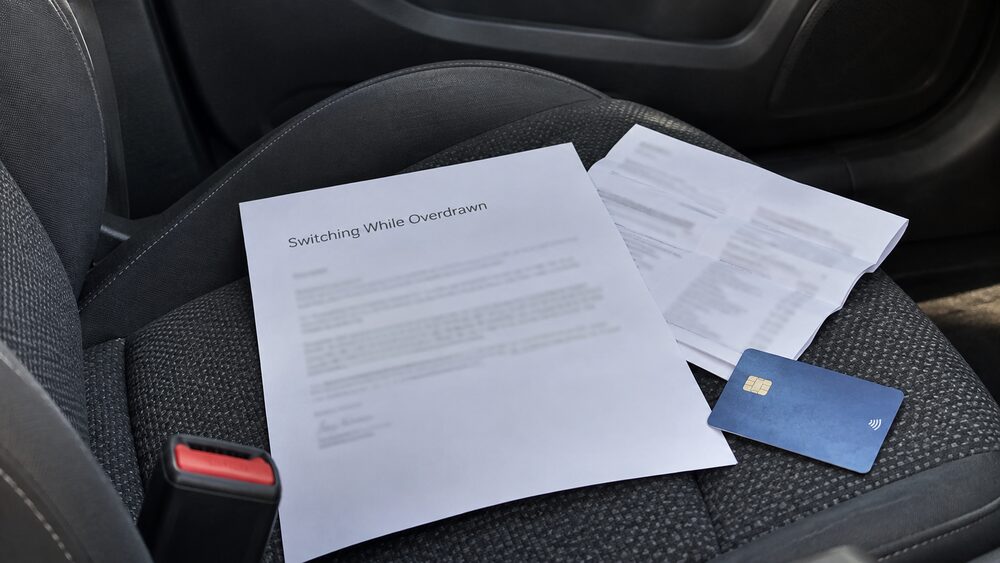
Bankruptcy changes it. If you are bankrupt, any money left in your account will be given to the official receiver12. Money in an account can be frozen, and where that money is needed to live on, withdrawing it before the bankruptcy hearing is an option to consider13. A bank can close your account if there is a form of credit attached, like an overdraft14.
Joint accounts have their own rules. If you use a joint bank account and one holder becomes bankrupt, it will be frozen. The bank may close it and refund half the money in it to the other person, or remove your name from the account12. You can close a joint account at any time, but any overdraft will need to be repaid first15.
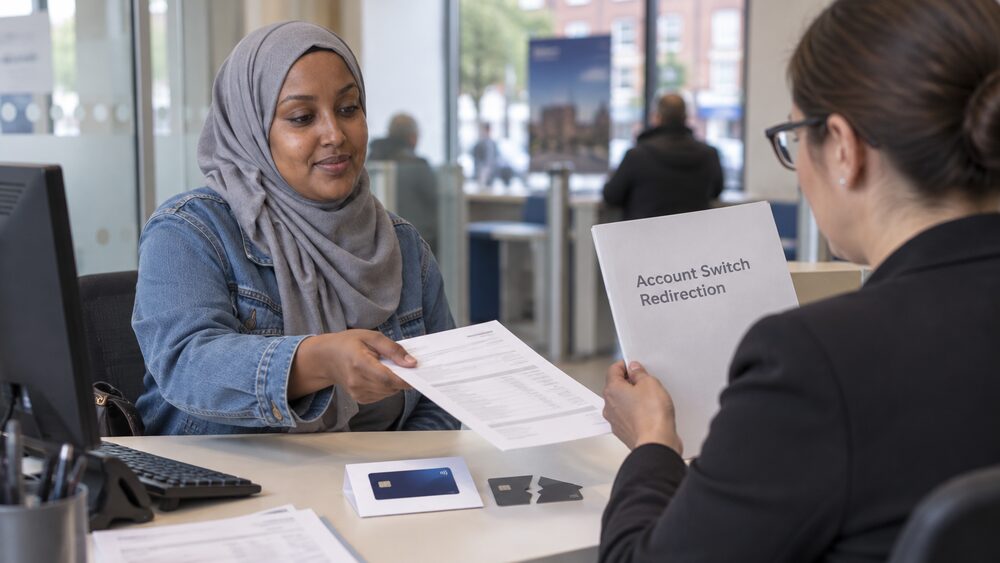
If your account is closed as part of a switch to another bank, payments reaching the old account after the Switch Date are returned to the payment originator with the reason "account closed"16. Once your old account is closed, third party providers won't be able to access it anymore17. Check your card statements and bank account balance for any unfamiliar transactions, and if you spot one, call your bank immediately18.
Complaining to the bank and the Financial Ombudsman Service
Start with the bank. If you are refused a basic bank account, the bank should tell you why you have been turned down, and it must tell you how to complain to the institution and the Financial Ombudsman Service and provide the relevant contact details9.
If you are not satisfied, you can take it further. Individuals and small businesses who feel they have been de-banked unfairly can complain to the Financial Ombudsman Service if unsatisfied with how their bank deals with their complaint2. The ombudsman helps resolve complaints about issues such as account closures, disputed transactions, IT failures, and problems with switching services19. It can also help with complaints about bank accounts and bank cards, insurance for your home, car or when you travel to another country, and problems with loans20.
There are two time limits to know. You can bring your complaint to the ombudsman if the financial business does not reply within 8 weeks or you are unhappy with its response21. You must contact the ombudsman within 6 months from getting the final response from the business6. You will need to make a complaint within 6 months from the date on your final response22.
The ombudsman received 8,900 new complaints about current accounts between April and June 202623. On branch closures, it has said it would not generally consider it unreasonable for a bank to make a commercial decision to close a branch, but it considers whether the firm acted fairly, provided appropriate support and communication, and took account of the customer's needs24. That approach shows how the ombudsman weighs a bank's commercial freedom against how it treated the customer.
Options for opening another account, including basic bank accounts
A basic bank account is the usual route if a standard current account is not available. Basic bank accounts are offered to customers who are legally resident in the United Kingdom and do not have a bank account, or who are not eligible for a standard current account5. You can apply if you have a low income or a poor credit history and think you might have trouble opening a bank account25. If you are bankrupt or have a poor credit rating, you may be able to open a basic bank account26.
There is a catch if you already owe your old bank money. If you have an overdraft or other debts on your current account and you open a basic bank account at the same bank, the bank may use the money in the new basic account to pay off debts in the old overdrawn account. Consider opening at a different bank if you get benefits, tax credit or state pension27. This is the bank's right of set-off in practice, and it is worth understanding before you apply.
Applying takes a little planning. You will often need to apply for one of the bank's other accounts first, such as their standard current account, and you can usually apply online, by phone or in a branch11. You can open a basic bank account with someone you trust if you both qualify11.
A basic bank account is considered open even if no transactions have taken place on the account, and it is also considered open if a decision has been taken to close the account but the account has not yet been closed5. That matters because the closure protections continue to apply during that period.
If you are turned down, there is a route to challenge it. The bank should tell you why you have been turned down, and it must tell you how to complain to the institution and the Financial Ombudsman Service9.
What documents can I use to prove my right to live in the UK?
You usually have to show the bank two separate documents that prove who you are and where you live, for example a passport and a recent bill27. If you do not have these, a letter from a responsible person such as a GP, teacher, social worker or probation officer may be accepted27. You will usually need ID to prove your identity, like a driving licence, passport, recent bills or official documents28.
Some providers accept specific immigration documents. Afin Bank, for example, states that if you are a foreign national it will ask for proof of your immigration status, like a copy of your Visa or BRP card29. NS&I accepts a Home Office UK biometric residence permit as identity evidence, along with a current valid full passport, a GB or Jersey photocard driving licence, and other documents30.
If you do not have ID documents, or they do not match your gender, you could ask someone from a homeless charity or LGBTQ+ organisation to go to the bank with you31. That kind of support can make the difference between an application succeeding and failing.
Tax status questions are separate from immigration status but often asked at the same time. Bank of Ireland UK requires all new personal customers, as part of account opening procedures, to answer questions to confirm whether they are US citizens and resident for tax purposes in the United States32. The Co-operative Bank requires customers to tell it within 30 days of any change to the information given about tax residence and US citizenship status33.
Will an account closure affect my credit file?
Closing a sole account does not, by itself, change your credit file. Joint accounts are different. Opening a joint account adds a financial link to the other person, so companies look at both credit histories and a poor history might lower chances of acceptance15. Closing a joint account won't remove the link to the other person from your credit file15. A "notice of disassociation" can be requested from credit reference agencies if there is no other financial connection15.
If you miss payments before or during a closure, that does show. Your credit file will show that you did not make your agreed payments, which impacts your credit score34. Banks often check your credit rating when you open a current account and can refuse an application based on credit history35.
Where to get free help and advice
Free, impartial help is available and it does not cost anything to use.
- MoneyHelper provides guidance on basic bank accounts and on managing your money if you have a health condition or disability11.
- Citizens Advice explains how to get a bank account, including in Scotland, and what to do if you are refused26.
- Shelter covers keeping a bank account when you are homeless, and says free regulated debt advice is available31.
- StepChange explains what happens to bank accounts after bankruptcy and how overdraft debt works12.
- Advice NI covers basic bank accounts and bankruptcy in Northern Ireland, and can be reached on 0800 915 4604 for guidance on who you need to talk to9.
- Independent Age offers a free, confidential benefits check through its helpline37.
If you are homeless or in insecure housing, Shelter's guidance on keeping a bank account is a practical starting point, including what to do if your ID does not match your gender31. If you are dealing with debt alongside a closure, free regulated debt advice is available31.
Sources37 cited
- Basic bank accounts with no credit check Shelter England, 2025-03-27
- Access to banking services and cash House of Commons Library, 2026-09-26
- Bank account closures and immigration status House of Commons Library, 2026-09-26
- Check if a previous energy supplier owes you money Citizens Advice, 2026-09-25
- Basic bank accounts July 2023 to June 2024 HM Treasury, 2025-11-05
- How to complain Financial Ombudsman Service, 2026-09-26
- Fraud markers Financial Ombudsman Service, 2026-09-26
- Refugees moving on from asylum support housing Shelter England, 2025-08-27
- Basic bank accounts Advice NI, 2026
- Savings terms and conditions Gatehouse Bank, 2025-12-01
- Basic bank accounts MoneyHelper, 2026-09-25
- Bank accounts after bankruptcy StepChange, 2026-09-25
- Basic bank accounts and bankruptcy Advice NI, 2026
- Minimal asset process bankruptcy StepChange, 2026-09-25
- Joint accounts MoneyHelper, 2026-09-25
- Personal current account switch Bank of Ireland UK, 2026
- Switch to Bank of Ireland Bank of Ireland UK, 2026-09-25
- Holiday fraud Take Five, 2026-09-26
- Banking and payments complaints Financial Ombudsman Service, 2026-09-25
- Consumer leaflet easy read Financial Ombudsman Service, 2026-09-26
- Financial difficulties with mortgages Financial Ombudsman Service, 2026-09-26
- How to complain Financial Ombudsman Service, 2026-09-25
- Quarterly complaints data Q1 2026-27 Financial Ombudsman Service, 2026
- Our response to HMT's call for evidence for the Access to Banking Review Financial Ombudsman Service, 2026-07
- Make your money easier to manage by yourself MoneyHelper, 2026-09-25
- Getting a bank account Citizens Advice, 2026-09-25
- Getting a bank account Citizens Advice Scotland, 2026-09-26
- Choosing a bank account for your Universal Credit payment MoneyHelper, 2026-09-25
- Getting a mortgage Afin Bank, 2025-07-18
- Evidence of identity NS&I, 2026-04-15
- Keeping a bank account Shelter England, 2025-01-23
- Foreign Account Tax Compliance Act Bank of Ireland UK, 2026-09-25
- Banking terms and conditions The Co-operative Bank, 2026-04-28
- Default notices and missed payments StepChange, 2026-09-25
- Overdraft debt StepChange, 2026-09-25
- Get help and support Consumer Council for Northern Ireland, 2026
- Helping someone to claim benefits Independent Age, 2026-09-26




 MoneyHelperFree, impartial money and pensions guidance, set up by government
 FSCSProtects your money if a bank, insurer or investment firm fails
 Financial Ombudsman ServiceFree, independent help when a complaint about a firm is not put right
 Citizens AdviceFree advice on money, consumer and legal problems in England and Wales