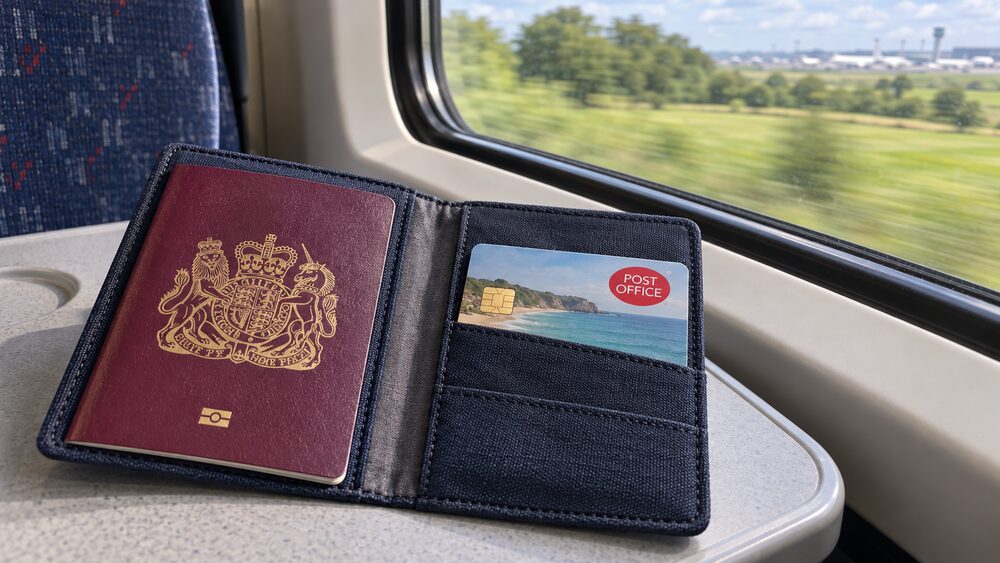
The Post Office Travel Money Card is a prepaid currency card that can hold up to 22 currencies on one card, and it works wherever the Mastercard Acceptance Mark is shown, in more than 200 countries1. It is a prepaid Mastercard rather than a credit card or a bank account, so there is no credit check and no overdraft2.
It is not a credit card and not a bank account. There is no credit check, no overdraft and no link to your current account, so you can only spend what you have put on it2. You need to be a UK resident and over 18 to get one3. You can order it online, in the app or at a Post Office branch4.
The card is aimed at people who want to fix a budget for a trip and avoid the foreign transaction fees that many debit and credit cards charge. The Post Office's own site carries today's exchange rates and the full fee schedule.
Currencies, exchange rates and locking in a rate
The card can be loaded with up to 22 currencies at any one time, and the Post Office's cash service covers over 60 currencies, so the card holds a narrower range than notes and coins5. You choose which currencies to load, and you can move funds between them later in the app or online8.
The rate is fixed when you load, not when you spend. The Post Office states that you lock in exchange rates at the time of loading, with the rate based on your total order value, and that the rate will not change after you order1. That is the central difference between this card and a debit or credit card, where the rate is set on the day the transaction settles and can move either way in between.
Rates differ between online and branch, so the same currency can cost more depending on where you load it2. If you are weighing up whether to fix a rate now or take your chances later, the trade-off is straightforward: a locked rate protects you if the pound weakens before your trip, and costs you if it strengthens. The Post Office's own guide to how exchange rates work explains what moves them1.
Fees and charges: when you pay and when you don't
The Post Office states there are no charges when you spend abroad using an available balance of a local currency supported by the card9.
Cash withdrawals are the other main cost. There is no delivery fee for the card itself, because it does not work until you activate it11.
| What you are doing | What it costs |
|---|---|
| Spending in a supported local currency | No charge9 |
| ATM withdrawal in the UK | £1.50 per transaction12 |
| ATM withdrawal abroad | Varies by destination12 |
| Card delivery | No fee11 |
| Cash home delivery under £500 | £5.996 |
Topping up with a credit card is possible, but your credit card provider might charge a cash advance fee2. The Post Office charges no cash advance fee when Post Office Travel Money is bought with a Post Office Credit Card, and it does not charge for using a personal credit or debit card, though your own bank may charge its own fees13. A debit card avoids the cash advance question entirely.
Loading, topping up and spending limits
You can load between £10 and £5,000 at a time2. The minimum top-up is £10 and the maximum is £5,000, with a maximum of three top-up transactions per day6. The card can hold a maximum balance of £10,000 at any time and a maximum annual balance of £30,0006. Where you order cash and a card top-up together, the maximum is £2,500 for cash and £2,500 for the card, and the two are charged as one transaction15.
There is no overall spending limit, but there is a maximum transaction limit of 40 per day, and a maximum of three ATM withdrawals per day2. You can hold up to three active cards in the free travel app, and all three can be added to Apple Pay16.
Friends and family can top up on your behalf at any Post Office branch, and all they need is your card number4. There is also a refer a friend scheme, which the provider's site explains in full3.
Using the card abroad: ATMs, contactless and digital wallets
The card runs on the Mastercard network, so it works wherever you see the Mastercard Acceptance Mark, which the Post Office puts at over 36 million locations worldwide in more than 200 countries6. Cash can be withdrawn at over 2 million ATMs worldwide3. Abroad, a prepaid card is used like a debit card18.
Contactless, Apple Pay and Google Pay are all supported4. The first transaction must be made with chip and PIN before you can use a digital wallet2. Your device needs near field communication technology, and Google Pay will use the currency of the country you are in, so you do not have to select a currency while paying19. The Post Office notes that security measures for payments over £45 might vary between devices19.
The app is the control centre: top up, freeze the card, swap funds between currencies, view your PIN and recent transactions12. It is free for iOS and Android12. Checking your balance at an ATM is not recommended, because the machine shows a sterling amount and your card may hold several currencies at once2. Use the app or the website instead.
Where the card may not work
Some places cannot take a payment straight away, and the card may be declined there. The Post Office lists cruise ships, planes and toll roads as examples, and says transactions on board are usually declined because the payment cannot be taken immediately12.
The card also cannot be used for a defined list of transactions: all UK gambling transactions, any online gambling including sports betting and online casinos, money transfers, adult service websites, recurring payments such as direct debits and subscriptions, and business purchases such as stock and merchandise, though business related travel is not excluded12.
Car hire deposits and hotel check-in deposits are specifically listed as uses the card is not recommended for12. A deposit is a hold on funds rather than a payment, and prepaid cards can behave differently from credit cards when a merchant needs to reserve money. A credit card is the usual tool for those situations.
Getting your money back: refunds, leftover balances and dormancy
If your trip is cancelled, the Post Office's refund guarantee covers 100% of the holiday money you bought from it, and applies to both the Travel Money Card and foreign currency20. For card funds, you must call the number on the back of the card; a Post Office branch cannot assist with refunds for Travel Money Card top-ups20. For physical currency bought online or in a branch, you go into a branch that sells foreign currency20.
Refunds are sent directly to your bank account, and payments typically take 3 to 5 working days to appear20. The same 3 to 5 working day window applies to withdrawing leftover funds to a UK bank account online2.
Lost or stolen cards and how your money is protected
If the card is lost or stolen, call 020 7937 02804. You can also log into the travel app and use the freeze card function, which stops the card working until you unfreeze it16. If you are abroad, the Post Office may charge a fee to courier a replacement card to you2.
The card is protected by chip and PIN technology, is not linked to your bank or credit card account, and can be frozen if lost or stolen2. Because it is not connected to your current account, a lost card does not expose your main bank balance. The Post Office states the card is an electronic money product, which means it is not covered by the Financial Services Compensation Scheme in the way a bank deposit is5.
General card safety advice applies: keep your card secure and in sight along with your other travel documents, especially when out and about21. If your card is lost or stolen, report it immediately22. If you have lost money or spotted an unauthorised transaction, contact your bank immediately using the phone number on the back of your card23.
Who can get one and how to apply
You must be a UK resident and over 18 to get a Post Office Travel Money Card3. There is no credit check: the issuer checks your address electronically and stores the result, but the Post Office states this will not affect your credit rating2. Because it is a prepaid product, there is no overdraft and no borrowing facility.
You can order one online, in the app or by visiting a local Post Office branch4. If you need one sooner, you can pick one up in a branch with a valid passport or UK driving licence as proof of identity3.
Loading money can be done in any Post Office branch, and you can also top up online or in the app8. If you order cash and a card top-up together, both home deliveries must go to the same address, though cash can be delivered to a branch while the card goes to your home2.
Problems and complaints
If something goes wrong with a transaction, the first step is the Post Office's own support pages, which cover top-ups, refunds and card issues11. For a lost or stolen card, the line to call is 020 7937 02804. For refunds of funds loaded on the card, you must call the number on the back of the card rather than visiting a branch20.
If you are not satisfied with how a complaint is handled, the Financial Ombudsman Service can look at complaints about financial firms. The card is an electronic money product, so the ombudsman route is available. Keep records of what you were told and when, and note that refunds typically take 3 to 5 working days to appear20.
For free, impartial help with money questions, MoneyHelper is the government-backed service. For debt problems, StepChange and other debt advice charities offer free advice.
Sources23 cited
- How do exchange rates work? Post Office, 2026
- Travel Money Card help and support Post Office, 2026
- Post Office Travel Money Card Post Office, 2026
- The right travel card for spending abroad Post Office, 2026
- Post Office Travel Money Card Post Office, 2026
- Post Office Travel Money Card Post Office, 2026
- Post Office foreign currency Post Office, 2026
- What is a prepaid currency card? Post Office, 2025
- Post Office Travel Money Card cross-border fee Post Office, 2026
- Post Office Travel Money Card Post Office, 2026
- Travel money help and support Post Office, 2026
- Post Office Travel Money Post Office, 2026
- Post Office Travel Credit Card Post Office, 2026
- Post Office Credit Card Post Office, 2026
- Post Office Travel Money Card Post Office, 2026
- Post Office Travel Money Card and Apple Pay Post Office, 2026
- Post Office Travel Money Card and Google Pay Post Office, 2026
- Travel money advice ABTA, 2026
- Holiday fraud Take Five, 2026
- Post Office Travel Money refund guarantee Post Office, 2026
- Card fraud Take Five, 2026
- Tips for reporting scams Which?, 2026
- Credit card help and support Post Office, 2026


 MoneyHelperFree, impartial money and pensions guidance, set up by government
 FSCSProtects your money if a bank, insurer or investment firm fails
 Financial Ombudsman ServiceFree, independent help when a complaint about a firm is not put right
 FCA Warning ListCheck whether a firm is authorised before you deal with it
 Citizens AdviceFree advice on money, consumer and legal problems in England and Wales