
Travel money means the cash, cards and accounts you use to pay for things outside the UK. There are four main ways to take money abroad: foreign currency in cash, your ordinary UK debit or credit card, a prepaid travel money card you load with a currency before you go, and a currency account or wallet that holds several currencies at once. Each one costs you in a different way, through the exchange rate, a percentage fee on each transaction, or a flat charge each time you spend or withdraw.
The single biggest cost for most people is card fees. MoneyHelper, the free government-backed money service, states that using a debit card abroad typically attracts a foreign exchange fee of around 3% of the transaction amount, plus a spending or cash machine charge of typically £1 to £3 each time you use the card, except for euros in the EU1. Most credit cards add a similar foreign transaction fee of around 3% on non-sterling purchases and cash withdrawals2. On small purchases these charges add up quickly: Which? calculated that spending just £5 with a card that charges fees could set you back £1.15, an additional 23%3.
The other decision that changes what you pay is made at the till or cash machine, not before you travel. When a terminal abroad asks whether you want to pay in pounds or the local currency, choosing the local currency almost always gives you a better exchange rate4. Paying in pounds, a practice called dynamic currency conversion, gives you certainty over the amount but can work out more expensive5.
Ways to take money abroad: cash, cards and currency wallets
There is no single best way to take money abroad, and most people use a mix. Each option works differently and costs you in a different place.
Cash. Exchanging pounds into foreign currency before you travel fixes the rate at the moment you buy. HSBC states that once you have exchanged the amount you want, there are no further fees to pay for using that money outside the UK5. Cash works everywhere, including places with no card machines, but it offers no protection if it is lost or stolen.
Your own debit or credit card. Ordinary UK cards work abroad wherever the card network is accepted, but they usually carry the percentage and flat fees described in the next section. Some accounts are built for travel: Virgin Money's M Plus Account states there is no charge for using the card or withdrawing cash when abroad6.
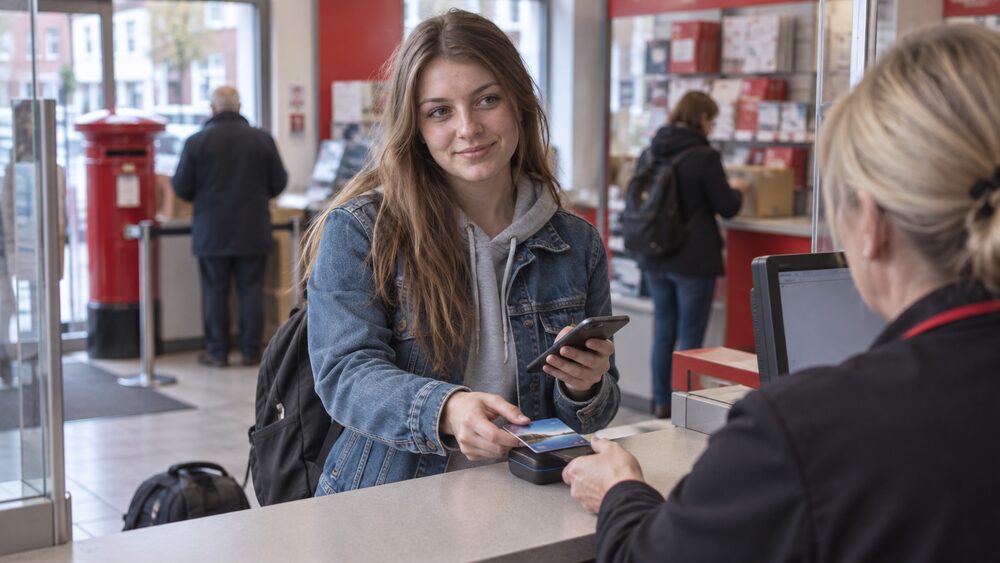
Prepaid travel money cards. A prepaid card is one you can load up with foreign currency before you travel, and abroad it can be used like a debit card4. The Post Office states you can load multiple currencies onto these cards, enjoy 0% commission and lock in the exchange rates at the time you buy7. Which? has reported on cases where customers struggled to get unused money back off a prepaid foreign currency card, so check the terms on refunds and expiry before loading a large amount8.
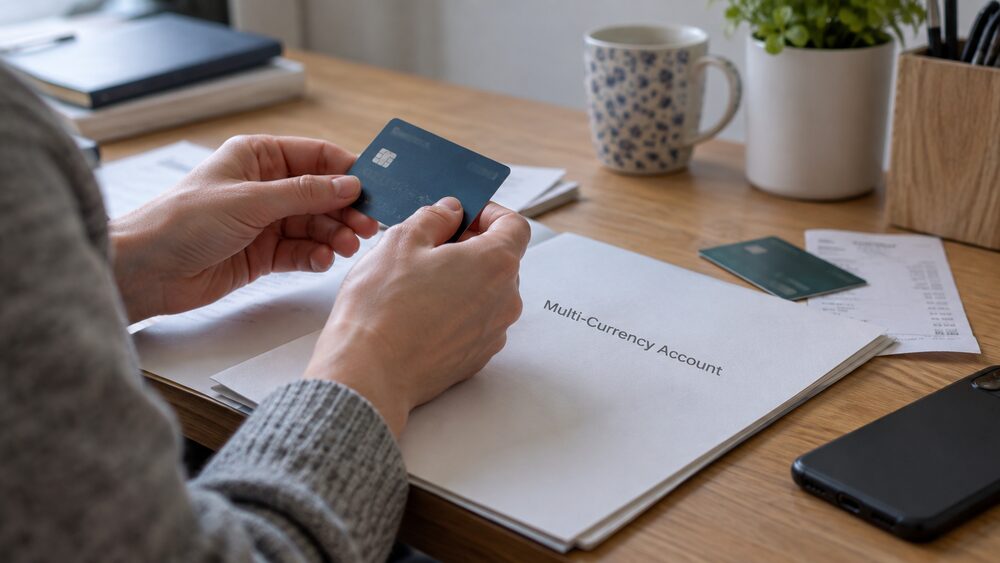
Currency accounts and wallets. A multi-currency account holds balances in several currencies. HSBC's Global Money Account lets you convert currency into one of 17 supported currencies using the HSBC Exchange Rate, which includes a currency conversion margin, and then spend without paying any additional HSBC fees9. Experian notes that travel cards of this kind typically offer the best currency exchange rates and do not charge for international transactions10. The Klarna Card charges no foreign exchange fees when spending abroad or in other currencies11. Some accounts also offer virtual cards for online spending, though these have exclusions: they cannot be used for cash withdrawals, gambling purchases, cryptocurrency exchanges or money transfers such as Western Union12.
A dedicated comparison of prepaid travel cards, the guide to multi-currency accounts and currency wallets, and the narrower choice between a prepaid travel card or debit card go into each option in more detail. For a quick view of the trade-offs, see cash or card abroad.
Card fees abroad: percentage charges and flat fees
Card fees abroad come in two shapes: a percentage of the transaction and a flat fee per withdrawal or purchase. Many providers charge both4.
For debit cards, MoneyHelper sets out the typical position: a foreign exchange fee often around 3% of the transaction amount, plus a spending or cash machine charge typically between £1 and £3 each time you use the card, except for euros in the EU1. For credit cards, Which? reports that most add a foreign transaction fee of around 3% on non-sterling purchases and cash withdrawals2, and Citizens Advice confirms that most credit card companies charge a commission when you use the card abroad13. Lloyds Bank describes the same charge on its travel cards page: most credit cards charge around 3% on each transaction made in a foreign currency, whether at home or abroad14.
| Fee type | Typical amount | Where it comes from |
|---|---|---|
| Debit card foreign exchange fee | around 3% of the transaction1 | MoneyHelper |
| Debit card cash machine charge | £1 to £3 per use, except euros in the EU1 | MoneyHelper |
| Credit card foreign transaction fee | around 3%2 | Which? |
| Credit card cash withdrawal fee | around 3%, minimum £33 | Which? |
| Small purchase example | £5 spend could cost £1.15 extra, 23%3 | Which? |
Individual providers set their own numbers within these ranges. 118 118 Money explains that if a lender charges fees for foreign usage, these are likely centred on non-sterling foreign transaction fees and possibly flat fees each time the card is used abroad, depending on the issuer's terms15. Cater Allen's banking tariff shows a debit card foreign transaction commission of 2.00% outside Europe for pound accounts16. The PayPal credit card charges a 2.5% fee when used abroad17. The Currensea card, which links to your existing bank account, charges a 0.5% flat fee per transfer18.
Cash withdrawals on a credit card are treated differently from purchases. Halifax states that on cash withdrawals abroad you might be charged a foreign exchange fee, usually a percentage of the transaction amount, in addition to a cash transaction fee19, and Lloyds Bank says that abroad you may pay both a cash transaction fee and a foreign exchange fee, plus interest at the cash transaction rate20. Interest on credit card cash withdrawals is usually charged from the day of the withdrawal, unlike purchases. Citizens Advice adds that if you withdraw cash on a credit card abroad you may be charged a foreign transaction fee on top of the usual cash advance fee13.
Even accounts sold as travel-friendly can carry charges in one place and not another. When N26 operated in the UK, it offered fee-free overseas spending at the Mastercard exchange rate with no markup, but customers were still charged a 1.7% fee on cash withdrawals abroad21. The lesson is to check both spending and withdrawal fees, not just one.
For more detail, see using a debit card abroad and the main guide to credit cards.
Pay in pounds or local currency: choose local
When you pay by card abroad, the terminal, restaurant or cash machine will often ask whether you want to be charged in pounds or in the local currency. This is not a neutral choice about how the bill is displayed. It decides who sets the exchange rate.
If you choose pounds, the merchant's terminal converts the price itself, a practice known as dynamic currency conversion. HSBC explains that paying in local currency gives you the most up-to-date exchange rates and avoids dynamic currency conversion fees, while paying in pounds gives more certainty over the amount but can sometimes work out more expensive5. HSBC's travel money guidance states that in most cases paying in local currency will be cheaper22. NBK UK advises always requesting to pay in the local currency of the country you are visiting to avoid extra charges23, and Ulster Bank's advice is the same: when paying for goods abroad with a card, always pay in local currency24.
The certainty argument for pounds is real but small. You see the exact amount in pounds on the terminal before you approve it, which helps with budgeting. The cost is that the rate used to produce that figure is set by the terminal operator rather than your card network, and it is typically worse than the rate your own provider would apply. ABTA's advice is to choose the local currency when asked, because you will get a better exchange rate4.
The same rule applies to cash machines abroad, which ask the same question before dispensing money. The full explanation is in the guide to dynamic currency conversion.
Cash machines abroad: withdraw less often
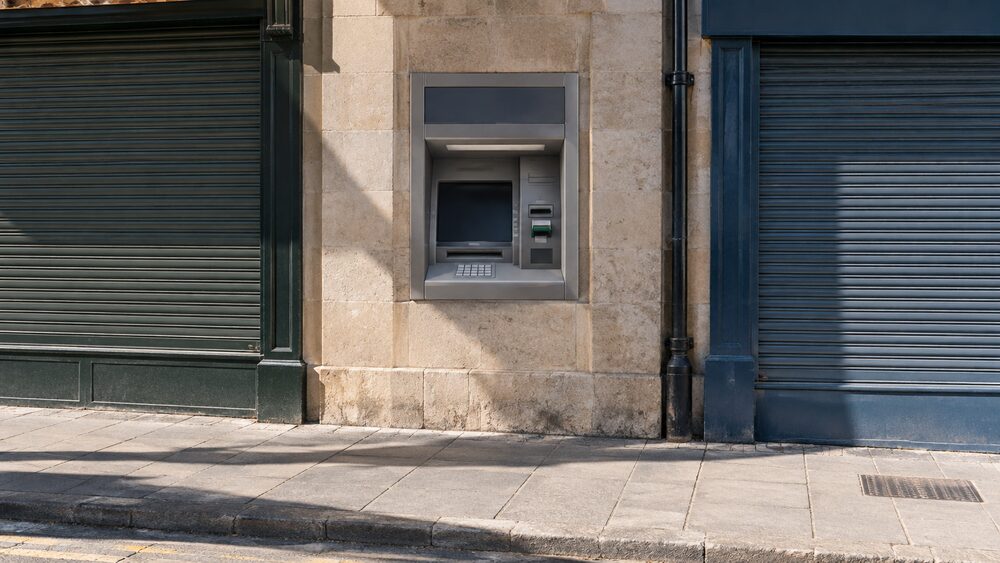
Cash machine fees abroad are charged per withdrawal, so the number of withdrawals matters as much as the amount you take out. ABTA advises avoiding taking cash out of ATMs in lots of small amounts, because you may be charged per withdrawal4.
The fixed part of the cost is what makes several small withdrawals expensive. MoneyHelper's typical range of £1 to £3 per use for debit card cash machine charges abroad1 applies each time, so several withdrawals cost more in fixed charges than one larger withdrawal of the same total amount. On credit cards the fee is around 3% with a £3 minimum3, which hits small withdrawals hardest: the £3 minimum takes a larger share of a small withdrawal than of a large one.
There is also a cost built into the cash machine network itself. The Payment Systems Regulator explains that when a cash machine operator's machine is used, the cardholder's bank pays the operator an interchange fee, which costs around 25 pence per withdrawal25. Some machine operators abroad add their own surcharge on top, disclosed on the screen before you withdraw, and these are common at machines in tourist areas, hotels and convenience stores.
The balance to strike is between fees and safety. Fewer, larger withdrawals reduce fees but mean carrying more cash, which has no protection if lost or stolen. A common approach is one or two withdrawals planned around when money is actually needed, using a machine attached to a bank rather than a standalone unit. The guide to cash machines abroad covers fees, limits and how to spot surcharge machines.
Ordering travel currency before you go
Buying currency before you travel gives you a fixed rate and removes the per-transaction fees that cards attract. ABTA recommends ordering less used currencies at least a week in advance, because providers do not always hold them in stock4. Major currencies can usually be bought much sooner.
Where you buy matters as much as when. Rates at airports and ferry terminals are typically worse than high street and online rates, because the seller knows you have no alternative left. The Post Office lets you order foreign currency online and in selected branches, and you lock in your rate when you order26. RBS similarly lets you order travel money ahead of your trip and have it delivered to your door or made ready for collection at a wide range of locations27.
Prepaid travel cards work on the same principle. A prepaid card is one that you can load up with foreign currency before you travel1. The Post Office states that with prepaid travel money cards you lock in the exchange rates at the time you buy, which means the rate is fixed before you go rather than set at the till abroad7. Which? has reported that unused funds on prepaid foreign currency cards are typically usable within 12 months of returning home, or before the card's expiry date, whichever is sooner8, so a leftover balance has a limited life once the trip is over.
The mechanics of exchange rates themselves, including how margins are built into the rate you are quoted, are covered in the guide to buying foreign currency, and what to do with notes you come home with is covered in leftover foreign currency.
Home delivery or collection: how to get your travel money
Once you have ordered currency, there are two ways to receive it: delivery to your home or collection from a branch. The Post Office model is typical: order online and in selected branches, lock in your rate when you order, then collect in any branch or choose delivery to your home26. HSBC offers the same choice for its Travel Money: order online and choose home delivery or collection from a branch with counter service9.
Collection suits people who want the currency shortly before departure or who live near a branch. Home delivery suits people ordering early or buying larger amounts, though it means cash sitting in the house and someone needing to be in to sign for it. Delivery is sometimes restricted by amount or area, and some providers charge for delivery below a minimum order, so the total cost is the rate plus any delivery charge, not the rate alone.
A practical point on timing: ordering early enough for delivery gives you a fallback if there is a problem with the order, whereas a last-minute order leaves collection as the only option. For less used currencies, ABTA's week-in-advance guidance4 is the safe margin.
Travellers cheques and 0% commission cashing
Travellers cheques are pre-printed cheques in fixed amounts that you sign when buying and sign again when spending, and they can be replaced if lost or stolen, which is why some travellers still carry them as a backup. They are far less widely accepted than they once were, but UK banks still provide one service around them: cashing.
RBS charges 0% commission for cashing travellers cheques in foreign currency28, and NatWest's terms state the same, 0% commission for cashing traveller's cheques in foreign currency29. The Post Office advertises 0% commission across its travel money service30. The Post Office also applies the 0% commission language to prepaid travel money cards7.
"0% commission" is worth reading precisely. It means no separate commission charge is added on top of the exchange rate, but the rate itself still contains the provider's margin, which is how the provider makes its money. Two providers both charging 0% commission can still offer different rates, so the figure that matters is the amount of foreign currency you receive for your pounds, not the commission label. The guide to buying foreign currency explains how to compare rates on that basis.
Card blocks and telling your bank you're travelling
A card suddenly used abroad can look to a bank's fraud systems like a stolen card, and the bank may block it while it checks. ABTA's advice is to tell your card provider you are going away, because if you do not, they could block your card as they may think it is being used fraudulently4.
Practice varies by bank, and several major providers have moved away from travel notifications. Lloyds Bank states you do not need to tell it when travelling abroad31, Bank of Scotland says the same32, and first direct states there is no need to let it know you are travelling and planning to use your debit card abroad33. For these providers, the fraud systems are designed to handle overseas spending without a prior alert.
Even where notification is not required, two things still matter. First, that the bank can reach you: a block is often resolved by a text or app message asking you to confirm the spending, which only works if your contact details are current and your phone works abroad. Second, that you have a second way to pay while the block is sorted, which is where a second card from a different provider, or some cash, avoids a holiday grinding to a halt. If a card is lost or stolen abroad, the steps are in the guide to lost or stolen cards and cash abroad.
Protection, scams and where to get help
Each way of taking money abroad carries different protection. Cash has none: if it is lost or stolen, it is gone. Cards have more. Under the FCA's banking conduct rules, information about a debit card used to withdraw foreign currency outside the UK is treated as a cash withdrawal, which affects how the transaction must be described and handled34. Money spent on a credit card between £100 and £30,000 has the legal protection described in the guide to credit cards, and the general framework for complaining and compensation is covered under consumer protection in UK financial services.
Prepaid cards sit in a weaker position. Which? has reported on customers unable to get their money out of a prepaid foreign currency card, which is why checking the terms on refunds, expiry and dormant account charges before loading matters8. MoneyHelper, the free service backed by government, publishes guidance on bank accounts and card fees and is the first port of call for an impartial view1.
Holiday fraud is a growing risk around travel money. Take Five, the national campaign against fraud, advises checking your card statements and bank account balance after returning from overseas for any unfamiliar transactions, and calling your bank immediately if you spot one35. Its guidance also covers holiday scams more broadly, including fake websites and deals. The site's section on scams and fraud covers how to report fraud and what reimbursement rules apply.
If something goes wrong with a provider and cannot be resolved with the firm, the Financial Ombudsman Service can look at complaints about most travel money products sold by UK-regulated firms, free of charge. For emergencies abroad with no money at all, there are limited routes, including consular support, described in the guide to emergency financial help abroad.
Sources35 cited
- How to open, switch or close your bank account MoneyHelper, 2026-09-25
- Should I get a credit card Which?, 2026-09-18
- Spending abroad: the dos and don'ts Which?, 2024-07-26
- Travel money tips ABTA, 2026
- Using a debit card abroad vs local currency HSBC, 2026
- M Plus Account Virgin Money, 2026-09-25
- Choosing the right travel card Post Office, 2026-04-07
- Prepaid foreign currency card complaints Which?, 2021-10-08
- Managing your money when travelling HSBC, 2026
- Getting your first credit card Experian, 2026
- Klarna launches debit card Which?, 2025-10-30
- What are virtual debit cards Which?, 2026-05-27
- The costs and charges of credit cards Citizens Advice Scotland, 2026-09-25
- Lloyds Bank travel credit cards Lloyds Bank, 2026-09-27
- Credit card charges 118 118 Money, 2026
- Banking tariff Cater Allen, 2026
- PayPal launches debit and credit card Which?, 2025-11-22
- Currensea terms and conditions Currensea, 2026
- Cash transactions on Halifax credit cards Halifax, 2026-09-27
- Cash transactions on credit cards Lloyds Bank, 2026-09-27
- N26 withdraws from the UK Which?, 2020-02-15
- Understanding travel money HSBC, 2026
- Security tips NBK UK, 2026
- Holiday scams guide Ulster Bank, 2026-09-25
- The UK's ATM network Payment Systems Regulator, 2026-09-26
- How do exchange rates work Post Office, 2026-09-14
- Travel money ordering RBS, 2026-09-26
- Current account rates and charges RBS, 2026-09-25
- Current account terms and conditions NatWest, 2026-09-25
- Post Office Travel Money Post Office, 2026-09-26
- Using debit and credit cards abroad Lloyds Bank, 2026-09-27
- Using your cards abroad Bank of Scotland, 2026-09-27
- first direct travel debit card first direct, 2026
- BCOBS 7.5.5R: foreign currency cash withdrawals FCA Handbook, 2018
- Holiday fraud protection Take Five, 2026-09-26



 MoneyHelperFree, impartial money and pensions guidance, set up by government
 FSCSProtects your money if a bank, insurer or investment firm fails
 Financial Ombudsman ServiceFree, independent help when a complaint about a firm is not put right
 FCA Warning ListCheck whether a firm is authorised before you deal with it
 Citizens AdviceFree advice on money, consumer and legal problems in England and Wales