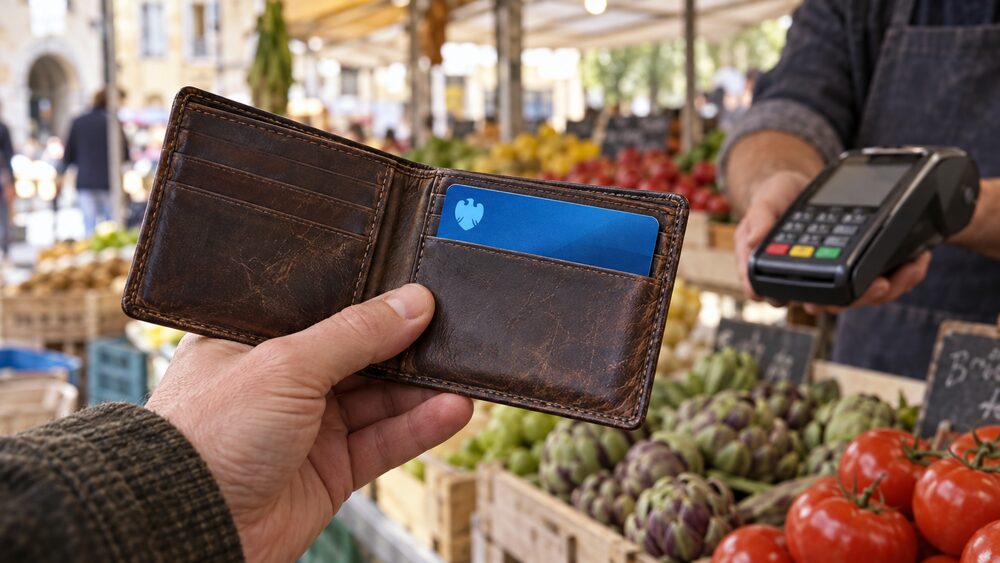
The Barclays Travel Wallet is a foreign exchange service built into the Barclays app. It lets you convert money from your Barclays GBP current account into another currency, hold it there, and then spend it using the debit card you already have. Barclays describes it as "a feature that allows you to purchase and store selected foreign currencies, with the ability to spend them using your debit card"1.
It is not a separate account with its own card, and it is not a prepaid travel card you top up at a shop. The currency sits inside your existing banking relationship, and the wallet is simply the pot the money is held in. You can hold a maximum of one wallet for each travel currency on each eligible account1.
The charge for converting your pounds into foreign currency is not shown as a separate fee. It is built into the exchange rate you are offered, and the Barclays app refers to it as the margin1. That means the cost of the service is invisible unless you compare the rate you are given with the rate you could get elsewhere. The provider's site has today's figures.
What the Barclays Travel Wallet is: foreign currency held inside the Barclays app
The Travel Wallet is one feature among many in the Barclays app, which also lets you view and download statements, transfer cash between your accounts, pay in a cheque, manage standing orders, see spending insights and controls, report a debit card lost or stolen, send a message, and manage a mortgage3. The wallet sits alongside those, not apart from them.
The distinction that matters for a consumer is between holding currency and spending it. Holding currency in the wallet means you have already converted your pounds at a rate you accepted. Spending it means the debit card draws on that currency rather than on your sterling balance, so the conversion has already happened and the rate is fixed at the point you bought it.
That is different from the way a debit card normally works abroad. Without a wallet, Visa converts payments into sterling using its exchange rate on the day it processes your transaction, which may be a different day from when you made it4. With a wallet, you have taken the exchange rate decision in advance.
It is also different from a prepaid travel card. The ABTA guidance describes a prepaid card as "one that you can load up with foreign currency before you travel"5. A Travel Wallet does the same job of holding currency in advance, but it does not come with a separate piece of plastic. It runs on the debit card already in your wallet.
Who can use a Barclays Travel Wallet
The eligible account is "any Barclays GBP personal current account, whether a sole account or joint account, or such other Barclays accounts we may agree in writing"1. The wallet is open to sole accountholders, joint accountholders and authorised users1.
For joint accounts, both holders can register the account on the Barclays app on different phones, as long as the other account holder is happy for them to do so, and both account holders receive their own debit card6. That matters for the wallet because each person is spending from the same pot of currency. MoneyHelper notes that a joint account normally allows two or more people to receive payments, pay by debit card, transfer money and manage the account, depending on the bank7. Scope's guidance is blunter about the practical risk: "Joint accounts let both account holders manage the account. Make sure you trust the person you open the joint account with"8.
You need to be 16 or over to access this product or service using the app2, and you need a current account with Barclays and a mobile phone number to use the Barclays app at all9.
If you cannot get a standard Barclays current account, the Barclays Basic Current Account is available to people who are not eligible for another current account with Barclays, do not have a UK account, do not have standard ID, or are experiencing financial challenges9. It comes with limits: overdrafts and cheque books are not available with it9. Business Debtline notes that basic accounts let you set up direct debits and standing orders10, which is relevant because those cannot run from a Travel Wallet itself.
How the Barclays Travel Wallet exchange rate and charges work
There is no separate line on your statement for the cost of converting money into a Travel Wallet. Barclays states that "our charge forms part of the exchange rate on each conversion from GBP to a Travel Currency and is referred to in the Barclays app as the 'margin'"1. The margin is the gap between the rate Barclays gives you and the rate it is working from.
That underlying rate is the Barclays reference exchange rate, which Barclays says it sets "based on the market exchange rates for the two currencies"11. For payments in another currency, the exchange rate is calculated by applying an FX margin to the Barclays Reference Exchange Rate12.
Because the charge is inside the rate, the only way to judge it is to compare the rate you are offered with a rate you can see elsewhere at the same moment. The provider's site has today's figures. The same structure appears across the market: a currency conversion charge is expressed as a percentage applied on top of a reference rate, so the cost of converting is never a separate line but always a difference in the rate itself13.
Buying currency and changing it back to pounds
Buying currency happens in the app. Barclays tells personal current account customers: "You can buy currency in your app to spend on your debit card, to help avoid un..."14. The rate is quoted, held for 90 seconds, and once you accept, the conversion is done1.
Changing currency back to pounds works the same way in reverse. Ulster Bank, part of the same group, describes the equivalent feature on its travel account: "You can exchange your currency back to pounds at any time in your mobile app or online banking"15. HSBC uses the term buy backs for the same idea: "you can exchange your foreign currency back into pounds. These transactions are often referred to as 'buy backs'"16.
Two things are worth knowing about the return leg. First, the rate you get back is unlikely to be the rate you bought at, because the margin applies in both directions. Second, if you close a currency account, Barclays says it will "convert any money in the account to GBP and transfer it to your linked sterling account"17. That is a conversion you did not choose at a rate you did not see in advance.
If you are deciding whether to convert back or hold on, the wider options are set out in leftover foreign currency: selling it back or keeping it.
Spending abroad and taking out cash
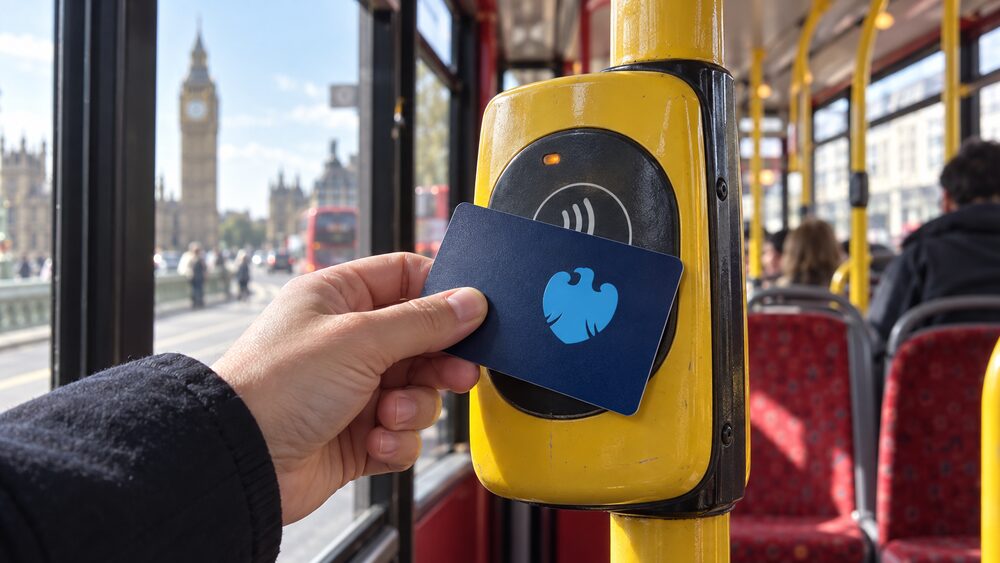
You spend from the wallet using your debit card. Barclays says you can make purchases and withdraw money from cash machines abroad18, and you do not need to tell Barclays when you are travelling4. That is a change from the older advice to notify your bank, which ABTA still gives generally: "Tell your card provider that you're going away. If you don't, they could block your card as they may think it's being used fraudulently"5. With Barclays, that step is not needed.
You can also control where the card works. The app lets you control whether card payments can be made in shops, restaurants or retailers abroad, and you can restrict card payments made when abroad14. If you have misplaced the card, a temporary freeze stops it being used14.
On cash machines, the position is layered. Barclays does not charge for using your card in any Barclays or Link ATM, and other companies may make a charge but must tell you on screen before you commit to any transaction9. For withdrawals from a Travel Wallet specifically, "other ATM providers may charge for cash withdrawals from your Travel Wallet and such charges will be deducted from your Travel Wallet"1. Ulster Bank puts the same point plainly: "some ATMs will charge their own fees for withdrawing cash. This is set by the individual ATM machine rather than by us"19.
ABTA adds a practical tip: "Avoid taking cash out of ATMs in lots of small amounts, you may get charged per withdrawal"5.
| Where you use the card | Who sets the charge | What to expect |
|---|---|---|
| Barclays or Link cash machine | Barclays | No charge from Barclays9 |
| Other cash machines abroad | The machine's operator | A charge set by the machine, deducted from the Travel Wallet1 |
| Shops, restaurants and retailers abroad | The retailer or their bank | No Barclays charge for the card payment itself14 |
When a Travel Wallet runs short of currency
A shortfall in the wallet does not automatically stop the payment. Barclays sets out two options an account holder can choose between: convert the transaction into GBP and authorise the payment to be debited from the linked account, or decline the payment1.
The default described across the group is the first of those. Ulster Bank states that if you make a payment and do not hold enough currency in your Travel account to cover the full transaction, the total payment will debit your linked current account, and you may be charged a non-sterling transaction fee20. Its spending guidance repeats the point: the full amount of the transaction will be paid from your linked current account in pounds and you may be charged a non-sterling transaction fee19. Coutts describes the same fork for its multi-currency card: the sterling current account is used to make the payment, or the payment is declined21.
The practical consequence is that a wallet running low does not protect you from a poor rate. It converts the shortfall at whatever rate applies to the linked account at that moment, and it may add a non-sterling transaction fee on top. Ulster Bank's general guidance notes that fees may apply, such as local ATM fees or bank fees if you do not hold enough foreign currency to cover a transaction22.
If a card is swallowed by a machine abroad, Barclays runs a temporary debit card replacement service in over 150 branches for emergency use24. More on that is in lost or stolen cards and cash abroad.
What the Travel Wallet cannot be used for
The clearest exclusion is payments. Barclays states that "other types of payment, such as direct debits, are not available" from a Travel Wallet1. Direct debits and standing orders are managed from your current account instead, and you can change their details in the Barclays app3. Anyone with a bank account can set up a direct debit, and it must come directly from a UK or Channel Islands bank or building society account25. You cannot use a credit card to set one up25.
The wallet is also not a general-purpose currency account for every kind of transaction. It is designed for card spending and cash withdrawals. If you want to send money abroad to another person or business, that is a separate service: Barclays lets you send and receive money online to more than 130 countries26, and you can do it through the app, Online Banking, Telephone Banking or a branch27. The app supports sending money abroad to over 35 countries3.
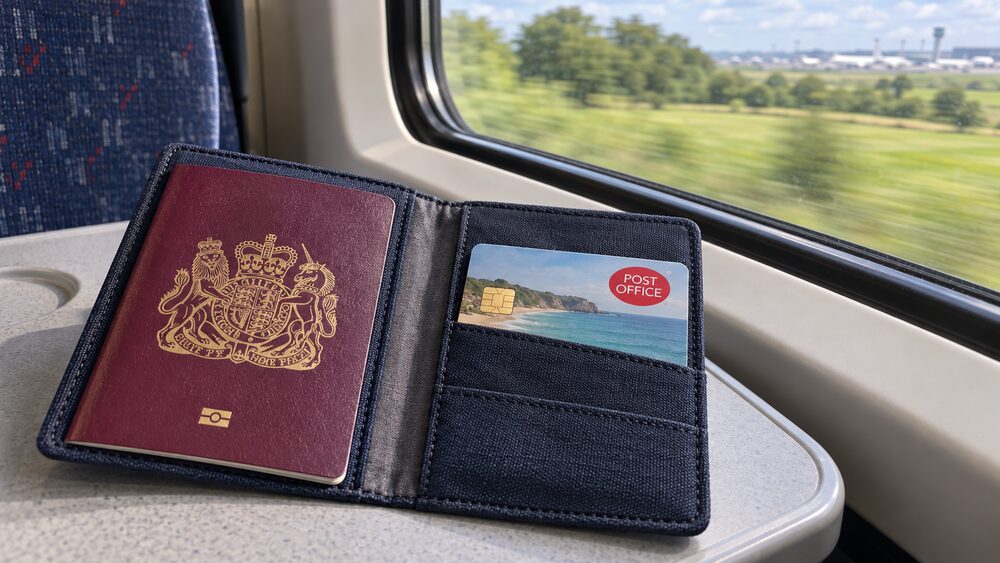
Some exclusions that apply elsewhere in the Barclays range are worth knowing because they show where the boundaries sit. Barclays Cashback Rewards is not available for Barclaycard Business, Amazon Barclaycard, Barclaycard Avios or Avios Plus28, and available cashback is for your sole use and cannot be transferred to any other person29. From 27 June 2025, you can no longer make crypto-currency transactions using a Barclaycard30. Virtual cards cannot be used for cash withdrawals, gambling purchases, cryptocurrency exchanges or money transfers31. The Post Office Travel Money Card cannot be used for UK gambling transactions, online gambling, money transfers, adult service websites, recurring payments such as direct debits and subscriptions, or business purchases32. Currensea's card cannot be used for ATM withdrawals in the UK33.
Opening a wallet and switching to Barclays
If you already hold a Barclays personal current account, the wallet is opened inside the app. If you do not, you need a current account first, and the app requires a mobile phone number9.
Switching a current account to Barclays is a separate process from opening a wallet. Barclays notes two limits on its switching service: it is not offered for joint Wealth or business accounts, and "we can't transfer recurring debit card payments"34. That second point matters if you have subscriptions billed to a card rather than by direct debit, because those will need to be set up again manually.
MoneyHelper sets out the general process for opening, switching or closing a bank account35. If you are moving from another bank, the wider comparison of how a wallet sits against other ways of holding currency is in multi-currency accounts and currency wallets.
Problems, complaints and protection
A Travel Wallet is a foreign exchange service held alongside your Barclays current account, not a separate deposit account with its own protection limit. The Financial Services Compensation Scheme protects eligible deposits up to its limit per person, per bank. Because the wallet sits within your banking relationship rather than apart from it, it is worth checking the current position with Barclays before holding large sums in it.
The regulatory backdrop is worth knowing. The FCA's Banking: Conduct of Business sourcebook covers the use of a debit card to withdraw money in a currency other than a currency of the United Kingdom from a machine or at an establishment outside the United Kingdom36. That is the rulebook that sits behind the conduct you experience at a foreign cash machine.
If something goes wrong, the route is the provider first and then the Financial Ombudsman Service if you are not satisfied. Which? has reported on the difficulty consumers can face getting money out of a prepaid foreign currency card37, which is a reminder that a currency balance is not the same as cash in a current account.
For free, impartial help with banking problems, MoneyHelper covers opening, switching and closing accounts35. For accessibility needs, Scope publishes guidance on accessible banking and financial services8, and Barclays publishes its own material on neurodiversity and accessibility38.
Sources38 cited
- Travel Wallet terms and conditions Barclays, 2026
- Barclays debit cards Barclays, 2026
- Barclays app features Barclays, 2026
- Using your card abroad Barclays, 2026
- Travel money ABTA, 2026
- Barclays joint bank account Barclays, 2026
- Joint accounts MoneyHelper, 2026
- Accessible banking and financial services Scope, 2026
- Barclays Basic Current Account Barclays, 2026
- Safe bank accounts Business Debtline, 2026
- Send and receive money online to 130+ countries Barclays, 2026
- Reclaim non-UK tax Barclays, 2026
- Debit card management in the Barclays app Barclays, 2026
- Travel account Ulster Bank, 2026
- Managing your money when travelling HSBC, 2026
- Closing an account Barclays, 2026
- Managing money abroad Barclays, 2026
- Travel account spending questions Ulster Bank, 2026
- How to open, switch or close your bank account MoneyHelper, 2026
- If I make a payment in an overseas currency and my currency account has insufficient funds Coutts, 2026
- Using your debit card abroad RBS, 2026
- Dormant and lost accounts Barclays, 2026
- Card captured Barclays, 2026
- Direct debits RBS, 2026
- Sending international payments Barclays, 2026
- Using your debit card abroad Barclays, 2026
- Barclays Cashback Rewards Barclays, 2026
- Barclays Cashback Rewards cardholder terms, October 2025 Barclays, 2025
- Barclaycard crypto-currency restrictions Barclays, 2025
- What are virtual debit cards and should you use one Which?, 2026
- Post Office Travel Money Card Post Office, 2026
- Currensea terms and conditions Currensea, 2026
- Switch your bank account Barclays, 2026
- BCOBS 7.5 FCA Handbook, 2018
- Travel account how-to guidelines Ulster Bank, 2026
- I can't get my money out of my prepaid foreign currency card Which?, 2021
- Getting a bank account Citizens Advice Scotland, 2026
- Neurodiversity and accessibility Barclays, 2026
 MoneyHelperFree, impartial money and pensions guidance, set up by government
 FSCSProtects your money if a bank, insurer or investment firm fails
 Financial Ombudsman ServiceFree, independent help when a complaint about a firm is not put right
 FCA Warning ListCheck whether a firm is authorised before you deal with it
 Citizens AdviceFree advice on money, consumer and legal problems in England and Wales