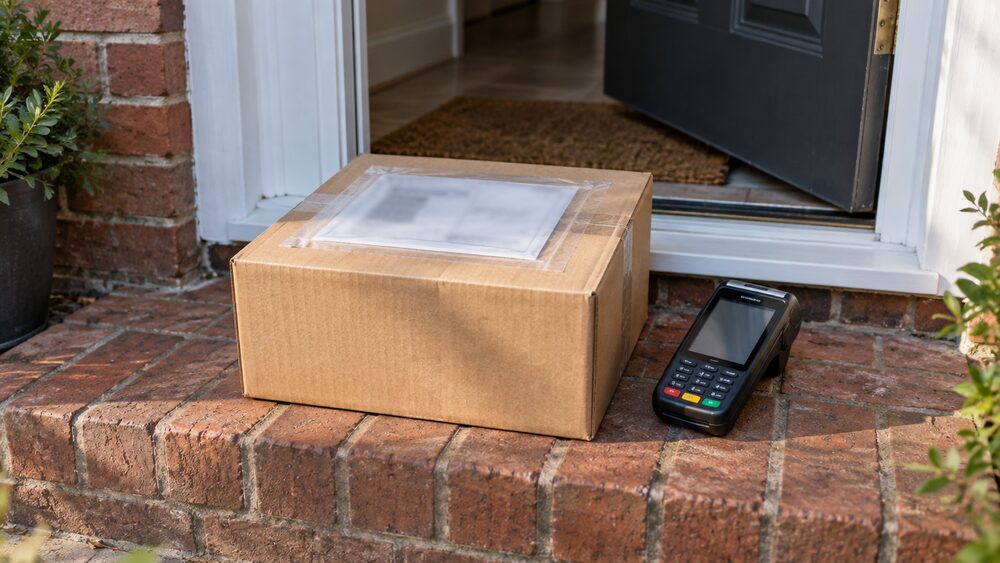
Ordering from a website based outside the UK can look like shopping anywhere else online, but three extra layers of cost and risk sit between the checkout and your door. First, the payment itself: your card may add a foreign exchange fee, often around 3% of the transaction, and the exchange rate you are offered is not always the best one available1. Second, the parcel: once the order passes the £135 threshold, import VAT at 20% and possibly customs duty can be added, and the courier will charge a handling fee on top for collecting the tax2. Third, the seller: your UK consumer rights often still apply, but enforcing them against a business with no presence in the UK is harder than chasing a British shop.
The rules also depend on where the parcel is coming from and where you live. Goods bought from the EU can attract customs duties, VAT and handling fees as a result of Brexit3, while shoppers in Northern Ireland face a different arrangement again, because parcels moving between Northern Ireland, the UK and the EU are treated differently from those crossing into Great Britain2. This page sets out each layer in turn: what the card fees are, how the customs thresholds work, what the courier is allowed to charge, and what protection you have if the order goes wrong.
What changes when you buy from an overseas website
The visible price on a foreign website is rarely the whole story. Three things change the moment the seller, the parcel or the payment crosses a border.
The first is the payment itself. Every card transaction between countries involves fees behind the scenes. Cross-border interchange fees are paid by acquirers to issuers every time consumers use Mastercard or Visa debit or credit cards online between the UK and the EEA5. Since the UK left the EU, Visa and Mastercard have increased these fees five-fold for certain card transactions between the UK and the EEA where the cardholder is not present, which includes almost all online shopping4. Consumer cross-border card payments between the UK and the EU, where either the acquirer or the issuer is based outside the UK's jurisdiction, are no longer subject to the interchange fee caps that applied under the Interchange Fee Regulation6. These fees are paid by the merchant's side of the transaction, but regulators have noted they feed through into the costs businesses face when selling across borders4.
The second is the parcel. Goods arriving from outside the UK can carry customs duty, excise duty and import VAT, and the postal operator that delivers them will add its own handling fee7. You pay different taxes on goods from abroad if you go over your customs allowance8. The thresholds and rates are covered in detail below.
The third is your legal position. The UK has left the EU, which means the consumer rights you have against traders in the EU have changed3. UK consumer rights law still protects you when you buy goods, services or digital content remotely, and it can apply even when a foreign website says its own law governs the sale9. But turning a right into a refund is harder when the seller sits outside the UK's enforcement system, which is why card protection matters more, not less, on cross-border purchases.
Paying in a foreign currency: exchange rates and fees
When a website charges in euros, dollars or another currency, your card does the conversion, and each card handles it differently. Many current accounts charge a foreign exchange fee, often around 3% of the transaction amount, when you use your debit card for a purchase in a foreign currency1. That fee comes on top of the exchange rate itself, and the rate applied is set by the card scheme or your bank rather than by anything you agreed at checkout.
The fee is not the same for every card or every account. Some accounts and cards are built for foreign currency spending and charge less, while others add both a conversion fee and a separate purchase fee. The practical point for an online order is that the amount that finally leaves your account can be noticeably more than the number you saw on the website, because the conversion happens after the merchant has taken the payment.
There is also a background cost that has grown since Brexit. The five-fold increase in cross-border interchange fees between the UK and the EEA applies to online retail transactions where the cardholder is not present4. The Payment Systems Regulator has been reviewing these fees and consulting on remedies, noting the interests of anyone involved in online retail payments between the UK and the EEA, including cardholders4. For an individual shopper this does not appear as a separate line on a receipt, but it is part of the cost structure behind cross-border online retail.
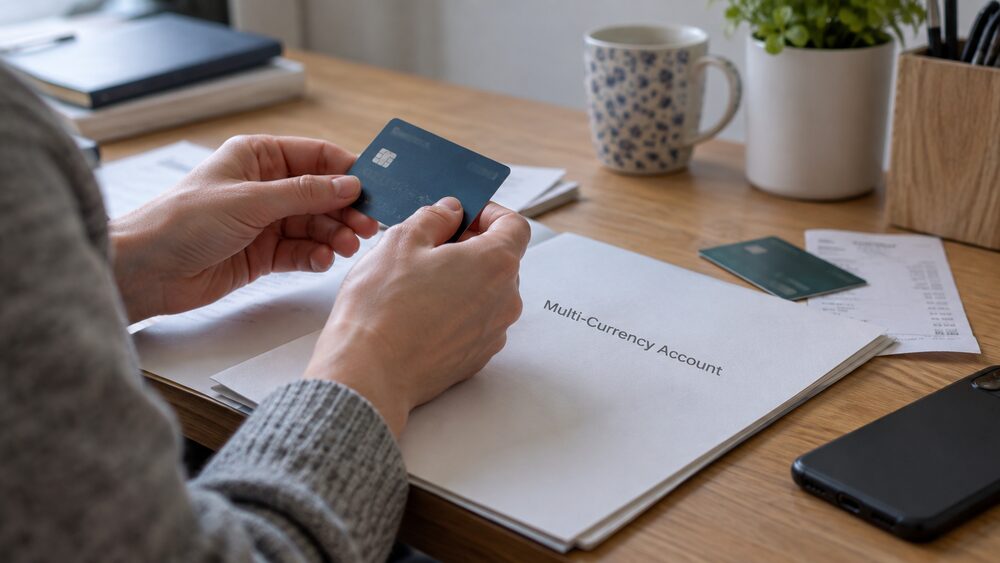
If you shop online in foreign currencies regularly, the guides to using a debit card abroad, prepaid travel money cards and multi-currency accounts explain the alternatives and what each one charges.
Pay in pounds or the local currency: how each one works
Many overseas websites, and some card terminals, offer a choice at the moment of payment: pay in the local currency, or pay in pounds with the conversion done for you. The advice from travel money guidance is consistent: choose the local currency when you are asked whether you want charging in pounds or the local currency, because you will get a better exchange rate10.
When you choose pounds, the merchant or its payment provider converts the price and presents a final figure in sterling. That sounds convenient, but the exchange rate used is set by the merchant's side, and it is typically worse than the rate your own bank or card scheme would apply. The difference is the merchant's margin on the conversion. This arrangement is known as dynamic currency conversion, and the same logic applies to online checkouts as to card machines abroad.
When you choose the local currency, the merchant takes the payment in its own currency and your card network does the conversion later, at its own rate and with your card's foreign exchange fee applied. For most cards, that combination works out cheaper than accepting the merchant's sterling price. The dedicated page on dynamic currency conversion explains how the two routes compare and where the margin sits.
One caution applies to either choice: check the final figure before confirming. A price shown in pounds at checkout may still be processed as a foreign currency transaction by your bank, in which case the card's own fee can apply on top. If the total looks different from what you approved, that is the first thing to check with your card provider.
Customs duty and import VAT on goods from abroad
Parcels arriving in the UK from outside the EU, and some EU special territories, can carry three separate charges: customs duty, excise duty and import VAT7. Which ones apply depends mainly on the value of the order and what is in it.
The key threshold is £135. Orders costing £135 or less bought online do not attract additional fees on top of the order price, provided the seller is registered with HMRC to account for VAT on its UK sales, which EU sellers are now required to do2. Above £135, extra customs, VAT and delivery costs can start to apply2. Import VAT is charged on the total cost of the item and the shipping and handling costs accrued when the courier brings the purchase to the UK2.
Customs duty itself kicks in above £135, in addition to import VAT and courier handling fees2. There are exceptions and complications:
- Excise goods, such as alcohol or tobacco, attract duty under specific conditions regardless of the general thresholds7.
- Goods of EU origin should not be charged customs duty, due to the rules of origin agreement between the UK and the EU2.
- Goods considered "at risk" of entering the EU can be charged customs duties, which matters for parcels moving through Northern Ireland7.
- Brexit changed the EU picture: as a result of Brexit, you may have to pay customs duties, VAT and handling fees for goods bought from the EU3.
If you are charged too much, there are reclaim routes. For goods delivered by Royal Mail or Parcelforce, you complete form BOR286 to reclaim import VAT and customs duties; for other couriers, form C285 is the equivalent2. The official HMRC process confirms form BOR286 for Royal Mail and Parcelforce deliveries and notes that repayments of import duty and VAT can only be made to a UK bank account11. If the item was faulty, form C1179 can be used to reclaim customs charges and import VAT on faulty products2.
Handling and clearance fees charged on delivery
Even when the tax itself is small, the delivery company adds its own charge. An additional amount is charged by the postal operator, called a handling or clearance fee, which covers the costs the operator incurs processing the item, notifying you of the charges and collecting the money on behalf of HMRC7. The postal operator, for example Royal Mail or Parcelforce, collects this fee on behalf of HM Revenue and Customs and the Border Force7.
This fee is separate from the import VAT and customs duty, and it is charged per parcel, so several small orders can each attract their own handling fee. The fee is not a tax and does not go to HMRC; it goes to the delivery company for the work of clearing the parcel.
The rules on what must be told to you in advance are on your side. Retailers must display information about delivery charges and terms clearly, and delivery restrictions or surcharges must be specified at the beginning of the online shopping process, before checkout12. More generally, if a trader does not tell you about certain costs in advance, you do not have to pay them: costs that are conditions of a right to cancel, extra costs for delivery and extra costs to return goods all fall into this category13. The underlying regulations state that where the trader has not complied with the information requirements covering delivery and related costs, the consumer is not to bear those charges14.
If a parcel arrives with a demand for charges you were never told about, that is the argument to make: quote the delivery terms shown at checkout, and if the seller will not help, the reclaim routes in the previous section apply to the tax element, while the handling fee can be disputed with the courier or through the retailer.
Gifts sent from abroad: when they are taxed
Gifts follow their own thresholds, and the person receiving the gift is the one who pays. Like items bought online, the recipient is liable for the delivery costs on receipt2.
The value bands work as follows:
- £39 or less: import VAT, customs duty and handling fees should not apply2.
- Between £39 and £135: the 20% rate of import VAT applies to the total cost of the item and shipping2.
- Over £135: customs duty applies in addition to import VAT and courier handling fees2.
The 20% rate is the standard import VAT rate and applies to the whole cost including postage, so a gift whose item price is under £135 can still be pushed over a threshold by shipping charges. If you are sending gifts to Europe or elsewhere from the UK, you have to attach customs declaration forms to anything sent, though letters, postcards and documents are exempt2.
Two further points affect where the parcel travels. Parcels moving between Northern Ireland and the UK, or between Northern Ireland and the EU, should not face additional customs fees, VAT or courier handling fees2. And the EU has introduced a €3 customs charge on small parcels, a change aimed at addressing the large volume of products coming into the EU from online retailers, which may not meet the required safety and product standards7. That charge applies on the EU side, so it matters mainly if you are sending goods to someone in the EU rather than receiving them.
Returns, refunds and faulty goods from overseas sellers
Your starting point is UK law, and it reaches further than many foreign sellers claim. The Consumer Rights Act provides that where the law of a country or territory other than an EEA State is chosen as the law applicable to a consumer contract, but the contract has a close connection with the United Kingdom, the relevant protections apply despite that choice9. In plain terms, a foreign website cannot opt out of your UK rights simply by naming its own law in its terms and conditions, if the sale has a close connection with the UK.
What those rights give you depends on the problem:
- Late delivery: if you paid for delivery and requested the item be delivered by a certain date or time, and the delivery arrives late, this is a breach of contract and you have the right to cancel your order and get a full refund12.
- The refund amount: the refund can include the full cost of the item plus standard postage, regardless of the delivery option chosen12.
- Cancellation: in Northern Ireland, you are entitled to cancel your order up to 14 days after the delivery of goods and receive a full refund, though some exceptions apply16.
- Returns: online retailers must state who is responsible for the return of items if they are unsuitable12.
The practical difficulty is enforcement. The UK has left the EU, which means the consumer rights you have against traders in the EU have changed3. UK consumers can still access alternative dispute resolution (ADR) entities in EU countries, just not through the EU's Online Dispute Resolution platform17. For a seller with no UK presence that simply ignores complaints, the realistic routes are your card provider, covered in the next section, and reclaiming the customs element of your loss: form C1179 exists specifically to reclaim customs charges and import VAT on faulty products2.
If a payment was taken from your account without authorisation, the payment regulations require the provider to refund the amount of the unauthorised transaction and, where applicable, restore the debited account to the state it would have been in had the transaction not taken place14.
Section 75 and chargeback on overseas purchases
Card protection does not stop at the border, and on cross-border purchases it is often the only route that actually produces a refund. Section 75 of the Consumer Credit Act applies to purchases made on a credit card, including purchases from overseas websites2. If you bought a faulty item online and paid with a credit card, Section 75 still applies for purchases made from overseas sellers2. This matters because the claim is against your UK card provider, not the seller: the card provider is jointly liable, so a seller that has vanished or refuses to engage no longer controls the outcome.
The thresholds decide which route you use:
- Credit card, over £100: Section 75 applies, and guidance on avoiding scams recommends paying by credit card for purchases over £100 precisely because of the stronger protection18.
- Debit card, or credit card under £100: if you used a debit card to buy bogus goods or services, or a credit card where the price was less than £100 so the Consumer Credit Act rights do not apply, you may be able to use the chargeback scheme19.
Two boundaries are worth knowing. First, Section 75 might not apply if you used a credit card to put funds into a standard e-money account, such as a currency wallet, and then used that account to buy something: the ombudsman's guidance notes this gap, because the card payment funded the wallet rather than the goods23. Second, buy-now-pay-later agreements are being brought within similar protections: BNPL users will benefit from strong rights, such as those under Section 75 of the Consumer Credit Act, making it easier to obtain refunds for issues like faulty goods24, and the FCA confirms Section 75 is available under these agreements, the same protection as using a credit card25.
Chargeback is not a legal right in the same way Section 75 is: it is a scheme rule operated by the card networks, and the card provider can reject a claim. A rejection is not the end, because a complaint about it can be taken to the Financial Ombudsman Service.
Scams and fake overseas shops: warning signs
A website based abroad is harder to check and harder to chase, which is exactly what fake shops exploit. The warning signs are consistent across official guidance:
- Inaccurate spelling and wording
- A sense of urgency to act quickly
- Asking for bank details or passwords, and being told not to tell anyone
- An unfamiliar email address26
The Financial Services Compensation Scheme lists its own red flags for scam approaches: being asked for money or payment details; a message from an unusual source such as WhatsApp; a phone number not on the firm's website; an email address that does not match the firm's domain; an unregulated firm; compensation offered in a foreign currency or by a firm in another country; and American spellings or spelling errors27. Several of these are especially relevant to overseas shopping, where a foreign currency or a foreign address is part of the story the scam relies on.
Before buying, the Information Commissioner's Office advises checking for a padlock symbol and a clear privacy and returns policy28. A padlock alone only shows the connection is encrypted, not that the shop is honest, but the absence of any returns policy on a site selling physical goods is itself a warning sign.
How you pay changes your exposure. Guidance on scams recommends paying by credit card for purchases over £100, by debit card or by PayPal, rather than by bank transfer, because these methods carry more protection18. A bank transfer to an overseas account is the payment method to avoid for an unfamiliar seller: once the money has gone, there is no card scheme to reverse it and no Section 75 claim to make. The wider guide to scams and fraud covers how fake shops and purchase scams work and what to do if you have already paid.
Where to get help with a problem overseas purchase
Where you turn depends on what went wrong. For a delivery problem, start with the retailer and the courier: retailers must display delivery charges and terms clearly, and restrictions or surcharges must be shown before checkout12. Shoppers in Northern Ireland can often face problems getting parcels delivered, pay higher delivery prices in the form of surcharges, or have free UK delivery withdrawn, so checking the delivery terms for your postcode before ordering matters there16.
For a problem with the goods or the seller, consumer rights advice in Wales is available from Trading Standards, which sets out your key consumer rights and the remedies and redress available29. For a complaint about a card payment, Section 75 claim or chargeback that your provider has rejected, the Financial Ombudsman Service is the next step. It offers an online complaint checker: answer a few questions on its website and it will tell you whether it thinks it can help and what to do next22. The service is free, and it handles complaints involving sellers outside the UK: it received 7,515 complaints from consumers living outside the UK in the year from 9 July 2024 to 8 July 202530.
For recovering money from a person or business in another country, the official guidance is to get legal advice, because cross-border debt recovery is a legal process rather than a consumer complaint route31. The practical order is usually: complain to the seller, then to your card provider, then to the ombudsman, and only then consider legal routes, which carry their own costs.
If the problem is a scam rather than a dispute, report it and check the guidance on types of scam and on protecting yourself from identity theft, since a fake shop may also be harvesting card details for later use28.
Frequently asked questions
Do I have to pay VAT on things I buy from outside the UK? Often, yes. If your order costs £135 or less and the seller is registered with HMRC, VAT is normally included in the price at checkout and no extra fees apply. Above £135, import VAT is charged on the total cost of the item and shipping, at 20% for most goods, and customs duty may also apply. The courier or postal operator collects these charges on behalf of HMRC before delivery.
Why did the courier ask me to pay before delivering my parcel? When a parcel arrives from outside the UK and import VAT, customs duty or excise duty is due, the postal operator or courier collects the tax on behalf of HMRC and the Border Force. It also charges a handling or clearance fee to cover its own costs of processing the parcel, notifying you and collecting the money. You pay these charges before the parcel is released for delivery.
Is it cheaper to pay with a debit card or a credit card abroad online? The card fees themselves are similar: many current accounts charge a foreign exchange fee of around 3% of the transaction either way. The difference is protection. Credit card purchases over £100 come with Section 75 protection, which makes the card provider jointly liable if something goes wrong. For debit cards, or credit card purchases under £100, chargeback through your card provider is the main route instead.
Can I get my money back if an overseas website never delivers? Start with the seller: if you paid for delivery and asked for the item by a certain date and it arrives late, that is a breach of contract and you can cancel for a full refund, including standard postage. If the seller ignores you, your card may help: Section 75 for credit card purchases over £100, or chargeback for debit cards and smaller credit card purchases. Complaints that the card provider rejects can go to the Financial Ombudsman Service.
Do UK consumer rights apply when I buy from a foreign website? Often, yes. The Consumer Rights Act applies despite a foreign choice of law if the contract has a close connection with the UK. However, the rights you have against traders in the EU changed after Brexit, and enforcing a judgment against a seller with no UK presence can be difficult in practice. Card protection through Section 75 and chargeback does not depend on where the seller is based.
What happens if I refuse to pay the customs charges on a parcel? The postal operator or courier will not release the parcel until the import VAT, customs duty and its handling fee are paid, because it collects the tax on behalf of HMRC. If you believe the charges are wrong, you can reclaim overpaid import duty and VAT, for example using form BOR286 for Royal Mail or Parcelforce deliveries. If you never ordered the goods at all, unsolicited parcels can be kept without paying.
Sources31 cited
- How to open, switch or close your bank account MoneyHelper, 2026-09-25
- Online shopping: do I have to pay VAT, import and handling costs? Which?, 2025-07-30
- Consumer advice: overseas purchases Isle of Anglesey County Council, 2025-03
- Market review of UK-EEA consumer cross-border interchange fees Payment Systems Regulator, 2026-09-26
- Market review into cross-border interchange fees Payment Systems Regulator, 2025-10
- Why are interchange fees going up on UK-EU card transactions? Payment Systems Regulator, 2026-09-25
- Tax and customs charges on postal goods Consumer Council Northern Ireland, 2026
- Tax on shopping GOV.UK, 2026-09-26
- Consumer Rights Act 2015, Part 2 legislation.gov.uk, 2026
- Travel money: planning and booking a holiday ABTA, 2026
- How to claim a repayment of import duty and VAT if you've overpaid GOV.UK, 2026-02-20
- Online shopping and parcel delivery rights Consumer Council Northern Ireland, 2026
- Doorstep selling regulations GOV.UK, 2026-09-26
- Consumer Contracts (Information, Cancellation and Additional Charges) Regulations 2013, Part 2 legislation.gov.uk, 2026
- Consumer Rights Act 2015, Part 2 (as enacted) legislation.gov.uk, 2026
- Shopping safely online Consumer Council Northern Ireland, 2026
- Brexit and consumer rights: the EU Online Dispute Resolution platform House of Commons Library, 2026-09-26
- Types of scam MoneyHelper, 2026-09-25
- Consumer advice: bogus goods and chargeback Isle of Anglesey County Council, 2025-10
- I want to return something bought online Which?, 2026-03-10
- Should I get a credit card? Which?, 2026-09-18
- How to complain: consumer video transcript Financial Ombudsman Service, 2026-09-26
- Electronic money services: complaints we deal with Financial Ombudsman Service, 2026-09-27
- The regulation of buy-now, pay-later agreements legislation.gov.uk, 2025
- Buy now pay later Financial Conduct Authority, 2026-02-11
- Scams: what to look for Financial Services Compensation Scheme, 2026-05-05
- FSCS podcast episode 46 transcript Financial Services Compensation Scheme, 2025
- Identity theft Information Commissioner's Office, 2026-09-25
- Remedies and redress: an overview of your key consumer rights Trading Standards Wales, 2025-09
- Alternative Dispute Resolution annual activity report 2024-2025 Financial Ombudsman Service, 2024
- Options if you're owed money GOV.UK, 2026-09-27



 MoneyHelperFree, impartial money and pensions guidance, set up by government
 FSCSProtects your money if a bank, insurer or investment firm fails
 Financial Ombudsman ServiceFree, independent help when a complaint about a firm is not put right
 FCA Warning ListCheck whether a firm is authorised before you deal with it
 Citizens AdviceFree advice on money, consumer and legal problems in England and Wales