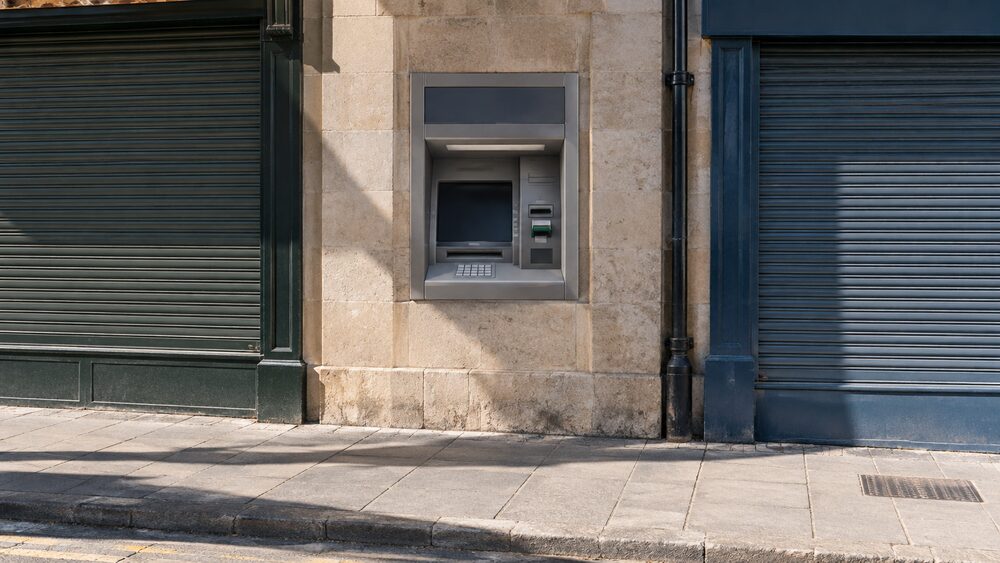
Taking cash out of a machine abroad can cost you in three separate ways, and the charges stack. MoneyHelper, the government-backed money guidance service, explains that using a debit card abroad typically brings a foreign exchange fee, often around 3% of the transaction amount, plus a spending or cash machine charge, typically between £1 and £3 each time you use your card, except for euros in the EU1. Credit cards are dearer still: Which? reports you can expect a fee of around 3%, with a minimum of £3, when you take money out of an ATM with a credit card, and interest charged on the withdrawal straight away2.
On top of your own bank's or card issuer's charges, the machine itself may add a fee. Many overseas ATMs apply their own operator fee for cash withdrawals, set by the local ATM provider, particularly in tourist hotspots, and this can sometimes be several pounds per withdrawal3. None of these fees is shown on the machine's screen in pounds and pence in a single figure, so the only way to know the full cost is to understand each layer before you travel.
The fees that can stack up on one withdrawal
A single withdrawal abroad can attract several charges at once, and which ones apply depends on the card you put in the machine. The Post Office's travel money guidance describes the debit card version clearly: if you withdraw cash at a foreign ATM, you'll be charged a non-sterling transaction fee for currency conversion plus a non-sterling cash fee, either as a flat fee or a percentage5. So even before the machine operator takes its cut, two separate charges from your own bank can apply to the same transaction.
With a credit card the layers are thicker. Citizens Advice Scotland warns that if you withdraw cash on a credit card abroad you may be charged a foreign transaction fee on top of the usual cash advance fee6. Which? adds that you'll be charged interest on cash withdrawals straight away, sometimes at a higher rate than the interest on purchases2. That means a credit card withdrawal can carry three charges from the card issuer alone: the cash fee, the foreign transaction fee, and interest that starts accruing immediately.
The size of the problem grows as the withdrawal shrinks. Which? calculates that spending just £5 with a card that charges fees could set you back £1.15, an additional 23%2. Percentage fees with minimum amounts bite hardest on small withdrawals, because a fixed minimum takes a larger share of a smaller sum before anything else is added.
The practical consequence is that the cheapest approach is usually fewer, larger withdrawals rather than many small ones, since flat fees and minimums are charged per transaction. That has to be weighed against carrying more cash than you want to hold, which is covered in cash or card abroad. The full costs of each card type, and the accounts that avoid some of these fees, are set out below.
Debit cards: your bank's foreign cash fee
A debit card used in a foreign cash machine typically attracts two charges from your own bank: a currency conversion fee and a cash fee. MoneyHelper puts the foreign exchange fee at often around 3% of the transaction amount, with the spending or cash machine charge typically between £1 and £3 each time, except for euros in the EU1. The exact figures vary by bank and by account.
Halifax states that, in addition to any service provider charges, a foreign currency transaction fee and a foreign cash fee or foreign currency cash fee may apply to cash withdrawals at an ATM or branch outside the UK8. Nationwide similarly says fees may apply for cash withdrawals or for making debit card payments in a foreign currency9. Barclays charges a 2.99% non-sterling transaction fee if you use your debit card to make a payment abroad or withdraw cash10.
Some banks charge less than the typical 3%. Cater Allen's banking tariff lists a debit card foreign transaction commission of 2.00% outside of Europe on a pound account11. HSBC's card guidance lists a cash fee outside the UK of 2%, with a minimum of £1.75 and a maximum of £5.00, on its other accounts12. The maximum matters: on HSBC's debit cards, the cash fee stops growing once the withdrawal is large enough.
A few accounts advertise no foreign transaction fees, but read the wording carefully. The Royal Bank of Scotland Reward account offers no foreign transaction fees on debit card spend abroad, but states this is not valid for ATM withdrawals and that local fees may apply13. In other words, the headline waiver covers shopping, not cash. Starling takes a different position: it does not charge for using your debit card abroad, though some ATM providers overseas may charge their own fee14.
The Financial Conduct Authority's banking conduct rules list "use of a debit card to withdraw money in a currency other than a currency of the United Kingdom from a machine or at an establishment outside the United Kingdom" among the fees and charges that must be disclosed to customers15. So your bank is required to tell you what a foreign withdrawal costs, and the figures above should appear in its published tariff. If you cannot find them, ask before you travel. More detail on debit card use overseas generally is in using a debit card abroad.
Credit cards: a cash fee of around 3% (minimum £3)
Credit cards treat cash withdrawals as a special category of transaction, and the fees reflect that. Which? reports a fee of around 3%, with a minimum of £3, when you take money out of an ATM with a credit card2, and its wider guidance notes that most credit cards add a foreign transaction fee of around 3% on non-sterling purchases and cash withdrawals16. The two can apply to the same withdrawal.
Card issuers' own terms confirm the pattern. Nationwide charges a cash advance fee of 2.5% of the amount, or £3, whichever is greater, on cash machine withdrawals in sterling or foreign currency, buying foreign currency, or paying for traveller's cheques17. TSB charges a cash fee of 3% of the amount of each cash withdrawal made in the UK or abroad, with a minimum of £317. first direct's Credit and Gold Cards carry a cash advance fee of 2.99%, minimum £3.00, at an ATM18.
| Card issuer | Cash withdrawal fee | Minimum |
|---|---|---|
| Nationwide credit cards | 2.5% | £317 |
| TSB credit cards | 3% | £317 |
| first direct Credit or Gold Card | 2.99% | £318 |
| Santander Everyday Long term Balance Transfer card | 3% | £319 |
| NatWest Credit Card | 3% | not stated20 |
| Santander World Elite Mastercard | 3% | £321 |
| Royal Bank of Scotland credit cards | 3% | £322 |
| Zable travel credit card | 3% | £323 |
| HSBC credit cards (non-sterling) | 2.99% | £3 for cash related payments24 |
The interest treatment is what really separates credit card cash from debit card cash. StepChange, the debt charity, is blunt: "Cash transactions will always charge interest" and "You are charged interest from the day you took the money out"7. NatWest makes the same point for its own card: you'll pay interest from day one, even if you have a 0% interest offer20. Which?'s guidance adds that paying for foreign currency with a credit card counts as a cash advance too, so buying currency at a bureau counts as a cash transaction16.
Experian's guidance on travel cards notes that standard credit and debit cards often charge a "load fee" of around 3% per transaction abroad, and that travel credit cards make no charge for spending overseas25. TSB's credit card pages confirm the cash fee applies to all cash withdrawals, not just foreign ones26. The message across every source is consistent: a credit card is a spending tool abroad, not a cash withdrawal tool, unless the card specifically says otherwise.
Charges the cash machine owner adds on top
The fees above all come from your own bank or card issuer. A separate charge can come from the machine itself, and this one is outside your bank's control. Many overseas ATMs apply their own operator fee for cash withdrawals, set by the local ATM provider, particularly in tourist hotspots, and this can sometimes be several pounds per withdrawal3. The machine should tell you the fee before you confirm, but it will be in the local currency.
The UK's own cash machine system works differently, and the contrast explains why foreign fees can come as a surprise. The House of Commons Library describes how the LINK network sets higher fees for withdrawals from isolated and low-use ATMs, to make running them more attractive to ATM operators27. The Payment Systems Regulator explains that free-to-use ATMs generate fees for their providers through per-transaction "ATM interchange fees" that are paid by the card issuing banks and building societies28. In the UK, in other words, the bank typically pays the machine owner, and you do not.
Abroad, that arrangement often does not exist. A 2012 Treasury Committee report on the multilateral interchange fee noted that card issuers may be charged an interchange fee of 26p for cash withdrawals29, a small sum that does not cover the cost of running machines in many countries, which is why operators abroad charge the customer directly instead. Starling warns its customers that some ATM providers overseas may charge their own fee, which is not charged by Starling14, and Virgin Money makes the same point: it won't charge for spending or withdrawing cash abroad, but some cash machines might charge a fee30.
One charge you can refuse on the screen is dynamic currency conversion, where the machine offers to bill you in pounds rather than the local currency. ABTA's travel money advice is to choose the local currency when you're asked if you want charging in pounds or the local currency, because you'll get a better exchange rate4. The pounds option lets the machine operator set the rate, and that rate is rarely in your favour. This is explained in full in dynamic currency conversion explained.
Accounts and travel cards with no foreign usage fees
Not every card charges the full stack. A growing number of UK accounts and travel cards waive their own foreign fees, though none of them can waive the local machine operator's fee.
- Starling has no fees on spending abroad, including cash withdrawals, according to Which?'s guidance2.
- Virgin Money current accounts, including the Club M Account and the M Plus Account, charge no fees when you use your card abroad or shop online in other currencies, while noting that some cash machines might charge a fee30.
- The Post Office Travel Money Card makes no charges when you spend abroad from an available balance of a supported local currency5.
- The Wise travel money card states you'll avoid foreign transaction fees while withdrawing from ATMs abroad33.
- PayPal's debit card launched with no fees for using the debit card abroad, as Which? reported at launch34.
- Currensea, a travel debit card, makes ATM withdrawals free under a limit of £500 a month, after which a 2% fee applies2.
Prepaid currency cards need particular care on cash machines. Which? has reported on prepaid foreign currency cards where some charge fees for withdrawing cash, and where it may be cheaper to pay for purchases by card instead, and some cards charge fees if they're not used for a certain period35. One credit union prepaid card charges a 75p ATM fee alongside a 50p load fee36. The general shape of these cards, and the protection they do and do not carry, is covered in prepaid travel money cards and the Post Office Travel Money Card page.
History also counsels checking the small print on "fee-free" claims. When N26 operated in the UK, it advertised fee-free overseas spending at the Mastercard exchange rate with no markup, but customers were still charged a 1.7% fee on cash withdrawals abroad37. A card that is free for spending abroad may not be free for cash abroad, and the two claims are easy to confuse. Comparisons of the options, including the trade-offs between prepaid cards and debit cards, are in prepaid travel card or debit card.
Debit or credit card for cash: how the costs compare
For cash specifically, the debit card is almost always the cheaper of the two. HSBC's own guidance is to always use a debit card to withdraw money from a cash machine, because it's usually free in the UK38, and the same logic carries abroad even where fees apply, because the debit card's charges are smaller and it charges no interest.
The comparison in outline:
| Debit card | Credit card | |
|---|---|---|
| Currency conversion fee | often around 3%1 | typically up to 2.99%2 |
| Cash withdrawal fee | typically £1 to £3, except euros in the EU1 | around 3%, minimum £32 |
| Interest on the withdrawal | none | charged from day one, sometimes at a higher rate2 |
| Effect on credit record | none | cash advances can be flagged16 |
The interest line is decisive. A credit card cash withdrawal accrues interest from the day of the withdrawal with no interest-free period, even if you repay in full and on time16, so the cost continues to grow until the money is repaid. A debit card withdrawal is paid for once, from money you already have. Which?'s guidance also notes that cash advances are treated differently from purchases by card issuers, which can matter for your credit record16.
The exception is a travel credit card or a no-fee account that explicitly covers cash. Nationwide's Select and Member credit cards charge 2.5%, minimum £3, on cash advances abroad17, so they are no better than standard cards for cash, but accounts such as Starling and Virgin Money charge nothing at all for foreign withdrawals2. For a fuller comparison of the options for a trip, see travel money and cash or card abroad.
What protects you, and where it stops
Your main protection is disclosure. The FCA's banking conduct rules require firms to tell you about charges including the use of a debit card to withdraw money in a foreign currency outside the UK15, and MoneyHelper confirms banks must publish these fees1. Before travelling, you can check your bank's tariff or ask it directly. If a charge appears that was not properly disclosed, you can complain to your bank and, if it does not resolve the matter, to the Financial Ombudsman Service.
Card payments abroad also carry the usual card protections. If your card is used fraudulently overseas, the card rules that apply in the UK to unauthorised transactions apply to your account wherever the transaction happened, and your bank must refund you unless it can show you authorised the payment or acted with gross negligence. If a card is lost or stolen abroad, the steps to take quickly are in lost or stolen cards and cash abroad, and emergency options including consular assistance are in emergency help abroad.
Where protection stops:
- The local machine fee is not refundable by your bank. It is charged by the machine operator, not your issuer, and no UK rule caps it3.
- Prepaid travel cards are not bank accounts. Money on them may not be covered by the Financial Services Compensation Scheme in the same way as a current account, and Which? has reported on customers unable to get money out of prepaid foreign currency cards35. Check the protection section of prepaid travel money cards.
- Choosing pounds on the machine screen is a choice you made. The worse exchange rate that follows from dynamic currency conversion is disclosed on the screen, which makes it hard to challenge afterwards4.
- Credit card interest is contractual. Because cash transactions always charge interest from day one7, there is no basis to complain about interest that was properly disclosed, only about fees that were not.
If a trip goes wrong and you are left short of money, options exist beyond the cash machine, from emergency transfers to FCDO support, and they are set out in emergency financial help abroad. For everyday planning, the comparison pages prepaid travel card or debit card and cash or card abroad set the withdrawal fees above in the context of a whole trip's spending.
Sources38 cited
- How to open, switch or close your bank account MoneyHelper, 2026-09-25
- Spending abroad: the 4 dos and 5 don'ts Which?, 2024-07-26
- Best and worst travel cards for summer 2026 YourMoney.com, 2026-06-30
- Travel money tips ABTA, 2026
- The right travel card for spending abroad Post Office, 2026-04-07
- The costs and charges of credit cards Citizens Advice Scotland, 2026-09-25
- Understanding interest charges StepChange, 2026-09-25
- Credit vs debit cards Halifax, 2026-09-27
- Living and working abroad Nationwide, 2026
- Debit cards Barclays, 2026
- Banking tariff Cater Allen, 2026
- Using your card HSBC, 2026
- Reward account Royal Bank of Scotland, 2026-09-26
- Currency calculator Starling Bank, 2026
- BCOBS 7.5.5: fees and charges disclosure Financial Conduct Authority, 2018
- Should I get a credit card? Which?, 2026-09-18
- Credit card fees and charges Nationwide, 2026
- Using your cards outside the UK first direct, 2026
- Everyday Long Term Balance Transfer Credit Card Santander, 2025-10-08
- The NatWest Credit Card NatWest, 2026-09-25
- Santander World Elite Mastercard Santander, 2026-07-17
- What is the foreign transaction fee on my credit card? Royal Bank of Scotland, 2026-09-25
- Travel credit card Zable, 2026-09-25
- Credit card fees HSBC, 2026
- Travel cards Experian, 2026
- Credit cards TSB, 2026
- Access to banking services and cash House of Commons Library, 2026-09-26
- CP18/2: draft Specific Direction 8 on protected ATMs Payment Systems Regulator, 2026-09-26
- Treasury Committee report on the multilateral interchange fee Parliament, 2012-08-31
- Club M Account Virgin Money, 2026-09-25
- M Plus Account Virgin Money, 2026-09-25
- Joint bank account Virgin Money, 2026
- Japanese currency travel money Wise, 2026-09-26
- PayPal launches debit and credit card with up to 1.5% cashback Which?, 2025-11-22
- I can't get my money out of my prepaid foreign currency card Which?, 2021-10-08
- Credit union evidence on prepaid cards Senedd, 2012-10
- N26 withdraws from the UK: what does it mean for your money? Which?, 2020-02-15
- Credit cards vs debit cards HSBC, 2026







 MoneyHelperFree, impartial money and pensions guidance, set up by government
 FSCSProtects your money if a bank, insurer or investment firm fails
 Financial Ombudsman ServiceFree, independent help when a complaint about a firm is not put right
 FCA Warning ListCheck whether a firm is authorised before you deal with it
 Citizens AdviceFree advice on money, consumer and legal problems in England and Wales