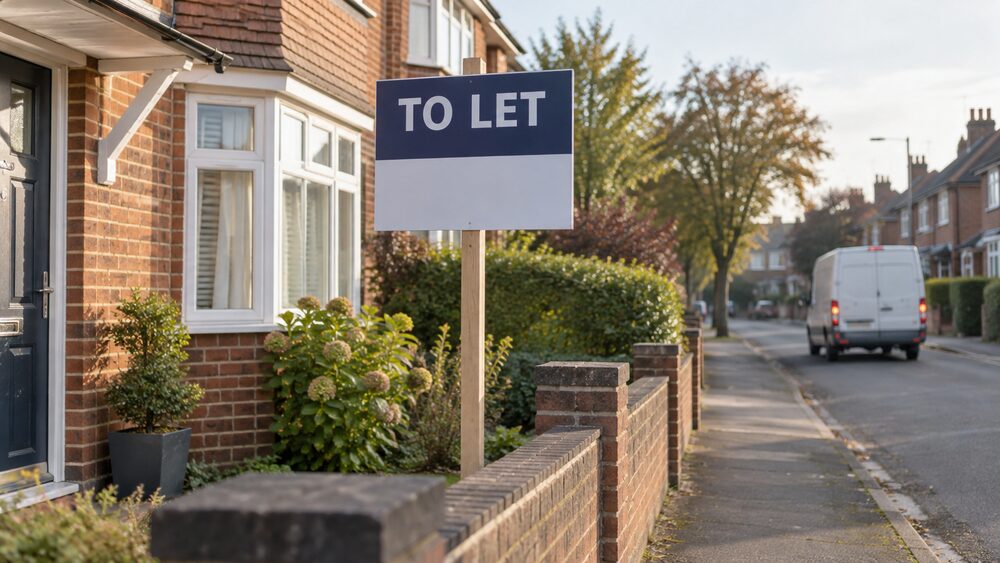
Moving abroad does not stop your UK home being your responsibility, and if you plan to let it to tenants, several things have to change before they move in. The first is your mortgage: a residential loan is granted on the basis that you live in the property, and letting it out means either getting your lender's permission, known as consent to let, or switching to a buy-to-let mortgage1. The second is tax: HMRC taxes UK rental income whether or not you live in the UK, and since 6 April 2025 the rules are based on where you are tax resident rather than where your permanent home (domicile) is3.
There is also a practical rule that catches many landlords living overseas: under the Non-resident Landlords Scheme, your letting agent or tenant normally deducts tax at the basic rate, currently 20%, from your rental profits each quarter before paying you the balance, unless HMRC has agreed to let you receive the rent with no tax deducted5. You can apply to HMRC for that approval, and you still report the profits through Self Assessment either way.
Your mortgage has to change before tenants move in
A residential mortgage is granted on the understanding that the property is your home. If you plan to let your current home to tenants, you need a buy-to-let mortgage, or at minimum your lender's agreement to let on your existing deal1. Which route you take depends on your lender: some will grant a consent to let on the current deal, while others may insist on switching to a buy-to-let mortgage2.
Consent to let is usually the lighter option. It is permission to rent out the property for a period, often with conditions attached, and it may carry a fee or a change to your interest rate. It tends to suit a temporary move abroad where you expect to return and live in the home again. A switch to a buy-to-let mortgage is a bigger step: the loan is assessed differently, typically against the rent the property is expected to generate rather than your salary, and the terms, fees and rates will not be the same as your residential deal.
There is a third arrangement worth knowing about if your move abroad is part of a wider plan. If you want to move but cannot sell, you could consider a let-to-buy arrangement: remortgaging your current home onto a buy-to-let mortgage and using the equity released to buy a new property3. This is sometimes used alongside a bridging loan, a short-term loan used to bridge a gap between buying and selling3.
Do not confuse any of this with an overseas mortgage, which is a mortgage for a property that is not in the UK5. Your UK home needs a UK mortgage, and the question is which kind, not which country's lender.
The wider detail on how buy-to-let lending works, including how lenders assess rental income, is covered in the mortgages section of this site.
What lenders and landlords weigh up: the cost of a mortgaged let
Being a landlord with a mortgage has become markedly more expensive, and it is worth knowing the shape of those costs before committing from abroad. By the end of 2024, mortgaged buy-to-let landlords in England were spending on average 50% of rents on mortgage interest, up from between a quarter and a third through the late 2010s and early 2020s11. That rise reflects the interest rate environment rather than anything specific to living overseas, but an overseas landlord feels it more sharply, because managing a let that eats half its rent is harder to do at a distance.
Lenders assessing a buy-to-let application from someone abroad will look at the rental income the property can support, your remaining UK income and outgoings, and your status as a non-resident borrower. Not every lender accepts overseas landlords, and those that do often apply stricter conditions, so the range of deals available is narrower than for a landlord living in the UK.
Alongside the mortgage, you take on the legal duties of a landlord, and these differ across the UK nations. In England, you must check that your tenants have the legal right to live in the UK by looking at and making copies of immigration documents such as a passport; letting agents can conduct these right to rent checks for you2. In Scotland, landlords do not need to check tenants' right to rent, as that immigration policy only applies in England12. In Wales, letting out your home involves registering with Rent Smart Wales and, if you are managing the property yourself, obtaining a licence13.
If you use a letting agent to manage the property, many of these duties can be handled for you, for a fee usually charged as a percentage of the rent. Tenancy costs are also regulated: holding deposits are capped at one week's rent in England and Wales, and are banned in Scotland14.
Tax on UK rental income: residence now counts, not domicile
The basis of UK taxation changed on 6 April 2025. The previous rules for non-domicile status ended and were replaced by a system based on tax residence: the official measure replaces the concept of domicile as a relevant connecting factor in the UK tax system with a system based on tax residence4. In practice, what determines your UK tax bill is now where you are resident, not where your permanent home is considered to be.
For rental income, the position is clear cut: if you have profits from letting property situated in the UK, you are liable to tax in the UK on those profits, even if you are not UK resident7. Rental income from UK property is liable to UK tax whether or not you are resident in the UK7.
You usually have to send a Self Assessment tax return if you live abroad and rent out property in the UK8. The Self Assessment rules for property rentals apply in the same way if you are not a UK resident but get income from renting out property in the UK15. There is a small threshold below the reporting line: if your gross income from renting property is less than £1,000, you do not have to report it15.
Residence itself has rules worth knowing before you leave. You stayed UK resident if you were abroad less than a full tax year (6 April to 5 April the following year), which means you usually pay UK tax on your foreign income for the entire time away16. And if you return to the UK within 5 years, temporary non-residence rules can apply: you may have to pay tax on certain income or gains made while you were non-resident, though this does not include wages or other employment income16.
Where tax is worked out in another currency, you normally use the exchange rate when the rent was due6. If you also own property abroad, you are taxed on your foreign properties in the same way as you would be on any UK properties, working out the profits for all your foreign properties as a whole by taking expenses away from income6. The rules on foreign income and UK tax and double taxation are covered in detail elsewhere on this site, as is Form P85, which you can use when you leave the UK.
The Non-resident Landlords Scheme: 20% taken each quarter unless HMRC agrees otherwise
The Non-resident Landlords Scheme is the mechanism HMRC uses to collect tax from landlords who live outside the UK. A letting agent or tenant normally deducts tax when they pay rent for a UK property to a landlord who lives outside the UK17. The rate is the basic rate, currently 20%, deducted each quarter from your rental profits, and the balance is then paid to you6.
You can apply to HMRC, as an individual, to receive your UK rental income with no tax deducted17. Approval depends on your tax affairs being in order, and it is not automatic. Even with approval, the rental profits remain taxable: you pay income tax on any profits at your normal rate6, and you still report them through Self Assessment8.
In practice, the scheme means your cash flow arrives 20% lighter until HMRC agrees otherwise. If your actual tax bill is lower than the amount deducted, because your profits are small or your expenses are high, you reclaim the difference through Self Assessment rather than receiving the gross rent up front. Budgeting for the let from abroad means planning around the net figure.
Changes to property income tax rates
Landlords living overseas are affected by UK property tax changes in the same way as landlords living here, because the tax follows the property. Official estimates suggest that by 2029 to 2030, 2.4 million landlords (6% of taxpayers in 2029 to 2030) will face an increase in tax on their property income18.
One long-standing feature of the system is the restriction on finance cost relief. The tax relief landlords of residential properties get for finance costs, including mortgage interest, is at the rate of 20%, and it is the same for residential landlords across the UK19. This is why mortgage-heavy lets can produce a tax bill even when the rental profit is thin: relief comes as a reduction of the tax bill rather than a deduction from income.
Looking ahead, independent analysis has projected the combined effect of tax changes on landlords. Those without mortgages would see the share of their gross rental income spent on tax in 2030 increase from just over 26% to around 33% under proposed changes, compared with current arrangements20. For mortgaged landlords, the pressure is already visible in the 50% of rents going to mortgage interest noted above11.
Capital gains tax when you later sell
Letting out your home changes its capital gains tax position when you sell. You may have to pay Capital Gains Tax if you make a profit (a gain) when you sell property that is not your home, for example buy-to-let properties, business premises, land or inherited property10. Once your home has been let to tenants, it is no longer wholly your main home, and you may have to pay capital gains tax when the sale is completed if the value has increased since you bought it21.
The main home relief has edges that catch landlords. Independent guidance lists the situations in which a capital gains tax bill can arise on a home that would otherwise be exempt: developing the home, selling part of the garden totalling more than half a hectare, using part exclusively for business, letting out all or part of it, moving out nine months or more ago, or buying to renovate and sell9. Letting out all or part of the home, and moving out for a long period, are both on that list, which is why a stint abroad with tenants in the house can create a bill years later.
For non-UK residents, the reporting rules are stricter than for people living in the UK. You must report all sales of UK property or land, residential and non-residential, if you are not a UK resident, even if you have no tax to pay22. How you report and pay depends on whether you sold a residential property in the UK23. The deadline is tight: you must report and pay any Capital Gains Tax on most sales of UK property within 60 days10. A non-UK resident who sells a UK residential property may have to pay Capital Gains Tax on the gains7.
One point in the other direction: if you were not resident in the UK and paid a surcharge to purchase residential property in England or Northern Ireland, you may be able to claim a refund of that Stamp Duty Land Tax surcharge once you are a UK resident for SDLT purposes24. This can arise when someone returns to the UK after buying while abroad.
Proving your identity from abroad
Lenders, banks and government bodies all need to verify your identity, and doing this from overseas usually means certified copies of documents rather than originals. The requirements vary, but the pattern is consistent: a professional person confirms in writing that a copy is a true likeness of the original. NS&I, for example, asks savers who live outside the UK for a certified copy of a bank statement issued within the last three months25.
The range of documents UK organisations accept is broad. Official guidance on identity verification lists items such as a certificate of registration or naturalisation as a British citizen, showing you are allowed to work in the UK, among photographic ID options26. Benefits calculators and support services list accepted proof of identity including a birth certificate, marriage or civil partnership certificate, passport, medical card, driving licence, UK residence permit, ID card or recent gas or electricity bill27.
If you are claiming UK benefits or support from abroad, similar evidence rules apply. A Housing Benefit claim in Northern Ireland requires your national insurance number and evidence of who you are, for example a birth certificate or driving licence, plus evidence that you must pay the rent, such as a rent book or tenancy agreement28.
Your tenants' identity also matters to you as a landlord. In England, right to rent checks involve looking at and copying immigration documents such as a passport2. EEA citizens who were resident in the UK by 31 December 2020 could establish their right to rent simply by proving their nationality, for example by showing a passport or national identity card29. People granted refugee status or humanitarian protection can rent from a private landlord, and an eVisa shows the right to work, claim benefits, rent from a private landlord and get housing help in the UK30.
Who pays and manages the mortgage while you are away
Moving abroad does not transfer your responsibilities. You are responsible for the rent or mortgage payments if you are an owner or contract holder, joint or sole, or married to or in a civil partnership with the owner or contract holder31. Continuing to make the payments is also what protects the home: independent guidance is emphatic that keeping up the rent or mortgage payments protects the property31.
If the property is repossessed, responsibility does not end at the door. After eviction for mortgage arrears in England, you are still responsible for the mortgage payments until the property is sold, and it does not matter if you are not living there32. A shortfall after the sale can still be pursued, which is a real risk for someone managing everything from overseas.
Day-to-day management can be delegated. A letting agent can collect the rent, deal with tenants and pass the money to your UK account, deducting tax under the Non-resident Landlords Scheme as described above17. A third party mandate or power of attorney can allow a trusted person in the UK to operate your bank account, though arrangements vary by bank. If a partner or dependent remains in the home, benefit rules allow a claim for a partner or dependent child who is away for a short time in England, Scotland or Wales, provided they plan to return home within 52 weeks33.
Getting rent paid in
The practical plumbing of rent matters more from abroad than it does at home. Money sent to your account from an account outside the UK is treated as an international payment, with the delays and charges that can involve34, so the simplest arrangement is rent paid into a UK sterling account. Keeping or opening a UK bank account while you live abroad is covered in detail elsewhere on this site.
Some UK providers require a UK account outright. NS&I states that customers living outside the UK may still be able to save with it if they have a UK bank account35. The State Pension can be paid into a UK bank or building society account, or into a bank in the country where you live, paid in local currency36, which shows the two standard patterns: keep the sterling account, or receive converted payments locally.
For tax purposes, where the rent is converted between currencies, you normally use the exchange rate when the rent was due6. Two allowances can reduce or remove the tax on rent in particular circumstances: if your gross income from renting property is less than £1,000, you do not have to report it15, and the Rent a Room Scheme may let you earn £7,500 in rent before paying tax on it, though it applies to letting furnished accommodation in your own home37.
Insurance, arrears and where to get help
Letting out a property changes your insurance position. Buildings and contents insurance is built around an owner-occupier living in the property, and you might need to tell your insurer if you rent out a room; your premiums could increase38. A let to tenants needs landlord insurance, and a residential policy that is not updated can be invalid when a claim is made, which is a risk compounded by distance. Most mortgage agreements let you have a lodger as long as you live in the property, but letting the whole property to tenants while abroad is a different matter, and the lender's consent comes first38.
Arrears are the main danger. If the rent stops covering the mortgage, or a void between tenants stretches on, the payments remain yours31. Free, independent help is available, and getting it early matters:
- Shelter (England) and Shelter Cymru (Wales) give free housing advice, including on mortgage problems and selling voluntarily21.
- Citizens Advice covers mortgage problems and eviction for mortgage arrears32.
- Independent Age and Age UK give free money and debt advice, including on problems paying your mortgage37.
- TaxAid gives free tax advice to people on low incomes, including Self Assessment on property rentals15.
- MoneyHelper, the government-backed money guidance service, is the starting point for free, impartial help with the mortgage and the letting.
If you are struggling with the mortgage from abroad, the options include consent to let or a product switch with the lender, renting out a room where the mortgage and insurer allow it38, or selling the property voluntarily, which ends the liability but may trigger the capital gains tax reporting described above21.
Sources38 cited
- Home buying and selling jargon HomeOwners Alliance, 2026-07-31
- Becoming a landlord Which?, 2026-07-30
- Bridging loans explained Which?, 2026-06-23
- Tax changes for non-UK domiciled individuals HM Government, 2024-10-30
- Overseas mortgages explained Which?, 2026-04-02
- Tax on overseas property Which?, 2026-04-06
- Residence, domicile and the remittance basis: RDR1 HMRC, 2025-05-16
- Tax on UK income if you live abroad HMRC, 2026-09-26
- Capital gains tax on property Which?, 2026-04-06
- Tax when you sell property HMRC, 2026-09-26
- Rebalancing the housing market through tax reform Joseph Rowntree Foundation, 2024
- New tenancy in Scotland mygov.scot, 2026-05-07
- Increasing your income Shelter Cymru, 2026-08-28
- Renting a home: the first steps Which?, 2026-07-30
- Property rentals and Self Assessment TaxAid, 2025-10-06
- Tax returns HMRC, 2026-09-27
- Apply as an individual to receive UK rental income without UK tax deducted HMRC, 2024-09-05
- Income tax changes to tax rates for property, savings and dividend income HM Government, 2029
- Scottish income tax: allowances and reliefs mygov.scot, 2026-04-06
- How tax reform would make rent controls feasible to deliver Joseph Rowntree Foundation, 2030
- Selling your home voluntarily Shelter Cymru, 2026-08
- Report and pay Capital Gains Tax: non-UK residents HMRC, 2026-09-28
- Report and pay your Capital Gains Tax HMRC, 2026-09-26
- Apply for a refund of Stamp Duty Land Tax HMRC, 2026-06-26
- NS&I evidence of identity NS&I, 2026-04-15
- Documents to verify your identity for Universal Credit DWP, 2026-06-09
- Evidence requirements entitledto, 2026-09-26
- Housing Benefit in Northern Ireland: how do I claim Turn2us, 2026-09-26
- Right to rent entitledto, 2026-09-26
- Refugees: moving on from asylum support housing Shelter England, 2025-08-27
- Protecting your rights to return Shelter Cymru, 2026-09-18
- Eviction for mortgage arrears Citizens Advice, 2023-06-26
- Housing Benefit when away from home Shelter England, 2024-08-29
- Current account glossary Kroo, 2026-09-25
- Joining NS&I NS&I, 2026-07-21
- State Pension abroad: easy read DWP, 2026
- Problems paying your mortgage Independent Age, 2026-09-26
- Taking in a lodger if you have mortgage arrears Shelter England, 2026-09-14






 MoneyHelperFree, impartial money and pensions guidance, set up by government
 FSCSProtects your money if a bank, insurer or investment firm fails
 Financial Ombudsman ServiceFree, independent help when a complaint about a firm is not put right
 FCA Warning ListCheck whether a firm is authorised before you deal with it
 Citizens AdviceFree advice on money, consumer and legal problems in England and Wales