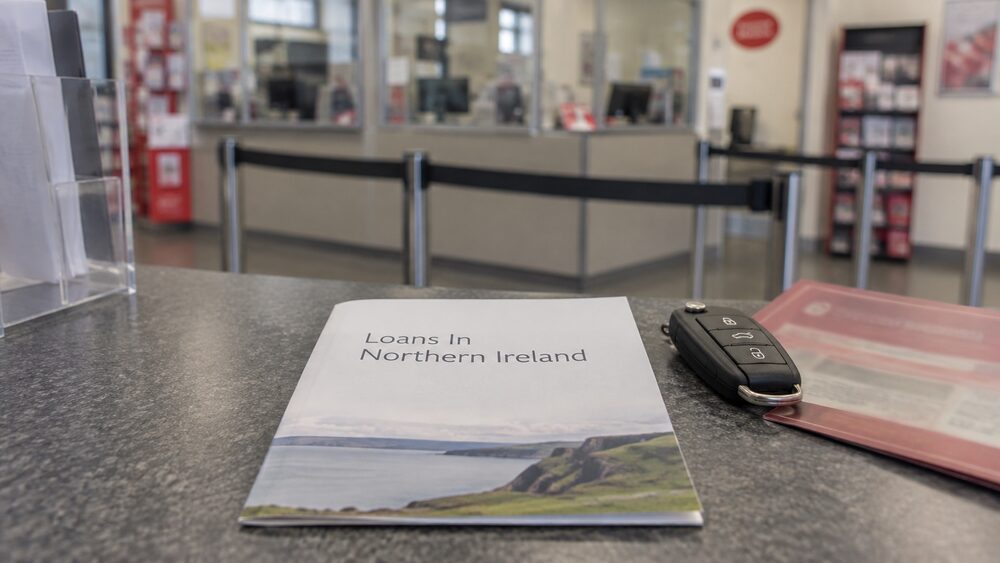
Most people in Northern Ireland borrow in the same ways as elsewhere in the UK: personal loans from banks and lenders, car finance arranged at a dealership, and smaller loans from credit unions. The products work to the same Consumer Credit Act rules, and lenders are regulated by the Financial Conduct Authority (FCA) in the same way. What differs is the local landscape: Northern Ireland has a particularly strong credit union movement, with roughly 170 credit unions across the region1, its own courts and debt solutions, and some UK-wide firms whose authorisation covers Northern Ireland only2.
Borrowing is common. In the Consumer Council's Cost of Basics research published in 2024, 15% of consumers surveyed in Northern Ireland had taken out additional credit or loans with official lenders such as banks and building societies3. That means a significant share of households are juggling new borrowing alongside everyday costs, which makes knowing how loans work, what they cost and where free help sits all the more useful.
Personal loans in Northern Ireland: what they offer and who provides them
A personal loan is a fixed amount borrowed from a bank, building society, finance company or credit union and repaid in monthly instalments over an agreed term. nidirect, the Northern Ireland government information service, sets out the main ways of borrowing and the things to check before signing, including the total you will repay and what happens if you fall behind9. The basics of how these loans work, from interest to monthly payments, are covered in how personal loans work.
Who provides them falls into a few groups. UK-wide banks and online lenders serve Northern Ireland customers in most cases, though authorisation can vary: the FCA's access to cash guidance notes that Danske Bank, the brand behind Northern Bank Limited, is authorised for Northern Ireland only2. Credit unions are the distinctive local option. The Irish League of Credit Unions, through its members, provides a range of savings and loan services8, and a Northern Ireland Assembly research paper records that credit unions in the region have a remit to offer basic financial services such as share accounts, loans and life assurance10. An earlier Assembly inquiry put the number at approximately 170 credit unions1.
Credit unions are member-owned, not-for-profit lenders that typically serve people who live or work in a common bond area, such as a town, workplace or church community. Their loans tend to be smaller than bank loans, and borrowing is usually tied to saving with the union first. The credit union borrowing guide covers how these loans work in detail, and credit union fees covers what they cost.
There are also specialist and higher-cost lenders operating UK-wide, including home credit and high-cost short-term credit, and forms of borrowing that sit outside the FCA's consumer credit regime entirely, such as loans from family, which are covered in lending money to family. At the far end sits illegal lending: the Consumer Council for Northern Ireland provides help and information for people worried about borrowing from loan sharks, and signposts free advice through Advice NI members8.
Secured or unsecured: how each type of loan works
The single most important distinction in any loan is whether it is secured against something you own. An unsecured loan, the kind most banks advertise, is a promise to repay based on your credit history and assessed affordability. If you do not pay, the lender must go through the courts to enforce the debt. A secured loan is tied to an asset, usually your home or your car, which the lender can take if the agreement breaks down.
nidirect gives a clear example: a logbook loan is secured on your vehicle9. That means the lender has a claim over the car itself, and logbook lending works very differently from an ordinary personal loan, including what happens if you miss payments, which is covered in can a logbook lender take your car. The comparison of logbook loan or unsecured personal loan sets the two side by side.
Homeowner loans, which sit as a second charge on a property, are another form of secured borrowing, and the risks are serious: missing payments on a secured loan can ultimately lead to losing the asset, as missing secured loan repayments and your home explains. Official mortgage statistics for 2025 show the average loan-to-income ratio for all mortgage sales in Northern Ireland was 3.0 times income, rising to 3.1 times income for first-time buyers, a measure of how much debt households take on relative to earnings when borrowing against property11.
The Consumer Credit Act 1974, which governs most consumer credit agreements, extends to Northern Ireland, so the core protections, including rules on how agreements are formed and enforced, apply in the same way as in England and Wales4. The secured or unsecured borrowing compared page sets out the full differences, and your rights under the Consumer Credit Act covers what the law entitles you to.
APR and the representative example: what a loan really costs
The figure lenders advertise is a representative APR, and it is the single most useful number for comparing loans, provided you understand what it does and does not promise. APR bundles the interest rate and compulsory fees into one annualised figure, so two loans with the same headline interest rate can cost different amounts if one charges fees and the other does not. How that calculation works is covered in how loan interest is calculated and loan APR, representative APR and personal APR explained.
The word "representative" matters. It means the lender expects most successful applicants to get that rate, not all of them. If your circumstances, the amount you want or the term you choose differ from the advertised example, you can be offered a higher personal APR, and the loan will cost more than the advert suggested. The representative example in an advert must show a typical loan amount and term, which is what lets you compare like with like across lenders.
Fees form part of the picture. Arrangement fees, and any early repayment charge, feed into the total cost, and loan fees and charges covers the common ones. The FCA's glossary defines an early repayment charge as "a charge levied by the [mortgage lender] on the [customer] in the event that the amount of the loan is repaid in full or in part before a date or event specified in the contract"12. The same principle applies to other regulated loans: whether a charge applies, and how big it is, is set out in your individual credit agreement, and paying off a loan early and settlement figures explains how to find out.
Whether a rate is fixed or variable also changes what you pay over time. A fixed rate keeps payments the same for the term; a variable rate can move, up or down, as the lender changes it. Fixed vs variable interest rates on loans compares the two.
Car finance options: hire purchase, PCP and personal loans
Buying a car on finance in Northern Ireland works the same way as across the UK, with three main routes. Hire purchase (HP) means you pay a deposit plus monthly instalments and own the car only after the final payment. Personal contract purchase (PCP) means lower monthly payments, a deferred "balloon" payment based on the car's guaranteed future value, and a choice at the end between paying it, returning the car or using any equity towards a new one. A personal loan means you borrow the money, buy the car outright and owe nothing further on the vehicle itself. How car finance works explains each in detail, and PCP or hire purchase: which suits you compares the two dealership routes.
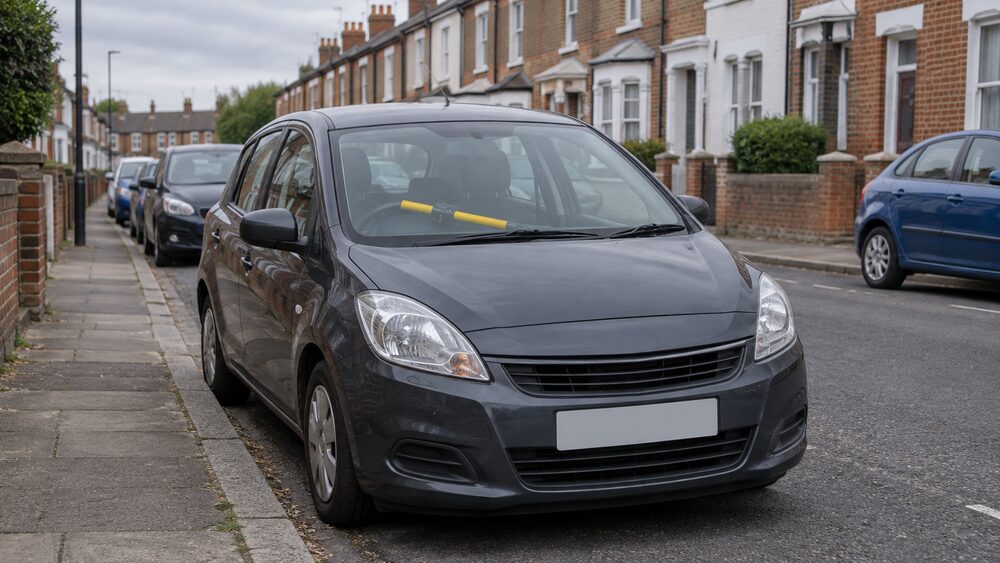
Each route has different consequences if things go wrong. With HP or PCP the finance company owns the car until the end, so it can repossess it if you default, subject to rules covered in can a finance company repossess my car. With a personal loan the car is yours from day one, but the debt is yours regardless of what happens to the car, as if your financed car is written off and faults on a used car bought on finance set out. Car finance or a personal loan for buying a car weighs the two approaches.
Two Northern Ireland-specific points arise. First, a car brought directly from Great Britain to Northern Ireland for personal use carries no additional costs beyond the price paid to the dealer and the buyer's own transport costs, according to Consumer Council guidance on shopping after the EU exit13. Second, vehicle tax in Northern Ireland has its own paperwork: to tax a vehicle at a Post Office in Northern Ireland, a paper copy of an insurance certificate or cover note and an original MOT test certificate or evidence of a Temporary Exemption Certificate must also be taken14.
Motor finance has also been the subject of a major regulatory review of discretionary commission arrangements. The FCA has launched a scheme to compensate eligible car finance customers who may have been treated unfairly, and it publishes a list of lenders covered15. Claims under section 140A of the Consumer Credit Act seeking a monetary remedy have a limitation period of 6 years from the end of the motor finance agreement6. The motor finance redress scheme page covers the scheme, and how to find out who your car finance was with helps if you cannot remember the lender.
Christmas and seasonal loans
Borrowing tends to cluster around the end of the year, and credit unions in Northern Ireland actively market seasonal products for it. In September 2026 a credit union announced that its Christmas Loans 2026 were available, the kind of product that appears each autumn across the credit union movement. These are ordinary loans, repayable in the usual way, but marketed for seasonal spending.
The alternative to borrowing for winter costs is checking what support exists first. Winter Fuel Payment in Northern Ireland is tied to a relevant benefit, and the 2025 regulations define those as income support, income-based jobseeker's allowance, state pension credit, income-related employment and support allowance, or universal credit16. If you receive one of these, winter fuel support may be available without borrowing at all.
For people on a low income facing a crisis, Finance Support (Northern Ireland) offers help at a time when you or your immediate family's health, safety or wellbeing are at significant risk, and if you are eligible for Discretionary Support it can take the form of a loan or a grant17. A grant does not have to be repaid, which makes it worth checking before any borrowing. Getting a loan while on benefits covers the wider picture, including Budgeting Loans and Budgeting Advances.
If you do borrow for seasonal costs, the same rules of thumb apply as at any time of year: compare the total repayable, check the term, and be wary of high-cost credit that stores up a problem for January. Cheaper alternatives to a payday loan lists options that often cost less, including credit unions and community lenders.
Who can borrow: eligibility and credit checks
Lenders decide whether to lend using two things: your credit file and an affordability assessment. The credit file shows your history of repaying debts, held by credit reference agencies. The affordability assessment looks at your income and outgoings to judge whether the repayments are realistic. Both are required under FCA rules, and loan affordability checks: what lenders must check explains what happens behind the scenes.
Your credit file is fed by lenders and other organisations. nidirect notes that where serious benefit fraud is suspected, officers may contact a wide range of organisations holding information about you, including banks, building societies, credit providers, credit card companies and credit reference agencies18. That is a reminder that information about your finances flows between institutions, both for credit checks and for fraud prevention, under data protection rules.
Eligibility for specific products can carry extra conditions. Credit unions typically require membership of a common bond before you can borrow. Student loans have their own rules: a Northern Irish postgraduate loan is open to UK or Irish nationals resident in Northern Ireland, and to EU nationals with pre-settled or settled status, and you can apply even if you already hold a postgraduate qualification, but not if you have previously received a postgraduate loan from Student Finance NI19. A poor credit history narrows the mainstream options but does not close them all, as getting a loan with a poor credit history and near-prime and subprime lenders explained set out. Guarantor loans and joint borrowing are two other routes people take, each with risks for the second person involved.
Checking your chances before you apply
Every full application for credit leaves a hard search on your file, and a run of rejections makes the next lender more cautious. The way to avoid that is to use eligibility checkers, which run a soft search that does not affect your score, before applying. How loans affect your credit file covers the difference between soft and hard searches and what lenders see.
Some lenders and platforms now go further. In September 2026 Experian launched Fast Track, a marketplace feature using Open Banking and affordability data to give consumers more certainty before applying for loans and credit cards. It signals a shift towards pre-approval style checks that give a stronger indication than a basic eligibility score, though no check is a guarantee until a full application is approved.
The distinction matters because some marketing blurs it. A pre-approval is an indication based on partial information; a guaranteed loan does not exist in regulated lending, because every lender must complete its checks first. Any firm promising guaranteed acceptance, or asking for an upfront fee to arrange a loan, should be treated with caution, as is a lender asking for an upfront fee a scam explains. Direct lenders and loan brokers: what is the difference is also worth reading before you apply, because brokers can charge fees that direct lenders do not, covered in credit broker fees and the APR.
How to apply for a loan or car finance
Applying for a personal loan usually means an online or app-based form with your income, outgoings and employment details, followed by the lender's checks and, if approved, a credit agreement to sign. How to apply for a loan walks through the process step by step. Once you sign, you have a 14-day right to withdraw from most credit agreements, which is worth knowing before you commit.
Car finance is normally arranged at the point of sale, in the dealership, which means the decision is made quickly and under sales pressure. The paperwork is still a regulated credit agreement, and the same cooling-off right applies. Before signing anything at a dealership, it is worth knowing the total amount repayable, the term, and what happens at the end of the agreement, especially under PCP where the final balloon payment, explained in guaranteed future value and the balloon payment, is a large single sum.
Public sector loans have their own application routes. A Northern Irish postgraduate loan is applied for by logging in or creating an account at Student Finance NI, sending requested evidence and signing a declaration, with a paper form available for anyone who cannot apply online19. Student Finance NI is a service managed by the Student Loans Company in partnership with Student Finance Northern Ireland and the government20. For 2026 to 2027 full-time undergraduate applications, the Student Loans Company encouraged students to apply before the deadline of Thursday 30 April 2026 to ensure funding was in place for the start of term21. Official statistics on student loans in Northern Ireland are published by the government, with the 2025 to 2026 edition applying to Northern Ireland22.
When repayments go wrong and where to get help
The first step when repayments become unaffordable is free, independent advice, not more borrowing. Advice NI members provide free, confidential help and advice for anyone struggling to deal with money and debt, including advice on debt issues and a range of debt solutions such as debt management plans, plus advice on benefits, housing, employment, tax and consumer rights8. Advice NI has offices throughout Northern Ireland, which you can visit or telephone7. What to do if you can't repay a loan covers the practical steps, and consolidation loan or free debt advice weighs the most common temptation against getting advice first.
If a debt is undefended, judgments can be issued by the magistrates' court or the county courts in Northern Ireland, depending on the amounts of money owed25. Enforcement of unsecured debt therefore runs through the Northern Ireland court system rather than the English and Welsh county courts, though the underlying credit agreement rules are the same. The Consumer Credit Act sets court application limits for certain claims in Northern Ireland: the 1974 Act refers to credit not exceeding £300 for unregulated agreements4, and the 2006 Act allows an application to the county court where the agreement provides fixed-sum credit not exceeding £15,000 or running-account credit with a credit limit not exceeding £15,0005.
Formal debt solutions exist with Northern Ireland-specific rules. Guidance on insolvency and bankruptcy in Northern Ireland is provided by the Department for the Economy26. Debt relief orders are available under the Debt Relief Act (Northern Ireland) 2010, and individuals can only access the schemes if their total debt, total assets, the value of any vehicle kept for domestic use, and surplus monthly income are below prescribed amounts24. In 2024, legislation increased the limit at which a vehicle is exempt from being treated as an asset from £2,000 to £4,000 maximum potential realisable value27, a change that matters for anyone who needs a car for work. One exception to be aware of in bankruptcy: the Department for Communities can recover any benefit overpayments from any further benefits you receive28.
Complaining about a lender
Complaints start with the lender. Set out the problem in writing, keep copies, and give the firm the chance to respond; regulated lenders must have a complaints process and respond within set timescales. Complaining about a lender or finance company covers the process, and complaining about an unaffordable loan covers the specific case where you believe the lender should never have lent to you.
If the lender does not resolve it, the Financial Ombudsman Service can look at complaints about regulated lenders, free of charge. Some complaints have different routes in Northern Ireland. If you think you have been surcharged unlawfully by a merchant for using your card, the route is your local trading standards authority or the Department for Enterprise, Trade and Investment in Northern Ireland29. For motor finance commission complaints, the FCA's scheme to compensate eligible car finance customers who may have been treated unfairly is the relevant framework, and the FCA publishes a list of lenders covered15; claims under section 140A of the Consumer Credit Act seeking a monetary remedy carry a 6-year limitation period from the end of the motor finance agreement30. Using a claims firm for a car finance commission claim covers the paid-for route, which is not necessary since the process is free direct.
For borrowing outside the regulated system, the Consumer Council for Northern Ireland provides help for people worried about illegal lending and can be contacted through its website, www.consumercouncil.org.uk3. If a lender has closed or stopped lending, what happens to your loan explains that the debt usually continues to be owed to whoever takes it over.
Sources30 cited
- Inquiry into credit union regulation, services, funding and recommendations Northern Ireland Assembly, September 2007
- Access to cash, FCA Financial Conduct Authority, 18 September 2024
- Cost of Basics report, Consumer Council for Northern Ireland Consumer Council for Northern Ireland, March 2024
- Consumer Credit Act 1974, extent legislation.gov.uk, 31 July 1974
- Consumer Credit Act 2006, section 20 legislation.gov.uk, 30 March 2006
- CONRED 6 Section 1, FCA Handbook FCA Handbook, 31 March 2026
- Getting information and help with pensions, nidirect nidirect
- Help with illegal lending, Consumer Council for Northern Ireland Consumer Council for Northern Ireland
- Loans, nidirect nidirect (Northern Ireland government)
- Credit unions research paper 2025, Northern Ireland Assembly Northern Ireland Assembly, 2025
- Mortgage statistics UK: 2025, ONS Office for National Statistics, 2025
- Early repayment charge, FCA Glossary FCA Handbook, 11 July 2024
- EU exit and shopping, Consumer Council for Northern Ireland Consumer Council for Northern Ireland, 2026
- Vehicle tax, GOV.UK GOV.UK, 25 September 2026
- Car finance complaints: list of lenders, FCA Financial Conduct Authority, September 2026
- Winter Fuel Payment Regulations (Northern Ireland) 2025 legislation.gov.uk, 22 August 2025
- Grants and schemes, Carers UK Carers UK, 26 September 2026
- Benefit fraud, nidirect nidirect, 20 August 2026
- Postgraduate loans in Northern Ireland, Prospects Prospects, 26 September 2026
- Student loans, nidirect nidirect, 4 June 2026
- Full-time undergraduate student finance applications now open for 2026 to 2027 GOV.UK, 23 March 2026
- Student Loans in Northern Ireland: 2025 to 2026, GOV.UK GOV.UK, 18 June 2026
- Northern Ireland court action StepChange, 2026-09-25
- Proposed increases to monetary and eligibility limits for debt relief orders in Northern Ireland Department for the Economy, 17 May 2024
- Credit explained, ICO guidance Information Commissioner's Office, September 2019
- Get help from the Insolvency Service, GOV.UK GOV.UK, 27 September 2026
- Debt Relief Orders (Amendment) Regulations (Northern Ireland) 2024 legislation.gov.uk, 2024
- Effect of bankruptcy, Department for the Economy Department for the Economy, 6 May 2016
- The IFR and consumers, PSR Payment Systems Regulator, 25 September 2026
- CONRED 6, FCA Handbook FCA Handbook, 31 March 2026





 MoneyHelperFree, impartial money and pensions guidance, set up by government
 StepChangeFree debt advice and solutions from a charity
 National DebtlineFree debt advice by phone, webchat and online
 Financial Ombudsman ServiceFree, independent help when a complaint about a firm is not put right
 Citizens AdviceFree advice on money, consumer and legal problems in England and Wales