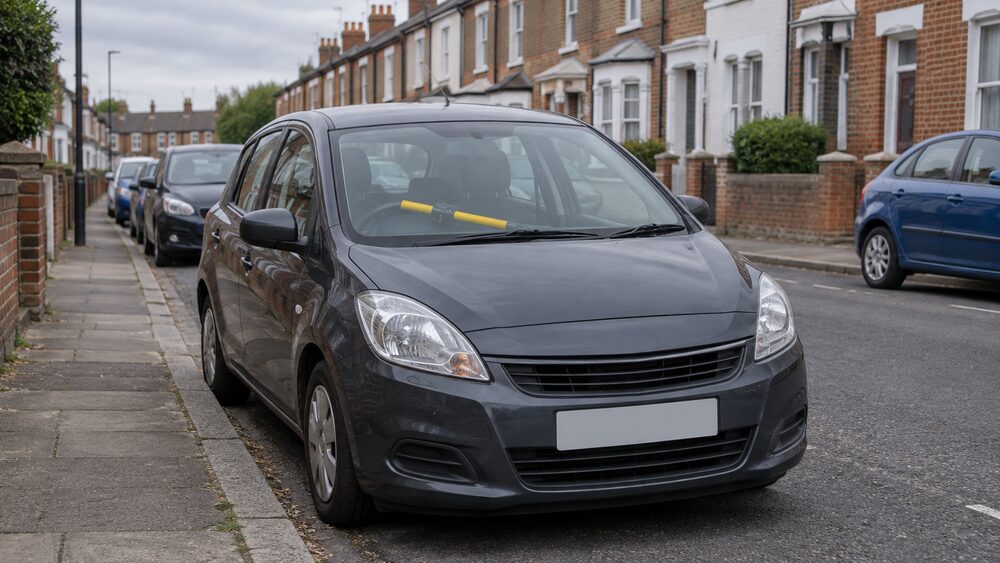
A logbook loan is a loan secured on your vehicle, normally a car. You keep driving it, but the lender takes legal ownership of it from the start of the loan and keeps that ownership until you have paid the money back in full1. If you do not repay, the lender can take the vehicle and sell it, and in most cases it does not need a court order to do so2.
The amounts are usually small, typically £400 to £5,000, repaid over one to three years2. But this is an expensive way to borrow: the APR is sometimes over 200 per cent, and borrowers often pay back more than double what they borrowed3. Logbook loans exist in England, Wales and Northern Ireland; bills of sale, the legal documents behind them, are not valid under Scottish law2.
How a logbook loan works: the lender owns your vehicle until you repay
The mechanics of a logbook loan are unusual among credit products. You take out a loan and use your vehicle, normally a car, as security for the money you have borrowed1. You can still use the vehicle while you repay the loan, but the lender takes ownership of it from the start, until you have paid the money back1. Only when you have settled the agreement in full do you become the vehicle's legal owner again3.
This is what separates a logbook loan from an unsecured personal loan. With a personal loan used to buy a car, the loan provider cannot take the car back if you miss payments, because the loan is not secured on it4. With a logbook loan, the vehicle itself is the lender's security, and the lender can take and sell it if you fall into arrears4.
It also separates a logbook loan from most car finance. Logbook loans can be used to buy a car, but they are often used to borrow cash secured against a car you already own4. The vehicle is not being bought with the loan; it is being handed over as collateral for a cash loan.
The debt is a secured debt: the lender has a claim over a specific asset, your vehicle, rather than just a claim against you generally5. That gives the lender stronger recovery powers than an unsecured lender has, and it gives you more to lose than the borrowed amount alone.
The two agreements you sign: a loan agreement and a bill of sale
When you take out a logbook loan, you usually sign two agreements: a personal loan agreement and a bill of sale agreement1. The bill of sale is the document that transfers the legal ownership of your vehicle to the lender until you have paid the loan in full1.
A bill of sale secures a debt against goods that you own rather than a house or land. Most commonly, a loan is given with a bill of sale used to secure the debt against a car6. The lender will own the goods until the loan has been paid off7. This is the same legal mechanism that can apply to other items too: if you have an item such as a car on a bill of sale agreement, the lender owns the goods until you pay off the loan8.
Before you sign, the lender should give you the key facts about the agreement and a Customer Information Sheet, and should give you both the bill of sale document and the credit agreement at the same time9. Credit agreements must be in writing10. The bill of sale should also be registered, and registration matters: if it is not registered, the lender must get a court order to repossess your vehicle3.
How much you can borrow and for how long
The amount you can borrow depends on the value of your vehicle1. In practice, logbook loans are usually for £400 to £5,000, and they are normally paid back over one to three years2.
That range is smaller than the unsecured personal loan market, where you can usually borrow between £1,000 and £25,000, and loans for as much as £50,000 are available from some lenders12. It is also a different shape of borrowing from high-cost short-term credit such as payday loans, which are designed for much shorter terms. The logbook loan sits between the two: a small loan, but stretched over years, with a vehicle at stake throughout.
Because the loan is secured on the vehicle, the lender's exposure is limited by what the car is worth. That is why the loan size tracks the vehicle's value rather than your income alone, and why a lender will want to see the vehicle logbook before lending1.
The cost: APR sometimes over 200 per cent
You will get cash quickly with a logbook loan, but the APR is very high for the loan repayments, sometimes over 200 per cent3. You often pay back more than double what you borrow2. Debt charities describe logbook loans as an expensive way to borrow money and recommend avoiding them4.
To see what that means in cash terms, it helps to compare with other ways of borrowing a similar amount. Borrowing £2,000 for five years at 99 per cent interest, a rate typical of some bad-credit consolidation lending, means paying an extra £5,317 in interest; over ten years the extra interest rises to £12,18013. At the other end of the market, spreading £5,000 over three years on a well-priced personal loan would accumulate £532 in interest14. A logbook loan's APR, sometimes over 200 per cent, sits far above both3.
| Way of borrowing | What the facts show |
|---|---|
| Logbook loan | APR sometimes over 200 per cent; often repay more than double what you borrowed3 |
| Bad-credit consolidation loan | £2,000 over five years at 99% costs an extra £5,317 in interest13 |
| Personal loan | £5,000 over three years at the lowest rate available costs £532 in interest14 |
The reason the rate is so high is a combination of the borrower profile and the product. Logbook loans are often marketed to people with poor credit records, and having a bad credit rating makes it more expensive and harder to borrow money15. Lenders price for that risk. But the security of the vehicle does not protect the borrower; it protects the lender, which can recover the debt by taking the car. Cheaper alternatives exist for many borrowers, including credit union loans, community lenders and the No Interest Loan Scheme.
Who can get one and what documents you need
Some lenders may give you a logbook loan if you have bad credit, but that is up to them2. The loan is regulated by the Consumer Credit Act2, and lenders must check your creditworthiness before lending: the rules that apply to payday lenders, for instance, require them to check your credit worthiness before they give you a loan, roll over a loan or increase the amount of credit16. A Financial Ombudsman case study of a payday loan shows what that check can involve: the lender showed it had carried out a credit check before offering the loan and asked about income and general living costs such as housing expenses, bills and outstanding credit17.
For a logbook loan specifically, you will usually need to show your vehicle logbook to the lender to prove that you are the registered keeper, and show that you are insured to drive the vehicle1. The V5C logbook is the same document used in other vehicle transactions, such as taxing a vehicle by phone, when you need your V5C or new keeper slip18.
Logbook loans are usually recorded on a database called the HPI Index2. That recording matters less for you as a borrower than for anyone who later buys the vehicle, but it is part of how the market keeps track of which cars carry these debts.
If you are on a low income, it is worth knowing that some borrowing costs nothing: Budgeting Loans from the government are available to people who have been getting income-based Jobseeker's Allowance, income-related Employment and Support Allowance, Income Support or Pension Credit for at least six months19. Free debt advice charities can also tell you whether any of these options fit your situation before you commit to a logbook loan.
Living with the loan: driving, selling and repaying early
You can keep driving the vehicle throughout the loan. There are no restrictions on mileage of the kind that apply to some car finance agreements4. What you cannot do is sell it. It is illegal to sell a vehicle before the logbook loan is paid off2. More generally, it is a criminal offence to sell an item that has a bill of sale agreement attached to it, without the lender's permission9.
This is a sharp contrast with an unsecured personal loan used to buy a car: you can sell the car at any time, because it is yours4. With a logbook loan, the car is not yours to sell until the final payment clears.
Ending the loan early is also restricted. You cannot end a logbook loan early in the way you might expect from other credit4. The rules on paying off a loan early and settlement figures that protect borrowers on other products do not translate straightforwardly here, so check exactly what your agreement says about early settlement before you plan around it.
If things go wrong and the loan is later found to have been unaffordable, redress can be significant. In a Financial Ombudsman case study, a borrower named Renee took a logbook loan despite having five defaults in the preceding 12 months with a total balance of over £1,400 on her credit file. The ombudsman said the lender should refund her the interest and charges she paid, waive those which were outstanding or due in the future, amend her credit file, stop recovery action, and treat the car as her full ownership20.
What happens if you miss payments
The lender can take your car if you miss payments and build up arrears, and does not need a court order to do so4. A bill of sale allows the lender to seize your car without a court order3. The sequence that follows is set out in the guidance:
After you miss one or two payments, the lender will contact you and should discuss ways for you to catch up and pay the arrears4. If you catch up quickly, the missed payments may not be recorded on your credit file, though interest and charges, including late payment charges, will be added21. If you keep missing payments, the lender may issue a default notice, and can then take further action to collect the debt and recover the car, possibly using a debt collection agency or applying for a county court judgment (CCJ)4. A CCJ will be visible on the public register and your credit file if it is not paid in full within a month of the judgment22.
The default notice itself gives you 14 days to bring the account up to date2. After the account defaults, the lender must wait at least five days before taking the vehicle2. Extra charges will usually be added to your debt to cover the costs of removal2.
Once the car is sold, the outcome depends on the price. If the sale price does not cover the total you owe, you have to pay the shortfall2. If the car sells for less than what you owe, you are liable for that shortfall23. If the sale price is more than the total you owe, the difference must be paid back to you2.
If you are struggling, free help is available before repossession happens. What to do if you can't repay a loan sets out the steps, and debt charities such as StepChange, National Debtline and Business Debtline offer free advice on secured debts like this one5.
Where logbook loans are not available: Scotland
Logbook loans are not common in Scotland, and the reason is legal rather than commercial: bills of sale are not valid under Scottish law2. The product exists in England, Wales and Northern Ireland2.
This matters if you live in Scotland and are being offered something that looks like a logbook loan, or if you move between nations with an existing agreement. Debt enforcement in Scotland also works differently: time to pay directions, one option for dealing with debts through the sheriff court, are not available where the debt is over £25,000, and legal aid is not available for small claim actions25. The loans and car finance in Scotland page covers how borrowing rules differ north of the border.
Buying a used car that has a logbook loan on it
Because it is illegal to sell a vehicle before the logbook loan is paid off2, and a criminal offence to sell an item with a bill of sale agreement attached to it without the lender's permission9, a private seller with a logbook loan may hand over a car that the lender still legally owns. If that happens, the lender may be entitled to take the car from you, the buyer, even though you paid for it in good faith.
You can take court action against someone who sells you a vehicle with an unpaid logbook loan2. But prevention is better than a claim. Before buying a used car:
- Run a vehicle history check. If finance is recorded, you will be able to find out which company it is with, when it was taken out, how long for and what type of finance it is26.
- Check the HPI Index, where logbook loans are usually recorded2.
- Use the credit reference agency Equifax's Car Finance Checker, which includes most car finance records back to 200727.
- Some service providers have a facility for checking documents, which means you can check the logbook's issue date and serial number, and the number on the MOT26.
The dedicated page on buying a car with a logbook debt still on it goes through your options in detail, including what to do about the seller and the lender.
Weaker protection than other credit, and where to get help
Logbook loans are regulated by the Consumer Credit Act2, but the consumer protection around them has long been criticised. StepChange, responding to a Treasury consultation on the Goods Mortgages Bill, said its clients have first-hand experience of the detriment caused by the antiquated and inadequate consumer protection governing logbook loans, and recommended stronger protection built into the legislation that specifies what the court can do to protect logbook loan borrowers28.
The practical gaps are visible when you compare with other credit:
| Protection | Logbook loan | Other credit |
|---|---|---|
| Repossession | No court order needed if the bill of sale is registered3 | HP and conditional sale cars are protected goods after a third paid; lender risks refunding all you paid if it breaks the rule24 |
| Selling the goods | Illegal until the loan is paid off2 | With an unsecured loan you can sell the car at any time4 |
| Ending early | You cannot end a logbook loan early4 | Early settlement rights apply on many other products |
If you have already taken out a logbook loan and cannot afford it, you have routes. The Financial Ombudsman Service can look at complaints that a loan was unaffordable, and its case studies show it ordering lenders to refund interest and charges, waive future charges, amend credit files and stop recovery action20. The page on complaining about an unaffordable loan explains how to make that complaint.
Free, impartial help is available: StepChange, National Debtline and Business Debtline all publish guidance on logbook loans and bills of sale2, and MoneyHelper offers free money guidance. If you are comparing options before borrowing, logbook loan or unsecured personal loan sets the two side by side, and the loans guide covers the full range of ways to borrow.
Sources28 cited
- Logbook loans Financial Ombudsman Service
- Logbook loan debt StepChange Debt Charity
- Loans nidirect
- Car finance debt StepChange Debt Charity
- What is secured debt: examples, risks and how it works National Debtline
- Bill of sale (E&W) National Debtline
- Bill of sale (E&W) Business Debtline
- Selling assets to clear debt (E&W) Business Debtline
- Selling assets to clear debt (E&W) National Debtline
- Unfair terms in consumer contracts and notices Trading Standards Wales
- Bankruptcy and my car StepChange Debt Charity
- Remortgaging to release equity and cash from your home Which?
- Debt consolidation loans for bad credit StepChange Debt Charity
- How to pay for home improvements in 2026 Which?
- What do I need to know about debt Bank of England
- Payday loans nidirect
- Given a payday loan I couldn't afford Financial Ombudsman Service
- Tax your vehicle without a V11 reminder GOV.UK
- Managing financially Gingerbread
- My lender has said it'll take my car because I can't afford to repay my logbook loan Financial Ombudsman Service
- Debt collection StepChange Debt Charity
- Tomlin order StepChange Debt Charity
- Car finance Advice NI
- Car repossession: what happens and what you can do about it National Debtline
- Sheriff court action (S) National Debtline
- Checking the history of a motor vehicle Finance and Leasing Association
- List of lenders Financial Conduct Authority
- Treasury consultation: Goods Mortgages Bill StepChange Debt Charity



 MoneyHelperFree, impartial money and pensions guidance, set up by government
 StepChangeFree debt advice and solutions from a charity
 National DebtlineFree debt advice by phone, webchat and online
 Financial Ombudsman ServiceFree, independent help when a complaint about a firm is not put right
 Citizens AdviceFree advice on money, consumer and legal problems in England and Wales