
When you borrow money, the interest is the charge for doing so, shown as a percentage of the loan1. On most loans, that percentage is applied not to the amount you originally borrowed but to the balance you still owe, so the interest portion of each payment falls as the debt is paid down2. That single principle drives almost everything about how a loan costs you money: how your monthly repayment is worked out, why a longer term costs more in total, and why paying early can save you interest.
This page explains how lenders calculate interest, how the rate and the term together determine the total amount repayable, and what happens when payments are late, paused or missed. It covers fixed-sum loans such as personal loans, credit union loans and similar products, and points to the protections that apply if things go wrong.
Loan interest is a percentage of what you still owe
The Bank of England defines the interest rate on borrowing as the amount you are charged for borrowing, shown as a percentage of the total amount of the loan1. StepChange puts the same idea in plainer terms: when you borrow, you usually pay interest, and this is the cost of borrowing, shown as a percentage2. The percentage itself is only half the story, though. What it is applied to, and how often, decides what the loan actually costs.
On the great majority of fixed-sum loans, the percentage is applied to the outstanding balance, the amount you still owe at that moment. Each monthly repayment is split between interest for that month and a reduction in the balance (the capital). As the balance falls, the interest charged on it falls too, so a growing share of each later payment goes to capital. This is why the early months of a loan feel slow, in terms of how much the debt shrinks, and the later months feel fast.
Government equity loan schemes show the same principle at work. With a Help to Buy: Equity Loan, monthly interest is worked out using the sum: equity loan amount in pounds multiplied by the interest rate, divided by 12 months9. After you make a part repayment, interest is worked out using the percentage of the equity loan left to repay and the original market value of the home9. The repayment guide gives a worked example: £10,000 remaining, at 1.75% per annum, gives £175 a year, or £14.58 a month10. The Help to Stay Wales scheme uses the same shape of formula: equity loan amount multiplied by the interest rate, divided by 1211.
Not every scheme uses the borrower's own rate. A Support for Mortgage Interest Loan, which helps with housing costs, is calculated using a standard rate of interest rather than your lender's actual rate for your loan12. And some loans charge interest on the full amount throughout: with a Help to Build: Equity Loan you pay 1.75% interest on the equity loan amount you borrowed in year 6, and from year 7 onwards the interest goes up in line with the consumer price index plus 2%13. PhD loans charge interest from the date of the first instalment, at the retail price index plus 3%14.
Daily interest on a reducing balance: how lenders work it out
Most lenders do not work out interest once a month. They work it out daily, on the balance as it stands that day, and add it to the account at the end of the month. Just Credit Union states this directly in its loan terms: "Interest is calculated daily on the reducing balance of your loan."15
Student loans show the same mechanics in official guidance. For fixed-term student loans, interest is calculated daily from the date the loan started and added to the account at the end of each month16. The legislation for plan 5 loans says the same in more formal language: interest is "calculated on the outstanding principal of the loan daily, and added to the outstanding principal of the loan monthly"6.
Daily calculation on a reducing balance is the fairest arrangement for a borrower who overpays: the day after any extra payment, the balance is smaller, so every day's interest from then on is smaller too. It also means that interest does not build up at a flat rate on money you have already handed back. The alternative, a flat rate applied to the original amount for the whole term, produces a much higher true cost than the headline suggests, which is one reason the APR exists.
Interest rate and APR: why the annual figure is higher
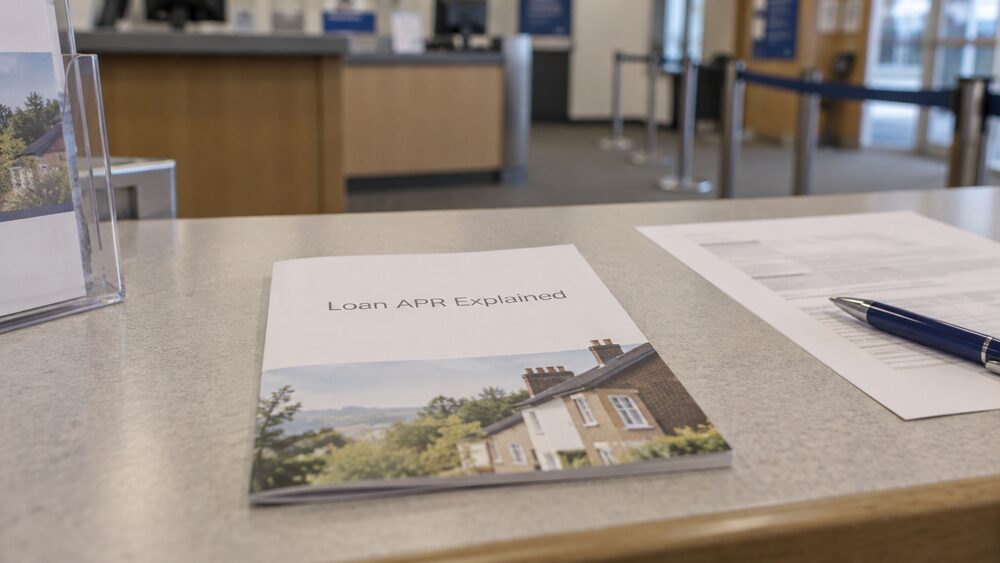
The interest rate a lender quotes and the APR (Annual Percentage Rate) are not the same number, and the gap between them is not a trick, it is arithmetic. Citizens Advice explains that lenders have to tell you what the APR is before you sign an agreement18, and nidirect advises that the APR is a way to compare loans: generally, the lower the APR, the cheaper the deal19.
The APR reflects the whole-year cost of the credit, taking account of how often interest is charged and certain compulsory charges. Because interest is added to the balance and then itself earns interest, a monthly rate compounds into a bigger annual figure. The legislation behind consumer credit rebates shows the conversion in action: for a loan with an APR of 16% per annum, the equivalent period rate for monthly calculation is 1.2445% per month20. Twelve lots of 1.2445% is not 16%: compounding lifts the annual figure above twelve times the monthly one, and any fees included in the APR lift it further.
The official worked examples in the Consumer Credit Act regulations show APRs of 14% and 16% per annum on two illustrative loans21. Those same examples show what the APR means for the total cost, which is the subject of the next section.
If a lender quotes you a monthly or flat rate, the APR is the figure to compare across lenders, because it puts different charging structures on a common scale. The dedicated page on loan APR, representative APR and personal APR covers how the advertised figure relates to the rate you are actually offered.
How the amount and term change what you pay back
Two things decide the total amount repayable on a loan: the rate, and how long the debt is outstanding. StepChange states the effect of the term plainly: taking a loan over a longer period may lower the monthly payments, but you pay interest for the whole time you owe the money, so you end up paying more7.
The official worked examples in the Consumer Credit Act regulations show the effect at full scale. A £5,000 loan repayable by 48 monthly instalments of £134.57 has a total amount repayable of £6,459.36, a total charge for credit of £1,459.36, and an APR of 14% per annum. A £10,000 loan repayable by 180 monthly instalments of £139.51 has a total amount repayable of £25,111.80, a total charge for credit of £15,111.80, and an APR of 16% per annum21. The monthly payments in the two examples are almost the same, £134.57 against £139.51, but the longer, larger loan costs more than ten times as much in interest.
Which? gives a mortgage example of the same principle. Borrowing £20,000 on a personal loan at 7%, repaid over five years, costs £3,640 in interest. Rolling £20,000 of debts into a mortgage instead, increasing a £180,000 mortgage with 20 years to go at 4.5% to £200,000, raises the monthly repayment by £127 and costs £10,300 in additional interest over the remaining term22. The rate is lower, but the term is far longer, and the term wins.
Mortgage examples show the same arithmetic at its largest. On a £300,000 repayment mortgage over 25 years at 5% interest, the total interest charged over the lifetime of the mortgage is £226,131, meaning the borrower pays back £526,131 in total23. The page on how personal borrowing works covers how these figures appear in a loan quotation before you sign.
Fixed repayments: interest first, capital later
On a loan with fixed monthly repayments, the payment stays the same but its composition changes. Early on, when the balance is at its largest, most of each payment is interest; later, as the balance falls, most of it is capital. StepChange gives a mortgage example: on £1,000 a month payments, £350 could go to the interest and £650 to capital as the mortgage gets smaller24. Earlier in the same loan the interest share would be larger, later it would be smaller still.
This is why overpaying early in a loan saves more interest than overpaying late: an extra payment made when the balance is large removes debt that would otherwise be charged interest for the whole remaining term. It is also why the balance seems to barely move in the first year of a long loan.
Not every loan splits the payment this way. On an interest-only mortgage you pay only the interest each month and the capital is repaid at the end: on £300,000 borrowed at 5% interest, the monthly repayment is £1,250, worked out as (£300,000 x 0.05) divided by 1223. A retirement interest-only mortgage works the same way, with the capital repaid when the property is sold, on death or going into care25. The interest charge never shrinks, because the balance never does.
Fixed repayments are fixed only if the rate is fixed. Business Debt Line's budget guidance notes that loan repayments are usually fixed, but if you borrow on a variable interest rate, your repayments may change if the bank's interest rate changes26. The comparison page on fixed vs variable interest rates on loans sets out how each behaves.
Secured or unsecured: how security affects the interest you pay
Whether a loan is secured against an asset changes both the rate and the risk. The Bank of England notes that on unsecured loans, where the lender has no claim to a specific asset if you do not pay, the interest tends to be much higher27. StepChange explains the other side: many secured loans are offered as a way to consolidate debts, with interest rates lower than unsecured personal loans because the risk to the lender is reduced3.
The trade for the lower rate is what you put at risk. A secured loan is tied to an asset, usually your home, and if you cannot keep up the payments the lender can take steps to repossess it. An unsecured personal loan carries no such claim, which is why it is treated as a non-priority debt when money is tight, as the final section of this page explains. The comparison page secured or unsecured borrowing compared sets the two side by side, and homeowner loan vs remortgaging covers the routes for borrowing against a home.
Credit unions: capped rates on the reducing balance
Credit unions are subject to a legal cap on what they can charge. The Credit Unions (Maximum Interest Rate on Loans) Order 2013 increased the maximum interest rate a credit union may charge on a loan from 2% per month to 3% per month28. The Order specifies the rate for the purposes of the Credit Unions Act 1979 as three per cent per month, from 1 April 201428. The explanatory note to the instrument states the change in one line: "This instrument increases the maximum interest a Credit Union may charge on a loan to 3 per cent per month."4
Three per cent a month is a ceiling, not a price: individual credit unions set their own rates below it, and many charge much less. Just Credit Union, for example, calculates interest daily on the reducing balance of the loan15, so the charge falls as the debt falls, in the way described earlier on this page.
Credit unions also lend at sizes mainstream personal loans do not reach. Personal loans usually run from £1,000 to £25,000, with some lenders offering as much as £50,00022, but credit unions and community lenders make smaller loans, and some require you to save alongside borrowing. The pages on credit union loans, save-to-borrow and saver loans and credit union fees cover how these products work, and payday lender or credit union loan compares them for small amounts.
Paying off early: exit fees and extra interest
Because interest is charged on the reducing balance, paying a loan off early reduces the total interest you pay: the debt stops existing, so the daily charge stops with it. But early settlement can involve costs of its own.
An early repayment charge is generally calculated as a percentage of the outstanding loan, and so can be a significant outlay22. Not every loan carries one: unsecured personal loans often do not, while mortgages and secured loans usually do. The page on paying off a loan early and settlement figures covers how to ask for a settlement figure and what to check.
The law also governs how much interest you get back when you settle early. The Consumer Credit Act regulations include worked examples of rebates: on the £5,000 loan over 48 monthly instalments, settling after the 12th instalment gives a rebate of £776.90; on the £10,000 loan over 180 instalments, settling after the 72nd gives a rebate of £6,606.9521. The rebate is the interest you no longer have to pay because the loan ended early.
For student loans, the rules on extra payments are set by plan type. The legislation provides that where an excess payment relates to a plan 1, 3 or 5 loan, interest is refunded at the rate at which the loan would have borne interest if it had not been repaid in full; for a plan 2 loan, it is the lower of that rate or the standard interest rate6. The narrow page on how a car finance settlement figure is worked out covers the same idea for motor finance.
Where extra charges come from: late payments and repayment holidays
Interest is not the only cost that can attach to a loan. Late payments and paused payments each add charges of their own.
On payday loans, the charges are capped. If you are late repaying, the most you can be charged is £1529. Citizens Advice warns that if there is not enough money in your account to repay the loan on the agreed date, the lender may keep asking your bank for payment, and charges will be added for late payment5. StepChange adds that some lenders will then charge interest on the original loan amount plus the late payment fee, but this is capped at 0.8% per day30. The page on the payday lending cost cap sets out the full cap.
Payment holidays, where a lender agrees to pause repayments, do not pause the cost. Interest and charges may still be added during the holiday31. When the break ends, your monthly payment to the loan rises to cover the missed payments and the interest charged during the payment break31. On a mortgage payment holiday, the new payment depends on how long is left of the mortgage term31. The page on payment holidays on loans and credit cards covers when to ask for one and what to expect afterwards.
If you cannot keep up with repayments
If repayments become unaffordable, the type of loan determines what is at risk. Money you owe to your bank, including an unsecured personal loan, is a non-priority debt32. Mortgages are priority debts: they should be paid first, because the lender could repossess your home and sell it to get their money33. Shelter lists other priority debts: loans secured on your home, gas and electricity, council tax, TV licence and mortgage arrears34. The Building Societies Association gives the same framing, naming loans secured against an asset, such as a mortgage or a car bought on hire purchase or conditional sale, among the most important debts to pay first35.
A non-priority debt can change its status. If the company you owe money to gets a county court judgment against you and you do not pay, it can get a charging order which puts your home at risk of repossession34. So an unsecured loan is non-priority only until enforcement turns it into a secured claim.
There are ways to change the terms rather than default. A time order, available in Scotland through the courts, can change the amount you have to pay each month, how long the loan will last and, in some cases, the interest rate36. On student loans, falling out of compliance with the repayment rules has a direct cost: borrowers who become non-compliant incur the highest interest rates of RPI plus 3% irrespective of income, until all required information is provided37. And if you have lived abroad, not updating your details means you continue repaying at the rate for the country you have been living in, which could mean paying more than you need to or being charged a higher rate of interest8.
Free, impartial help is available before things reach enforcement. StepChange, National Debtline and Citizens Advice all offer free debt advice, and the section page on debt gathers the options. The page on what to do if you can't repay a loan covers the practical steps, and complaining about a lender covers taking a dispute to the Financial Ombudsman Service.
Sources37 cited
- What are interest rates? Bank of England
- Credit confidence StepChange
- Secured loan debt StepChange
- Explanatory memorandum to SI 2013/2589 legislation.gov.uk
- Payday loans Citizens Advice
- The Education (Student Loans) (Repayment) (Amendment) Regulations 2022 legislation.gov.uk
- Personal loan debt StepChange
- Repaying your student loan GOV.UK
- Paying interest on your Help to Buy: Equity Loan GOV.UK
- Help to Buy: Equity Loan repayment guide GOV.UK
- Help to Stay Wales scheme guidance Welsh Government
- How much Support for Mortgage Interest Loan will I get Turn2us
- Apply for a Help to Build: Equity Loan GOV.UK
- PhD loans Prospects
- Payroll member loan terms Just Credit Union
- Repaying student loans (England and Wales) National Debtline
- Credit union loans Ulster Federal Credit Union, 2026-09-26
- Getting the best credit deal Citizens Advice
- Loans nidirect
- Consumer Credit (Rebate on Early Settlement) Regulations 2004, Schedule legislation.gov.uk
- Consumer Credit (Rebate on Early Settlement) Regulations 2004 legislation.gov.uk
- Remortgaging to release equity and cash from your home Which?
- How do mortgage payments work? Which?
- Mortgage with bad credit StepChange
- Over half of borrowers will still have a mortgage at 65 Which?
- Your business and household budget Business Debt Line
- What do I need to know about debt? Bank of England
- The Credit Unions (Maximum Interest Rate on Loans) Order 2013 legislation.gov.uk
- What's the best way to borrow money at Christmas? Which?
- Payday loan calculator StepChange
- Payment holiday for debt repayments StepChange
- Overdrafts and other bank debts nidirect
- Mortgage arrears or payment difficulties nidirect
- How to pay off mortgage arrears Shelter England
- Tips on dealing with debt Building Societies Association
- Time orders National Debtline
- Income Contingent Student Loan repayment plans, interest rates and calculations (England) GOV.UK




 MoneyHelperFree, impartial money and pensions guidance, set up by government
 StepChangeFree debt advice and solutions from a charity
 National DebtlineFree debt advice by phone, webchat and online
 Financial Ombudsman ServiceFree, independent help when a complaint about a firm is not put right
 Citizens AdviceFree advice on money, consumer and legal problems in England and Wales