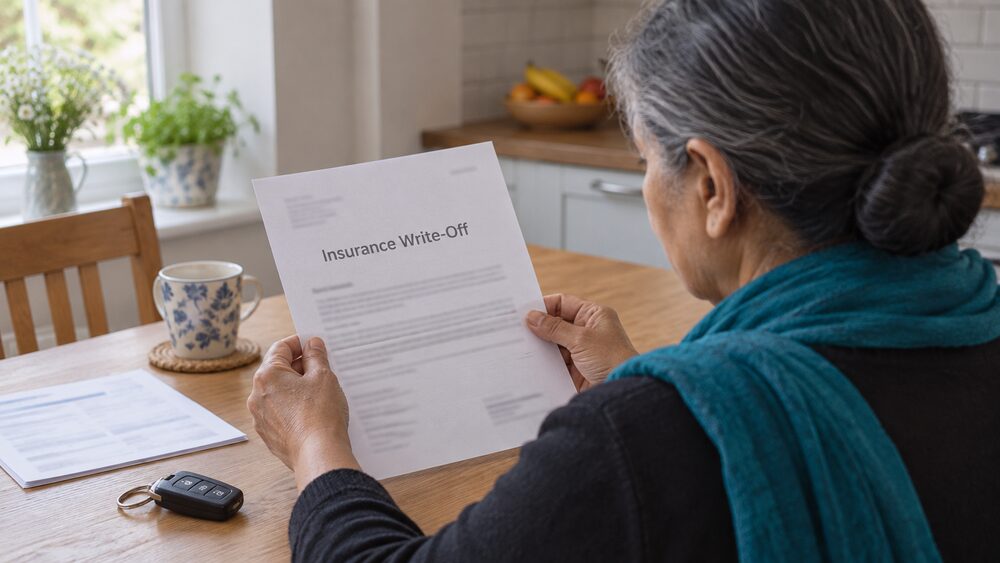
If your car is written off while it is still on finance, the insurance money does not simply clear the debt. The insurer pays the current value of the vehicle rather than the cost of repairing it1, and because the finance company owns the car until the agreement is paid off, that payout goes towards the finance first. Whatever is left on the agreement is still owed by you.
If your car is written off while it is still on finance, the insurance money does not simply clear the debt. The insurer pays the current value of the vehicle rather than the cost of repairing it1, and because the finance company owns the car until the agreement is paid off, that payout goes towards the finance first. Whatever is left on the agreement is still owed by you.
That is the part that catches people out. The finance agreement and the insurance policy are two separate contracts, and a total loss claim does not cancel the debt2. If the payout is more than the balance outstanding, the surplus comes to you. If it is less, you owe the difference, and the finance company can pursue it in the usual way.
What follows sets out who owns the car and why, why the write-off does not end the agreement, how the balance left to settle is worked out, and what your options are if the shortfall is more than you can pay.
The lender owns the car until the agreement is paid off
With most types of car finance, the borrowing is secured against the car, which means the lender owns it until you have paid off the agreement4. That single rule explains almost everything that happens after a write-off.
It applies across the main agreement types. With hire purchase or conditional sale, the finance company owns the car until you have made the last payment3. The same is true of PCP and conditional sale agreements: the vehicle is not fully owned by you until the last payment to the finance agreement is made6. With leasing or personal contract hire, the car remains the property of the finance company throughout3.
Because you do not own it, you cannot sell it. Under a hire purchase or conditional sale agreement you cannot sell the car without the lender's written permission, as you do not own it until you have paid off the agreement7. Selling a vehicle that is still under finance is against the law until the finance is paid off in full8. Anyone buying a car with outstanding finance on it may never legally own it and could lose the vehicle9.
There is one important exception. If you bought the car under an ordinary, unsecured loan agreement rather than a secured one, you own the car before it is paid for and the lender cannot take the car back7. In that case the write-off affects only your insurance, not any security, though the loan itself still has to be repaid.
Why a write-off does not end your finance agreement
Insurers sometimes call a write-off a "total loss"10. A vehicle might be written off because it is not worth the cost of repairing it, or because it has been stolen and never found10. Neither of those events touches the finance contract, which is a promise to repay a sum of money over an agreed term.
The clearest illustration is monthly car insurance. A total loss claim does not cancel the remaining monthly payments; the policy usually ends once the claim is settled, but the outstanding balance remains owed2. Usually, the money you owe would be deducted from the claim, rather than you needing to repay it directly2. So the insurer and the finance company settle between themselves, and you are left with whatever gap remains.
Where the car itself is concerned, the insurer takes the lead. If the vehicle is in category N or S and you want to keep it, the insurance company will give you an insurance payout and sell the vehicle back to you1. If it is being scrapped, your insurance company will usually deal with getting the vehicle scrapped for you1.
Paying off what you still owe on a secured car loan
Once the insurance payout has been applied, the finance company will tell you the balance outstanding: the total amount of the loan outstanding after a certain period of time11. That figure is what you owe, and it does not disappear because the car has.
If you can pay it, the agreement ends and the lender's interest in the car is released. If you cannot pay it in one go, the debt continues on its original terms, which normally means the monthly payments carry on. Continuous non-payment can result in formal notices of arrears and, after three or four missed payments in a row, a default notice4.
There are ways to reduce or restructure what is left, and they differ in how much they cost you:
- Keep paying as agreed. The simplest route, and the one that does least damage to your credit file. Paying monthly on time has a positive impact on your credit score, while failing to pay on time has a negative one12.
- Ask the lender to accept a payment arrangement. Creditors can agree a lower, affordable payment for a period. In an example used by one debt charity, a person with a credit card, an overdraft and a personal loan had a total outstanding balance of £1,000 and negotiated a repayment plan against it13.
- Make a full and final settlement offer. You offer a lump sum to clear the debt, and the account is then shown as closed with the balance changed to zero, and possibly a "P flag" for partial settlement14.
- Use a formal insolvency solution. These write off some of your debt after you have made payments for a set amount of time15. In Scotland, a protected trust deed writes off any remaining debt at the end16, and a trust deed writes off any debts you still have after the agreed period17. Bankruptcy writes off most debts, though criminal fines and fraudulent debts still have to be paid after discharge18.
If the shortfall is more than you can manage, free and impartial help is available. StepChange and National Debtline both give free debt advice, and the Financial Ombudsman Service can look at a complaint about how a finance company handled your case21.
Deposit, term and mileage: what shapes the balance left to settle
The size of the gap between the insurance payout and what you owe is not random. It is set by the terms you agreed at the start.
A deposit reduces the amount borrowed, so it lowers the balance outstanding from day one. It is not normally returned as a separate sum when a car is written off, because it has already been applied to the price of the car. But it can be returned in some circumstances: in one ombudsman case, the finance company was told to take back the car, cancel the remaining finance amount, correct adverse entries on the customer's credit file, and refund a £500 deposit with interest, with the customer paying something towards his use of the car21.
The term matters because interest accrues over it. A longer agreement means more of the total cost is still to come when the car is written off early, which widens the gap. Mileage matters because it feeds into the car's value, and the insurer pays the current value of the vehicle1. A car that has covered more miles than expected is worth less, so the payout is smaller and the shortfall larger.
Two other things can change the arithmetic:
- The type of insurance policy. An agreed value policy pays out an agreed figure if the car is written off, regardless of market value, and is usually more expensive22. That removes valuation risk but costs more up front.
- Whether you claim at all. If the damage is minor and you are considering paying for it yourself, claiming on your car insurance can mean you lose your no claims bonus23.
Taking out finance on a replacement car: credit, affordability and ID checks
Replacing the car usually means a new application, and the old agreement does not vanish from the picture. A lender will see it.
If you buy a car on finance, a new debt is added to your credit report12. Credit is subject to status and additional affordability checks24, and there may be credit checks when you sign a new agreement25. An existing balance from a written-off car counts against you in those checks, because it is still a debt you owe.
Before you commit to a replacement, it is worth checking the history of the car you are buying. A vehicle history check will show whether finance is recorded on it, and if it is, you can find out which company it is with, when it was taken out, how long for and what type of finance it is9. That protects you from buying a car that still belongs to someone else's lender.
If you are unsure who your own finance was with, the Financial Conduct Authority suggests checking old bank statements, contacting the dealer where you got the car, or checking your credit file, which you can access for free through Experian and TransUnion26.
If a new application is refused, that is not the end of the road. Getting a loan with a poor credit history and why you may have been refused car finance both set out what lenders look at and what the alternatives are. If the shortfall from the written-off car is the reason you cannot move on, what to do if you cannot pay your car finance covers the options in more detail.
Sources26 cited
- Scrapped and written-off vehicles: insurance write-offs GOV.UK, 2026-09-28
- My car's been written off, so why am I still paying for the insurance? Which?, 2026-07-13
- Car finance debt StepChange, 2026-09-25
- Car finance Advice NI, 2026-09-26
- How does debt affect a credit file? StepChange, 2026-09-25
- Bankruptcy and my car StepChange, 2026-09-25
- Car repossession: what happens and what you can do about it National Debtline, 2026-09-25
- Selling assets to clear debt Business Debtline, 2026-09-25
- Checking the history of a motor vehicle Finance & Leasing Association, 2026-09-25
- Vehicle valuations and write-offs Financial Ombudsman Service, 2024-12-04
- Home buying and selling jargon HomeOwners Alliance, 2026-07-31
- Buying a car RBS, 2026-09-26
- Arranging payment with creditors StepChange, 2026-09-25
- Full and final settlement offers Business Debtline, 2026-09-26
- Government debt advice StepChange, 2026-09-25
- Debt advice in Scotland StepChange, 2026-09-25
- Getting a trust deed StepChange, 2026-09-25
- How long will bankruptcy affect me? StepChange, 2026-09-25
- Getting credit card debt written off: your rights and options National Debtline, 2026-09-25
- Write off debt National Debtline, 2026-09-25
- Consumer told us they were struggling to repay their car finance agreement Financial Ombudsman Service, 2026-09-26
- Modified car insurance Which?, 2026-01-22
- Problems with a car repair Citizens Advice, 2026-09-25
- Car Finance Plus explained Bank of Scotland, 2026-09-27
- Credit reports and credit reference agencies Advice NI, 2026
- Car finance complaints: list of lenders Financial Conduct Authority, 2026-09







 MoneyHelperFree, impartial money and pensions guidance, set up by government
 StepChangeFree debt advice and solutions from a charity
 National DebtlineFree debt advice by phone, webchat and online
 Financial Ombudsman ServiceFree, independent help when a complaint about a firm is not put right
 Citizens AdviceFree advice on money, consumer and legal problems in England and Wales