
Whether a finance company can take your car back depends on two things above all: the type of agreement you signed, and how much of the total amount payable you have already handed over. On a hire purchase (HP) or conditional sale agreement, the finance company owns the car until you make the last payment, and it can take the car back if you miss payments1. But the law puts a brake on how it does that: once you have paid at least one third of the total amount payable, the car becomes "protected goods" and the lender needs a court order, or your consent, to repossess it2.
Before that one-third threshold, the lender can sometimes take the car without going to court at all, but only from certain places: a public road, or premises where you have given permission to enter2. If the car is on your driveway, in a garage or on other private land where you have not let the lender in, a court order is needed regardless of how much you have paid2. And repossession is meant to be a last resort: the Financial Conduct Authority expects lenders to have considered the impact on you and explored all other options before starting or continuing action to repossess a vehicle3.
The finance company owns the car until the last payment
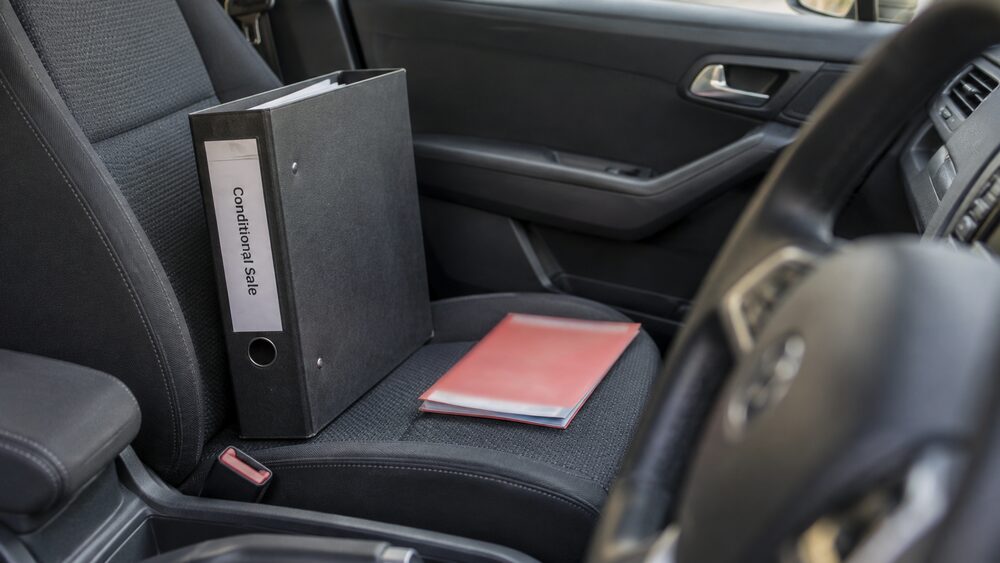
Most car finance in the UK works by the lender keeping ownership of the vehicle while you pay it off. When you buy a car with a hire purchase (HP) or conditional sale agreement, the finance company owns the car until you have made the last payment1. The same is true of personal contract purchase (PCP): the finance provider still owns the car1. Vehicles bought using a hire purchase or conditional sale agreement do not belong to you until the last payment to the finance provider has been paid5, and you don't own the car until the last payment is made6.
That has practical consequences beyond repossession. Because you don't have complete ownership until all payments are finalised, a private sale of a PCP or HP car is generally not legally permissible7. The different finance types also behave very differently when payments go wrong:
- Hire purchase or conditional sale: the finance company owns the car and can take it back if you miss payments1.
- PCP: the finance provider owns the car throughout, and because you may not pay more than a third of the total amount payable before the end of the agreement, the creditor may be able to repossess the vehicle without a court order first8.
- Lease or hire agreements: the car remains the property of the finance company, which can take it back if you miss payments1.
- Logbook loans: you hand ownership of your car to the finance company until you make the last payment, and the lender can take the car if you miss payments and build up arrears, without a court order1. You can still use the vehicle, but the lender takes ownership from the start of the loan until it is paid back, and can take and sell the vehicle if you don't repay9.
- Personal loan: the loan provider cannot take the car back if you miss payments, because the loan is not secured on the car. You own it from the start and can sell the car at any time1. The trade-off is that falling behind on a personal loan has its own consequences: your home may be repossessed only if the loan is secured on it, and unsecured personal loan arrears lead to default notices and debt collection instead10.
If you are unsure which type of agreement you have, the paperwork you signed at the dealership or lender will name it. The guides to hire purchase, PCP and conditional sale explain each one, and how car finance works sets out the market as a whole.
Missed payments and the default notice
Repossession does not happen after a single missed payment. On HP and conditional sale agreements, you normally need to miss two or three payments before a default notice is issued2. Advice NI puts the pattern slightly differently: continuous non-payment can result in formal notices of arrears, and after three or four missed payments in a row, a default notice7. StepChange describes the same sequence for hire purchase, with the default notice usually issued after three months11.
The default notice is a formal document that tells you the agreement is in serious arrears and gives you a chance to put it right. It says you have missed payments on your loan12, and it gives you 14 days to make up any missing payments4. Shelter's description of default notices on mortgage and loan arrears gives a slightly longer window of one month to pay your arrears12, so the exact period depends on the type of agreement and what the notice itself says. The notice is not repossession: it is the warning stage before the lender can take further action.
If you keep missing payments after the default notice, the lender can then take further action to collect the debt and recover the car, possibly using a debt collection agency or applying for a county court judgment (CCJ)1. The missed payments themselves will already have been recorded on your credit file, and for debts covered by the Consumer Credit Act the creditor will soon think about sending a default notice13. On a personal loan, you will be sent a default notice that gives you a chance to catch up with missed payments10.
The one-third rule: when a court order is needed
The central rule in car finance repossession is the one-third threshold. If you do not consent to repossession and you have paid at least one third of the total amount payable under your HP or conditional sale agreement, the lender will need a court order to repossess the car2. At that point the goods become "protected goods" and the creditor must go to court for an order for the goods to be returned, unless you consent to the repossession14.
The rule comes from the Consumer Credit Act's prescribed information, and the legislation itself sets it out: once the debtor has paid at least one third of the total amount payable (or the cost of installing the goods plus one third of the rest), the creditor may not take back the goods against your wishes unless it gets a court order15. National Debtline states the same threshold: if you have paid at least one third of the total amount payable on your agreement, your creditor will need to get a court order to repossess the goods16, and Business Debtline agrees that if you have paid at least one third of the total amount payable, your creditor will need to get a court order17. StepChange puts it as paying off more than one third of the total owing before the creditor must go to court18.
The threshold is measured against the total amount payable, not the cash price of the car. That matters because the total amount payable includes interest and charges, so the one-third mark is reached later than many borrowers expect. Advice NI is blunt about the practical effect: paying one third makes the car a "protected good", but "in all reality, this doesn't provide much protection as it merely requires the lender to get a court order to repossess the car"7. The protection is procedural: it forces the lender in front of a judge, where you can respond, rather than removing the risk of losing the car.
Repossession without a court order: roads and premises
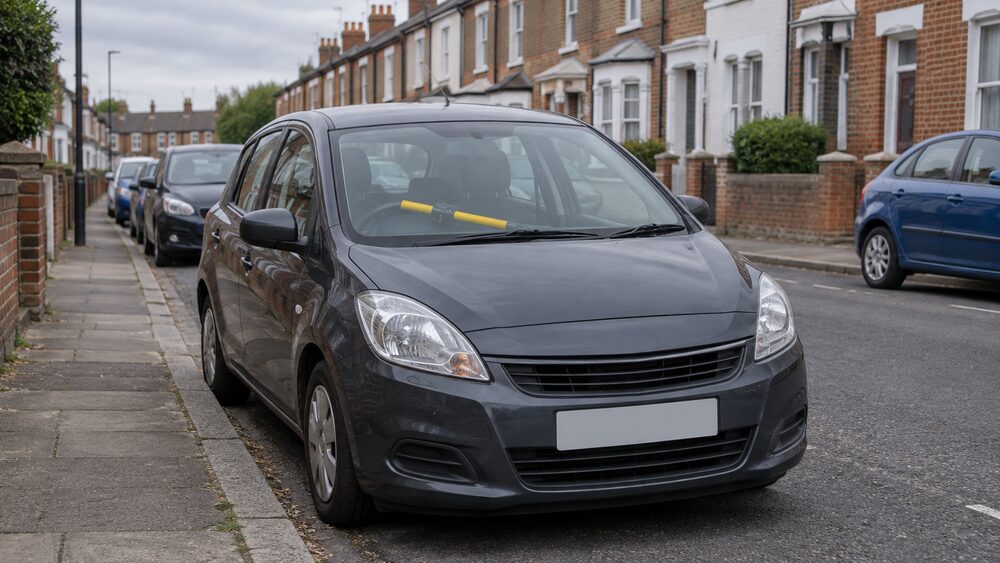
Below the one-third threshold, repossession without a court order is possible, but only from certain places. If you have paid less than a third, your lender can repossess the car if it is on a public road, or from "any premises" where you have given permission to enter2. However, the lender will need a court order if the car is on premises where you have not given them permission to enter2.
The premises rule applies even before the one-third mark. National Debtline states that even if you have not paid more than a third of the total amount payable, the creditor will need an order from the court, or your consent, to remove the goods from "any premises" they are on14. StepChange lists the two situations in which a court order is needed on HP: you have paid more than a third of the agreement, or the goods are stored on private land or inside your home11.
This is what distinguishes motor vehicles from most other hire purchase goods. Household items cannot usually be taken without a court order, but motor vehicles often can be11, because a car spends much of its life on a public road where the premises rule does not protect it. A car parked on the street overnight is at much greater risk than one behind a locked gate.
Two other products sit outside even these limits. A bill of sale, the legal basis of a logbook loan, allows the lender to seize your car without a court order19, and the lender does not have to go to court to repossess the goods4. There is one qualification: if the bill of sale is not registered, the lender must get a court order to repossess your vehicle19. The dedicated guide to logbook loans and the page on whether a logbook lender can take your car cover that market in detail.
Protected goods: what happens if the lender breaks the rules
The one-third rule has teeth. If a lender repossesses protected goods without a court order and without your consent, it risks having to refund all the money you have paid under the agreement2. That sanction is what turns the rule from paperwork into a real limit on what a lender can do.
The rule applies to HP and conditional sale agreements, and to PCP agreements where the one-third mark has been reached. Business Debtline states that if you have paid a third or more of the total amount payable, the goods become protected goods and the creditor must go to court for an order for the goods to be returned unless you consent3. The same guide notes that if you do not keep up with the payments, it is still possible for a creditor to repossess the goods, so protection does not mean the car is safe3.
Regulators have reinforced the last-resort principle. The FCA's Tailored Support Guidance for consumer credit firms states that "repossession of goods and vehicles should only be as a last resort and in accordance with all relevant government public health guidelines and regulations"20. The FCA's mortgage conduct rules carry a parallel principle for homes: a firm must not repossess the property unless all other reasonable attempts to resolve the position have failed21. For customers in payment difficulties, lenders are expected to give time and opportunity to repay, put in place an affordable repayment arrangement, and suspend or waive interest and charges if an arrangement is agreed8.
If a lender breaks the rules, you can complain to it directly and then to the Financial Ombudsman Service, which looks at car finance complaints free of charge. The ombudsman also expects lenders to explain themselves properly when refusing a repayment proposal: where a firm rejects a proposal for repayment from a customer in default or in arrears difficulties, the firm's response must include a clear explanation of the reason for the rejection22. The guide to complaining about a lender or finance company sets out the process step by step.
Responding to a return order and the N9C form
If the lender does go to court, the claim that lands on your doormat is an application for a return order (or a return of goods order). You need to respond to it by filling in the N9C admission form, which comes with the claim form, and you have 14 days to return it to the court2. Send the completed form, your witness statement and any supporting paperwork to the court within 14 days16.
The N9C is where you set out your position: whether you admit you owe the arrears, what you can afford, and any defence or proposal you want the court to consider. Business Debtline describes the same step for time order applications during court action: fill in the "admission" form N9C, which comes with the claim form17. A time order is one possible outcome of the court process: it can change the terms of the agreement, for example by rescheduling the payments, rather than simply ordering the car's return. The guides to time orders on hire purchase and to what to do if you can't pay your car finance cover those options.
The ombudsman's case studies show what courts and lenders expect when someone in financial difficulty wants to exit an agreement early. In one published case, the consumer said the options were not explained when she wanted to exit a hire purchase agreement early because of financial difficulties, and the options discussed included allowing her to hand back the car, sell it, and deduct the proceeds from the total amount she owed23. The lesson for a borrower facing a claim is that handing back the car is not the only route, and that proposals to reschedule are worth putting before the court on the N9C.
Voluntary termination: handing the car back yourself
You do not have to wait for the lender to act. If the lender has not already terminated the agreement, you can voluntarily terminate an HP or conditional sale agreement at any time before the last payment is due2. Voluntary termination is a right under the Consumer Credit Act, and the guide to voluntary termination explains how to use it.
What you owe on voluntary termination is capped. If you end the agreement yourself, you will owe up to half the agreement, plus any arrears and reasonable charges if the car is damaged2. To use the right, you need to have paid 50% of the total amount payable under the agreement; otherwise you will need to make up the difference if you want to hand the car back7. Advice NI describes the effect as a relatively clean break: when you use VT, you give the car back and there are no further payments or penalties, and it won't hurt your credit score7.
Voluntary surrender is a different thing, and the costs work differently. If you give the goods back rather than exercising the statutory right, you will normally have to pay the full amount owed on the original hire purchase agreement, minus what you have paid and minus the amount the creditor gets back from selling the goods14. And if the car sells for less than what you owe, you will be liable for that shortfall7. The comparison between voluntary termination and early settlement sets the two routes side by side.
Bankruptcy adds a further twist. A hire purchase or conditional sale agreement may include a clause ending the agreement if you go bankrupt; if this happens, the lender can repossess the vehicle and sell it, though some lenders may allow you to keep the car5. The page on car finance when someone dies and the debt guides cover those situations.
Repossession stays on your credit file for six years
A repossession is not over when the car is taken. Information about a car repossession under an HP or conditional sale agreement is normally kept on your credit reference file for six years, and it can affect your ability to get credit during that time2. The six-year period is the standard one across credit reference information: missed payments, defaults and court judgments all stay on your file for six years25, and the Financial Ombudsman's own reporting confirms that a default will stay on the consumer's credit file for six years26.
The practical effects reach beyond car finance. Shelter's guidance on the aftermath of repossession, written for mortgages but describing the same mechanism, notes that repossession will affect your credit rating, which can make it harder to get another mortgage, and you may have to pay a larger deposit and a higher interest rate27. A car repossession entry works the same way on future car finance applications: lenders checking your file will see the repossession, the arrears that led to it, and any shortfall debt that followed.
Some entries last longer. Bankruptcy restrictions can stay on your credit file for up to 15 years25. The guide to how loans affect your credit file covers the mechanics, and getting a loan with a poor credit history covers what borrowing looks like afterwards.
Where these rules apply and where to get help
The main repossession guide for HP and conditional sale covers England and Wales2. Scotland is different. In Scotland, the law is unclear about whether a creditor has to get a court order to repossess hire purchase goods if you have paid less than one third of the total amount payable14, and Business Debtline's Scottish guide repeats that uncertainty8. The legislation itself notes that in Scotland a creditor may need a court order at any time15, which is a broader protection than the England and Wales position, but because the law is unclear, anyone in Scotland facing repossession should take advice specific to Scotland. The page on loans and car finance in Scotland covers the wider differences, and loans and car finance in Northern Ireland does the same for Northern Ireland, where Advice NI's guidance applies7.
Help is free and independent. National Debtline, StepChange and Business Debtline all publish guidance on car repossession and hire purchase debt2, and a debt adviser can help propose a repayment plan before matters reach a court claim. The section page on debt gathers the options, and what to do if you can't repay a loan covers the first steps.
Two wider schemes may also matter to someone with car finance. The FCA has launched a redress scheme for borrowers28, covering certain motor finance agreements29. Car finance loans taken out between 6 April 2007 and 1 November 2024 are covered by the FCA compensation scheme if you were not clearly told, among other things, that your dealer or broker was allowed to set a higher interest rate just to earn a bigger commission30. The Consumer Council's guidance on the Motor Finance Redress Scheme says you may be owed compensation if you used car finance for a motor vehicle between 6 April 2007 and 1 November 2024, including hire purchase agreements such as PCPs31. The guide to the motor finance redress scheme explains it in full.
If you are unhappy with your lender's response to a complaint, you can go back to them and ask for a "redress determination", and the Financial Ombudsman cannot look at your case until you have one or the deadline for providing it has passed29. The ombudsman also looks at unaffordable lending complaints, and its guidance notes that it is not uncommon for some car finance agreements to be as much as £500 each month over four years32, which is the scale of commitment a lender should have checked you could afford. One warning for people in insolvency: if you took out a motor vehicle finance agreement before your bankruptcy or discharge, any claim for redress will belong to the Official Receiver33, and if you are under a Debt Relief Order, redress that takes your total assets above £2,000 during the moratorium period has consequences33.
Sources33 cited
- Car finance debt StepChange, 2026
- Car repossession: what happens and what you can do about it National Debtline, 2026
- Hire purchase debt Business Debtline, 2026
- Bill of sale Business Debtline, 2026
- Bankruptcy and my car StepChange, 2026
- Buying a used car Citizens Advice, 2026
- Car finance Advice NI, 2026
- Hire purchase debt in Scotland Business Debtline, 2026
- Logbook loans Financial Ombudsman Service, 2026
- Personal loan debt StepChange, 2026
- Hire purchase debts StepChange, 2026
- Repossession letters Shelter Scotland, 2025
- Debt collection StepChange, 2026
- Hire purchase debt in Scotland National Debtline, 2026
- Consumer Credit Act prescribed information schedules legislation.gov.uk, 2026
- Time orders on hire purchase National Debtline, 2026
- Time orders on hire purchase Business Debtline, 2026
- Your priority debts Business Debtline, 2026
- Loans nidirect, 2025
- Borrowers in financial difficulty project Financial Conduct Authority, 2022
- MCOB 13.3: repossessions FCA Handbook, 2024
- CONC 7.14: arrears and default FCA Handbook, 2014
- Case study: options not explained when exiting hire purchase early Financial Ombudsman Service, 2026
- Statute barred debts National Debtline, 2026-09-25
- How does debt affect a credit file StepChange, 2026
- Payday lending report Financial Ombudsman Service, 2026
- After repossession Shelter Scotland, 2025
- Car finance research briefing House of Commons Library, 2026
- Complaints about commission Financial Ombudsman Service, 2026
- Car finance FCA investigation: what you need to know Which?, 2026
- Motor Finance Redress Scheme Consumer Council, 2026
- Unaffordable lending Financial Ombudsman Service, 2026
- Motor vehicle finance mis-selling: the position of the Official Receiver GOV.UK, 2026




 MoneyHelperFree, impartial money and pensions guidance, set up by government
 StepChangeFree debt advice and solutions from a charity
 National DebtlineFree debt advice by phone, webchat and online
 Financial Ombudsman ServiceFree, independent help when a complaint about a firm is not put right
 Citizens AdviceFree advice on money, consumer and legal problems in England and Wales