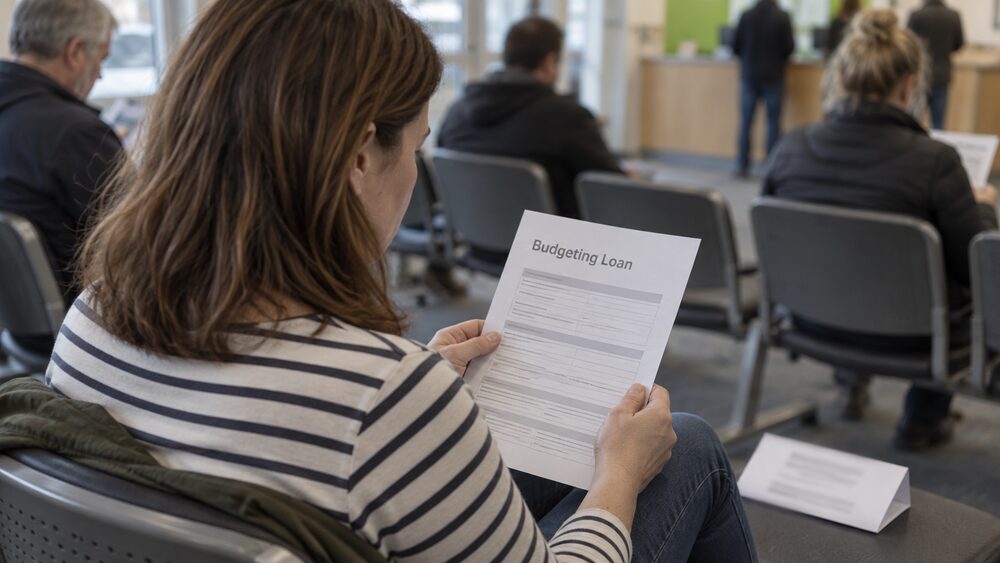
Being on benefits does not bar you from borrowing, but it changes which doors are open. High street lenders look at income from all sources, and a benefits-only income often means smaller loans, higher rates or a refusal, because a bad credit rating makes borrowing more expensive and harder1. The two cheapest routes for most people on benefits are the government's own schemes and credit unions. A Budgeting Loan is interest-free, repaid by a fixed deduction from your benefits, and available if you have been on certain benefits for six months or more2. Credit unions lend to members, including people with a poor credit history, and some offer loans repaid through your Child Benefit3.
The amounts are modest because these loans are designed for one-off essentials, not for filling a gap in living costs. A Budgeting Loan runs from £100 up to £812 if you have children, and is repaid within two years4. Universal Credit claimants cannot get one at all and are offered a Budgeting Advance instead2. This page explains each option, what it costs, how to apply, and what to do if you are refused or cannot keep up repayments.
Budgeting Loans: interest-free borrowing from the government
A Budgeting Loan is a loan from the Social Fund, the government's own scheme for people on low-income benefits. Its defining feature is the price: Budgeting Loans are interest-free, and you must repay the loan2. You pay back exactly what you borrowed, no more, which is why debt charities consistently point people on legacy benefits towards it before any commercial borrowing. StepChange lists Budgeting Loans among the cheapest ways to borrow for essentials, alongside credit unions, precisely because there is no interest adding to the debt over time3.
The loan exists to cover essential one-off large payments that are difficult to plan for, such as a broken boiler6. It is not a top-up for ordinary living costs: official Scottish guidance states plainly that Budgeting Loans are not provided to cover living costs7. That boundary matters. If your problem is that your regular income does not stretch to your regular outgoings, a loan of any kind adds a repayment to an already tight budget, and free debt advice is the more useful starting point. StepChange's guidance on short-term borrowing makes the same point: borrowing for essentials works only when the shortfall is temporary and one-off3.
Because the loan comes from the government rather than a commercial lender, there is no credit check in the sense a bank or card issuer would run, and no arrangement fee. The decision turns on your benefit history, your savings, what you already owe the Social Fund, and whether you can afford the repayment2. That also means the protection you get is different: there is no Section 75 claim to make, because there is no credit card, and complaints go through the Social Fund review process rather than the Financial Ombudsman, which is covered later on this page.
Who can get a Budgeting Loan
Eligibility rests on which benefits you have been receiving, and for how long. You or your partner must have been claiming Income Support, income-based Jobseeker's Allowance, income-related Employment and Support Allowance or Pension Credit for the past six months4. Age UK gives the same list and adds the same six-month rule5. The claim can be yours or your partner's; a qualifying partner is enough.
Two further conditions shape the award. First, savings: you cannot apply for a full Budgeting Loan if you or your partner have more than £1,000 in savings5. Second, existing Social Fund debt: the amount you get depends on any money you already owe to the Social Fund for previous loans, alongside the number of people in your household, your ability to repay and your savings2.
The six-month rule has a practical edge. New claimants on low income can no longer apply for Income Support but must apply for Universal Credit instead8, so the group who can get a Budgeting Loan is shrinking as people move across. If you have recently transferred to Universal Credit, you will not qualify, and the Budgeting Advance is the equivalent product, as the next sections explain.
Budgeting Loan amounts: £100 to £88
How much you can borrow depends on your household. The minimum amount you can apply for is £1004. The maximums, as set out in independent guidance for England, Scotland and Wales, are:
| Your household | Maximum Budgeting Loan |
|---|---|
| Single claimant | £3484 |
| Couple | £4644 |
| You or your partner claim Child Benefit | £8124 |
Turn2us gives the same figures, including £812 for families with a child9. The award is not automatic at the maximum: the amount you get depends on the number of people in your household, any money already owed to the Social Fund, your ability to repay, and your savings2.
Savings are deducted pound for pound above a threshold. If you or your partner are both under 63, your award will usually be reduced by the amount of any savings above £1,000; if one or both of you is 63 or over, the threshold rises to £2,0002.
Repayments come out of your benefits
Repayment is what makes a Budgeting Loan different from every commercial loan. A fixed amount is taken out of your benefits until the loan has been repaid4. You must agree how you will repay before you get the payment, and the repayments are worked out at the time your loan is agreed, based on what you can afford2. The money itself is paid into the account you provided detail of, the same account your benefits go into2.
The whole loan must be cleared on a schedule: you must pay back what you borrow within 2 years4, and Age UK states you will need to repay it within 104 weeks, which is the same two years5. Because the deduction is fixed and taken at source, you cannot fall behind by forgetting a payment, and there is no interest accruing if your circumstances change. The trade-off is that your benefit income is lower every week or month until the loan is cleared, so the affordability assessment at the start matters more than with a loan you control yourself.
If repayments become unaffordable, help exists. Under the Debt Respite Scheme, known as breathing space, DWP must stop debt deductions from income-based Jobseeker's Allowance, income-related Employment and Support Allowance, Income Support and Pension Credit while breathing space is running12. Free debt advice, which you need to enter breathing space, is available from charities such as StepChange, and the debt section of this site sets out the full range of options.
Universal Credit claimants cannot get a Budgeting Loan
The rule is absolute: you cannot get a Social Fund Budgeting loan if you or your partner currently claim Universal Credit2. Shelter Cymru states the same, and explains the alternative: if you claim Universal Credit you cannot apply for a Budgeting Loan, but you can ask for a Budgeting Advance instead4.
A Budgeting Advance is the Universal Credit equivalent, and its conditions mirror the loan's. You must have been getting Universal Credit, Employment and Support Allowance, Pension Credit or Housing Benefit for six months or more, unless you need the money to help you start a new job or keep an existing job13. How much you can get depends on whether you can pay the advance back and whether you have savings over £1,00014. Like the loan, it is repaid by deduction: the DWP takes money from your benefits each month until the loan is paid off15.
The differences are worth knowing. A Budgeting Advance is for household items, repairs or home security, rent in advance or moving home costs, and work costs like travel, uniforms or tools15. The full detail of advances, including the amounts and how the first deduction is timed, is on the dedicated page for Budgeting Loans and Budgeting Advances. If you receive other benefits alongside Universal Credit, such as Personal Independence Payment or Carer's Allowance, those benefits are not themselves moving to Universal Credit unless a working age benefit that is ending is also received16.
Credit union Child Benefit loans
Credit unions are not-for-profit financial cooperatives that serve their members. They offer members loans, savings and current accounts17, and the Welsh Government describes their role as providing access to fair and affordable credit for people with a poor credit history and those who cannot access mainstream forms of credit18. For a parent on benefits, one product stands out: the Child Benefit loan.
The mechanism is simple. You pay your Child Benefit into a credit union account, the credit union takes the loan repayment from it, and the remainder is released to you. Because the benefit itself guarantees the repayment, the credit union can lend where a bank would not, and the loan is cleared by the time the Child Benefit payments have done their work. Cardiff and Vale Credit Union launched a Family Flexi £500 Loan in May 2026, repaid via Child Benefit, alongside a Payroll Flexi £500 Loan repaid via payroll deduction19.
Child Benefit is a substantial, regular income stream: it is worth up to £1,406.60 a year for the eldest or only child, and up to £930.80 a year for each additional child20. That regularity is what makes it suitable as a repayment channel. Credit unions are community organisations, so membership usually depends on living or working in a common bond area, or on an employer or association link. The credit union borrowing page explains how to find your local credit union and how membership works.
What a Child Benefit loan costs
A credit union loan is not interest-free like a Budgeting Loan; each credit union sets its own rates, and the cost depends on the amount, the term and your credit union. Because interest is charged on the reducing balance, the cost falls as you pay the loan down, and paying early saves interest. Ulster Federal Credit Union states you can pay off your loan early, make additional lump sum repayments or increase your regular repayments, without a penalty21.
Two things to check before taking any credit union loan. First, whether the loan requires you to pay in the benefit itself, as a Child Benefit loan does, or whether ordinary repayments apply. Second, whether the credit union also asks you to save alongside the loan, which many do; a small amount is retained until the loan is repaid, which builds savings but reduces what you have week to week. The credit union fees page covers what credit unions may and may not charge.
One caution on Child Benefit itself: if your income is between £60,000 and £80,000 a year, the High Income Child Benefit Charge applies, at 1% of the Child Benefit received for each £200 of income over £60,000, so an income of £70,000 incurs a charge of 50% of your Child Benefit, and anyone with an income over £80,000 faces a charge equal to 100% of it22. This rarely affects benefit-only households, but it matters if a partner's income is high.
Applying for a Budgeting Loan or a credit union loan
For a Budgeting Loan, the process runs through official channels. You can apply at your local Jobcentre Plus office, either in person or by telephone, and claim forms are also available online4. In Northern Ireland, the claim form is on nidirect, and the form itself states it is for Northern Ireland only: if you live in England, Scotland or Wales you go to the Budgeting Loans page on gov.uk10. The review process is quick and simple, and should take no longer than 21 days2.
For a credit union loan, the process starts with finding your credit union and joining. Applications are typically made online or in a branch, and the credit union will assess what you can afford, as any lender must. The Welsh Government's guidance on saving or borrowing with a credit union sets out what to expect18.
A numbered summary of the Budgeting Loan route:
- Check you have been on a qualifying benefit for six months, and that neither you nor your partner claims Universal Credit2.
- Get the claim form from Jobcentre Plus, by phone, or online; use the nidirect form in Northern Ireland and the gov.uk form elsewhere4.
- Complete the form, including the account you want the loan paid into2.
- Wait for the decision, which should take no longer than 21 days2.
- Agree the repayment amount before the payment is made; deductions then start from your benefits2.
If you are claiming Universal Credit, the equivalent route is a Budgeting Advance, requested through your journal or by speaking to your work coach13. The how to apply for a loan page covers the general process for commercial borrowing.
Does PIP count as income when you borrow?
Personal Independence Payment, or PIP, is a disability benefit paid to people over 16 in England or Wales who have not reached State Pension age23. It replaced Disability Living Allowance for new claims from working age adults24. When a lender assesses a loan application, PIP is normally treated as income like any other regular payment, and it can support an affordability assessment. The Bank of England's guidance on debt notes that lenders look at income and outgoings before lending1.
Within the benefits system itself, the treatment is different and worth understanding. Not all benefits are counted as income for means-tested benefits: Adult Disability Payment, Attendance Allowance, the Christmas Bonus, Child Benefit, Disability Living Allowance, Personal Independence Payment, social fund payments like Winter Fuel Allowance and Housing Benefit are not counted when Pension Credit is worked out25. So PIP does not reduce your Pension Credit, but it does count as money coming in when a commercial lender decides what you can afford to repay.
Two practical points follow. First, because PIP is paid usually every four weeks26, a lender may ask you to evidence the payment schedule, and a four-weekly income can complicate monthly affordability calculations. Second, PIP is not a qualifying benefit for a Budgeting Loan on its own: you would need to be on Income Support, income-based JSA, income-related ESA or Pension Credit4. Mental Health and Money Advice's guidance on the Social Fund confirms that Budgeting Loans sit alongside these legacy benefits, and that Universal Credit claimants are directed to advances instead6.
If you are refused or struggling to repay
A refusal is not the end. If you are refused a Budgeting Loan and disagree, you can ask for the decision to be reviewed: apply in writing, within 28 days of the date the decision was given, explaining clearly the reasons why you think the decision is unfair4. Shelter also notes you can write to the address at the top of the decision letter or call the social fund enquiry line on 0800 169 014015.
If the refusal stands, or the Budgeting Loan route is closed to you, other help exists:
- Local welfare assistance. Local welfare funds provide help with emergencies and one-off costs; the Scottish Welfare Fund's guidance confirms applicants are not required to have applied for a Budgeting Loan before applying for a Community Care Grant27, and entitledto's guide lists what local welfare funds cover28.
- Northern Ireland. Discretionary Support offers an interest-free loan or a grant that you would not have to pay back29.
- Wales. The Discretionary Assistance Fund for Wales provides Individual Assistance Payments; if your application is declined, the letter will explain the reasons and set out what to do and by when, and you can ask for the decision to be reviewed30.
- Credit unions and community lenders. As set out above, credit unions lend to people with a poor credit history18, and the No Interest Loan Scheme and community lenders offer further affordable options.
If you are struggling with repayments on any loan, act early. nidirect's guidance on consolidating debts warns that with a poor credit rating you may only be able to get a loan at a high interest rate or secured against your home31, so consolidation is not always the answer. Free debt advice from StepChange and other charities is the place to start, and breathing space stops benefit deductions for qualifying debts while it runs12. If you believe a lender lent you more than you could afford, the Financial Ombudsman Service can consider complaints about unaffordable lending32; the page on complaining about an unaffordable loan explains how. Avoid loan sharks entirely: illegal lenders are covered on the loan sharks and illegal money lending page, and the cheaper alternatives to a payday loan page lists the options in order of cost.
Sources32 cited
- What do I need to know about debt? Bank of England, 2025-08-19
- Social Fund Budgeting Loan nidirect, 2026-06-25
- Short-term loan debt StepChange, 2026-09-25
- Budgeting loans Shelter Cymru, 2026-08-29
- How to get help with urgent or one-off expenses Age UK, 2026-08-26
- Social Fund Mental Health and Money Advice, 2025-07-23
- Benefits support mygov.scot, 2026-08-10
- Benefits statistics summary November 2025 NISRA, 2025-11-30
- How much Budgeting Loan/Advance will I get? Turn2us, 2026-03-02
- Claim a Social Fund Budgeting Loan nidirect, 2026-08-18
- Repayment plans Quaker Social Action, 2026
- Stop and restart deductions from benefits under the Debt Respite Scheme GOV.UK, 2021-05-06
- Help while waiting for a Universal Credit payment nidirect, 2026-06-30
- Universal Credit advance payments nidirect, 2026-05-20
- Budgeting advances under Universal Credit Shelter England, 2026-06-25
- What moves to Universal Credit nidirect, 2026-02-24
- Considering a payday loan StepChange, 2026-09-25
- Save with a bank or borrow with a credit union Welsh Government, 2026
- Our new Flexi £500 loans Cardiff and Vale Credit Union, 2026-05-26
- Extend Child Benefit for your teen before 31 August GOV.UK, 2026-08-17
- Credit union loans Ulster Federal Credit Union, 2026-09-26
- Child Benefit charge entitledto, 2026-09-26
- Disability Living Allowance (DLA) and Personal Independence Payment GOV.UK, 2026-09-26
- Guidance on social security abroad NI38 GOV.UK, 2026-07-07
- Income, benefits and Pension Credit nidirect, 2026-06-26
- How benefits and pensions are paid nidirect, 2026-07-15
- Scottish Welfare Fund statutory guidance Scottish Government, 2026-03-25
- Local welfare fund entitledto, 2026-09-26
- Discretionary Support nidirect, 2026-06-25
- Discretionary Assistance Fund for Wales: what happens next Welsh Government, 2026
- Consolidating debts nidirect, 2025-09-11
- Unaffordable lending Financial Ombudsman Service, 2026-09-26




 MoneyHelperFree, impartial money and pensions guidance, set up by government
 StepChangeFree debt advice and solutions from a charity
 National DebtlineFree debt advice by phone, webchat and online
 Financial Ombudsman ServiceFree, independent help when a complaint about a firm is not put right
 Citizens AdviceFree advice on money, consumer and legal problems in England and Wales