
A balloon payment is the large lump sum left at the end of a personal contract purchase (PCP). It is the car's guaranteed future value: the amount the dealer expects the car to be worth when the deal ends, agreed at the start and written into the agreement1. Because your monthly payments only cover the car's drop in value during the term, the balloon payment is normally much higher than the monthly payments you have been used to3.
A balloon payment is the large lump sum left at the end of a personal contract purchase (PCP). It is the car's guaranteed future value: the amount the dealer expects the car to be worth when the deal ends, agreed at the start and written into the agreement1. Because your monthly payments only cover the car's drop in value during the term, the balloon payment is normally much higher than the monthly payments you have been used to3.
The figure is also called the guaranteed minimum future value (GMFV) or the optional final payment2. It is set when you sign, based on the car, the length of the agreement and the annual mileage you expect to drive4. At the end you have three usual choices: pay the balloon payment and keep the car, hand the car back, or part-exchange it for another1.
The important part is the word guaranteed. The lender carries the risk that the car is worth less than the balloon payment at the end, so there is no shortfall for you to make up if it depreciates faster than expected5. That protection has limits, and mileage and condition are where it stops.
The balloon payment is the car's guaranteed future value
The balloon payment is not a penalty or a fee. It is the expected value of the vehicle at the end of the term, and it is normally much higher than the monthly payments you have been paying3. On a PCP you might pay an initial deposit and make monthly payments much like hire purchase, but those payments are typically lower because you are only financing part of the car's value9.
The payments you do make cover the drop in the car's value while you are paying back the PCP10. The balloon payment is the rest of the car's price, deferred to the end. That is why the two figures look so different: the monthly payments are chipping away at depreciation, while the balloon payment is the chunk of value still sitting in the car.
To own the car outright, you pay the balloon payment, also known as the guaranteed future value, which was agreed at the start of your contract2. The finance company responsible for your PCP arrangement determines the amount of the guaranteed future value, which is the expected value of the vehicle at the end of the term3.
A worked example makes the split clear. If a car is worth £20,000 and the dealership works out it will be worth £15,000 over a three-year PCP, you pay £5,000 over three years, with interest on top10. The £15,000 is the balloon payment. The difference between the two figures, £5,000, is what your monthly payments are covering.
How the guaranteed future value is worked out
The guaranteed future value is the stated value of the vehicle at the end of a PCP agreement and the final payment to take ownership. It is set at the start based on the retail price, the agreement term and the anticipated annual mileage, and it is also called the optional final payment4.
At the start you agree a guaranteed future value with the dealer, based on the car type and how many miles you think you will drive10. The finance company responsible for the PCP arrangement determines the amount3. The balloon payment, or guaranteed minimum future value, will have been calculated with your annual mileage in mind11.
Mileage is the lever that moves both figures. You agree an annual mileage limit at the start of your contract, and the lower this is, the lower your monthly payments1. A low mileage limit keeps the monthly cost down but raises the risk of an excess mileage charge later, because the guaranteed future value assumes the car will have covered roughly that distance.
End of the agreement: pay the balloon, hand the car back, or part-exchange
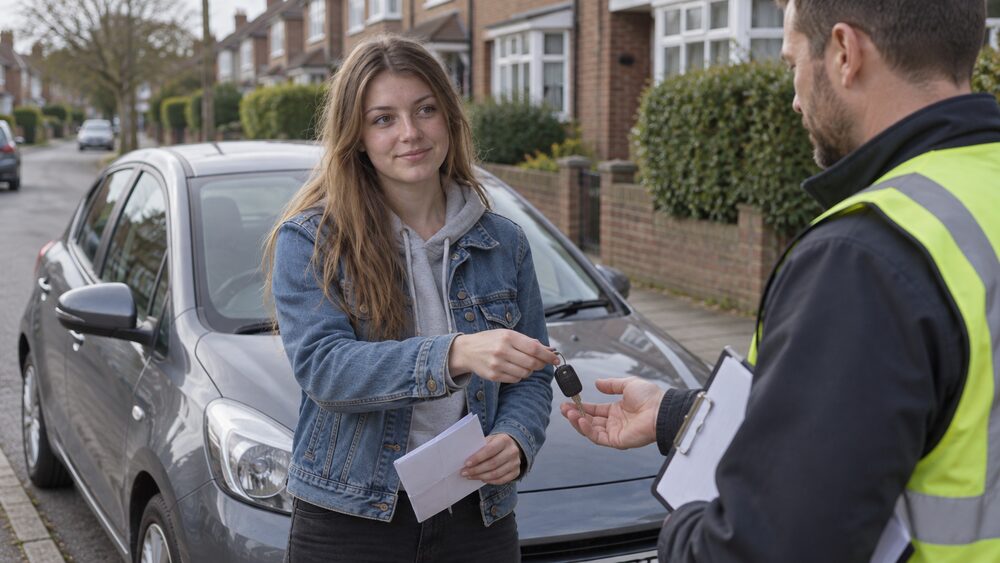
At the end of a PCP you have three usual options: pay the balloon payment and buy the car, give the car back, or part-exchange for a new car1. The same three choices appear across lenders and product guides. On a PCP plan you can pay the balloon payment and keep the car, trade it in for a new car on a new plan subject to status, or return it12. You can return the car, part-exchange it for a new one, or pay an optional final payment to own the car outright13. You can make a one-off payment to buy the car, give the car back, or exchange it for another14.
Some agreements add a fourth route. If you would like to keep the vehicle without settling the optional final balloon payment, you may be able to refinance the outstanding amount7. One manufacturer's PCP sets out four options: return the vehicle, trade it in for a new one, pay the optional final balloon payment plus a £10 option to purchase fee to own it, or refinance the outstanding amount8.
If you do not want to keep the vehicle, you can return it instead of paying the balloon payment and there will be nothing more to pay15. That is the cleanest exit, and it depends on the car meeting the mileage and condition terms. Handing the car back at the end of the term with nothing more to pay applies if you have not gone over the mileage limit or damaged the car10.
Where the guarantee does not protect you: mileage and condition
The guarantee covers the car's value, not your obligations. Two things sit outside it: mileage and condition.
You will need to agree an annual mileage limit at the start of your contract, and if you exceed the agreed mileage limit you will need to pay excess mileage charges1. If you have exceeded the agreed mileage allowance on return of the car, you will need to pay an excess mileage charge6. The balloon payment itself does not change, but the charge is what you owe for handing back a car that has covered more miles than the agreement assumed.
Condition matters in the same way. Handing the car back with nothing more to pay depends on not having gone over the mileage limit or damaged the car10. Fair wear and tear is normally expected; damage beyond that is not.
There is also a wider point about the loan itself. With PCP the loan is secured against the car1. If you cannot keep up the payments, the car is the lender's security, and returning it early because you cannot afford the payments could leave you with more to pay10. If you are struggling, free and impartial help is available from MoneyHelper and from debt advice charities such as StepChange.
If the car is worth less than the balloon payment
This is the situation the guarantee exists for. The lender calculates the guaranteed minimum future value at the start, so there is no shortfall to make up if the car's value falls quicker than expected5. You are not asked to find the difference between what the car is worth and the balloon payment.
The practical effect is that you can hand the car back rather than pay the balloon payment, and there will be nothing more to pay, provided the mileage and condition terms are met15. The lender absorbs the gap between the guaranteed figure and the car's actual value.
The guarantee does not extend to your monthly payments. If the car is worth less than the balloon payment, that does not reduce what you have already paid or refund it. It simply means the buy-the-car option is not worth taking on value grounds, and handing the car back is the route the guarantee supports.
Who takes the loss if the car depreciates faster than expected
The lender takes that loss on a PCP. Because the guaranteed minimum future value is calculated at the start, there is no shortfall for you to make up if the car's value falls quicker than expected5. That is the whole point of the word guaranteed in the name.
This is different from a straightforward loan against a car, where the car's value is your problem if you want to sell it. On a PCP the lender has priced in the expected depreciation and carries the risk that reality turns out worse.
The trade-off is that the guarantee only works if you hand the car back. If you want to keep the car, you pay the balloon payment regardless of what the car is worth on the market. If the car is worth more than the balloon payment, that surplus is yours to use, for example as equity towards another car16. If it is worth less, the guarantee means you are not out of pocket, but you also cannot keep the car without paying the full balloon payment.
Can I change the balloon payment once the agreement has started?
The balloon payment is fixed when you sign. It is agreed at the start of the contract and is not normally adjusted later2. It is built into the total amount payable under the agreement, which matters if you ever want to end the agreement early.
If you want to keep the car without settling the balloon payment in one go, some lenders say you may be able to refinance the outstanding amount7. That is a separate arrangement, not a change to the balloon payment itself.
If you are thinking about ending the agreement early rather than waiting for the end, the rules are different again. You can return the car early if you find you cannot afford payments, but you could have more to pay if you do this10. In a PCP agreement, the guaranteed future value, often referred to as the balloon payment, will need to be included in the total amount payable when working out whether you have reached the 50% mark for voluntary termination17. You will need to have paid 50% of the total amount payable under the agreement, otherwise you will need to make up the difference if you want to hand the car back17.
If something goes wrong with the finance
If a car bought on finance is rejected, the dealer will have to refund the finance company rather than you directly. The finance company will then have to terminate your agreement and pay you back your deposit plus any payments you have already made, minus any deductions made for fair usage18.
There is also a redress scheme for past motor finance commission. You may be owed compensation if you used car finance for a motor vehicle between 6 April 2007 and 1 November 2024, for example a car, motorbike, van or campervan, including hire purchase agreements such as PCPs19.
If you cannot afford your payments, free help is available. MoneyHelper offers impartial guidance, and debt advice charities such as StepChange can talk through your options. The Financial Ombudsman Service can look at complaints about a lender or finance company if you are unhappy with how a PCP has been handled.
Sources19 cited
- Personal contract purchase guide Experian, 2026
- What happens when your car agreement ends Stellantis Financial Services, 2026
- Personal contract purchase explained Oodle Car Finance, 2026
- Personal finance glossary Toyota, 2026
- Van finance explained Moneybarn, 2026
- Car finance refinance Bank of Scotland, 2026
- Car finance refinance Lloyds Bank, 2026
- PCP product information guide Volkswagen Financial Services, 2026
- Hire purchase debts StepChange, 2026
- Car finance debt StepChange, 2026
- SEAT Solutions PCP product information guide SEAT Financial Services, 2025
- Car finance calculator Lloyds Bank, 2026
- Car finance options compared Zopa, 2025
- Car finance with no deposit Experian, 2026
- Credit union car loan vs PCP Whitehaven, Bromley and Cumberland Credit Union, 2025
- Financing electric cars HSBC, 2026
- Car finance Advice NI, 2026
- Is there a 14-day cooling-off period when buying a car Which?, 2026
- Motor finance redress scheme Consumer Council, 2026





 MoneyHelperFree, impartial money and pensions guidance, set up by government
 StepChangeFree debt advice and solutions from a charity
 National DebtlineFree debt advice by phone, webchat and online
 Financial Ombudsman ServiceFree, independent help when a complaint about a firm is not put right
 Citizens AdviceFree advice on money, consumer and legal problems in England and Wales