
Credit unions do not charge arrangement fees, transaction charges or hidden fees on their loans. That is the consistent position across the credit unions whose loan pages set out their terms: Coventry, Lisburn, Partners, Capital, Newington, BAG and T.P.M. all state that there are no arrangement fees, no hidden fees and no transaction charges1.
Credit unions do not charge arrangement fees, transaction charges or hidden fees on their loans. That is the consistent position across the credit unions whose loan pages set out their terms: Coventry, Lisburn, Partners, Capital, Newington, BAG and T.P.M. all state that there are no arrangement fees, no hidden fees and no transaction charges1.
What a credit union loan does cost is interest, and that is capped by law. The maximum a credit union can charge is 3% a month8. Many credit union loans cost far less than the cap: 1% a month on the reducing balance is common8. The rate a particular credit union sets is a matter for that credit union, within the legal ceiling.
So the answer to the fee question is straightforward, but the cost of a credit union loan is not only about fees. There is the interest, the savings you are usually expected to build up alongside the loan, and what happens to those savings if you fall behind.
No arrangement fees, no transaction charges
The fee position is one of the clearest differences between a credit union loan and much of the rest of the market. Coventry Credit Union states "No arrangement fees or hidden charges"1. Lisburn Credit Union puts it more broadly: "Credit unions do not charge fees or transaction charges"2. Newington Credit Union uses the same wording5. Partners Credit Union says eligible loans have "No hidden fees or arrangement charges"3, and BAG Credit Union and T.P.M. Credit Union both state there are no hidden fees or transaction charges6.
Capital Credit Union goes further and confirms there are "No arrangement fees and no early repayment charges, unless stated otherwise for a specific product"4. That matters because early repayment charges are a common cost elsewhere: paying a loan off ahead of schedule can trigger a fee at some lenders, but not at these credit unions.
Independent guidance reaches the same conclusion. Which? says loans from credit unions "do not incur set-up fees, administration costs or early redemption fees"15. The Saver Loan product offered through creditunion.co.uk lets members use savings to pay off the outstanding balance at any time "without early repayment fees or penalties"16.
The practical effect is that the amount you borrow is close to the amount you repay, plus interest. There is no separate upfront cost to factor in when comparing a credit union loan with a bank loan or a payday loan, and no penalty for clearing the balance early.
Interest: capped at 3% a month
Interest is where a credit union loan does cost money, and the law sets a ceiling on it. Which? states: "By law, the amount of interest charged by a credit union can be no more than 3% a month"8. Riverside Credit Union confirms the same rule: "By law, the maximum interest rate that a credit union can charge its members for a loan is 3% per month"17.
The cap is not new. The Credit Unions (Maximum Interest Rate on Loans) Order 2013 increased the maximum interest a credit union may charge on a loan to 3% per cent per month18. The Northern Ireland Assembly research service notes that "the maximum interest a credit union may charge on loans is 3% per month"19.
The cap is a ceiling, not a typical rate. Which? notes that "Many credit union loans, for example, cost 1% a month on the reducing balance of a loan"8. So the range a borrower is likely to see runs from around 1% a month up to the 3% legal maximum, depending on the credit union and the loan.
The current position, as stated by Which?, Riverside and the 2013 Order, is 3% per month8.
What a credit union loan includes: free loan protection insurance
Many credit union loans come with loan protection insurance at no extra cost, a benefit that would normally be sold as a separate product elsewhere. Cranhill Credit Union states the benefit "is included at no extra cost to you as part of your Credit Union loan arrangement"9. Enterprise Credit Union describes "Free loan protection included, offering extra security for you and your family"10, and repeats the same wording on its season ticket loan page20.
The cover is not limited to one type of loan. Partners Credit Union says eligible loans include Loan Protection Insurance at no additional cost3. Capital Credit Union includes free loan protection insurance on its home improvement loan, subject to eligibility criteria and policy terms21. Just Credit Union advertises "FREE loan protection insurance (conditions may apply)"22. Islay & Jura Credit Union says life insurance is included at no cost to the borrower11, and Dumbarton Credit Union states the loan is covered by loan protection insurance provided free of charge23.
The conditions matter. Capital Credit Union's home improvement loan cover is expressly "subject to eligibility criteria and policy terms"21, and Just Credit Union notes conditions may apply22. The insurance is not a reason on its own to choose a credit union loan, but it is a cost that does not appear on a credit union loan and often does elsewhere.
Missed payments: your savings can be used to repay the loan
This is the condition most likely to surprise a new borrower. National Debtline states: "If you miss payments on a loan, the credit union may be able to use your savings to repay the loan"12. The same wording appears in National Debtline's Scotland guidance13 and in Business Debtline's guidance14.
In practice, that means the savings you build up while repaying a credit union loan are not fully separate from the loan. If repayments fall behind, the credit union can apply those savings to the debt. It is a structural feature of how credit unions lend, not a penalty, but it changes what "savings" means while you are borrowing.
Some credit unions build saving into the loan deliberately. Darlington Credit Union's top-up loans split repayments between the loan and savings, "so after you have repaid your loan you will have built-up savings to use as you wish"24. The Saver Loan works the other way round, letting you use savings to clear the balance early without penalty16.
If repayments become difficult, the credit union is the first place to go. The Financial Ombudsman Service deals with complaints about unaffordable lending in consumer credit, so a borrower who believes a loan should not have been granted has a route beyond the lender25. Free, impartial help is available from MoneyHelper and from debt advice charities such as National Debtline and StepChange26.
How much you can borrow, and what you need first
Credit union lending is built around membership and saving. MoneyHelper explains that a credit union provides "loans, savings, bank accounts and other services to their members"26, and that you will need to become a member, which normally means paying a small fee, for example £2, or saving a certain amount such as £1026. You will usually need two recent documents to prove your identity and address26.
Borrowing limits vary. National Debtline says that if you are a member of a credit union, "you can usually borrow at least two or three times the amount you have in savings", depending on the credit union's loan policy12. Business Debtline gives the same rule14. Which? notes that credit unions offer personal loans of up to about £3,0008, and the Welsh Government says credit unions provide loans starting from £5028.
Some credit unions require a savings history before larger borrowing. Shelter Cymru states: "You usually need a history of saving with a Credit Union before you can borrow"29. MoneyHelper notes that loan interest rates are capped, "but you might need to have a certain amount saved with the credit union before you can" borrow26.
| What you need | Detail |
|---|---|
| Membership | Required before you can borrow; you can often join as part of the loan application4 |
| Identity and address | Usually two recent documents, such as a passport, driving licence, bank statement or energy bill26 |
| Membership cost | A small fee, for example £2, or saving a certain amount such as £1026 |
| Savings history | Often needed for long-term loans and mortgages29 |
| Borrowing limit | Usually at least two or three times your savings, depending on loan policy12 |
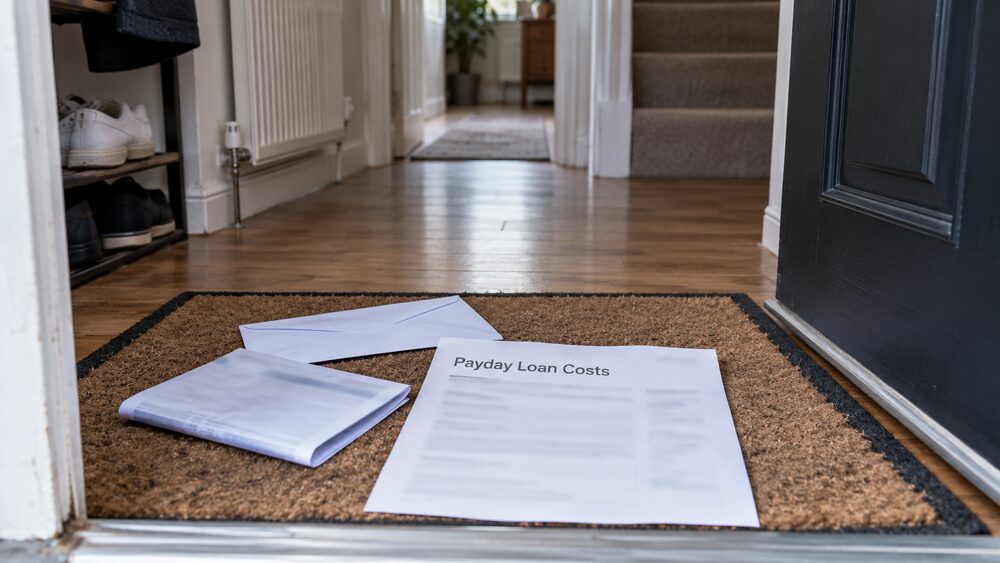
Is a credit union loan cheaper than a payday loan?
For smaller amounts, the evidence points to credit unions being cheaper. Which? says loans from credit unions are "generally cheaper than loans from most other providers for smaller amounts"15. Experian states that "Credit union loans are significantly cheaper than payday loans or doorstep lending"31. StepChange describes credit unions as "a more affordable alternative to banks, or expensive payday loans"27.
The comparison is not only about the interest rate. The absence of arrangement fees, transaction charges and early repayment fees removes costs that payday loans and some other products carry1. The 3% monthly cap also puts a hard ceiling on what a credit union can charge, which payday lending does not share in the same form8.
That said, credit unions are not the right fit for every borrower. They lend to members, usually expect a savings relationship, and may cap personal loans at around £3,0008. Someone who needs a larger sum quickly, or who cannot meet the membership criteria, may find a credit union loan is not available to them at all. The comparison is worth making on the total cost, not just the headline rate.
Who can join, and how to find one
Membership is the gateway to borrowing. Ormeau Credit Union states: "As a non-member you cannot apply for a loan, but you can join us"30. Capital Credit Union says all its loans are available to members, and you can join as part of the loan application process4. Coventry Credit Union says anyone who meets its membership criteria can join and start saving and borrowing32.
Credit unions are not-for-profit and owned by their members. The House of Commons Library describes them as "non-profit financial institutions owned by members who hold savings in the union"33. The Welsh Government calls them "not for profit community lenders, providing affordable loans, and savings"28. Capital Credit Union explains the structure: each member holds a £1 share and gets one vote regardless of savings, and any surplus is paid back to members as a dividend34.
To find one, the Building Societies Association points to findyourcreditunion.co.uk35. MoneyHelper lists credit union finders separately for England, Scotland and Wales, and for Northern Ireland26. Membership is usually based on a common bond, such as where you live or work.
Where protection applies, and where it stops
Credit union deposits are covered by the Financial Services Compensation Scheme, the same safety net that applies to banks and building societies. Capital Credit Union states it is a member of the scheme, "which provides a safety net if a bank, building society or credit union should fail"36. The Prudential Regulation Authority published its depositor protection policy statement in November 202537.
Most credit union loans are exempt from the Financial Conduct Authority's Consumer Credit sourcebook, the rulebook that governs much consumer credit25. That exemption is a structural difference from borrowing at a bank, and it means some of the conduct rules that apply elsewhere do not apply in the same way. The Financial Ombudsman Service still handles complaints about unaffordable lending in consumer credit25.
If a credit union stops lending or closes, the loan does not disappear. Borrowers continue to owe the outstanding balance, and the arrangements for repaying it are set out by whoever takes over the book. The FSCS protects savings up to the limit set by the PRA, not the loan itself36.
Sources37 cited
- Loans Coventry Credit Union, 2026-09-26
- Loans Lisburn Credit Union, 2026-09-26
- Loans Partners Credit Union, 2026-09-26
- Loans Capital Credit Union, 2026
- Loans Newington Credit Union, 2026-09-26
- Loans BAG Credit Union, 2026-06-25
- Loans T.P.M. Credit Union, 2025-04-14
- 10 tips on paying off your debts Which?, 2026-04-06
- Saving Cranhill Credit Union, 2026-09-26
- Value of shares and loans Enterprise Credit Union, 2026-09-26
- Services Islay & Jura Credit Union, 2026-09-26
- Debt consolidation (England and Wales) National Debtline, 2026-09-25
- Debt consolidation (Scotland) National Debtline, 2026-09-25
- Debt consolidation (Scotland) Business Debtline, 2026-09-26
- Personal loans explained Which?, 2026-09-18
- Saver loan creditunion.co.uk, 2026-08-13
- Frequently asked questions Riverside Credit Union, 2026-09-21
- The Credit Unions (Maximum Interest Rate on Loans) Order 2013 legislation.gov.uk, 2013
- Credit unions in Northern Ireland Northern Ireland Assembly, 2025-03-14
- Season ticket loan Enterprise Credit Union, 2026-09-26
- Home improvement loans Capital Credit Union, 2026
- Loans from £1,200 to £15,000 Just Credit Union, 2026-01-05
- Secure loan Dumbarton Credit Union, 2025-02-14
- Top up loans Darlington Credit Union, 2026-09-26
- Unaffordable lending Financial Ombudsman Service, 2026-09-26
- Credit union current accounts MoneyHelper, 2026-09-25
- Personal loan debt StepChange, 2026-09-25
- Save, bank or borrow with a credit union Welsh Government, 2026
- Credit union loans Shelter Cymru, 2026-08-30
- Loans Ormeau Credit Union, 2026-02-03
- Credit unions Experian, 2026
- Urgent gambling help creditunion.co.uk, 2026-08-13
- Credit unions House of Commons Library, 2026-07-08
- Help Lisburn Credit Union, 2026-09-26
- Credit unions Building Societies Association, 2026-09-15
- Loans and accounts legal Capital Credit Union, 2026
- Depositor protection policy statement Prudential Regulation Authority, 2025-11-18











 MoneyHelperFree, impartial money and pensions guidance, set up by government
 StepChangeFree debt advice and solutions from a charity
 National DebtlineFree debt advice by phone, webchat and online
 Financial Ombudsman ServiceFree, independent help when a complaint about a firm is not put right
 Citizens AdviceFree advice on money, consumer and legal problems in England and Wales