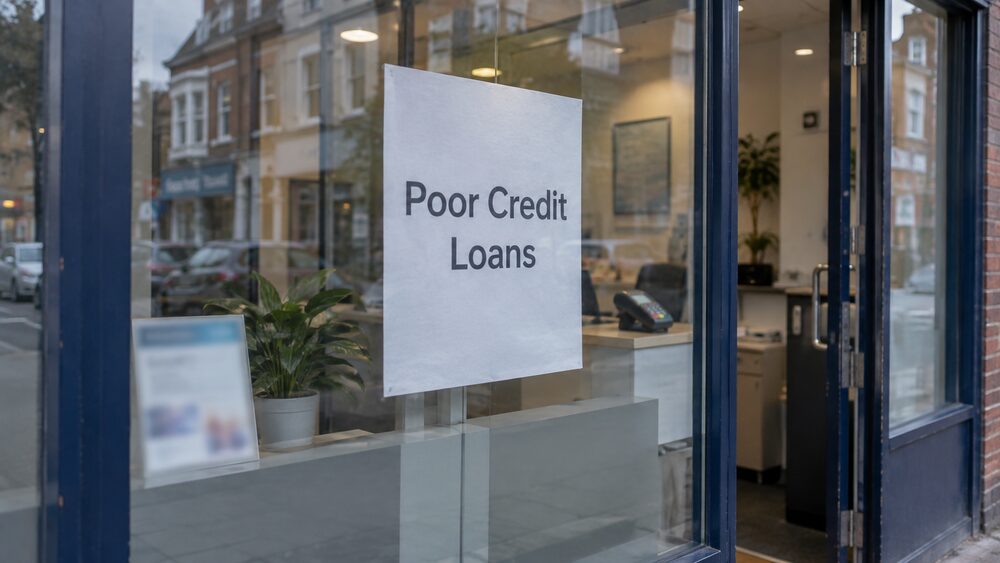
A poor credit history narrows your borrowing options and raises the cost of what is left, but it does not shut every door. "Adverse credit" is simply another way of saying someone has a poor credit history, which can impact lending1. Loans marketed at people in that position exist, from guarantor loans, which are usually aimed at people who either have bad credit or were turned down by other lenders2, to small loans from credit unions and community lenders that exist partly to serve people mainstream banks decline3.
The catch is cost. A bad credit rating makes borrowing more expensive as well as harder4, and households forced into higher-cost credit pay for it: research published in 2026 found subprime loan users paid an average of £805 a year extra, and payday loan users £6985. This page sets out what is available, what each route costs, what it does to your credit file, and the cheaper options to check before signing anything.
What a bad credit loan is and who it is for
There is no single product called a "bad credit loan". The phrase covers several kinds of borrowing whose common feature is that the lender accepts applicants a mainstream bank might refuse. "Adverse credit" is the term the mortgage and lending industry uses for a poor credit history, and it covers missed payments, defaults, county court judgments (CCJs) and similar records1.
The clearest example is the guarantor loan, where someone else, usually a friend or family member, promises to repay if you cannot. These are usually marketed at people who either have bad credit or were turned down by other lenders2. MoneyHelper notes a guarantor loan can be a solution if you have a bad credit score or no credit history at all, for example a student just starting out or someone new to the country3. The trade-off is serious: the guarantor becomes liable for the whole debt, and guarantor loans carry their own risks for both of you.
Other routes are aimed at the same group from the opposite direction. Credit unions and Community Development Financial Institutions (CDFIs) exist to offer financial help to individuals with a poor credit history, and the Scottish Community Lenders Fund was created specifically to support them11. The Welsh Government describes credit unions as providing access to fair and affordable credit for people with a poor credit history, including those who cannot access mainstream forms of credit or who may simply be unaware that affordable providers exist12. A basic bank account, designed for people with poor credit scores, is often the companion step, because you need somewhere to receive and pay out the money13.
If you are weighing a specialist product against a mainstream one, the pages on near-prime and subprime lenders and on how personal loans work explain the differences in how these lenders operate.
Who can apply: age, employment and credit history
The basic threshold is age: you generally need to be 18 to apply for a loan10. Below that, borrowing options are close to non-existent, and the exceptions sit in the benefits system rather than the credit market. Universal credit, for example, is normally a working-age benefit for people on a low income14, and legislation sets its minimum age at 16 only in specific circumstances, such as having limited capability for work, being a carer with regular and substantial caring responsibilities for a severely disabled person, or being pregnant within 11 weeks of the expected week of confinement15. Those rules affect benefit income, not loan eligibility, but a lender assessing a young applicant will look at whatever income of that kind exists.
Employment is not a strict rule but a practical one. Lenders must check affordability, which in practice means looking at income from work or benefits alongside regular bills and spending needs16. Credit unions offer accounts to people on low incomes or with a poor credit file17, and Citizens Advice Scotland notes that people with a poor credit rating or a low income may have problems opening a standard current or savings account, which is why basic bank accounts exist18. So a low or irregular income is not a bar in itself, but it shrinks what any responsible lender will offer.
Credit history is the third filter, and it works in degrees rather than yes or no. A secured loan, for instance, may be available to people with a bad credit history who would not get an unsecured personal loan, because the lender has a claim on your property if things go wrong19. That is a genuine option for some homeowners, but it converts a personal debt into one where missing repayments can put your home at risk. The comparison of secured versus unsecured borrowing sets out the difference in full.
Smaller amounts and higher rates: what poor credit costs
The pattern across every poor-credit route is the same: smaller loans, higher rates. The Bank of England's guidance is blunt that having a bad credit rating will make it more expensive and harder to borrow money, and that it can also affect your ability to rent a home, get a mobile phone contract or anything else that requires a credit check4. StepChange makes the same point for consolidation borrowing: a low credit score or a less-than-ideal credit history can make it harder to get approved, and may mean being offered higher interest rates than you pay now, or higher-risk secured loans20.
The extra cost is measurable. Research published in June 2026 found just over a quarter of low-income households (27%) had incurred a poverty premium in higher-cost credit, and the highest costs were incurred by those who use either subprime loans (£805) or payday loans (£698)5. Fair By Design's 2026 figures put the average premium for low-income households using some form of high-cost credit at £178 a year7. The two figures measure slightly different things, an average across all high-cost credit users against the cost for users of specific products, but they agree on the direction.
| Route | What the evidence shows |
|---|---|
| Subprime loans | £805 a year, the highest cost among higher-cost credit products5 |
| Payday loans | £698 a year on average for users5; borrowing £100 costs around £25, ranging from £14 to £518 |
| Bad credit consolidation at 99% interest | £2,000 over five years costs an extra £5,317 in interest; over ten years, an extra £12,18021 |
| Credit union loan | Many cost 1% a month on the reducing balance, an APR of 12.7%6 |
The scale of the market explains why. Fair4All Finance reports that affordable credit providers make just £250m of loans a year to people in this position, while over the same period high-cost short-term credit providers lend £3bn22. The demand is being met, but mostly at high cost. Regulation has pushed some prices down: the National Audit Office found that fees and charges on a typical payday loan fell from more than £100 to around £60 under the FCA's price cap, which the FCA estimates saves borrowers money23. The payday cost cap page explains how that cap works.
Credit builder products: borrowing to build a record
Credit builder products reverse the usual logic of borrowing. Instead of lending you money to spend, a credit builder loan typically holds the borrowed amount in a locked account while you make repayments, and the money is released to you once the loan is fully repaid. Every on-time repayment is recorded on your credit file, which is the point of the exercise. The FCA's research on the credit card market describes "low and grow" or credit builder cards aimed at subprime borrowers or those with little or no credit history, which start with a low limit that is gradually raised as the borrower proves their credit-worthiness25.
The FCA's interim report on the credit card market found these products tend to be characterised by an initially low credit limit, often £150 to £500, which can then be increased9. StepChange notes the same features from the consumer side: credit builder cards are marketed with claims such as "better your credit score" and "help you get your finances on track", and they come with lower spending limits26. They are aimed at people with a poor credit record or little credit history, which is precisely the group this page is about26.
Two things matter before taking one. First, the mechanism only works if you repay on time: a missed payment is recorded just as faithfully as a good one, and borrowing you cannot repay damages the very record you are trying to build. StepChange's general rule applies with extra force here: only take out credit when you can pay it back27. Second, these products are not free, and the interest on a small balance over a year can still exceed what a credit union would charge. The Creditspring Credit Builder Loan page covers one provider's version in detail.
Credit union loans: rates capped at 3% a month
Credit unions are usually the cheapest regulated route for someone with a poor credit record. Which? notes that credit unions offer very competitive rates of interest on personal loans of up to about £3,000, and that by law the amount of interest charged by a credit union can be no more than 3% a month, an APR of 42.6%. Many credit union loans cost 1% a month on the reducing balance of a loan, an APR of 12.7%6. Compare that with the £14 to £51 it can cost to borrow £100 from a high-cost short-term lender8.
The 3% cap is set in legislation and has a history worth knowing, because older loans may sit under older caps:
The explanatory memorandum to the original 2006 order records that credit unions may not charge interest on loans exceeding 1% per month, inclusive of all administrative costs and other expenses28. A later order set the rate at 2% per month from 1 June 200629. The Credit Unions (Maximum Interest Rate on Loans) Order 2013 then increased the maximum interest rate a credit union may charge on a loan from 2% per month to 3% per month31, a change the government had consulted on, raising the cap from 2% to 3% per month32. Northern Ireland Assembly research confirms the current position: the maximum interest a credit union may charge on loans is 3% per month11.
One regional wrinkle: a Welsh Parliament committee paper from 2012 describes credit union interest in Wales as capped at 2% per month on the reducing balance of a loan, or 26.9% APR33. That predates the 2013 order, and the 3% cap now applies across Great Britain, but it shows how the figures you may see quoted can differ depending on when they were written. The Welsh Government's own guidance now frames credit unions as providers of fair and affordable credit for people with a poor credit history12, and the Welsh Government describes them as good for those who find it difficult to borrow from banks due to having a poor credit history34.
Credit unions always consider affordability when assessing loan applications12, which means a real person looks at your budget rather than a score alone. To borrow, you normally need to become a member first, often by living or working in the union's area or sharing another common bond. The credit union borrowing page covers how membership and applications work, and payday lender or credit union loan compares the two side by side.
Savings, shares and how much you can borrow
Credit unions are built on savings as much as loans. Members' savings are often called "shares", and the amount you have saved can affect how much you can borrow and on what terms. Which? notes credit unions are happy to lend on personal loans of up to about £3,0006, which covers most of the amounts people with poor credit typically need to borrow. Some unions also run save-to-borrow schemes, where saving regularly for a period unlocks access to borrowing.
Credit builder loans, whether from a credit union or a specialist provider, are deliberately small. One credit union's terms set the loan rate at 3% a month and require the member to agree to save at least £5.00 a week in addition to the loan repayment, with those savings locked in until the end of the loan. The maximum loan term is one year, and the loan must be paid by standing order, weekly, fortnightly, four-weekly or monthly. Applications are looked at by humans rather than automated systems, and the credit union reviews the applicant's credit file and uses open banking as part of the application process35.
Top-up rules show how credit union lending works in practice. One credit union's published loans policy states that a top-up may be given up to two times the member's shares, at the discretion of the Credit Committee and the Board of Directors, after six months of the previous loan being granted unless it is a secured loan, and that the original loan needs to be at least 30% repaid before applying for a top-up35. In other words, you cannot immediately double up on borrowing: you must show a track record of repayment first, which is the same discipline the products are designed to build.
How a loan can repair or damage your credit file
A loan for someone with poor credit can work in either direction, and the direction depends almost entirely on whether the repayments are kept up. StepChange notes that a debt consolidation loan "may help you repair your credit file over time, if you keep up with payments"36. The same applies to any credit builder or small loan: each payment is reported to credit reference agencies, and missed or late repayments are reported too, so the record is built by the repayments, not by the borrowing itself.
There are also short-term effects to expect. When you first take out a loan, it is likely your credit score will dip temporarily because the lender makes a hard credit check37. Taking out a loan means taking out more credit, which could affect your credit score20. These effects fade as the loan seasons and repayments accumulate, but it is worth knowing the pattern so a small early drop does not come as a surprise.
The steps that genuinely improve a record, as set out in independent guidance, are:
- Pay back any credit you have borrowed
- Register on the electoral roll
- Check your credit report to make sure it is correct
- Make sure your credit file is not linked to somebody with a poor credit score26
The damage side is just as concrete. A Christmas savings campaign warned in September 2026 that paying for gifts on a credit card or using a short-term loan might seem like a quick fix, but borrowing can be costly and missed repayments could damage your credit report38. And the risk is not hypothetical: a Financial Ombudsman case study describes a borrower, Rik, who despite having a bad credit history had still been able to take out a payday loan he could not afford39. Access to credit without affordability is a trap, not a favour, and the ombudsman's role in that case is worth reading if a lender has lent to you regardless of your ability to repay. The credit file impact page covers the mechanics in detail.
Affordability checks and credit file reviews
Every regulated lender must check that a loan is affordable before granting it. StepChange explains that lenders will usually start by asking about your household budget, covering income, regular bills and spending needs, and they will also check your credit file for details of your debts16. This is not a formality: it is the check that is supposed to stop the outcome in the ombudsman case study above, where someone with a bad credit history was handed a loan he could not afford39.
For a borrower with a poor record, the practical implications are worth knowing:
- The lender will look at your whole budget, not just your income, so rent, bills and other debt repayments all count16
- Your credit file is reviewed for details of existing debts, so old defaults and CCJs will be seen even if you do not mention them16
- Credit unions always consider affordability when assessing loan applications, and are used to doing so for people on low incomes12
- Some lenders now use open banking data, with your permission, to look at your actual account transactions rather than relying only on what you tell them
That last point is growing. Open banking lets a lender see real income and spending directly from your bank account, which can work in your favour if your credit file is poor but your day-to-day finances are now stable. The loan affordability checks page explains what lenders must check and what you will be asked for.
If a lender granted you a loan without a proper affordability check, that can be the basis of a complaint. StepChange's guidance on irresponsible lending sets out your rights, and the route is the lender first, then the Financial Ombudsman Service16. The page on complaining about an unaffordable loan walks through the process.
Repaying early, topping up and when circumstances change
Paying a loan off early is usually good news for the interest you owe, because interest on many small loans is charged on the reducing balance, so less time outstanding means less interest. But check for charges first. StepChange warns that there are often penalties for paying off secured loans early, known as early repayment charges19. Ask the lender for a settlement figure in writing before sending money, and check your agreement for any fee. The paying off a loan early page explains settlement figures, and the 14-day right to withdraw covers the short window after signing in which you can change your mind.
Topping up follows the credit union pattern described above: at one union, a top-up may be given up to two times the member's shares at the discretion of the Credit Committee and the Board of Directors, after six months of the previous loan being granted unless it is a secured loan, and the original loan needs to be at least 30% repaid before applying35. The general page on topping up an existing loan covers the questions worth asking before you add to borrowing, not least whether a new loan at a high rate is really the answer to a shortfall.
When circumstances change for the worse, the order of steps matters:
Contacting the lender early gives the best chance of a workable arrangement, though reduced or missed payments may still be recorded on your credit file. Free debt advice before borrowing more costs nothing, and a second loan to service a first is the classic route into problem debt. And if the original loan should never have been granted, the complaint route is open: the lender first, then the Financial Ombudsman Service16. The page on what to do if you can't repay a loan sets all of this out in full.
Where to get free help
Several organisations give free, impartial help that is directly relevant to borrowing with poor credit. StepChange offers free debt advice and a debt consolidation calculator alongside its guidance pages on borrowing with a poor credit score26. MoneyHelper, the government-backed money guidance body, explains guarantor loans and other products in plain terms3. Citizens Advice, including its Scotland service, covers banking and borrowing options for people with poor credit ratings18. None of these charge for advice, and all of them will look at your whole situation rather than selling you a product.
Two warnings belong here. First, never pay an upfront fee to anyone promising to find you a loan: that is a known scam pattern, covered on the page about lenders asking for upfront fees. Second, if you are already behind on repayments, free debt advice is available at no cost, and the comparison of a consolidation loan versus free debt advice explains the difference between the two routes. If you have a complaint about a lender that cannot be resolved directly, the Financial Ombudsman Service is free to use and will look at whether the loan was affordable when it was granted39.
The simplest rule, from StepChange's credit confidence guidance, is the one to carry away: only take out credit when you can pay it back27. Everything else on this page, the caps, the costs, the credit file effects, follows from that.
Sources40 cited
- Mortgage jargon buster StepChange, 2026
- Guarantor loan debts StepChange, 2026
- Guarantor loans explained MoneyHelper, 2026
- What do I need to know about debt Bank of England, 2025
- Poverty Premium 2026 University of Bristol Personal Finance Research Centre, 2026
- 10 tips on paying off your debts Which?, 2026
- New research shows 736% poverty premium Fair By Design, 2026
- Predatory finance research Responsible Finance, 2026
- Credit card market study interim report Financial Conduct Authority, 2015
- Managing your own money Scope, 2025
- Research paper on community lending in Scotland Northern Ireland Assembly, 2025
- Save with a bank or borrow from a credit union Welsh Government, 2026
- Glossary StepChange, 2026
- Get help with rent Shelter England, 2026
- Universal Credit Regulations 2013, amendment data legislation.gov.uk, 2023
- Irresponsible lending and affordability checks StepChange, 2026
- Banking and borrowing StepChange, 2026
- Getting a bank account Citizens Advice Scotland, 2026
- Secured loan debt StepChange, 2026
- Debt consolidation calculator StepChange, 2026
- Consolidation loans with bad credit StepChange, 2026
- Transforming affordable credit in the UK Fair4All Finance, 2020
- Tackling problem debt summary National Audit Office, 2018
- Consolidating debts nidirect, 2025
- Key features of the credit card market Financial Conduct Authority, 2015
- Credit cards with a bad credit score StepChange, 2026
- Credit confidence StepChange, 2026
- Explanatory memorandum to the 2006 credit union order legislation.gov.uk, 2006
- Credit Unions Order 2006 legislation.gov.uk, 2006
- Credit Unions (Maximum Interest Rate on Loans) Order 2013 legislation.gov.uk, 2013-10-08
- Explanatory memorandum to the 2013 order legislation.gov.uk, 2013
- Credit union maximum interest rate cap consultation HM Treasury, 2012
- Welsh Parliament committee paper on credit unions Senedd Cymru, 2012
- Get advice about managing credit Welsh Government, 2022
- Loans policy Penilee Credit Union, 2025
- Debt consolidation and debt management StepChange, 2026
- Debt consolidation StepChange, 2026
- Five ways to save before Christmas Money and Pensions Service, 2026
- Case study: given a payday loan he couldn't afford Financial Ombudsman Service, 2026
- Temporary repayment plan StepChange, 2026-09-25





 MoneyHelperFree, impartial money and pensions guidance, set up by government
 StepChangeFree debt advice and solutions from a charity
 National DebtlineFree debt advice by phone, webchat and online
 Financial Ombudsman ServiceFree, independent help when a complaint about a firm is not put right
 Citizens AdviceFree advice on money, consumer and legal problems in England and Wales