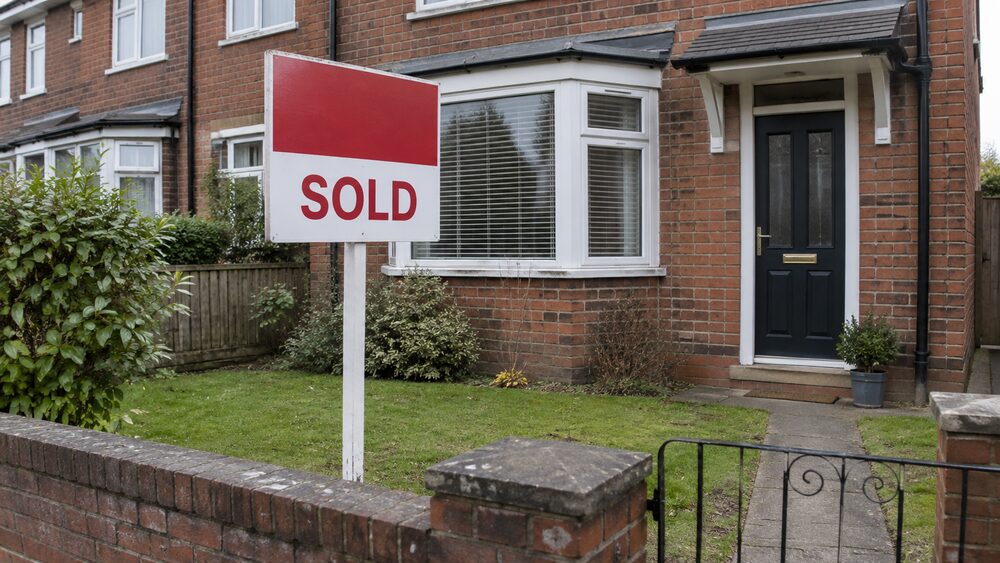
Right to Buy is a scheme that lets council tenants buy the home they rent at a price below its full market value. It was introduced in 1980, and the discount is the heart of it: for a house, up to 70% of the property value, or £16,000 to £38,000 depending on where you live, whichever is lower1. For a flat, the discount is between 50% and 70%1.
That discount is also what makes a Right to Buy mortgage different from an ordinary one. Because you are paying less than the home is worth, the gap between the discounted price and the market value can stand in for a deposit. Lloyds and Halifax both state that, depending on the level of discount offered, buyers may not need a personal deposit2. Leeds Building Society lends up to 100% of the discounted purchase price4.
The mortgage itself is not a special product. Official guidance is clear that you have access to the same mortgage products available on the market as everyone else1. What is special is the paperwork: your landlord has to confirm your eligibility and the discounted price before a lender will proceed.
What a Right to Buy mortgage is
Right to Buy is a council or local government scheme that allows council tenants to buy their home at a lower price7. To qualify in England you generally need the property to be your only or main home, to be self-contained, to have lived in any council or housing association home for three years, and to be a secure tenant6. Official guidance adds that eligibility also includes having no legal issues with debt, outstanding possession orders, and no history of tenancy fraud1.
The scheme applies to tenants of a list of landlords that includes district, county and London borough councils, the Common Council of the City of London, the Council of the Isles of Scilly, police and fire authorities, waste disposal authorities, and registered providers such as housing associations in secure or preserved cases1. If you rent from a housing association rather than a council, you may be looking at Right to Acquire instead, which gives a discount of between £9,000 and £16,000 depending on where you live6. A Preserved Right to Buy might give you a larger discount than Right to Acquire6.
The mortgage you take out is an ordinary residential mortgage secured on the home you are buying. It is repaid like any other mortgage, usually on a repayment basis, and the lender's affordability checks apply in the normal way. If you want the basics of how the loan itself works, see how a mortgage works and repayment mortgages explained.
One restriction worth knowing: if you are bankrupt in England, Wales or Northern Ireland, you cannot buy a council house using the Right to Buy scheme during your bankruptcy8.
Deposit: often lower, sometimes none at all
On a standard purchase, you will usually need a deposit of at least 5% of the property's value to get a mortgage9. Some lenders offer 5% or 0% deposit mortgages, but they generally come with high interest rates, and you may need a strong credit record to qualify10. A first-time buyer with a small deposit and a series of missed payments may struggle to borrow at 95% loan to value11.
Right to Buy changes the arithmetic because the discount does part of the work. Lloyds and Halifax both say that, depending on the level of discount offered, buyers may not need a personal deposit2. Leeds Building Society states that Right to Buy lending is available for up to 100% of the borrower's discounted purchase price4.
That does not mean the purchase is free of cash costs. You will still need money for legal fees, a survey if you choose one, and any lender arrangement fee, and lenders will still test whether you can afford the monthly payments. If you are short of a deposit on an ordinary purchase, a gifted deposit from a family member is one route lenders accept; the rules are set out in can my mortgage deposit be gifted?.
Borrowing more than the discounted price
Some buyers want to borrow more than the discounted price, usually to cover improvements or to consolidate other borrowing. Whether a lender will allow it depends on the lender and on your circumstances, and borrowing more pushes up your loan to value, which usually means a higher rate.
If you already have a Help to Buy equity loan on the property, the rules are much tighter. The government will only allow you to remortgage and borrow more money to pay back part or all of your equity loan, to make structural alterations when you have permission, or to fund a transfer of equity12. It may allow borrowing more on your repayment mortgage to pay off leasehold arrears or mortgage arrears, considered individually12.
There is a further trap with alterations. If you do not get permission to make structural alterations, any increase in your home's market value will be added to your equity loan, so you will owe more13. If you do get permission, and after making and paying for the alterations yourself this increases the value of your home, the increase in market value will not be added to the total equity loan amount you owe13. The same principle appears in the Help to Buy Wales rules: if the property value has not risen, only borrowing equal to the original contribution is permitted for alterations14.
If you already own your home and want to borrow against it later, the ordinary routes are covered in borrowing more on your mortgage and second charge mortgages.
Who offers Right to Buy mortgages
Right to Buy lending is offered by a mix of banks and building societies, and by specialist lenders. The table below sets out what each named lender says about its own scheme lending.
| Lender | What it says about Right to Buy |
|---|---|
| Leeds Building Society | Supporting Right to Buy with a range of mortgages; lending available for up to 100% of the borrower's discounted purchase price4 |
| Lloyds | Covers government housing schemes including Right to Buy; buyers may not need a personal deposit depending on the discount2 |
| Halifax | Covers government housing schemes including Right to Buy; buyers may not need a personal deposit depending on the discount3 |
| Together | Dedicated Right to Buy page and a step-by-step process from the Section 125 Notice to completion; transfers mortgage funds to the council15 |
Together also offers secured loans, bridging loans, buy-to-let mortgages and commercial mortgages17, and it appears among the providers that offer bridging loans18.
You are not limited to lenders with a named Right to Buy page. Because official guidance confirms you have access to the same mortgage products as everyone else1, any lender willing to accept the discounted price and the scheme paperwork can be approached. You can apply direct to a building society or other lender, or use a regulated mortgage broker to help you19. The trade-offs between those routes are set out in mortgage advice: brokers, advisers and applying direct.
How to apply for a Right to Buy mortgage
The process starts with your landlord, not a lender. You ask your landlord for the Right to Buy application form, known as form RTB120. Your landlord then checks whether you are eligible for the scheme16 and, if you are, issues the paperwork that sets out the discounted price. Lenders will want to see that documentation before they will lend.
Once you have it, the mortgage side runs much like any other purchase. You can get a Decision in Principle, then a full application, then a valuation and a mortgage offer.
A Decision in Principle is an indication from your mortgage lender of how much they may be willing to lend you21. It makes it easier to start shopping for a home, and you can show it to estate agents to prove you are a serious buyer21. It does not commit you to anything and is not a guarantee that your mortgage application will be accepted23. It is also known as an agreement in principle, a mortgage promise or a mortgage in principle24. There is more on how they work in mortgage in principle.
On channels, Leeds Building Society says you can apply online or over the phone to get a Decision in Principle4. Yorkshire Building Society says you can complete a full application online for most mortgages, or apply over the phone with a mortgage specialist22. HSBC says a remortgage can be done online, in a branch, or over the phone23. Many lenders let you apply online and receive a decision instantly, while some may prefer you to complete an application over the phone or in a branch21.
If your application is not accepted at the level of your Decision in Principle, it is typically because of the results of the affordability assessment or mortgage valuation, for example if the value of the property is lower than your Decision in Principle21.
Documents lenders ask to see
Lenders are expected to ask for evidence to inform their decisions25. For a Right to Buy purchase, the scheme paperwork sits alongside the usual income and identity documents.
Expect to provide:
- The Right to Buy documentation confirming your eligibility and the discounted purchase price4
- Proof of income, typically payslips or accounts, as part of the affordability assessment21
- Identification and address documents, as with any mortgage application
- Evidence of how you will pay for anything beyond the purchase price, if you are borrowing for alterations13
If you are buying a flat in a building affected by the building safety crisis, lenders are expected to ask for evidence including confirmation that any remedial works will be paid for by government funding, or by the original developer25. That can slow a purchase down, and it is worth raising early with your lender.
There are also rules about what a lender must give you. If a firm offers to vary an MCD regulated mortgage contract with a consumer, it must provide the consumer with an offer document26. Rules require information to be supplied to customers at the start of a regulated mortgage contract so they can check it has been set up in accordance with their requirements and to notify them of the first and subsequent payments27. Where a firm offers to enter into a home purchase plan, it must ensure the customer is, or has been provided with, an appropriate offer document in a durable medium28. What that illustration must show is covered in the ESIS illustration.
What protects you, and where it stops
The discount is set by the scheme rules, not by the lender, and the cost floor can reduce it. A rule called the cost floor may apply, and your discount will be reduced to reflect what your landlord has spent on building, buying, repairing, or improving your home over a specific period before you apply to buy1. That is the main reason a discount you were expecting can come out lower than the headline figure.
The maximum discount also depends on when you applied. For applications received before 21 November 2024, the maximum discounts were higher: £102,400, or £136,400 in London boroughs5. For a house bought now, the maximum is 70% of the property value or £16,000 to £38,000 depending on region, whichever is lower1. In the Eastern region, excluding the district of Watford, the figure is £34,0001. In the London boroughs of Barking and Dagenham and Havering it is £38,000, otherwise £16,00030.
| Region | Maximum discount on a house |
|---|---|
| Eastern region, excluding Watford | £34,0001 |
| London boroughs of Barking and Dagenham and Havering | £38,00030 |
| Elsewhere | £16,00030 |
On the mortgage itself, the usual protections apply. Lenders must follow the affordability rules, and if something goes wrong with the advice or the administration you can complain to the firm and then to the Financial Ombudsman Service; the process is set out in complaining to the Financial Ombudsman about your mortgage. If you fall behind, there are rules a lender must follow before going to court, covered in what a lender must do before going to court.
Where the protection stops is at the discount. It is a one-off reduction in the price, not an ongoing subsidy, and it does not reduce your monthly payments once the mortgage starts. If you buy with a discounted or variable rate deal, be aware that borrowers with large discounts may be in a particularly vulnerable position when their deal comes to an end, as they could face a large and sudden increase in their interest rate when they are moved to the lender's standard variable rate31. The options at that point are set out in what to do when your fixed rate ends and remortgaging explained.
If you are struggling with the payments, free and impartial help is available from MoneyHelper and from debt advice charities, and the routes are set out in mortgage arrears: what to do if you cannot pay.
Sources31 cited
- Your Right to Buy Your Home: a guide GOV.UK, 2026-04-08
- Government housing schemes Lloyds Bank, 2026-09-27
- Government housing schemes Halifax, 2026-09-27
- Right to Buy mortgages Leeds Building Society, 2026-09-26
- Shared ownership Which?, 2026-03-26
- Right to Buy and Right to Acquire Scope, 2026-04-01
- Mortgage jargon buster StepChange, 2026-09-25
- After bankruptcy StepChange, 2026-09-25
- Applying for a mortgage Which?, 2026-05-20
- How much can I borrow? Experian, 2026
- Getting a mortgage with late payments and defaults Which?, 2025-08-20
- How to remortgage your Help to Buy home and borrow more money GOV.UK, 2021-05-05
- How to make structural alterations to your Help to Buy home GOV.UK, 2021-05-05
- Help to Buy Wales post-completions guide Welsh Government, 2024-07
- Right to Buy mortgages Together, 2026-09-26
- Right to Buy step-by-step process Together, 2026-09-26
- Product guides Together, 2026-09-26
- Bridging loans explained Which?, 2026-06-23
- How to get a mortgage Building Societies Association, 2023-01-19
- Buying a home Citizens Advice, 2026-09-25
- What is a Decision in Principle? HSBC, 2026
- Mortgage application process Yorkshire Building Society, 2026-09-26
- What is remortgaging? HSBC, 2026-09-15
- Mortgage agreements in principle (AIPs) Which?, 2026-05-20
- Mortgages on flats affected by the building safety crisis National Housing Federation, 2026-09-26
- MCOB 6A FCA Handbook, 2026-09-26
- MCOB 7 FCA Handbook, 2026-06-26
- MCOB 6.8 FCA Handbook, 2026-06-26
- What is mortgage protection life insurance? Which?, 2026-09-25
- 7 first-time buyer schemes available now Which?, 2026-03-26
- Discount mortgages Which?, 2026-04-02



 MoneyHelperFree, impartial money and pensions guidance, set up by government
 StepChangeFree debt advice and solutions from a charity
 Financial Ombudsman ServiceFree, independent help when a complaint about a firm is not put right
 Citizens AdviceFree advice on money, consumer and legal problems in England and Wales
 ShelterFree housing advice from a charity