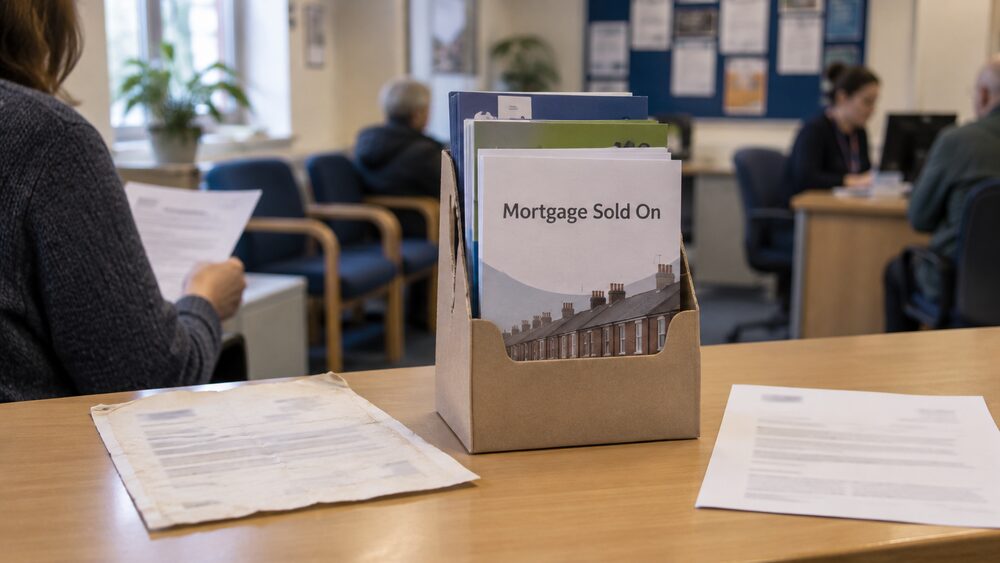
Finding a letter saying your mortgage has been sold to a company you have never heard of is unsettling, but the basic position is reassuring. A mortgage is a debt secured on your home, and when that debt is assigned to a new owner, the loan itself travels across intact: the amount you owe, the rate you agreed and the terms you signed up to do not get rewritten just because a different firm now collects the payments. Lenders' own mortgage terms set this out: Accord's conditions, for example, allow the lender to transfer some or all of its rights in the agreement, the loan and the security to a transferee1, and Vida Homeloans' terms state it may sell, transfer, assign, charge or otherwise dispose of its interest in the loan and mortgage to another person at any time without the borrower's consent2.
Your consent is not needed, and you are not asked to sign anything new: Vida Homeloans' terms state that it may dispose of its interest, rights, powers and remedies in the loan and mortgage at any time, on such terms as it decides, and without your consent2. The things that genuinely change are practical: where the payments go, who you contact, and, in some cases, what deals the new owner will offer you when your current one ends. Some firms that buy mortgage books do not offer new mortgages or new interest rate products to existing borrowers at all, a situation known as a closed book3.
Your mortgage terms stay the same when it is sold
The starting point, and the thing most people want confirmed first, is that a sale of the mortgage does not reopen the deal you signed. What is bought and sold is the right to collect under the existing contract, not the right to invent a new one. Lenders' own terms make the mechanics explicit: Accord's mortgage conditions allow the lender to transfer some or all of its rights in the agreement, the loan and the security to a transferee1, while making clear that the borrower cannot transfer their own rights under the agreement. The security on the property travels with the loan, and the borrower's obligations under it stay as they were.
This matters because the buyer is often a firm you have no relationship with, and sometimes one that does not take on new customers at all. The same rule applies in the related situation where a mortgage shortfall debt ends up with a different owner: the ombudsman notes that such a debt may be held by your former lender, by someone acting on their behalf, or by a debt collection company that has bought the debt from the lender4. Whoever holds it, the underlying obligations are the ones you originally agreed to.
There are limits to how far any lender, old or new, will go to change who is bound by the mortgage. MoneyHelper gives the example of a joint mortgage after separation: even if both owners agree, or a court orders one person to take over the mortgage, the lender is not obliged to release the other person from it, and lenders apply their own affordability criteria and can refuse5. So a sale changes the identity of the firm at the other end of the phone, but the borrower's side of the bargain, and the lender's ability to pick and choose when it agrees to a change, stays much as it was.
Why lenders sell mortgage books
Lenders sell mortgages, or whole books of mortgages, for their own commercial reasons, and those reasons are not things a borrower can influence. What the sale means for you is captured by the ombudsman's description of the market that grows out of these transfers: some lenders do not offer new mortgages or new interest rate products to existing borrowers, and this is called a closed book2. A firm may buy a book of loans to collect them as they stand, without any intention of competing for the borrowers' next deal. Borrowers whose lenders have a closed book in this way are the people often described as mortgage prisoners, and the ombudsman lists among the complaints it sees lenders not offering new interest rate products to customers in exactly this position2.
The same pattern of debts changing hands appears elsewhere in the market. The ombudsman describes how a mortgage shortfall debt may be held by your former lender, by someone acting on their behalf, or by a debt collection company that has bought the debt from the lender4. The direction of travel is the same in each case: the right to the money is a thing that can be sold, and the borrower is a party to be informed rather than a party whose consent is sought. Lenders' terms confirm this, with Vida Homeloans stating it may dispose of its interest in the loan and mortgage at any time without the borrower's consent2.
Other regulated markets work in a similar way, which is worth knowing because it sets expectations. Citizens Advice notes of energy supply that you will normally be told when your account is being moved to a new supplier6. The detail differs, but the principle of notice before anything changes is the same one that applies to a sold mortgage.
What the new lender can and cannot change
The new owner steps into the shoes of the old one, holding the rights in the agreement, the loan and the security that the original lender held1. In practice that means it cannot change the deal you are on, but it does decide how it exercises the discretion your mortgage terms always gave the original lender. Your terms probably allow changes in some situations with the lender's agreement, and a new owner can say yes or no to those just as the old one could. The transfer itself, though, needed no such agreement: the lender's right to assign the loan without the borrower's consent is written into standard mortgage terms2.
Permission to rent out your home is a good example. National Debtline explains that renting out your house requires your lender's permission, and some lenders add an extra percentage on to the mortgage interest rate for allowing you to rent out the property7. A new owner inherits both the power to give that permission and the ability to charge for it, because both come from the mortgage terms rather than from the identity of the lender.
Changes to who is named on the mortgage are also within the lender's discretion rather than the borrower's. MoneyHelper notes that a lender is not obliged to release one person from a joint mortgage even where both agree or a court orders it, and can refuse based on its own affordability criteria5. A sale makes no difference to this: the new owner has the same choice.
Some things follow the borrower rather than the lender. Official guidance on Support for Mortgage Interest, the government loan that helps with interest payments, states that when a claimant moves to a new property they can transfer their SMI loan to the new property without repaying, with the outstanding balance transferred across8. That support is tied to you and your circumstances, not to which firm owns your mortgage.
Letters from your lender and what they tell you
The letters around a transfer are where the practical detail lives, and they are worth reading as a set. Look out for the name of the new owner, the date the transfer takes effect, where payments go from that date, and the contact details for questions. If a letter does not make one of those things clear, that is the moment to ask, before the change rather than after it.
Letters from your mortgage lender also matter at other points in the life of the loan, and the pattern of what they contain is fairly consistent. HMRC advises borrowers claiming tax relief to make sure they get, and keep, a certificate of interest or alternative finance payments paid during the year from their lender, because it may ask to see it9. A lender that has sold your book should still be able to produce this kind of evidence of what you have paid, and the new owner becomes the firm to ask once the transfer has taken effect.
Where a mortgage runs into difficulty, letters become part of the record a court looks at. nidirect guidance for Northern Ireland explains that a person selling the house may be expected to bring to court a letter from the estate agent confirming the property is for sale, stating the asking price and whether it is realistic, indicating how easy or difficult it will be to sell, stating any offers received and for how much, and stating the agent's opinion about the timescale for finding a buyer10. The point for a transferred mortgage is that whoever owns the debt, the evidence of your situation is yours to gather and keep.
Payments, direct debits and your account details
The riskiest moment in any transfer is the gap between the old arrangement ending and the new one starting. The general expectation, as Citizens Advice puts it in the context of a supply account moving to a new company, is that you will normally be told when your account is being moved6. With a mortgage, the guidance points the other way from cancelling anything: Shelter Cymru's advice on selling a home, where the lender's position is also in flux, is that mortgage payments, and any arrears if possible, should continue until the property is sold11. The same principle applies to a sale of the loan: payments continue until a letter with the new details says otherwise.
Direct debits do not always need to be set up from scratch. Official Help to Buy guidance describes how, where a direct debit is already in place to pay a monthly management fee, it is used again when interest starts being charged12. Transfers of mortgage books are commonly designed so that the payment mechanism carries over, but the letter confirming the transfer should say so explicitly, and if it does not, asking the new owner before the payment date avoids a missed payment that was nobody's intention.
A missed payment is not a technicality. Which? notes that on a joint mortgage, a missed mortgage payment will show up on both credit reports, regardless of whose fault it was13. If a transfer causes confusion about where money should go, that consequence lands on the borrower's file, which is why confirming the payment details in writing, and keeping the confirmation, is worth the few minutes it takes.
Interest rates and moving off a fixed deal
The rate on your mortgage does not change because the loan is sold: the new owner holds the same rights in the agreement, the loan and the security as the original lender1. What the sale can change is what happens when your current deal runs out. Which? explains the standard position: at the end of your fixed period, you will need to remortgage, and if you do not, you will be moved to your lender's standard variable rate (SVR), which is usually much more expensive14. That rule applies whoever the lender is, but with a sold mortgage there is a second question: will the new owner actually offer you anything to move to?
For some borrowers the answer is no. The ombudsman describes the closed book situation, where a lender does not offer new mortgages or new interest rate products to existing borrowers2, and lists among the complaints it sees lenders not offering new interest rate products, the position known as mortgage prisoners2. In that case the timeline of a fixed deal looks like this:
The ombudsman also takes seriously how a lender behaves around rate changes. Where a complainant is in or has recently been in financial difficulty, it checks whether the lender carefully considered whether the borrower could afford the interest rate, since otherwise the borrower would incur an early repayment charge if the property needs to be sold2. And it handles complaints where lenders did not tell borrowers their interest rate product was ending in time, or where delays arranging a new rate left the borrower paying more2. If a new owner is slow or silent as your deal ends, that is a proper subject for a complaint, not just a frustration.
Overpayments, early repayment charges and remortgaging
The mechanics of paying the loan off early or moving it elsewhere are unchanged by a sale, because they sit in your original terms. Which? notes that if you sell your home you can use the proceeds to pay off the mortgage, although you may incur an early repayment charge if you are still in the introductory period of your mortgage14. The same applies on a joint mortgage: an early repayment charge may apply if you sell while still in the introductory period13. The new owner collects that charge on the same basis the old one would have, and the details are in your mortgage offer.
Remortgaging is the main escape route from an owner you do not want to stay with. The Bank of England defines it plainly: remortgaging occurs when existing borrowers redeem their current mortgage in favour of a new one secured on the same property, but with a different mortgage lender16. It distinguishes this from other lending, where existing borrowers increase the size of their current mortgage with the same lender16. If your loan has been sold to a closed book firm, remortgaging away from it is the route the ombudsman's description of the market points to2.
Two costs are worth weighing before you move. First, the early repayment charge already mentioned, which applies during the introductory period of the deal14. Second, if you are moving home rather than just switching lender, the timing of the two transactions. Which? notes that if you want to move but cannot sell, you could consider a let-to-buy arrangement, remortgaging your current home onto a buy-to-let mortgage and using the equity released to buy a new property17. That requires the lender's permission, and some lenders add an extra percentage to the interest rate for allowing you to rent out the property7.
If you receive Support for Mortgage Interest, remember it is a loan rather than a grant. Business Debtline explains that the new loan attracts interest, is usually secured to your property, and that you will be asked to repay it if you sell your home, if the title is transferred, assigned or otherwise disposed of, or if you die18. Remortgaging does not itself trigger repayment, but selling or transferring the property does.
What the new lender owes you
Beyond the terms of your mortgage, the new owner owes you the same standard of treatment the law demands of any mortgage lender. nidirect puts it simply: the law says mortgage lenders must treat you fairly and take your circumstances into account19. A firm that has bought your loan is a mortgage lender for this purpose, and being a closed book owner does not dilute that duty.
The Financial Ombudsman Service sets out what fair treatment looks like when a borrower is struggling. It can look at complaints about financial difficulties affecting your ability to repay your mortgage, and it lists the kinds of support a lender should be thinking about: changing the payment due date, offering a temporary reduced payment arrangement, offering a new interest rate, changing the mortgage in some other way such as extending the term, and adding the arrears to the outstanding balance, known as capitalising the arrears20. A new owner that refuses to consider any of these is not just being unhelpful; it is falling short of what the ombudsman expects lenders to consider.
Where a complaint passes through a broker rather than the lender, the rules still route it properly. FCA redress scheme rules state that where a credit broker receives a complaint in relation to the subject matter of the scheme, it must forward the complaint to the lender and inform the consumer it has done so21. So even if the firm a complaint is first made to is not the one that owns the mortgage, the complaint reaches the right place, and the consumer is told it has been sent on.
If you fall behind after a sale
Arrears are dangerous whoever owns the loan, and the consequences of a sale of the property are set by law and practice rather than by the lender's identity. National Debtline explains that if you fall behind on payments, the lender could take court action to repossess your home, which could be sold to repay what you owe22. Shelter England describes the end of that process: when the sale goes through, your lender and any other secured creditors get their money back, and you get any money left over23.
If the sale does not raise enough, the debt does not simply vanish. National Debtline warns that if selling your home does not raise enough money to repay the first mortgage, any other mortgages and all the costs, you may still owe some money to the lender22. nidirect names this the mortgage shortfall: if the property sells for less than you owe, the lender may want you to pay back the rest of the debt19. The ombudsman notes that such a debt may end up held by your former lender, by someone acting on their behalf, or by a debt collection company that has bought it4, so the firm chasing a shortfall years later may be neither the lender you started with nor the one it was sold to.
There are rules about how shortfall debts are pursued. National Debtline explains that if a lender intends to recover a shortfall debt, it must tell you in writing within five years of the date your home was sold, and if it does not, you can complain to the Financial Ombudsman Service3. Interest can also keep running in the meantime: after eviction, the lender will still add interest to the mortgage account until the property is sold24.
Free, independent help is available before things reach court. National Debtline and Business Debtline publish guidance on mortgage arrears and on the options for selling assets or the home itself to clear debt22, and Shelter England describes asking the court for time to sell where the sale will repay the mortgage debt or you have other money to pay it off if you are in negative equity25. The rules on repossession differ between England and Wales, Scotland and Northern Ireland, and the court process pages for each nation cover the detail.
Complaints and the Financial Ombudsman Service
The complaint route is the same whoever owns your mortgage. The ombudsman's own guidance is to explain to your lender what you are unhappy about, and the reasons why; if you are not happy with the response, you can bring the complaint to the ombudsman with as much information as possible27. For complaints about mortgage interest rates specifically, you can go to the ombudsman once you have complained to the lender or intermediary and are unsatisfied, or once eight weeks have passed without a reply2.
Once a complaint is accepted, the process is straightforward: the ombudsman assigns a case handler who will contact you when they start to investigate, and may ask for more information later28. The ombudsman can look at complaints from individual customers, or customers who share a financial product or service, for example a joint mortgage30.
The range of mortgage complaints it handles is wide, and several types bear directly on a sold mortgage. It deals with complaints where lenders have applied unfair charges to an account, such as arrears fees, legal costs and field agent visit fees; where a lender would not agree to a concession the borrower asked for, like a temporary switch to interest-only or a term extension; where a lender is unfairly trying to repossess a house; where a borrower cannot afford payments and the mortgage company will not help; and where a lender is harassing a borrower about arrears31. It also covers not being able to change or move a mortgage or take a payment holiday, and repossession complaints both before possession takes place and after20.
Where the ombudsman finds the lender made a mistake, it has real teeth. In underpayment cases, it looks at how the mistake came about and who is responsible, the information provided about repayments, whether the customer could reasonably have known they were not paying enough, whether they could have sorted the problem sooner, and whether the lender or broker could have picked up on problems at the time29. If the mortgage company made the mistake and the customer could not have known, the ombudsman generally tells it to rework the account as if the correct payments had been made, possibly writing off the extra money or some of it29. If a broker or another third party made the mistake, the ombudsman cannot restructure the account but can tell them to pay the money to the mortgage account instead29. It can even investigate how a repossessed property was valued and marketed, if you think your lender failed to get a fair price32.
Sources32 cited
- Accord Mortgages conditions 2026 Accord Mortgages, 2026
- Interest rates applied to mortgages Financial Ombudsman Service, 2026-09-26
- Mortgage shortfalls guide National Debtline, 2026-09-25
- Mortgage shortfall complaints Financial Ombudsman Service, 2026-09-26
- Dividing the family home and mortgage during divorce MoneyHelper, 2026-09-25
- Check who has taken over your energy supply Citizens Advice, 2026-09-25
- Negative equity guide National Debtline, 2026-09-25
- Mortgages guidance, deposited paper HM Government, 2025
- HS340 interest and alternative finance payments HMRC, 2026-04-06
- When a lender takes action against you nidirect, 2025-09-05
- Selling your home voluntarily Shelter Cymru, 2026-08
- Paying interest on your Help to Buy equity loan GOV.UK, 2024-07-18
- Mortgage types explained Which?, 2026-04-02
- Mortgage types explained Which?, 2026-04-02
- Debt collection complaints Financial Ombudsman Service, 2026-09-27
- Further details about total lending to individuals data Bank of England, 2024-05-13
- Bridging loans explained Which?, 2026-06-23
- Help with mortgage payments Business Debtline, 2026-09-26
- Mortgage arrears or payment difficulties nidirect, 2025-11-07
- Financial difficulties with mortgages Financial Ombudsman Service, 2026-09-26
- CONRED 5 redress scheme rules FCA Handbook, 2026-03-31
- Mortgage arrears guide National Debtline, 2026-09-25
- Home repossession process Shelter England, 2026-08-24
- Mortgage arrears guide Business Debtline, 2026-09-26
- Selling your home to avoid repossession Shelter England, 2025-09-16
- Selling assets to clear debts National Debtline, 2026-09-25
- Valuations and surveys complaints Financial Ombudsman Service, 2026-09-26
- Ongoing financial advice and services complaints Financial Ombudsman Service, 2026-09-26
- Mortgage underfunding complaints Financial Ombudsman Service, 2026-09-26
- Who we can help, consumer transcript Financial Ombudsman Service, 2026-09-28
- Mortgage arrears charges complaints Financial Ombudsman Service, 2026-09-26
- Sale by mortgage lender Shelter Cymru, 2026-08-28






 MoneyHelperFree, impartial money and pensions guidance, set up by government
 StepChangeFree debt advice and solutions from a charity
 Financial Ombudsman ServiceFree, independent help when a complaint about a firm is not put right
 Citizens AdviceFree advice on money, consumer and legal problems in England and Wales
 ShelterFree housing advice from a charity