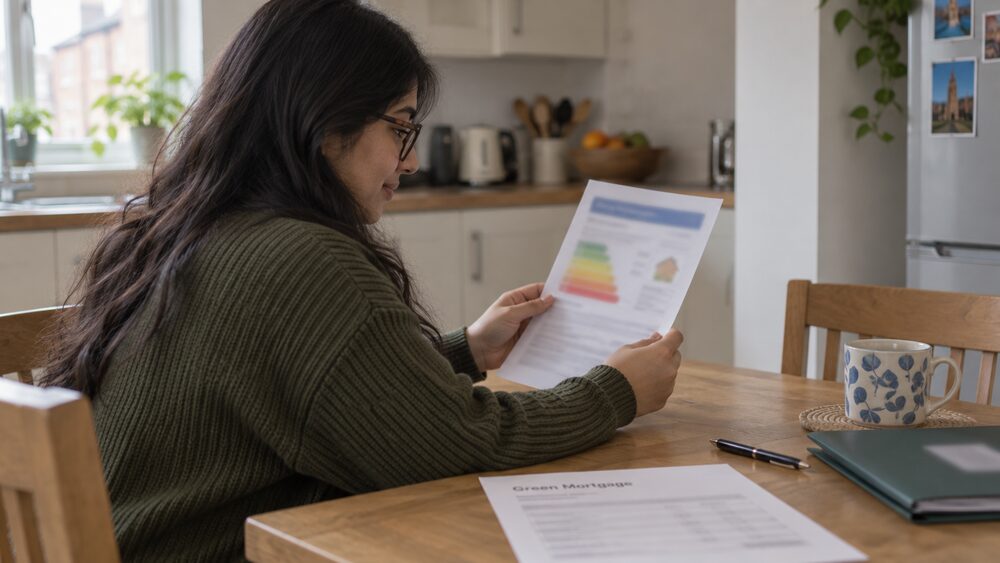
A green mortgage is a mortgage deal that rewards you for the energy efficiency of your home. Some lenders give lower interest rates, cashback or larger loans if your home meets a minimum energy-efficiency level, or if you make energy-efficiency improvements1. The idea is simple: a home that costs less to heat is treated as less risky to lend against, and lenders pass some of that benefit back to the borrower.
The market has grown quickly. There were just four green mortgage products in 2019, and by September 2025 there were roughly 602. Almost all of these are residential mortgages, with the rest being lifetime and later-life products3. So while green deals are still a small corner of the mortgage market, they are no longer a niche experiment, and most major lenders now have some form of green offer.
The catch is that the rewards are modest. Green mortgage rates are often around 0.1% or 0.15% below the lender's standard rate3, which on a typical loan is a real but small saving. Whether a green deal is worth having depends on the whole package: the rate, the fees, and whether your home's Energy Performance Certificate (EPC) rating actually qualifies.
What a green mortgage is and what it offers
A green mortgage works like any other mortgage: you borrow money to buy or refinance a home, and you repay it with interest. What makes it "green" is a condition attached to the reward. The lender checks your home's energy efficiency, usually through its EPC rating, and if the home meets the threshold, you get the benefit, whether that is a lower rate, cashback, or the ability to borrow more1.
Some banks offer cheaper rates specifically for people buying new-build properties with high energy-efficiency ratings9. New builds tend to score well on EPC assessments because they are built to current standards, so this route is often the easiest way into a green deal for a first-time buyer.
The market's growth tells you something about how lenders see this. Four products in 2019 becoming roughly 60 by 20252 means most big lenders now run at least one green product, and the range of structures has widened beyond simple rate discounts to cashback rewards and additional borrowing for improvements7. A green mortgage is not a separate type of loan in the way a fixed rate or tracker is: green deals come in those types too, with the green element layered on top.
It is also worth knowing what a green mortgage is not. It is not the Green Deal, which is a government scheme providing loans for energy efficiency home improvements10, and it is not a grant. A green mortgage is ordinary borrowing with a reward attached to energy performance.
Lower rates, cashback or bigger loans: the rewards lenders use
Lenders use three main rewards, and some combine them.
Lower rates. The most common reward is a discounted interest rate. Green mortgage rates are often around 0.1% or 0.15% below the lender's standard rate3. Barclays and NatWest have both offered cheaper rates for people with energy-efficient homes11, and Barclays' Green Home Mortgage is one of the established products in this space, scoring 75% in Which?'s customer score analysis3. On a large balance over a long term, even a small rate reduction adds up, but it rarely changes which deal is cheapest overall on its own.
Cashback. Some lenders pay a cash reward instead of, or as well as, a rate discount. Halifax's Green Living Reward offers some mortgage customers a cashback reward of up to £2,000 for making qualifying home improvements such as insulation, solar panels or a heat pump7. This structure suits people planning improvements anyway: the reward follows the work, not just the rating. Cashback mortgages generally have their own trade-offs, and in one analysis a quarter of residential mortgage products offered cashback once green mortgage products were excluded12, so cashback alone is not a sign a deal is green.
Bigger loans. Some lenders will lend more against an energy-efficient home, on the basis that lower running costs leave more room in a household's budget for mortgage payments. This can help a borrower reach a property they would otherwise fall short of, though a larger loan is a larger debt, and the loan to value ratio affects the rates available.
Which structure suits a borrower depends on circumstance. A rate discount rewards a home that is already efficient; cashback rewards a home that is being improved; a bigger loan helps at the point of purchase. None of them is free money: each is a lender's pricing decision, and the overall cost of the deal, fees included, is what matters.
EPC ratings explained: A to G
An Energy Performance Certificate gives information on the energy efficiency of a property using A to G ratings, with A being the most energy efficient and G the least efficient6. The certificate provides a rating of the energy efficiency and carbon emissions of a building from A to G, where A is very efficient and G is very inefficient13.
An EPC is always accompanied by a recommendation report that lists cost-effective and other measures to improve the energy rating of the home13. That report is useful well beyond mortgage applications: it is a starting list of the works that could lift a home into a higher band, which is what green renovation mortgages ask for.
A property needs an EPC when it is built, and before it is sold or rented14, and it is a legal requirement for any property being built, sold or rented15. A certificate is valid for ten years and can be used multiple times during that period6. In Scotland, there is an additional rule for landlords: the EPC must be displayed somewhere within the property where tenants can easily see it15.
Which EPC rating you need: usually A or B, sometimes C
Most green mortgages ask for an A or B rating. Barclays' Green Home Mortgage requires the home to have an energy efficiency rating of 81 or above, or to be in energy efficiency bands A or B4. Ecology Building Society's EcoReward requires an EPC rating of B or above for its self-build product5. The number 81 matters because EPC scores are numeric as well as banded: a home scoring 81 sits at the bottom of band B, so a lender can set its threshold either way.
Some deals accept band C, and some renovation products instead ask for an improvement of at least one band rather than a fixed starting point5. The threshold a lender sets usually reflects what the reward is for: a rate discount for an already-efficient home tends to demand A or B, while a product funding improvements asks for movement between bands.
For context on where homes actually sit, the energy efficiency rating needed for a rental property is E or higher16. Much of the existing housing stock is therefore below the A or B threshold that green purchase mortgages typically demand, which is why green deals have so far concentrated on new builds and why renovation products exist at all.
If your home is in band C or below, the realistic routes are a renovation or further advance product, or improving the home first and then remortgaging once the new EPC is in place.
Buying, remortgaging or improving: the types of green mortgage
Green products fall into three broad groups, matching the three moments a borrower can use one.
Buying. Green purchase mortgages, including the new-build deals some banks offer with cheaper rates for high energy-efficiency ratings9, reward a home that already qualifies. The EPC, or a predicted EPC for a property not yet built, is part of the evidence at application4.
Remortgaging. Remortgaging means switching from one mortgage to another, either a new deal with your existing lender or a new mortgage with a different lender17. Green deals are available on remortgages, so a homeowner whose home has a good rating can move to one at the end of a fixed period. Ecology's EcoReward, for example, can cover any secured lending on the property or works to improve it on a remortgage, and up to 80% of the purchase price or valuation on a purchase5. The general process is covered in remortgaging explained.
Improving. A green further advance or additional borrowing product lends you more against your home to fund energy improvements. Halifax's Green Living Reward sits in this space, paying up to £2,000 cashback for qualifying improvements7, and Coventry Building Society offers a Green Home Improvements additional borrowing product3. Further advances are explained in borrowing more on your mortgage.
There is also a switch route for existing borrowers. Ecology describes a non-advised process for members who wish to switch to EcoReward without changing their existing mortgage arrangements5. More generally, a product transfer with your existing lender can be simpler than a full remortgage, though it limits you to that lender's deals.
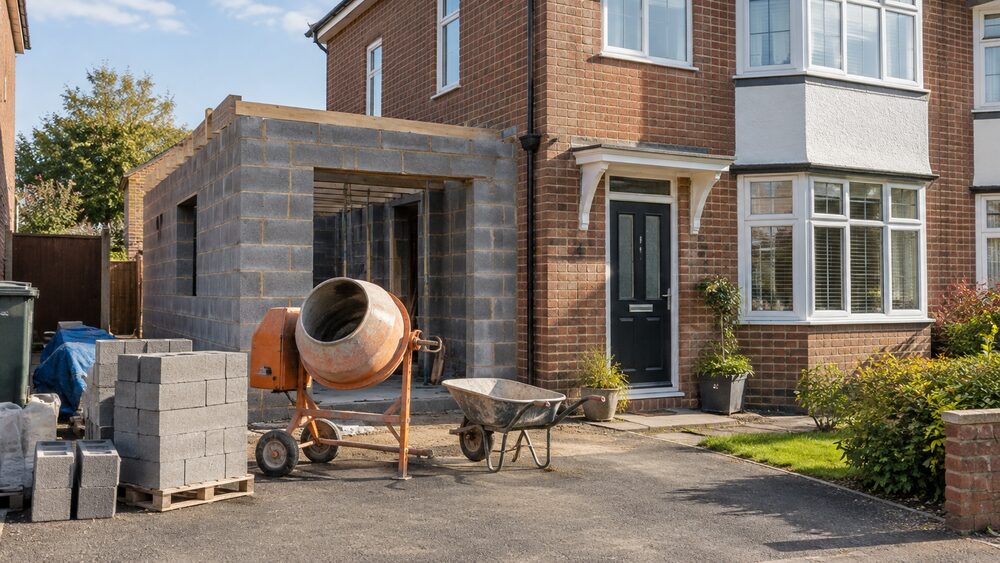
Green mortgages for renovations: improving your home's EPC band
Renovation products are the green mortgage's answer to the fact that most UK homes are not in band A or B. Instead of rewarding a rating you already have, they fund or reward the work that gets you there.
Ecology Building Society's EcoReward for renovation requires the borrower to demonstrate an improvement of at least one EPC band5. That is a meaningful but achievable target: the recommendation report that comes with every EPC lists the cost-effective measures that would do it13, typically insulation, glazing, heating upgrades or solar panels.
Halifax's Green Living Reward offers cashback of up to £2,000 for qualifying home improvements such as insulation, solar panels or a heat pump7. The structure differs from Ecology's: Halifax pays for the work done, while Ecology prices the loan around the resulting band. A borrower planning major works may find a renovation mortgage that releases funds in stages suits better than a lump-sum further advance; self-build and renovation mortgages work on that staged basis.
Two practical points shape whether this route works. First, the works must actually move the EPC band, which means a new assessment after the work is done. Second, borrowing against your home to fund improvements increases the mortgage, so the monthly saving on energy bills and any cashback need to be weighed against the extra interest over the term. The Mortgage Charter warns in a related context that monthly payments after support may be higher than they otherwise would have been and overall costs over the life of the mortgage will be higher18, a principle that applies to any borrowing that adds to the balance.
Costs to check beyond the rate
A green label does not make a deal cheap. The rate reduction is small, around 0.1% or 0.15%3, so fees can easily outweigh it.
Mortgage arrangement fees are typically between £500 and £1,500, and you can usually choose between paying the arrangement fee upfront or adding it to the loan8. Adding a fee is not free: in one first-time buyer example, adding the fee to the loan cost just over £316 extra over a five-year fixed term, and in a remortgage example, £480 additional over a two-year term19. Percentage fees are generally for properties over £750,000 and are much more common with buy-to-let mortgages19.
If you use a broker, check their fee too. Tembo, for example, charges £499 for a standard mortgage and £749 for its boost mortgage20. Broker fees vary widely, and some brokers are paid by commission instead; mortgage advice: brokers, advisers and applying direct explains the options.
Other costs that can eat the green saving:
- Valuation and survey fees, which apply to purchases and many remortgages
- Legal fees, on a purchase or a remortgage where a lender requires conveyancing
- Early repayment charges on your existing deal if you leave it early, covered in early repayment charges
Porting adds its own conditions. If you port your mortgage to a more expensive property, you will need to pass your lender's affordability checks and may have to pay a fee to increase your loan, or take on another mortgage product at a different rate21. The mechanics are in porting a mortgage when you move home.
The honest comparison is between the total cost of the green deal and the total cost of the best standard deal you could get, over the period you expect to hold it, with the arrangement fee and any broker fee counted on both sides.
How to get an EPC and apply for a green mortgage
If you are buying a property, you must receive an Energy Performance Certificate free of charge6, so for purchases the certificate usually already exists. If you own your home and need a new one, you commission an assessment from an accredited assessor and pay for it yourself. Certificates are valid for 10 years6, so check whether an in-date certificate exists before paying for a new one.
Barclays sets out a typical purchase route for its Green Home Mortgage: use the borrowing calculator, apply for an Agreement in Principle, and provide the predicted energy assessment or EPC at a meeting with a mortgage adviser4. An agreement in principle is an early indication of how much a lender may offer, and it does not commit you.
For a renovation product, the process adds a step: the lender will want evidence of the planned improvement, and Ecology asks borrowers to contact its mortgage team to explain what they would like to do5. After the works, a new EPC demonstrates the band improvement the deal requires.
A numbered summary of the process:
- Check your home's existing EPC and its expiry date, or obtain the certificate from the seller if buying6
- Read the recommendation report to see which measures would lift the band13
- Compare green deals alongside standard deals, with fees included8
- Get an agreement in principle to confirm how much you could borrow4
- Make a full application, providing the EPC or predicted EPC as evidence4
- Check the mortgage offer confirms the green reward in its terms before you accept
Free, impartial help is available: MoneyHelper offers guidance on mortgages, and a whole-of-market broker can tell you which green deals your EPC band qualifies for.
Where a green mortgage does not apply
Green mortgages have boundaries, and it is worth knowing them before you count on one.
Buy-to-let. The Mortgage Charter's commitments do not apply to buy-to-let mortgages24, and green residential products are built around homes you live in. Ecology's EcoReward requires the property to be your main residence, though it states it may still be able to help where an authorised consent to let is in place5. A landlord looking at energy efficiency is in a different market: rental properties need to achieve a minimum EPC rating of E25, and the government has consulted on requiring newly rented properties to be rated C or above from 2025, with existing tenancies having until 2028 to comply under those proposals14. Buy-to-let mortgages are covered separately.
Second homes and holiday homes. Because most green products require a main residence5, a second home or holiday let generally falls outside them. Check a lender's criteria directly rather than assuming.
Green Deal plans. A Green Deal plan, the government loan scheme for energy improvements10, is treated differently in law from ordinary borrowing: the Consumer Credit Act states that its subsection does not apply in relation to an agreement that is a green deal plan26. If you are funding improvements through a Green Deal rather than a mortgage, different rules govern the arrangement.
New builds that have never been occupied. In the related grants world, the exception is for people who live in a new build property that has never been occupied, who could not claim the Green Homes Grant27. New builds are instead the natural home of green purchase mortgages, since they tend to carry high EPC ratings9.
Homes below the band. If your EPC is below the lender's threshold and you are not making improvements, a green deal simply is not available to you. The realistic options are improving the home first, or taking a standard deal.
Where a green mortgage does not fit, the protections around ordinary mortgages still apply: the Financial Ombudsman Service handles complaints, and FCA mortgage rules govern how lenders must treat you. Those rights do not depend on your EPC band.
Sources27 cited
- Home buying and selling jargon HomeOwners Alliance, 2026-07-31
- Financing low carbon home heating Which?, 2025-09
- Green mortgages Which?, 2026-05-29
- Green Home Mortgage Barclays, 2026
- EcoReward Mortgage Ecology Building Society, 2026-08-21
- Buying a home Citizens Advice, 2026-09-25
- Additional borrowing Halifax, 2026-09-27
- Cost of moving calculator HomeOwners Alliance, 2026-06-11
- Mortgage types explained Which?, 2026-04-02
- Home energy saving improvements Shelter Cymru, 2026-08-28
- Should you remortgage to fund home improvements? Which?, 2021-03-27
- What's the catch with cashback mortgages? Which?, 2026-06-09
- Renting a property RICS, 2026-09-26
- Energy Performance Certificate Coventry Building Society, 2026
- Landlord checklist Halifax, 2026-09-27
- Upfront costs of private renting Shelter England, 2026-05-01
- Remortgage HomeOwners Alliance, 2026-07-31
- Mortgage Charter HM Government, 2023-06
- Are mortgage fees worth paying to secure the best rates? Which?, 2026-01-30
- Online mortgage brokers Which?, 2026-06-03
- Porting a mortgage Which?, 2026-01-27
- The cost of selling a house Which?, 2026-01-27
- Green Mortgage Swansea Building Society, 2026
- Mortgage Charter 2026 HM Government, 2026-03-26
- Becoming a landlord Which?, 2026-07-30
- Consumer Credit Act 1974 legislation.gov.uk, 1974-07-31
- Green Homes Grant worth £5,000 Entitledto, 2026-09-26



 MoneyHelperFree, impartial money and pensions guidance, set up by government
 StepChangeFree debt advice and solutions from a charity
 Financial Ombudsman ServiceFree, independent help when a complaint about a firm is not put right
 Citizens AdviceFree advice on money, consumer and legal problems in England and Wales
 ShelterFree housing advice from a charity