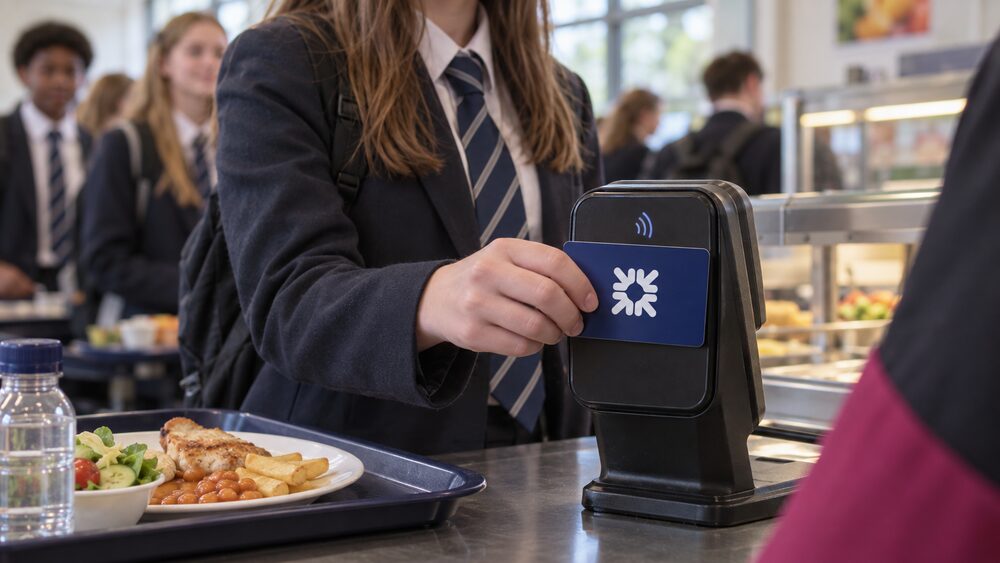
Ulster Bank Adapt is a current account for young people aged 11 to 17 who live in the UK. It comes with a debit card from age 11, has no monthly fee, and is run through the Ulster Bank mobile app and Anytime Banking rather than paper statements.
The account is designed to be a first everyday bank account rather than a savings pot. Money can be paid in, spent on a card, withdrawn from cash machines, and sent to friends from age 13, with fixed daily limits on app payments. Statements are viewed in Anytime Banking and are not posted. The week of the holder's 18th birthday, the account becomes an adult Select account, keeping the same account details and balances1.
This page covers what the account is, how it works day to day, how fees and charges are structured, who can apply and how, how the money is protected, and what to do when something goes wrong. Ulster Bank's own site carries today's figures for anything that changes, including overdraft interest and any charges that apply to other account types.
What the Adapt account is and who it is for
Adapt sits in Ulster Bank's range of children's and teenagers' accounts. It is open to anyone aged 11 to 17 who is a UK resident, and a bank account can be opened for a child from 11 years old. A debit card can come with it from that age, which makes it one of the earlier points at which a young person can hold a card in their own name1.
The account is built around the app. Statements are viewed in Anytime Banking and are not posted, so there is no paper statement arriving at home. That matters for a teenager who wants some independence, and it also matters for a parent who wants to keep an eye on what is going in and out, since the parent is a party to the application for the younger age group1.
Several features are age-gated rather than open to everyone with the account:
- Debit card: from age 111
- Payments to friends through the app: from age 13, with limits1
- Standing orders: only for those aged 16 and over1
- Adult savings accounts: the minimum age for most of Ulster Bank's adult savings accounts is 161
For children under 11, Ulster Bank points to the NatWest Rooster Money account, which offers a prepaid Rooster Card for children aged 6 to 17. That is a separate product from Adapt and is not a current account in the same sense2.
If you are weighing up whether a young person needs a current account at all, the wider guide to children's and teenagers' bank accounts sets out how these accounts differ from savings accounts, and how a current account works explains the basics of paying in and paying out.
How the account works day to day
Adapt runs through the Ulster Bank mobile app and Anytime Banking. The app is available to personal and business banking customers aged 11 and over using compatible iOS and Android devices, and needs a UK or international mobile number from specific countries3. Registration for the app asks for an Anytime Banking customer number, requested characters from the Anytime Banking PIN and password, confirmation of a mobile number, an activation code sent by text, and a passcode of the customer's choosing5.
Payments behave differently depending on age.
Other day-to-day features include:
- Get Cash without a debit card: requires at least £10 available in the account and an active debit card1
- Contactless card: customers with a Foundation or Adapt account can request a contactless debit card6
The account is a current account, not a savings account, and the two behave differently. Ulster Bank's own explanation of the difference notes that current accounts are built for everyday money in and out, while savings accounts are for setting money aside8. A young person who wants to save as well as spend may end up with both, and the guide to current account versus savings account covers how that split usually works.
How the fees and charges work
There is no monthly fee on the Adapt account. Ulster Bank describes it as a kids and teen bank account with no monthly fee, and the bank's current account range is built around an everyday, fee-free account or one that rewards everyday spending, with eligibility criteria applying1.
That does not mean no charge can ever arise. Ulster Bank's arranged overdraft terms state that the bank does not charge fees for using an arranged overdraft, and only charges interest on the amount of overdraft used, with the interest depending on the type of current account held. There is no cost to set up an arranged overdraft, and interest charges apply only for the days the overdraft is used9. Whether an overdraft is available on an Adapt account, and on what terms, is set by the bank and set out in its fee information rather than on this page.
Two points are worth separating:
- Account fees: the Adapt account itself carries no monthly fee1
- Interest and charges elsewhere: arranged overdraft interest depends on the account type, and Ulster Bank notes that its interest charge tracking does not include any current account fees or unpaid transaction fees9
Ulster Bank's site carries today's figures for overdraft interest and for any charges that apply to other account types. The general guide to current account fees and charges explains the categories of charge a current account can carry, and overdraft charges covers how interest on borrowing is worked out.
Who can apply and how to apply
The eligibility rules differ by age, and the parent or guardian requirement is the part that catches people out.
- Aged 11 to 15: you must apply with a parent or guardian who has an Ulster Bank current account1
- Aged 16 to 17: you can apply for your own teen account, and when applying online only your proof of ID is needed1
- Aged 16 to 17 without your own documents: if you cannot prove your identity and address with your own documents, you apply with a parent or guardian who has an Ulster Bank current account2
- Surname differs from the parent or guardian: a proof of relationship document is needed to show the link between you1
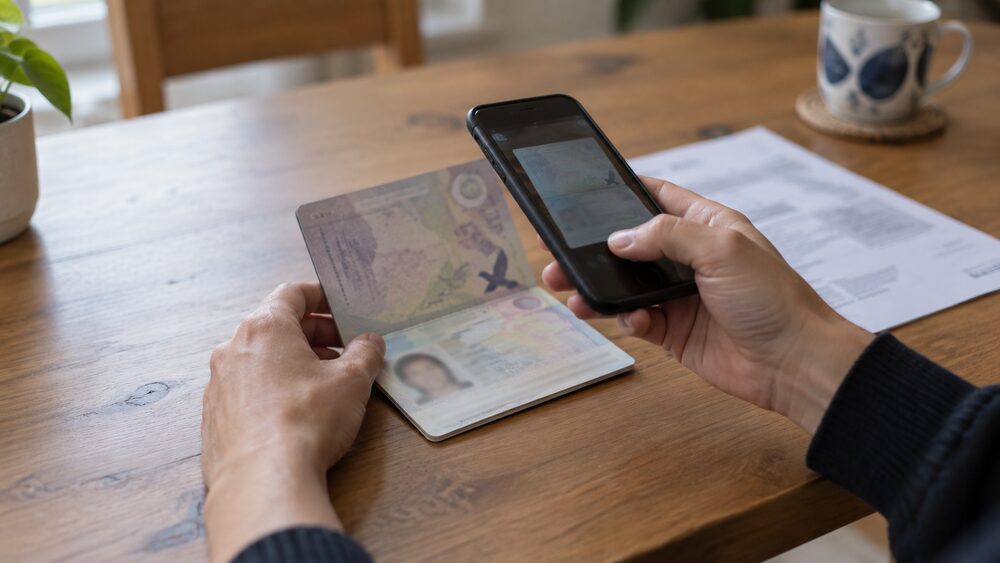
Ulster Bank tries to verify details electronically first, and sometimes needs to see physical documents. Documents can be provided online, in branch or by post, and the bank uses a security partner, Mitek, for online ID upload, so an email and text from Mitek may arrive during the application2.
For under 18s applying online, photo ID must be a passport, an EU or EEA ID card, a PASS card or a UK provisional driving licence. Proof of relationship documents that Ulster Bank accepts include a birth or adoption certificate, legal guardianship papers, an HMRC or benefits letter, a child arrangement order, or a foster care agreement2.
There are also routes for children in foster or care arrangements. Ulster Bank accepts a care or foster care agreement as proof of address where the applicant has different ID, is currently in foster or care and is 18 or under, and the name and date of birth match the application, with the information confirmed with social work by phone or in branch. A letter of introduction for a child in care or foster care must be addressed to the applicant's Ulster Bank branch with the full branch address, be dated, and include a local authority reference, the child's full name, date of birth and home address2.
If you are applying with a parent or guardian and want the wider picture on documents and refusals, the guide to how to open a current account and the page on what ID you need to open a bank account cover the standard requirements.
Switching to Ulster Bank, and what happens at 18
Switching into Ulster Bank depends on whether the applicant is already a customer. Existing customers apply through the mobile app using the Switch my account option, or through Anytime Banking using Switch to us. New customers choose a current account and apply, then switch through online banking, mobile banking or by phone12.
The Current Account Switch Service moves everything across within 7 working days, including Direct Debits and standing orders. Savings accounts and ISAs cannot be switched through that service, though ISAs held with another provider can be transferred to Ulster Bank using its own ISA transfer process. If a joint account is being moved, it can only be switched to a joint account in the same names, and personal details must match on both accounts12.
For a young person, the more relevant transition is turning 18. Ulster Bank states that the week of the 18th birthday, the account is changed to an adult Select account, and that all account details remain the same, including balances1. In practice that means the sort code and account number carry over, so money coming in and going out continues without interruption, but the account then runs on adult terms.
Closing an Adapt account is not done online. Either the young person, and the parent if both are signatories, needs to visit a branch. The same branch visit applies to a urfirst savings account13. The general guide to closing a bank account covers the routes used for other account types, including postal closure.
How your money is protected
Ulster Bank states that the Adapt account is protected by the Financial Services Compensation Scheme1. Ulster Bank is a trading name of National Westminster Bank Public Limited Company, which holds firm reference number 121878 on the Financial Conduct Authority register, and appears on the Bank of England's list of banks incorporated in the UK authorised to accept deposits, dated 1 September 202615. The company is active on the Companies House register, with company number 00929027, incorporated on 18 March 196817.
On the fraud side, Ulster Bank states that it protects customers around the clock by monitoring accounts and using technology to keep them safe, and that it will refund any money paid out of an account as long as security information has been kept safe18. Contactless debit cards come with the same condition: provided the card and PIN have been looked after, the bank says it will protect the customer against loss or fraud19.
There are practical steps a young account holder can take:
- Biometrics: an extra layer of security can be added through My Security Profile in the help section of the mobile app20
- Biometric Approval: available to eligible mobile app customers aged 16 or over, and can be set up by tapping the initials icon then settings in the app21
- Passwords: Ulster Bank advises unique passwords changed regularly, with a mix of letters, symbols and numbers22
- Wi-Fi: the home connection is the most secure, otherwise a mobile network such as 4G or 5G should be used to log in22
The wider guide to FSCS protection explains how deposit protection works and where it stops, including the limits that apply across accounts held under the same licence.
Problems, complaints and getting help
Most problems with an Adapt account are handled in the app. To dispute a transaction, Ulster Bank's instructions are to click on the transaction, select Report a dispute, fraud or scam, and then follow the remaining steps that suit the situation. The same route is described for virtual debit cards: in the mobile app, tap on the account, then My transactions, select the transaction, then Report a dispute, fraud or scam24.
For cash machine disputes, the route is different. Ulster Bank asks customers to log into Anytime Banking, click Chat to Cora on the home screen and type ATM dispute, or in the mobile app tap Help, then Chat to Cora, and type ATM dispute. Cora, the bank's AI assistant, provides further help with the dispute26.
If a payment has not arrived, Ulster Bank's guidance is that where the wrong reference has been submitted, the customer should contact the payee, who should be able to move the money from their suspense account to the customer's account with them27.
Where money is tight, Ulster Bank's support pages cover missing payments, managing debt, getting in touch and getting independent support, and the bank asks customers to tell it as soon as possible if a repayment has been missed, is about to be missed, or if paying off an overdraft is difficult28. Accounts that have been passed to a debt collection agency, become subject to insolvency, or are being managed under a debt repayment plan run by a third party such as PayPlan stand for repayment only, and only credits are accepted into them30.
For customers who need adjustments, Ulster Bank offers reasonable adjustments for customers with a disability, who are elderly, or who find its services difficult to use, and the bank's Banking My Way service lets existing customers record the support or adjustments they need so it is shared on internal systems33. The guide to accessible banking and extra support covers what banks generally offer.
On fraud, Ulster Bank's guidance includes not being rushed into giving out personal details or making sudden payments, being careful what is shared on social media, keeping personal documents safe and shredding them, not giving remote access or installing software after a cold call or unsolicited message, and registering for biometrics in the app. Suspicious texts can be forwarded to 88355 at standard network rates, and if details have been compromised, the bank asks customers to call using the number on the back of their card35.
The Ulster Bank brand page covers the bank's wider range, and the section on current accounts sets out how these accounts compare across providers.
Sources38 cited
- Adapt teenage current account Ulster Bank, 2026-09-25
- What you need to open an account Ulster Bank, 2026-09-25
- Anytime Banking features Ulster Bank, 2026-09-25
- Credit scoring guide Ulster Bank, 2026-09-25
- How to use the app Ulster Bank, 2026-09-25
- Ways to pay Ulster Bank, 2026-09-25
- How to make payments Ulster Bank, 2026-09-25
- Bank account vs savings account Ulster Bank, 2026-09-25
- Overdrafts Ulster Bank, 2026-09-25
- Borrowing needs Ulster Bank, 2026-09-25
- Fostering and children in care Ulster Bank, 2026-09-25
- Switch to Ulster Bank Ulster Bank, 2026-09-25
- How to close your account Ulster Bank, 2026-09-25
- How do I close an account Ulster Bank, 2026-09-25
- FCA register entry for National Westminster Bank Public Limited Company Financial Conduct Authority, 2026-09-25
- Banks incorporated in the UK authorised to accept deposits Bank of England, 2026-09-01
- National Westminster Bank Public Limited Company, company number 00929027 Companies House, 2026-09-25
- How we protect you Ulster Bank, 2026-09-25
- Contactless debit cards Ulster Bank, 2026-09-25
- SIM swap Ulster Bank, 2026-09-25
- Protect your credit score Ulster Bank, 2026-09-25
- Protecting your data Ulster Bank, 2026-09-25
- Impersonation scams Ulster Bank, 2026-09-25
- Debit card payments guide Ulster Bank, 2026-09-25
- Virtual debit cards Ulster Bank, 2026-09-25
- ATM dispute timescale Ulster Bank, 2026-09-25
- Why has my online payment not arrived Ulster Bank, 2026-09-25
- Manage my debt Ulster Bank, 2026-09-25
- Cost of living Ulster Bank, 2026-09-25
- My account has been passed to a debt purchaser Ulster Bank, 2026-09-25
- Struggling financially: overdraft debt Ulster Bank, 2026-09-25
- Financial abuse Ulster Bank, 2026-09-25
- Access to cash Ulster Bank, 2026-09-25
- Bereavement Ulster Bank, 2026-09-25
- Fraud guide Ulster Bank, 2026-09-25
- Text message fraud Ulster Bank, 2026-09-25
- Email fraud Ulster Bank, 2026-09-25
- Crypto scams Ulster Bank, 2026-09-25






 MoneyHelperFree, impartial money and pensions guidance, set up by government
 FSCSProtects your money if a bank, insurer or investment firm fails
 Financial Ombudsman ServiceFree, independent help when a complaint about a firm is not put right
 Citizens AdviceFree advice on money, consumer and legal problems in England and Wales