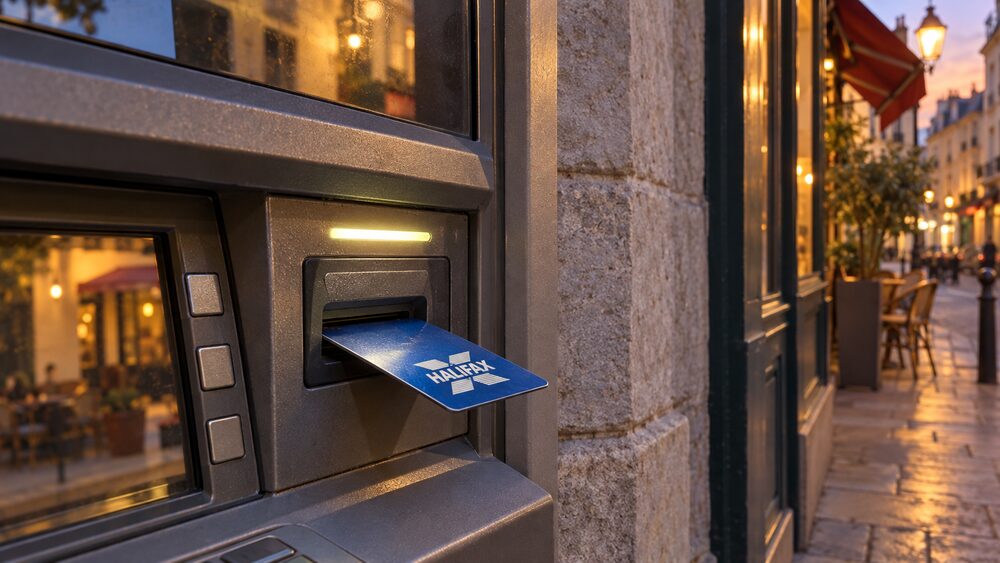
The Halifax Reward current account is an everyday current account with a monthly fee that can be avoided, a monthly prize draw, and no debit card fees from Halifax when you spend or withdraw cash abroad. Halifax says you can use your debit card to pay or withdraw cash without any fees from it, anywhere in the world1.
The monthly fee is the part most people want pinned down. The two statements sit on the same page and are not reconciled, so treat the fee as conditional on your monthly deposits and check the current position on Halifax's site before you apply.
Halifax is also changing. The Halifax brand is becoming Lloyds, and Halifax says customers will get the same protection they get today, with clear notice when it is time to move2. That change runs alongside the account's own terms, not instead of them, so nothing about your Reward account stops working in the meantime.
What the Halifax Reward current account offers
The Reward account is a standard current account with a small set of extras attached. The first is interest on the balance: Halifax says that if you have a Reward Current Account, Student Current Account, Cardcash account for holders aged 16 and 17, or Expresscash account, it will pay you interest on the money in your account3. The account's own page gives two rates, 1.49% on balances between £1 and £3,999.99 and 2.96% on balances between £4,000 and £5,000, and the two figures are not reconciled with each other, so the provider's site is the place to check today's position1.
The second extra is the monthly payday prize draw. The same condition appears on Halifax's general current account page and on its joint accounts page, so it applies across the range rather than to the Reward account alone6.
The third is travel money. Halifax says you can get preferential rates with an Ultimate Reward or Reward current account, and it can deliver travel money to any home address on your account in the British mainland or Northern Ireland8. That account also already includes home emergency cover9.
If you are weighing up whether a fee-paying account with extras is worth it against buying cover separately, the comparison is set out in packaged bank accounts.
How the monthly fee and rewards work
The Reward account's fee structure is the least settled part of the picture. Those two statements are not reconciled on the page, so the honest position for a reader is that the fee depends on your monthly deposits and should be confirmed with Halifax before applying.
The prize draw has clearer conditions. Halifax repeats the same condition on its Current Account page, its Ultimate Reward page, its joint accounts page and its Basic Account page, which suggests it is a group-wide mechanic rather than something specific to the Reward account6.
Interest on the account is paid monthly. Halifax says interest is paid into your Reward Current Account by the second working day of the following calendar month1. That matters if you are timing a switch or moving money out: the interest lands after the month ends, not on the last day of it.
There is also a condition attached to earning credit interest. Halifax says you need to pay at least 2 separate direct debits from your Reward Current Account each calendar month, and that quarterly direct debits and standing orders do not qualify1. Two monthly direct debits is a low bar for most households, but it is a bar: an account with one direct debit, or with two quarterly ones, does not meet it.
Check the current position on Halifax's site before you apply, and read any change notice you receive.
Using your Reward card abroad without debit card fees
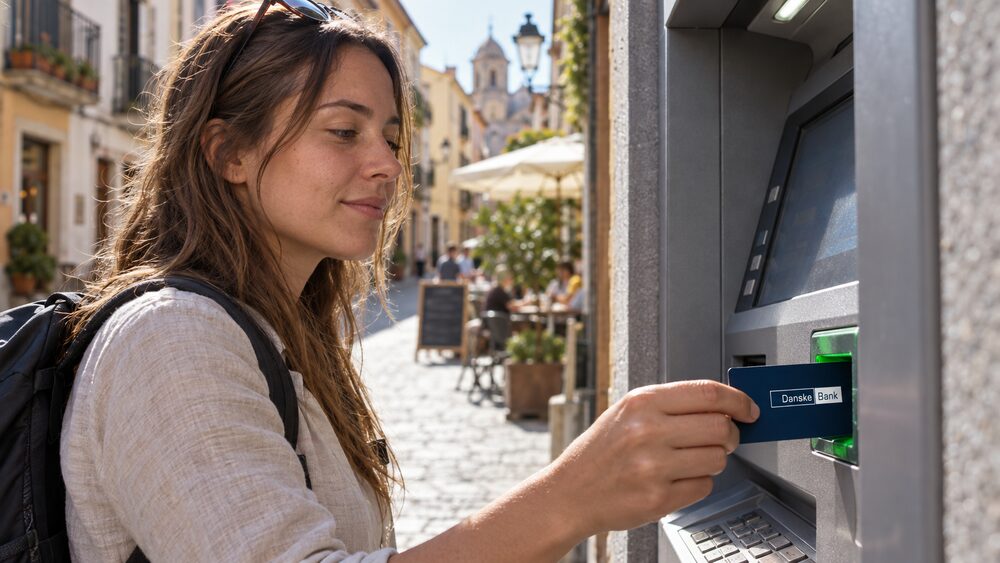
This is the Reward account's clearest selling point, and it is stated consistently across Halifax's pages. Halifax says it does not charge any fees when you use your debit card to shop or withdraw cash abroad, for Reward, Ultimate Reward, Student or Graduate account holders11. The Reward page puts it plainly: you can use your debit card to pay or withdraw cash without any fees from us, anywhere in the world1.
The detail behind that is worth knowing. Halifax says it will not charge a fee for currency conversion or any other debit card fees on transactions or withdrawals at home or abroad where a Reward, Ultimate Reward, Student or Graduate debit card has been used12. The same promise appears in Halifax's rates and fees guidance, which names the Reward, Ultimate Reward, Student and Graduate debit cards specifically3.
There is a parallel scheme for other accounts. Halifax says you can add Travel Ready to your account to use your debit card abroad without any fees from us in your selected weeks, and that this applies to Current Account or Basic Account holders11. Halifax also says it will not charge these fees in relation to other current accounts you hold, for your selected weeks, if you have Travel Ready added to the account3. So the fee-free position is not unique to Reward, but on Reward it applies all the time rather than in selected weeks.
Two limits are worth stating. First, "no fees from us" is not the same as "no cost": if a foreign bank or cash machine operator charges you for a withdrawal, that is their charge, not Halifax's. Second, the fee waiver is a Halifax promise about Halifax's own charges, and it does not change the exchange rate you get.
Overdrafts and other charges on a Reward account
An arranged overdraft is available on the Reward account, but it is not automatic. Halifax says you can apply for an arranged overdraft if you have a Current Account, Reward Current Account, Ultimate Reward Current Account or a Student Current Account13. All overdrafts are always repayable on demand, which means the bank can ask for the money back at any time13.
The charging structure has one feature that works in your favour. Halifax says that if you use your arranged overdraft but pay it back before the end of the day, you will not pay any arranged overdraft interest for that day1. Interest is charged daily, as set out in the terms and conditions of your current account, and Halifax says you can update your mobile number to receive alerts when you are being charged daily arranged overdraft interest14.
Going overdrawn without an arrangement is a different matter. Official guidance for Northern Ireland sets out what can follow: you may have to pay a penalty charge and a high rate of interest, your bank may charge for sending a reminder letter and for direct debits or cheques put through the account, and it may freeze the account until the overdraft is paid off15. MoneyHelper's guidance is simpler and applies across the UK: there are usually fees or interest if you spend more than you have in your account, including if there is not enough to cover a Direct Debit or standing order16.
StepChange, the debt charity, is blunt about the cost of living in an overdraft: your overdraft has high interest and charges17. If an overdraft has become a permanent feature rather than a short gap, the options are set out in struggling to repay an overdraft, and the mechanics of daily interest are explained in how overdraft interest and charges work.
A refused payment does not attract a fee, though the underlying overdraft position still can.
Who can open a Reward account and how to switch
Halifax says you can apply online, in branch or by phone18. You can also apply through the Halifax app, and through the Lloyds app, and if you start an application by email it must be completed within 14 days from the date you started1. The Student Current Account route is app-based: once you are in, you select Apply then Current accounts19.
On documents, Halifax says that in most cases you will only need to produce one of the following: a current UK photo driving licence, a passport from the United Kingdom, or a Biometric Residence Permit card18. If you live at a BFPO address, Halifax asks for your Service Number, Rank, Unit, Regiment, Operation Name where applicable, and BFPO Number18. The wider process is covered in how to open a current account and what ID you need to open a bank account.
Switching is done through the Current Account Switch Service. Halifax says it will switch your accounts within seven working days, that the service is free to use, that payments are transferred and the old account is closed1. The same seven working day promise appears on the Ultimate Reward page9 and on Halifax's switching page, which says you can switch your old account held elsewhere to either a new or existing Halifax current account using the Current Account Switch Service4. Halifax's account closure guidance adds that the service handles the move automatically, transferring direct debits and standing orders and redirecting payments20.
If you would rather keep your old account open, a partial switch moves your payments without closing it. The difference is set out in the Current Account Switch Service and partial switching.
Halifax is becoming Lloyds: what changes for Reward customers
Halifax's own pages carry a single, repeated line: the Halifax brand is changing to Lloyds2. It appears across Halifax's help centre, its loans FAQs, its credit card guidance and its mobile banking app guidance, which states that the Halifax Mobile Banking app is rebranding to the Lloyds app21.
What Halifax says about the effect on customers is narrow and worth quoting directly. On its loans FAQs, Halifax states: "The same protection you get today."2 Its mortgage FAQs go slightly further, saying customers will get the same protection they get today, with clear notice when it is time to move to Lloyds2. That is the whole of the promise as published: same protection, clear notice, no change to what you are covered for.
There is one practical consequence already visible. Halifax says that if you do not use online or mobile banking, you can start using the Lloyds app now to see your existing Halifax accounts, using your Halifax account details2. So the Lloyds app is already a route into a Halifax account for some customers, ahead of any formal move.
Banking with Halifax: app, online, branches and phone
Halifax runs the account across four channels, and the app is the one most customers will use day to day. Halifax describes its Mobile Banking app as a way to manage your account in a way that works for you, with card freeze, viewing card details, paying in a cheque, app notifications, fingerprint or Face ID, and payment confirmation among the features22. To use it you need an up-to-date phone number registered with Halifax, Wi-Fi or data on your phone, and an Apple App Store or Google Play account21.
The app also carries a messaging route. Halifax says you can select Message us 24/723. That is a support channel inside the app rather than a phone line, and it is available around the clock.
Online banking and the app are the standard ways in. Halifax says joint bank accounts have account access through Online Banking and the Mobile Banking app7. The same pattern runs across Halifax's savings products: the Instant Saver can be managed online, in the app, in a branch and by phone24, and the Bonus Saver and Regular Saver can be opened by existing customers online, in the app, by phone or in branch24. Balance transfers can be requested using Online Banking, the Mobile Banking app, by phone or in branch24.
Branch and phone access remain part of the picture, and Halifax publishes accessibility guidance for customers who need it, including help with accessing the app21 and at-home support23. If you need adjustments, the options are set out in accessible banking and extra support.
Service record, scams and how your money is protected
Halifax publishes its personal service quality information, which is where its complaint and fraud figures sit. It records 24 hour help for reporting a suspected fraudulent incident or transaction25. On complaints, Halifax's published timescales are that if a complaint is not resolved within 5 working days it will contact you with an update or acknowledgement, and that it will contact you at 4 weeks if it is still investigating25. The two statements describe different stages rather than contradicting each other, but they are not presented as a single timeline.
On scams, Halifax's advice is specific. It says you can check that it called you by hanging up and then dialling 159 to talk with it26. That is the safe route: end the call, then dial 159 yourself, rather than trusting a number the caller gives you. Halifax also explains that two-factor authentication, where it texts you a code or sends one by an automated call, can only work if it has your current phone number27. Keeping that number up to date is what keeps the check working.
On protection, Halifax states that the Financial Services Compensation Scheme protects the eligible money you hold with it28. The scheme covers eligible deposits up to its limit, and the detail of what counts and how joint accounts are treated is set out in is my current account protected?.
The firm behind the Halifax brand is Bank of Scotland plc, which is authorised by the Financial Conduct Authority with firm reference number 169628, and appears on the Bank of England's list of banks incorporated in the UK authorised to accept deposits5. Its company number is SC327000 and its registered status is active29. The FCA register lists Halifax among its current trading names, alongside Bank of Scotland, Lloyds, Birmingham Midshires, Intelligent Finance and others5. That matters for one practical reason: brands sharing a banking licence share a single compensation limit, so money held across them counts together towards it.
Sources29 cited
- Reward Current Account Halifax, 2026-09-27
- Loans FAQs: brand change Halifax, 2026-09-27
- Rates, rewards and fees Halifax, 2026-09-27
- Switch to Halifax Halifax, 2026-09-27
- FCA register: Bank of Scotland plc Financial Conduct Authority, 2026-09-25
- Current Account Halifax, 2026-09-27
- Joint accounts Halifax, 2026-09-27
- Travel money Halifax, 2026-09-27
- Ultimate Reward Current Account Halifax, 2026-09-27
- Basic Account Halifax, 2026-09-27
- Using debit and credit cards abroad Halifax, 2026-09-27
- Using your debit card abroad Halifax, 2026-09-27
- Overdrafts Halifax, 2026-09-27
- Keeping overdraft interest as low as possible Halifax, 2026-09-27
- Overdrafts and other bank debts nidirect, 2025-11-07
- Choosing a bank account for your Universal Credit payment MoneyHelper, 2026-09-25
- How can I stop living in my overdraft? StepChange, 2026-09-25
- Account opening guide Halifax, 2026-09-27
- Student Account Halifax, 2026-09-27
- Close a bank account Halifax, 2026-09-27
- Accessing our app Halifax, 2026-09-27
- Mobile banking app Halifax, 2026-09-27
- At home Halifax, 2026-09-27
- Current accounts Halifax, 2026-09-27
- Personal service quality information Halifax, 2026-09-27
- Scam calls Halifax, 2026-09-27
- Bank safely: protect your passwords Halifax, 2026-09-27
- Which firms does the PRA regulate? Bank of England, 2026-09-25
- Bank of Scotland plc company filing Companies House, 2026-09-25











 MoneyHelperFree, impartial money and pensions guidance, set up by government
 FSCSProtects your money if a bank, insurer or investment firm fails
 Financial Ombudsman ServiceFree, independent help when a complaint about a firm is not put right
 Citizens AdviceFree advice on money, consumer and legal problems in England and Wales