
A bank account for a child works much like an adult's current account, with a card and an app, but with age limits and adult controls built in. Children's bank accounts can be opened for kids as young as six, and from age 11 a child can have a bank account in their own name, though a parent's or guardian's permission is needed to open one1. High street banks set a minimum age of 16 or 18 for their standard accounts, so the accounts in between, for six to 15 year olds, are a separate category with their own rules1.
Most children's accounts cost nothing to run. The trade-offs are on the adult side: the parent or guardian is usually the account owner, decides what the child can do, and in some cases cannot switch the account using the normal switching service. This page explains the age limits, the controls, what a child can and cannot do, and what changes at 16 and 18.
Ages covered: from six to 17
The age limits decide which account a child can have, and they step up in stages rather than all at once. Children's bank accounts can be opened for kids as young as six1. From age 11, a child can have a bank account in their own name, but a parent's or guardian's permission is needed to open it2. From age 16, a child can open a bank account without asking their parents at all2.
Standard adult accounts come next. High street banks set a minimum age of 16 or 18 for standard bank accounts1. Basic bank accounts, the no-frills type explained in our basic bank accounts guide, need you to be at least 16 to open, or over 18 for some banks3. Citizens Advice likewise notes you may have to be 18 or over to open some accounts5.
App-based children's accounts sit at the young end. Monzo's Under 16s account, for example, is for children aged 6 to 15, and UK residents only4. Once a child passes 16, they move into the adult range of accounts, and the children's account is no longer available to open.
The ages also matter for savings. Children can open most children's non-ISA savings accounts themselves from age seven6. For Junior ISAs, a parent or guardian manages the account while the child is under 16, and from 16 the child can choose to manage it themselves7.
Fees and charges: usually £0 a month
Children's bank accounts are generally free. Basic bank accounts are free to set up and use3, and Independent Age confirms the same for the basic account category as a whole8. On Monzo's Under 16s account there are no up-front costs, subscription or top-up fees4.
The absence of a monthly fee is not the same as the absence of all charges. Accounts of this kind can still carry charges for specific things, such as using the card abroad or replacing a lost card, so the terms of the particular account are what matter. The general picture is that the industry bears the cost of fee-free basic banking voluntarily: a House of Lords report put the total cost of fee-free basic bank account providers at an estimated £300 to £350 million per year9.
For comparison, paid accounts do exist in the wider market. Which? notes that Monese has a range of accounts costing up to £14.95 per month, although a free version also exists1. That is the adult market, not children's accounts, but it shows what "free" is measured against.
If the aim is saving rather than spending, children's regular savings accounts work differently: the top accounts usually allow a maximum of £100 to £200 to be paid in per month6. A children's current account and a children's savings account are separate products, and many families hold both. Our current account vs savings account comparison explains the difference.
Who owns the money: how a parent or guardian controls the account
The defining feature of a children's account is that an adult stays in charge. On Monzo's Under 16s account, the parent or guardian is the account owner, and any money in the account legally belongs to them4. The child's parent or guardian is the main account holder10.
Control is exercised through the app. Parents can set a daily spending limit for the child, and use customisable controls to turn cash withdrawals and online payments on or off4. Online payments, contactless payments and cash withdrawals can each be turned on or off individually11. Parents receive instant notifications when the child spends, if notifications are switched on4. Parents and guardians can also lock Pots, which is useful if the money is for something important4.
The child is not shut out of the arrangement. The child can freeze their card if they have the app, or the parent can do it for them, and the card can be defrosted to work again11. The child can keep an eye on their own spending, and the parent can monitor it from their own app12.
How control of a child's account shifts from parent to child as the child gets older.
The same pattern of adult management until 16 applies to savings products. A parent or guardian manages a Junior ISA for a child while they're under 16, and once the child reaches 16 they can choose to manage their own account7. For children's Premium Bonds, prizes are paid to the responsible parent or guardian who manages the account while the child is under 1613.
Grandparents and other family members
Grandparents and other relatives can be involved, but usually through the parent rather than instead of them. On Monzo's Under 16s account, the main account holder can invite a family member to help with the account. The invitation is sent from the app: under the Under 16s account, the parent taps the three dots on the child's card, then Manage account, then Add a family member under Helping with this account14. If there are multiple children, the inviting parent selects which children the helper can assist with14.
Before that, the parent needs to be findable by phone number, which is switched on in Settings, then Privacy & security, then Profile privacy, then Phone number14. If the adults share a joint account, Monzo asks whether they would like to invite you; if not, Monzo shows the main account holder their Monzo contacts, who may need to enable contacts first14. If you decline an invitation, the main account holder can invite you again if you change your mind14.
For savings, grandparents have their own routes in. Grandparents are able to open and contribute to a child's Investment Account, but they need to nominate someone to look after the account until the child turns 16, and that person must be a parent or guardian15. The rules for National Savings accounts go further back: legislation provides that a deposit may be made on behalf and in the name of a minor under the age of sixteen by that minor's parent, guardian or grandparent16.
Where family payments are involved, official help exists. The Child Maintenance Service can give you a letter for your bank explaining why you need to set up a particular type of account, and can give bank details to the other parent17.
What a child can and cannot do in the app
Children's apps are the adult app with restrictions added. Monzo states that under 16s need the same app as the parent, with certain restrictions added to keep them safe18. What a child can do in the app is a defined list, and what they cannot do is just as defined.
Under 16s can see their balance, see their activity, view their card and account details, use Pots, freeze their card, and customise the app wallpaper, app icon and profile picture18. With Pots they can create and sort money into them, set savings goals, and schedule payments18.
Under 16s cannot send money to others, view their PIN, open other Monzo accounts, get a loan or overdraft, or spend at certain blocked merchant categories18. The PIN restriction is practical rather than decorative: the parent must show the child their PIN in the parent's app, because the child cannot view it themselves18.
The child does not need their own phone. Monzo's app has been made child-friendly for under 16s, but the child can use their card without it, and the parent can keep an eye on their spending in the parent's app12. No proof of address, photo ID or separate mobile device is needed for the child12.
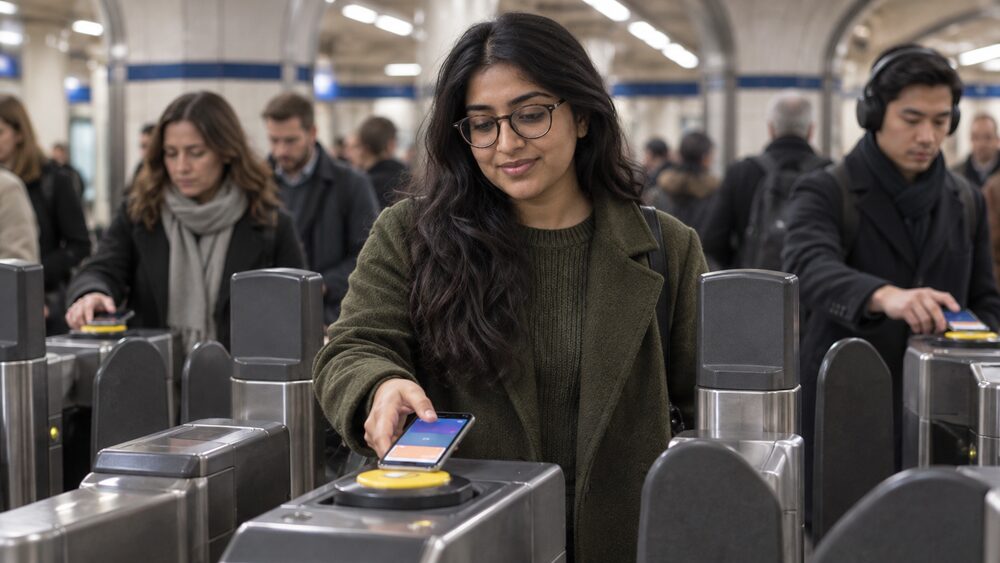
Digital wallets come in at 13. Apple Pay and Google Pay are available from age 13 on Monzo's Under 16s account4. Apple Pay, along with Google Wallet and Samsung Pay, lets card details be uploaded to a digital wallet on a phone or tablet, then used to tap on a card reader in shops and to pay on some websites and apps19. Our guide to paying with Apple Pay, Google Pay and Samsung Pay covers how these work in full.
Security is stronger in a wallet than with the card alone. When a card is added to a digital wallet, the details are encrypted and stored on the device rather than on external servers, the card information is replaced with a device account number or token, authorisation requires a facial scan, fingerprint, PIN or password, and the information can be wiped from a lost or stolen device using another device20. Some retailers accept wallet payments above the contactless card limit: Aldi does20.
Using a child's card abroad
A child's card can generally be used abroad in the same way as at home. Prepaid cards, one common form of travel money for children, can be used abroad like a debit card21. The practical points are the charges and the currency.
On currency, official guidance is blunt: HMRC states that all overseas payments should be made in sterling, and that a bank may charge for using any other currency22. That guidance comes from HMRC in the context of repaying child benefit overpayments, but the principle is the same for any account holder: where a sterling option is offered, paying in sterling avoids a conversion charge by the bank.
The charges to check before travelling are the foreign transaction fee on card spending, any charge for withdrawing cash abroad, and the exchange rate the provider applies. None of these figures is fixed across the market, so the account's terms are the only reliable source. Our money abroad guides cover travel money in more depth, and ABTA's guidance on travel money explains the options including prepaid cards21.
If the child travels with a phone rather than a card, the digital wallet security described above applies there too: the wallet details can be wiped remotely if the phone is lost or stolen20.
Paying in cash and cheques is harder than it looks
This is the point where children's accounts most often disappoint. On Monzo's Under 16s account, the account has no account number or sort code of its own; it is linked to the parent or guardian's Monzo current account10. That has knock-on effects for everything that depends on those identifiers.
Cheques are the clearest case. Cheques in the child's name cannot be paid in directly to an Under 16s account; the parent or guardian can pay in cheques in their own name and move the money across10. Receiving money works through the parent instead: the parent can send the child a one-off payment, schedule regular pocket money, or share the child's payment link so others can pay in. A child can receive up to £250 in total, not per individual payment, over a 30 day period via their payment link10.
Cash can be paid in where the underlying adult account allows it, but the child's account is not a full current account, and the limits of basic accounts show what the floor looks like. A basic bank account will have fewer features and benefits than regular current accounts, including having a cheque book23. Our guide to paying cash and cheques into your account explains the normal routes, including banking at the Post Office.
There is also an evidence point for families who pay each other in cash. With private child maintenance arrangements, non-payment is very hard to evidence if payments are made in cash, so written evidence of every payment should be kept; a bank account gives both parents proof of how much and how often payments were made24. Official guidance on benefits makes a similar point about account choice: child benefit can be paid into any account, apart from a Nationwide cash builder account in someone else's name25.
Switching a child's account: why CASS may not apply
The Current Account Switch Service (CASS) is the free service that automatically switches a current account to another bank or building society26. It moves money and payments automatically from the old account to the new one, including redirecting incoming payments, and refunds any interest or charges if things go wrong27. You can choose and agree your switch date with the new bank, and the service is free to use28.
Children's accounts can fall outside this. Monzo's Under 16s account is not compatible with the Current Account Switching Service, so you cannot switch an existing child's account to it29. You can still open an Under 16s account as an additional account for your child, and you do not need to close any existing accounts to do so29.
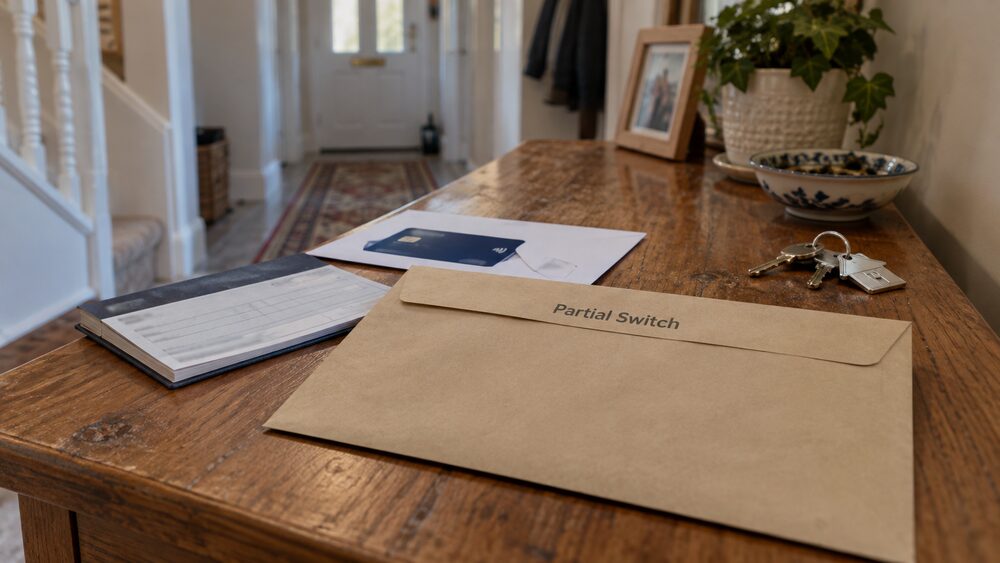
So the practical position is: check with the provider before planning a switch involving a child's account. If the account is not CASS-compatible, the options are to open the new account alongside the old one and move payments manually, or to wait until the child is old enough for a standard account, where the full switch service applies. Our guide to the Current Account Switch Service explains how switching works, and partial switching covers moving payments without closing the old account.
Joint accounts have their own rule: switching works for joint accounts provided you are switching to another joint account and all account holders agree, and you can also switch a sole account to a joint account elsewhere30. That matters for families where a child's account is linked to a joint adult account.
If a card is lost, stolen or used by someone else
The first action is always the same: if your card is lost or stolen, report it to your bank immediately31. If you think your card, online bank account or cheque book have been stolen or hacked, speak to your bank or building society straight away32.
If the card is on a children's account with an app, freezing comes first. The child can freeze their card in the app, or the parent can freeze it for them, and it can be defrosted to work again11. If a phone holding a digital wallet is stolen, report the phone as stolen and freeze the card immediately, or use a friend's or family member's phone to call your bank33.
If money has already gone, speed matters. Which?'s guidance on reporting scams states that anyone who has lost money or spots an unauthorised transaction on their account should contact their bank immediately, using the phone number on the back of their card34. Our guide to unauthorised payments and your refund rights explains what the bank must do next, and the scams and fraud section covers the wider picture.
ID and paperwork for opening
What you need depends on the account. At the app-based end, opening a Monzo Under 16s account requires no proof of address, no photo ID and no separate mobile device for the child12. The child must be 6 to 15 years old and a UK resident12.
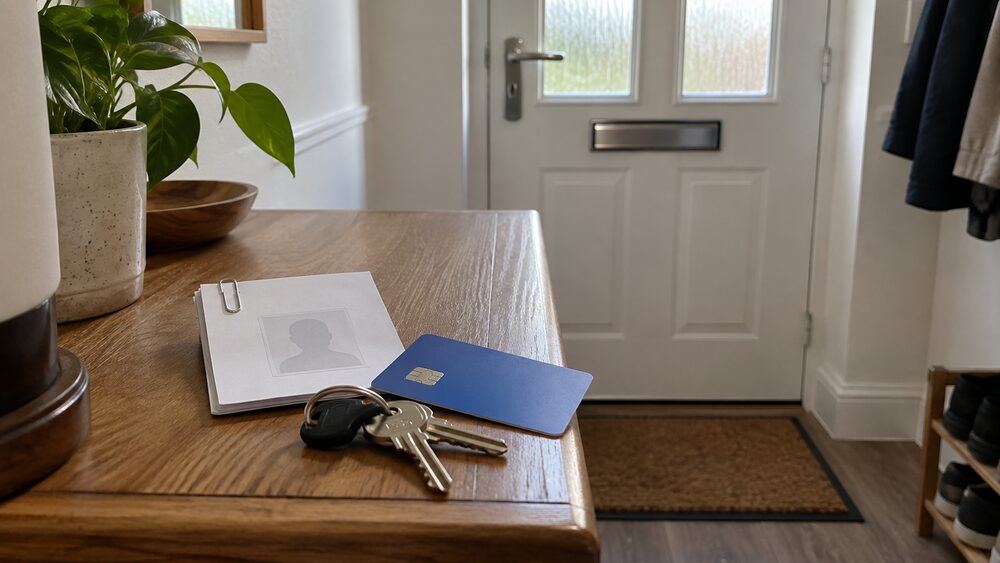
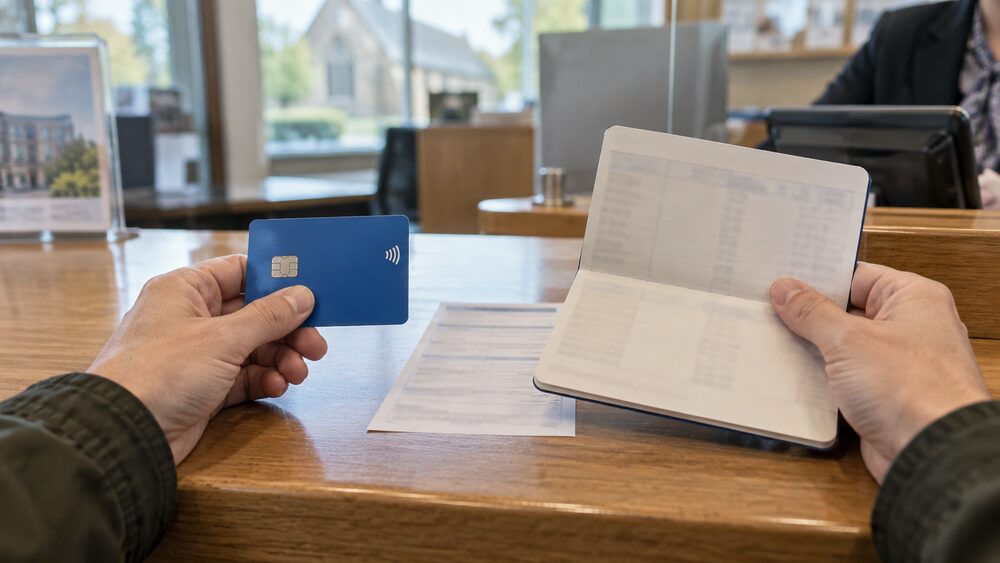
At the traditional end, the adult's identity is what is checked. Most banks ask for a driving licence or passport to prove identity, or a photo of these if applying online, often with a selfie3. Other documents may be accepted, including letters from DWP, HMRC, JobCentre+, the local council, a GP, a minister of religion, a social landlord, an armed services officer, a warden, a care home manager, an employer, or a college or training provider3.
If you do not have a passport or photocard driving licence, ask the bank what forms of ID it will accept before you try to open an account with them35. Our guide to what ID you need to open a bank account covers this in full, and how to open a current account explains the application process.
For savings products the age rules differ again. On NS&I's Junior ISA, for children aged under 16 only their parent or legal guardian can open an account, while children aged 16 or 17 can open their own36. Anyone with parental responsibility for someone under 18 who is resident in the UK can open a Junior ISA for them, and the account is in the child's name36.
Protection, and where it stops
Money in a children's bank account held with a bank is covered by the Financial Services Compensation Scheme in the same way as adult deposits. Monzo states that FSCS protection applies to its Under 16s accounts11. Our guide to FSCS protection explains the deposit protection limit and how it applies across accounts.
The protection has edges. Where money is held in a child trust fund or Junior ISA account, FSCS compensation will have to be paid into another ISA rather than being cashed37. That matters for families holding these products with a failed provider: the money stays inside the ISA wrapper.
Two further limits are worth knowing. First, access: with a parents' savings account for a child, it is likely the money cannot be used until the child is 18, depending on the account's rules2. Second, the number of accounts: under the Junior ISA regulations, an eligible child may hold only one cash account and only one stocks and shares account, and an account holding less than one penny is disregarded38.
Child Trust Funds, the predecessor scheme, are a separate matter: most children received around £250 each from the government at the time their account was set up39. A child born while that scheme ran may already hold an account without the family knowing, which is worth checking before opening new savings.
For help with any of this, MoneyHelper offers free, impartial guidance on choosing and using bank accounts27, and Citizens Advice covers getting a bank account and what to do if a bank refuses to open one5.
Sources39 cited
- How to open a bank account online Which?, 2026-04-23
- Managing your own money Scope, 2025-08-18
- Basic bank accounts MoneyHelper, 2026-09-25
- Monzo Under 16s account: understanding the account Monzo, 2026-09-25
- Getting a bank account Citizens Advice, 2026-09-25
- Best ways to save for children Which?, 2026-04-06
- ISA basics NS&I, 2026-09-01
- Making the most of your bank account Independent Age, 2026-09-26
- Report on fee-free basic bank accounts House of Lords, 2017
- Monzo Under 16s: sending money Monzo, 2026-09-25
- Monzo Under 16s safety features Monzo, 2026-09-25
- Monzo Under 16s: child requirements Monzo, 2026-09-25
- Premium Bonds prize options NS&I, 2023-01
- Monzo Under 16s: how a family member joins Monzo, 2026-09-25
- Looking after a child's savings NS&I, 2023-11-13
- National Savings regulations 2015 legislation.gov.uk, 2015-03-10
- Private child maintenance arrangements nidirect, 2026-08-19
- Monzo Under 16s: the child's app Monzo, 2026-09-25
- Scamwatch: has my Apple Pay been suspended? Which?, 2026-08-25
- How much is the limit on Apple Pay at Tesco and high street retailers Which?, 2018-12-14
- Travel money ABTA, 2026
- Repay child benefit overpayments GOV.UK, 2026-09-26
- Basic bank accounts: bankruptcy advice Advice NI, 2026
- How are child maintenance payments made? One Parent Families Scotland, 2026-07-29
- How benefits and pensions are paid nidirect, 2026-07-15
- How to choose the right bank account MoneyHelper, 2026-09-25
- How to switch your bank account Which?, 2026-09-07
- Joint accounts MoneyHelper, 2026-09-25
- Monzo Under 16s and CASS Monzo, 2026-09-25
- Card fraud: protect yourself Take Five to Stop Fraud, 2026-09-26
- Protect your identity nidirect, 2025-10-28
- Stolen mobile phone guidance Take Five to Stop Fraud, 2026-09-26
- Tips for reporting scams Which?, 2026-06-17
- Watch out for the PayPal deposit scam Which?, 2026-04-16
- Basic bank account StepChange, 2026-09-25
- Junior ISA NS&I, 2026-09-24
- Deposit protection: credit unions FSCS, 2026-09-25
- Junior ISA regulations 2011 legislation.gov.uk, 2011-07-26
- Investigation into Child Trust Funds National Audit Office, 2023-03-14

 MoneyHelperFree, impartial money and pensions guidance, set up by government
 FSCSProtects your money if a bank, insurer or investment firm fails
 Financial Ombudsman ServiceFree, independent help when a complaint about a firm is not put right
 Citizens AdviceFree advice on money, consumer and legal problems in England and Wales