Barclaycard Forward is a credit-building credit card from Barclays, designed for people who want to borrow on a card but whose credit history may not yet support a mainstream deal. It works like any other credit card: you spend, you get a statement, and you pay at least the minimum each month. What makes it a builder is the way it rewards the behaviour a lender wants to see, and the way it is priced for someone starting out.
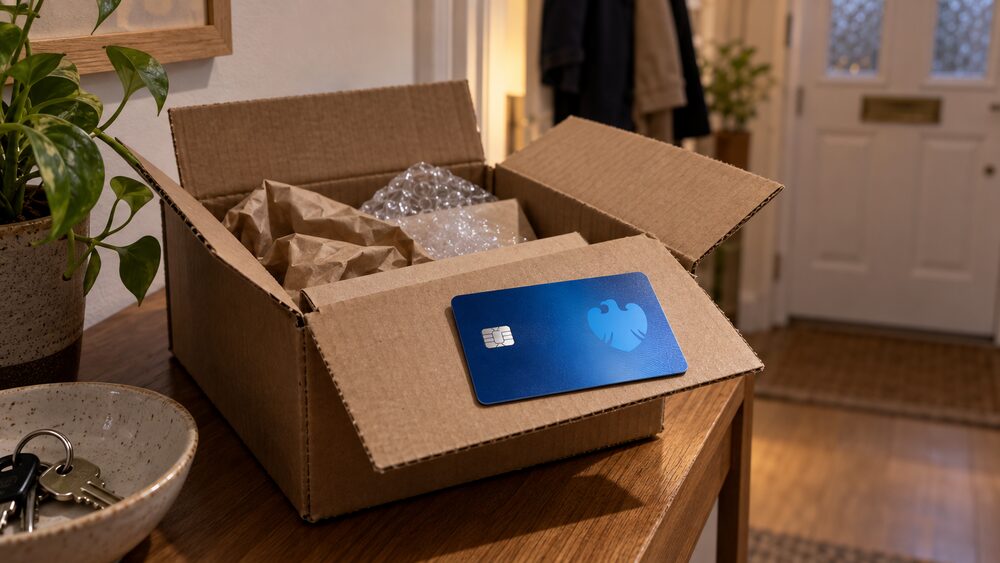
The headline feature is a reduction in the interest rate for paying on time. Barclays says that if you keep up on-time payments in the second year, you get another 2% reduction1. The card also carries a balance transfer fee of 2.9% on each balance transfer made, with a minimum transfer of £250 across up to five different balance transfers1. If you are approved, Barclays says your card could be with you in seven working days1.
Before any of that, you can check whether you would be accepted. Barclays states that you can check your eligibility before you apply to see if you could be successful, without impacting your credit score2. That check is the sensible first step, because a full application leaves a mark on your credit file whether or not you are accepted.
What Barclaycard Forward is and who it is designed for
Forward sits in Barclays' credit-building range, alongside the other cards the bank groups under that heading2. A credit-builder card is not a different kind of borrowing; it is an ordinary credit card aimed at people a mainstream lender would otherwise turn down, usually because their credit file is thin, new or marked by past problems.
The trade-off is familiar. Credit-builder cards tend to start you on a low limit and grow it as you demonstrate you can manage the account. That is the mechanism: the card is a way of producing a record of reliable repayment, which is what future lenders look at.
Barclays does not publish a separate eligibility rule for Forward beyond the general one that applies to its lending. For any Barclays lending, you must be 18 or over and resident in the UK4. The same age and residency rule appears on the app-based Barclays Bank Account, which is described as 18+ and UK only5.
It is worth being clear about what a builder card is not. It is not a route to a large limit, and it is not a way to borrow cheaply in the short term. Its value is in the record it creates, and that only works if the payments are made on time. If you already have a card and simply want a different one, the credit-builder credit cards page sets out how the category works across providers.
How the interest rate reduction for on-time payments works
The Forward card's distinguishing feature is a rate that steps down as you pay on time. Barclays describes a reduction in the first period and then a further 2% reduction if you keep it going in the second year of on-time payments1. The exact starting rate and the resulting rate are on the provider's site, which carries today's figures.
Two things drive what you actually pay in interest, and neither is the headline rate on its own. The first is whether you clear the statement balance in full. Barclays says the interest-free period on all its credit cards is 56 days if you pay off your statement balance in full and on time and stay within your credit limit6. That is the single biggest lever: a card used this way costs nothing in interest, whatever the rate.
The second is how much you repay when you do not clear the balance. Barclaycard's own guidance notes that you could increase your monthly payment amount to reduce the amount of interest you will pay7. Because interest is charged on the balance that remains, paying more than the minimum shortens the time the debt exists and cuts the total cost. The how credit card interest is charged page explains the daily calculation behind this.
For a builder card the interaction matters more than usual. A rate reduction is only worth having if you are carrying a balance, and carrying a balance is the thing that slows down the credit-file improvement you are trying to achieve. The two goals pull against each other, and the arithmetic is set out in minimum payments.
Interest-free purchases and balance transfers on Forward
Forward is not sold as a 0% card, and no promotional purchase or balance transfer period is published for it. What is published is the cost of moving a balance onto it: a 2.9% fee on each balance transfer made, with a minimum of £250 across up to five different balance transfers1.
That fee structure shapes what the card is good for. A balance transfer moves a debt from one card to another; it does not reduce the debt, and the fee is added to what you owe. The balance transfer fees page works through how these charges are applied.
If a balance transfer is the main thing you need, Barclays' dedicated balance transfer cards are the ones built for it.
The practical point for a Forward holder is that the card's balance transfer facility exists but is not its purpose. If you are carrying expensive debt and want to stop the interest, the balance transfer credit cards page compares the routes properly.
Fees and charges: late payments, cash and spending abroad
Barclays' general position on credit cards is that you need to pay back at least a minimum amount each month, or you will be charged a late payment fee4. Citizens Advice puts the same point in consumer terms: you will usually be charged for going over your credit limit, for using the card abroad and for late payments, and the credit agreement sets out what other charges apply8.
That is a fairness benchmark rather than a cap, and it is the figure to hold in mind when reading a statement.
Cash withdrawals are the expensive corner of any credit card. Citizens Advice notes that if you withdraw cash on your credit card abroad you may be charged a foreign transaction fee on top of the usual cash advance fee9. Barclays confirms that you can make purchases and withdraw money from cash machines abroad10, so the facility exists, but the charges stack up. The withdrawing cash on a credit card and using a credit card abroad pages cover both in detail.
One small mercy on timing: Barclaycard adjusts a due date that falls on a bank holiday so it lands on the next working day, and operates a built-in grace period to allow for delays, so no fees are charged11. That is a Barclaycard policy reported by Which?, and it applies to the card rather than being something you have to ask for.
Who can apply and how the eligibility check works
The general rule for Barclays lending is that you must be 18 or over and resident in the UK4. Beyond that, acceptance depends on the assessment Barclays makes of your circumstances, which is why the eligibility check exists.
The check is a soft search. Barclays states that you can check your eligibility before you apply to see if you could be successful, without impacting your credit score2. The same promise appears on the Barclaycard Platinum card, where Barclays says to use the eligibility checker first and then apply in a few steps, and that this will not affect your credit rating12. Barclays makes the same commitment on personal loans, saying it will tell you what your loan rate is before you apply and that this will not affect your credit score4.
What the check does not do is guarantee acceptance. It tells you how likely an application is to succeed based on the information available; the full application still involves a hard search and a final decision. Independent guidance on credit scores makes the distinction clearly: a change to how a score is calculated does not affect your ability to get credit13, and what lenders actually assess is the underlying file.
If you have a county court judgment on your file, that is a different matter. Independent guidance lists the impacts as your credit score, borrowing, renting and employment opportunities14. A builder card can help you rebuild over time, but it does not remove a judgment.
Managing a Forward card in the app and online
Barclays runs its cards through the Barclays app, and the app is where most day-to-day management happens. The app lets you view and download statements, transfer cash between your accounts, pay in a cheque, manage standing orders, use spending insights and controls, report a debit card as lost or stolen, send a message, and manage a mortgage15.
Several of those features matter specifically for a credit card. You can link your debit or credit card to an Android or Apple device5. You can choose a daily limit for cash machine withdrawals and control whether your card can be used to make payments online, in apps or over the phone5. You can also restrict card payments made when abroad, which Barclays describes as protecting you both home and away5.
If your card has not arrived, the app shows it. Barclays says that if you have the Barclays app you can see your new card in Manage your cards or Your cards as soon as it has been sent16. And if you lose the card while travelling, you can report it lost or stolen in the app so a replacement could be waiting for you when you get home10.
Some Barclaycards are app-first, meaning the app is required to activate, use and manage the account, with only some parts available in online banking17. Forward is not described that way, but the app is the main channel. The Barclays page covers the wider banking side.
Missed payments, your credit record and getting help
Missing a payment on a credit-builder card does the opposite of what the card is for. The consequences are well documented. Missed payments go on your credit file and can make it harder to get credit in future and to remortgage18. The Welsh Government's cost of living guidance puts it plainly: missed payments could affect your credit rating, making it more difficult to get credit in the future19. Extra charges are added if you miss payments18.
The escalation path is also documented. After three or four missed payments, the missed payments are recorded on your credit file, the creditor will soon think about sending a default notice for credit card or buy now pay later debts, and the creditor will be considering other recovery steps20. A default notice is a formal step, and it stays on your file.
There is an expectation on the lender too. If you miss a repayment, firms need to contact you to let you know and explain what this means, and lenders need to provide support if you are struggling to make repayments21. The Financial Ombudsman Service notes that if you have already missed payments, any help you receive will impact your credit file22. That is not a reason to avoid asking for help; it is a reason to ask early, before the missed payments exist.
If you are struggling, free and impartial help is available. Step Change's guidance on paying off credit card debt sets out the options18, and the help with credit card debt page lists the free services. In Scotland and Northern Ireland the routes and the legal framework differ, and those are covered separately.
Fraud cover, purchase protection and complaints
Barclays builds monitoring into the account. The bank says your account gets 24/7 monitoring, and that it will text or call you within 60 seconds if it sees any suspicious activity2. That is a detection service rather than a guarantee, and the standard advice still applies: UK Finance runs the Take Five to Stop Fraud campaign, whose advice is to stop, challenge and protect23.
On purchases, the card carries the same protection as any credit card. Barclays states that purchases over £100 could be protected if they are faulty or damaged when you receive them2. That is Section 75, which makes the card issuer jointly liable with the retailer for qualifying purchases. The Section 75 page explains the thresholds and the exclusions, and chargeback covers the separate scheme that applies to debit cards and to purchases outside Section 75.
One restriction is worth flagging. From 27 June 2025 you can no longer make crypto-currency transactions using a Barclaycard3. Barclays explains the reason in its own words:
"Your account gets 24/7 monitoring, we'll text or call you within 60 seconds if we see any suspicious activity."
If something goes wrong with the card itself, the complaint route starts with Barclays. For a disputed transaction, Barclaycard directs customers to select the transaction in the app under Help with this transaction, complete the online form, or call 0800 161 529124. If the complaint is not resolved, the Financial Ombudsman Service can look at it. The complaining about a credit card provider page sets out the process and the time limits.
Where the protection comes from, and where it stops
Barclaycard is a trade mark of Barclays PLC used under licence25. The firm behind the card is Barclays Bank UK PLC, which appears on the FCA Register with reference number 75967626 and on the Bank of England's list of banks incorporated in the UK authorised to accept deposits, as of 1 September 202627. The company is active, registered in England with company number 09740322, and was incorporated on 19 August 201528. The FCA Register lists the trading names that sit under that authorisation, including Barclays, Barclaycard, Barclays Smart Investor, Barclays Premier Banking, Barclays Business Banking, Tesco Bank and Barclays Wealth Management26.
For a credit card, the protection that matters most is not deposit protection. FSCS covers deposits, not credit balances you owe. What protects a cardholder is Section 75 on qualifying purchases, the chargeback scheme, the rules on how firms must treat customers in financial difficulty, and the Financial Ombudsman Service as the final route for a complaint. Those are the four things to hold on to.
Where the protection stops is at the edges of each one. Section 75 has a threshold and exclusions. Chargeback is a scheme, not a legal right, and depends on the card scheme's rules. Forbearance expectations apply to the lender's conduct, not to the debt itself, and the ombudsman can order a firm to put something right but cannot wipe out a debt you genuinely owe. The consumer protection section covers the framework as a whole.
Sources28 cited
- Barclays Forward credit card Barclays, 2026
- Credit building credit cards Barclays, 2026
- Barclaycard crypto-currency restrictions Barclays, 2025
- Ways to borrow Barclays, 2026
- Barclays app features Barclays, 2026
- Credit card jargon buster Barclays, 2026
- Why have I been charged interest? Barclays, 2026
- Choosing and applying for a credit card Citizens Advice, 2026-09-25
- The costs and charges of credit cards Citizens Advice Scotland, 2026-09-25
- Managing money abroad Barclays, 2026
- Credit card bills due on bank holidays: what are your rights Which?, 2022-01
- Barclaycard Platinum credit card Barclays, 2026
- Credit score StepChange, 2026-09-25
- Not paying or ignoring a CCJ StepChange, 2026-09-25
- Banking from home Barclays, 2026
- When will my new card arrive? Barclays, 2026
- Amazon Barclaycard Barclays, 2026
- Paying off credit card debt StepChange, 2026-09-25
- Cost of living Welsh Government, 2026
- Debt collection StepChange, 2026-09-25
- Buy Now, Pay Later Financial Conduct Authority, 2026-07-15
- Financial difficulties with mortgages Financial Ombudsman Service, 2026-09-26
- Fraud and scams UK Finance, 2026
- Send money Barclays, 2026
- Barclays app terms and conditions, April 2026 Barclays, 2026-04
- Barclays Bank UK PLC, FRN 759676 FCA Register, 2026-09-25
- Banks incorporated in the UK authorised to accept deposits Bank of England, 2026-09-01
- Barclays Bank UK PLC, company number 09740322 Companies House, 2026-09-25








 MoneyHelperFree, impartial money and pensions guidance, set up by government
 StepChangeFree debt advice and solutions from a charity
 National DebtlineFree debt advice by phone, webchat and online
 Financial Ombudsman ServiceFree, independent help when a complaint about a firm is not put right
 Citizens AdviceFree advice on money, consumer and legal problems in England and Wales