
It carries an annual fee, and that fee is refunded if you hold a Reward Black current account1.
NatWest starts with an eligibility check that it says will not hurt your credit score, and the check covers all of its credit cards2. The card is not the same thing as the Reward Black current account: the account brings the airport lounge access, the card does not3.
This page sets out how the earning works, what the fee does, what the card costs to use abroad, who can apply and how the application runs. NatWest's own site carries today's rates and figures.
How Rewards are earned on supermarket and everyday spending
The card pays two different rates depending on where you spend. The same structure appears across NatWest's materials: the product page, the wider credit card pages and the MyRewards terms all describe 1% on supermarket purchases and 0.5% at supermarket petrol stations and elsewhere3.
It is worth being precise about what "supermarket" means here, because the higher rate is tied to the category rather than to any shop you happen to visit. Spending at a supermarket petrol station therefore earns the lower rate even though the shop is a supermarket.
The same terms set out a separate 0.5% on all purchases made in line with the MyRewards terms at MyRewards retailers4. That sits alongside the headline partner rates rather than replacing them, so the rate you actually receive depends on which part of the scheme the retailer falls under.
The difference between the two cards is concentrated in the everyday rate rather than the supermarket rate.
Rewards are not paid out automatically. Once you have earned at least £5, you choose what to do with them: bank them, exchange them for an e-card, or donate them3. In practice that means a voucher for chosen retailers, a donation to chosen charities, or cash into your bank account3.
Partner retailers and when Rewards can be used
The rate varies by retailer, so the same purchase can earn very different amounts depending on where it is made. NatWest's wider credit card pages describe the same 1% to 15% range from chosen partner retailers5.
This tiered structure is common to retail reward cards generally. Experian's guidance explains that these cards reward you in the same way as general points credit cards but usually offer double or triple points for shopping with the co-branded retailer6. The trade-off is that the boosted rate is tied to particular shops.
That restriction matters when you come to spend the Rewards. Experian notes that with retail reward cards you can also only cash in your points with that retailer6. The NatWest scheme is broader than that: Rewards can be banked as cash, exchanged for a voucher or donated to charity3. The boosted earning is limited to partner retailers, but the redemption is not.
Other providers run comparable schemes. Lloyds, for example, offers cashback when you shop with selected retailers using a Lloyds debit or credit card, in store or online2. Vanquis runs a rewards scheme where you can earn cashback when you spend at participating retailers using your linked Vanquis credit card7. The pattern across the market is a base rate on ordinary spending plus a higher rate at named partners.
For a reader weighing this card up, the practical question is how much of your regular spending falls into the boosted categories. A card that pays well at supermarkets and at a handful of partners suits someone whose spending is concentrated there. The same card pays the lower rate on almost everything else.
How the annual fee works and when it is refunded
The Reward Black credit card carries an annual fee, and the fee is refunded if you have a Reward Black current account1. NatWest states the same thing on the current account side: the Reward Black credit card annual fee is refunded for Premier Reward Black members8. The refund is therefore tied to holding the account, not to how much you spend on the card.
The same refund logic applies to NatWest's other rewards card. The Reward credit card's annual fee is refunded if you have a Reward current account9. That figure is the group's published fee for the card; NatWest's own site carries the current figure for its version.
Timing matters as much as the amount. On the Reward credit card, the annual fee is charged when you first use the card to buy something or to transfer a balance, and then each year on the same date2. So the fee does not land on the day the account opens; it lands when the card is first used, and the anniversary follows from that date.
There is a separate charge to be aware of if a payment fails. That is a charge for a payment that does not go through, not a charge for paying late as such, and it is worth knowing about because it is easy to trigger by accident when a Direct Debit date falls awkwardly.
Using the card abroad: purchases and cash withdrawals
Purchases made abroad on the Reward Black credit card do not carry a foreign transaction fee3. That is a meaningful difference from the wider market, where a foreign transaction fee is a standard feature of many cards. The card is a Mastercard, so it is accepted wherever Mastercard is taken3.
Cash withdrawals are a different matter. NatWest states that if you take cash out of cash machines you will be charged a fee to do so3. That applies to the card regardless of where the withdrawal happens, and it is the point at which the card stops behaving like a travel-friendly product.
The wider market shows why the distinction matters. Citizens Advice explains that if you withdraw cash on your credit card abroad you may be charged a foreign transaction fee on top of the usual cash advance fee10. So a cash withdrawal can attract two separate charges: the cash advance fee and, on many cards, a foreign transaction fee as well. On the Reward Black card the foreign transaction fee is not charged on purchases, but the cash withdrawal fee still applies3.
Interest on cash advances is a further cost. first direct explains that interest is charged on cash advances from the transaction date until the balance is repaid in full, at the cash transaction interest rate shown on your statement11. There is no interest-free period on a cash advance, which is what makes withdrawing cash on a credit card expensive even when the headline fee looks small.
Some cards are built specifically for travel. Experian's guidance on travel credit cards lists no charge for cash withdrawal abroad, no fees when you use the card for purchases overseas, good foreign exchange rates and purchase protection if you use them abroad12. The Reward Black card matches the purchases-abroad part of that description but not the cash withdrawal part.
Interest on balance transfers and repayments by Direct Debit
Moving a balance onto the Reward Black card does not make it interest-free. NatWest states that if you transfer a balance onto your Reward Black credit card, it will charge you interest on it3. The same wording appears on the Reward credit card: if you transfer a balance onto your Reward credit card, NatWest will charge you interest on it2.
That is worth stating plainly, because balance transfers are often associated with interest-free periods. On this card there is no such period for transferred balances, so a balance transfer here is a way of consolidating debt with one provider rather than a way of pausing interest.
Repayments can be made in several ways. NatWest lists the NatWest app, Online Banking, another UK bank account via Open Banking using Payit, and Direct Debit2. If you pay by Direct Debit, NatWest says it usually collects the payment 25 calendar days after you get your statement, or soon after3. The same timing applies to the Reward credit card2.
"We usually do this 25 calendar days after you get your statement, or soon after."
Because the collection date is tied to your statement date rather than to a fixed day of the month, it can move slightly from month to month. That is different from arrangements where the collection date is fixed: StepChange, for example, can only accept Direct Debit payments on the 1st or 10th of the month13, and collects debt management plan payments on the 1st and 10th14. If your income arrives on a fixed date, it is worth checking where the 25-day point falls before relying on a Direct Debit to land at a convenient time.
Who can apply: age, income, residency and credit history
The eligibility rules for the Reward Black credit card are set out plainly. NatWest states the same requirement on the current account side: to apply you must be a UK resident, aged 18 or over and earning at least £15,000 per year8.
There is one further condition that is easy to miss. Applicants must not have been bankrupt in the last six years, and if the application is for a joint account, the other person must not have been bankrupt in the last six years either3. That is a longer look-back than many people expect.
The income threshold places this card above NatWest's standard rewards card.
For context on how providers set these bars, other cards in the market use different combinations. A 118 118 Money credit card requires applicants to be UK residents aged between 18 and 70, earning at least £12,000 a year, not in arrears with another lender and with no default payments in the past six months. Another of its cards sets the income bar at £8,400 a year with the same age and arrears conditions. The pattern is that income thresholds, age bands and recent credit history conditions vary widely, and each provider sets its own.
Credit history is assessed as part of the application rather than against a published checklist. Which? explains that when you apply for a credit card it will leave a mark on your credit file, so if you apply and you are rejected, it will show15. That is the reason providers offer a soft search eligibility check first, and it is the reason to use one.
How to apply and verify your identity
The application starts with an eligibility check. NatWest states that it will start by checking your eligibility and that this will not hurt your credit score3. The check covers all of NatWest's credit cards, so a single check tells you where you stand across the range rather than for one product only2.
If you go ahead, the identity check is handled by a named partner. NatWest works with Mitek, which checks your identity by matching you to your photo ID3. The same arrangement appears across the group's card applications: Mitek checks ID in what the provider describes as a safe, quick way5, and the same partner is named on the Royal Bank credit card application16.
The documents you will need are the standard ones. MoneyHelper's guidance on opening an account says you will usually need ID to prove your identity, such as a driving licence, passport, recent bills or official documents17. StepChange's guidance on basic bank accounts lists proof of ID as a passport, a newer photocard driving licence, a letter confirming your benefit entitlement, or an HMRC tax notification letter18.
Some providers check identity electronically first and ask for documents only if that fails. NS&I, for example, normally checks your identity and address electronically through a credit reference agency. Where an electronic check does not work, there is usually a fallback: Universal Credit claimants can confirm their identity in person at the Jobcentre by selecting Verify your identity in their online account and clicking I can't do this online.
Once the card is in use, online payments are confirmed through the card scheme's authentication service. Tesco Bank describes the process as confirming your identity through Visa Secure or Mastercard Identity Check, done in the app using Face ID, fingerprint or security details. Because the Reward Black card is a Mastercard, the equivalent check is Mastercard Identity Check3.
Seeing your credit score in the NatWest app
NatWest offers a free credit score and report from TransUnion to customers who opt in, available to those aged 18 or over with a UK address2. Which? describes the arrangement as a partnership with TransUnion giving customers free access to their credit score and report through the app and online banking19.
Getting to it takes a couple of taps. In the app, tap the customer icon in the top right of the screen to reach your profile and select Know your credit score; in Online Banking, log in and select Know my credit score7. The features include a full credit report, proactive alerts, a score predictor and personalised insights7.
If you want to see your file from more than one angle, Which? notes that you can check it through Experian, Credit Karma or Equifax20. Different agencies can hold different information, so a report from one is not a complete picture on its own.
What protects you, and where it stops
Purchases made on the card are covered by the usual credit card protections. Section 75 of the Consumer Credit Act makes the card issuer jointly liable with the retailer for purchases over £100 and up to £30,000, which is a stronger protection than a debit card gives. The card is a Mastercard, so scheme chargeback is also available for disputes that fall outside Section 753.
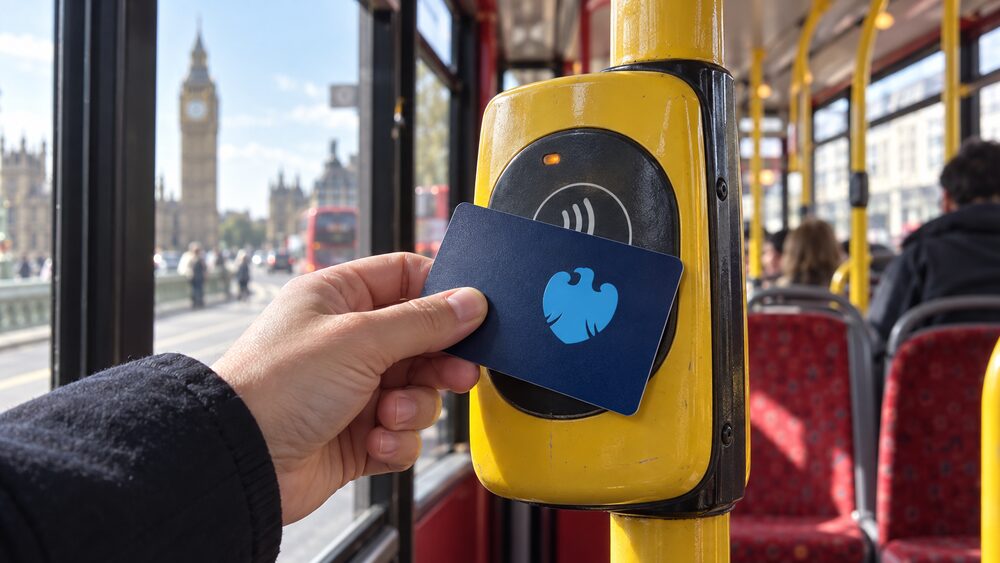
The card also supports Apple Pay and Google Pay, though Apple Pay only works on certain Apple devices and Google Pay only on certain Android devices3. Mobile payments carry the same underlying protections as the card itself.
Where the protection stops is at the card's own limits. The two figures serve different purposes: the first describes what the provider advertises, the second illustrates the cost of borrowing. Neither predicts the limit you will be offered, which depends on the provider's assessment.
If something goes wrong with the card, the first step is the provider's own complaints process. If that does not resolve it, the Financial Ombudsman Service can look at the complaint independently. For free, impartial help with card debt, MoneyHelper and debt advice charities such as StepChange offer guidance at no cost.
Sources20 cited
- Credit card fees and charges NatWest, 2026-09-25
- Reward credit card NatWest, 2026-09-25
- Reward Black credit card NatWest, 2026-09-25
- MyRewards terms and exclusions RBS, 2026-09-25
- Credit cards RBS, 2026-09-25
- Rewards credit cards Experian, 2026
- Credit scoring guide NatWest, 2026-09-25
- Premier Reward Black account NatWest, 2026-09-25
- Manage your credit card Ulster Bank, 2026-09-25
- The costs and charges of credit cards Citizens Advice Scotland, 2026-09-25
- Using your cards outside the UK first direct, 2026
- Santander Edge credit card Santander, 2026
- Paying your IVA StepChange, 2026-09-25
- Ways to pay your plan StepChange, 2026-09-26
- Basic bank account StepChange, 2026-09-25
- Purchase and balance transfer credit card RBS, 2026-09-25
- Choosing a bank account for your Universal Credit payment MoneyHelper, 2026-09-25
- Ways to make budgeting easier StepChange, 2026-09-25
- Credit reports: how they work and what's included Which?, 2025-10-24
- Paying interest on your Help to Buy equity loan GOV.UK, 2024-07-18












 MoneyHelperFree, impartial money and pensions guidance, set up by government
 StepChangeFree debt advice and solutions from a charity
 National DebtlineFree debt advice by phone, webchat and online
 Financial Ombudsman ServiceFree, independent help when a complaint about a firm is not put right
 Citizens AdviceFree advice on money, consumer and legal problems in England and Wales