It is not a spending card, and it is not open to everyone: the offer is only available if this is your first credit card with Barclays, and the provider reserves the right to withdraw it at any time1.
Two rules shape almost everything about how the card behaves. The second is that you can only transfer balances from cards issued by other banks, not from any other Barclaycard or any of Barclays' partner-branded cards1. A transfer fee applies to each balance moved, and it is added to what you owe rather than billed separately2.
This page covers what the card is for, how the transfer works, how the fee is worked out, who can apply, and what to do if something goes wrong. It does not carry rates or fees: those change, and the provider's own product page has today's figures.
What it is and who it is for
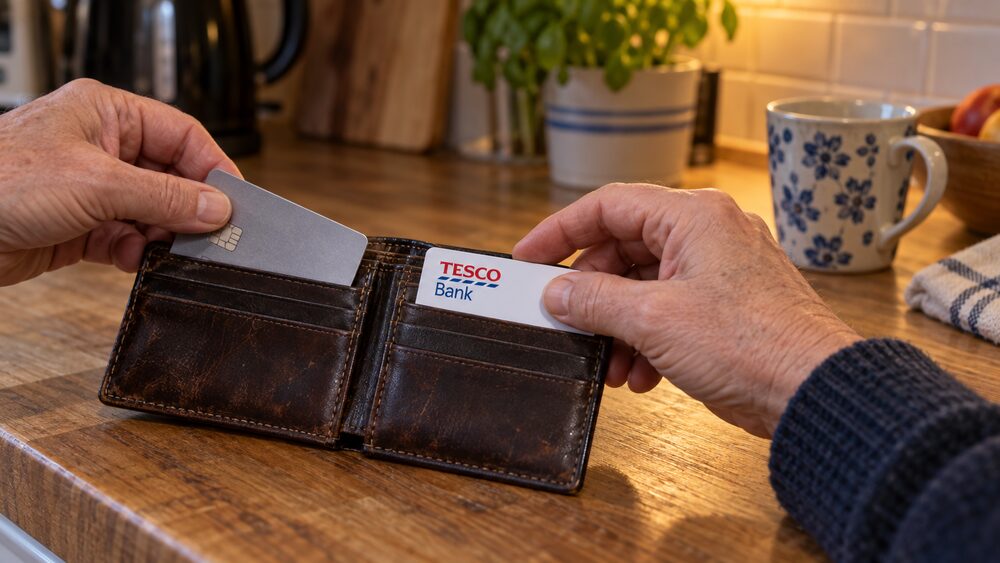
A balance transfer is what happens when you move balances from one credit or store card to another; a transfer fee might apply in addition to interest4. Tesco Bank describes the same thing in similar terms: a balance transfer allows you to move debt from one credit card to another, in your name only5. The debt does not disappear, it changes address.
The Platinum balance transfer card is aimed at someone carrying a balance on a card from a different bank who wants that debt to stop attracting interest for a set period. The card carries a free additional cardholder, so a partner can spend on the account if that is useful1. It is not designed for someone who wants to borrow new money, and it is not designed for someone who already holds a Barclaycard.
That last point matters more than it sounds. Because the offer is only available if this is your first credit card with Barclays, existing Barclaycard customers cannot simply move their balance across to take advantage of it1. If you already hold a Barclaycard and want a different deal, the route is a card from another provider, or one of the Barclaycard products that existing customers can switch to.
The card sits inside a wider range. Barclays sells separate Platinum cards built around purchases, where the promotional offer covers spending rather than transfers, and those cards also carry a transfer fee if you use them to move a balance6. Choosing between them comes down to whether the debt you want to deal with is existing card debt or spending you have not done yet.
How it works
The mechanics are straightforward, but the order matters. You apply, you are accepted, the account opens, and the 0% period starts running from that date rather than from the date you move the money1. You then have 60 days to make the transfers1. Anything moved inside that window gets the promotional rate; anything moved after it does not.
To make the transfer you need the details of the card you are paying off, including the account number, and you tell the new lender how much you want to move7. This can usually be done online via the provider's website or app, or through their customer helpline8. Barclaycard's own eligibility checker is the first step before applying, and the provider states it will not affect your credit rating2.
Once the money lands, the old card should show a cleared or reduced balance. It is worth checking that the old account is genuinely at zero and then deciding what to do with it: leaving it open with a nil balance can help your credit file, while closing it removes a line of available credit. There is a separate question about whether to close old accounts after transferring a balance, and it is worth thinking through before you act.
If you spend on the Platinum balance transfer card, that spending is treated differently, and interest is charged if the last statement balance is not paid off by the payment due date10. Paying the full balance before the due date avoids paying any interest at all10.
How the fees and charges work
The headline cost of a balance transfer is the transfer fee. Barclaycard charges a percentage of each balance moved, and the fee is added to the card balance rather than collected from your bank account2. That means the amount you owe on day one is slightly more than the debt you moved, and the difference itself sits on the card.
The fee is charged per transfer, not per card. If you move two balances from two different cards, the fee applies to each one2. Moving a single larger balance in one go is therefore cheaper than splitting the same debt across several transfers, assuming the cards you are clearing allow it.
Other lenders structure the same charge in the same way, which is useful context for judging whether a fee is reasonable. TSB's guide to balance transfers sets out a fee for its Platinum Balance Transfer Card in the first 90 days11. The percentage varies between providers and between offers, and some cards run periodic no-fee promotions.
Beyond the transfer fee, the costs that catch people out are the ones that apply after the promotional period or outside it:
- Interest on purchases, which is charged from the transaction date on most balance transfer cards unless the card also carries a purchase offer10.
- Missing a payment, which can end the promotional rate and trigger a default rate.
Barclaycard's own guidance on clearing card debt is blunt about the arithmetic: increasing the monthly payment amount reduces the amount of interest you will pay10.
Who can apply and how to apply
The eligibility rules for this card are narrower than for a general credit card. The offer is only available if this is your first credit card with Barclays, and the provider reserves the right to withdraw it at any time1. Residents of the Channel Islands or the Isle of Man must have a Barclays current account that has been open for at least 2 months when they apply1.
Beyond the product-specific rules, the usual lending checks apply. Barclays' own guidance on paying off card debt notes that you will usually need a healthy credit score to get a balance transfer card12. Lloyds, which sells comparable cards, lists having a regular income among its eligibility conditions13. The provider decides, and an eligibility checker gives an indication rather than a decision.
The application process runs in a few steps:
- Check eligibility first. Barclaycard's eligibility checker tells you whether an application could be accepted, and the provider states this will not affect your credit rating2.
- Apply. The application itself is made in a few steps, and a full application leaves a mark on your credit file2.
- Wait for the account to open. The 0% period runs from the date the account is opened, not from the date you apply1.
- Make the transfer within 60 days. Have the old card's account number and the amount ready1.
- Check the old account. Confirm the balance has cleared and that no residual interest or charges remain.
There is a separate route for existing Barclaycard customers who want a different card rather than a new one. The Amazon Barclaycard, for example, allows existing Barclaycard customers to apply to switch on Amazon's website or app; if approved, the current card is closed straight away and the balance transferred to the new card14. That is a switch, not a balance transfer, and it does not attract the transfer fee in the same way.
How your money is protected
Barclays Bank UK PLC holds FCA reference number 759676 and appears on the Bank of England list of banks incorporated in the UK authorised to accept deposits3. That matters for deposits held with the bank, which are covered by the Financial Services Compensation Scheme up to the scheme's limit. A credit card balance is not a deposit, so the protection that applies to a current account or savings account does not apply in the same way to money owed on a card.
What does protect a cardholder is the fraud and dispute framework. Barclays operates a Fraud Protection Guarantee under which you will not be held responsible for any confirmed fraudulent charges, provided you have taken reasonable care to protect your card, account details, PIN and any device you have stored your account details on16. Lloyds and MBNA describe the same principle for their cards: you will not be charged for transactions you did not authorise, as long as you tell the provider if you spot anything odd or lose your card13.
Purchases made on a credit card carry a separate layer of protection. Barclays states that purchases over £100 could be protected if they are faulty or damaged when you receive them6. MoneyHelper's guidance on scams makes the same point from the consumer side: paying by credit card, if it is more than £100, gives you more protection than a bank transfer18. That protection does not extend to money transfers, which Lloyds states explicitly13.
There is one more restriction worth knowing about. From 27 June 2025, Barclaycard customers can no longer make crypto-currency transactions using a Barclaycard, because a fall in the price of crypto assets could lead to customers finding themselves in debt they cannot afford to repay19.
Problems, complaints and getting help
Most balance transfer problems fall into a few categories: a transfer that has not arrived, a promotional rate that has not been applied, a fee that was not expected, or a payment that has been missed and the offer lost. The first step in every case is the provider.
Barclaycard can be contacted about a card through the app, Online Banking and Barclaycard online servicing, where account details are visible20. Bills can be paid in Online Banking if you are registered, in a branch, or at a number of Barclays cash machines inside branches across the UK21. If you have a credit balance on the card, you can ask for it to be transferred to your current account by sending a message from the Help section of the app22.
If a complaint is not resolved, the Financial Ombudsman Service is free and independent. That figure is worth knowing because it tells you complaints in this area are not automatically rejected.
Where the problem is debt rather than a dispute, the options widen. Barclays' own guidance on paying off card debt sets out the arithmetic of clearing a balance faster12, and there are free, impartial services that will look at your whole position rather than one card. MoneyHelper offers free guidance on scams and on money troubles generally18, and the debt advice charities will assess whether a balance transfer is the right tool at all or whether a different solution fits better.
If you are in a situation where an abuser has access to your accounts, banks can help. Barclays has a specialist domestic and financial abuse team that can support with account security, changing how you receive statements and letters, removing the abuser as a named cardholder from your credit cards, and removing you from joint accounts or freezing them24.
Sources24 cited
- Barclaycard Platinum up to 36 month Balance Transfer credit card Barclays, 2026
- Barclaycard Platinum credit card Barclays, 2026
- Barclays Bank UK PLC register entry Financial Conduct Authority, 2026
- What are interest rates? Halifax, 2026
- Credit card FAQs Tesco Bank, 2026
- Purchase credit cards Barclays, 2026
- What is a balance transfer? Experian, 2026
- Switching credit cards Experian, 2026
- Balance transfers for existing customers Halifax, 2026
- Why have I been charged interest? Barclays, 2026
- Balance transfer guide TSB, 2026
- How to pay off your credit card debt Barclays, 2026
- Balance transfers Lloyds Bank, 2026
- The Amazon Barclaycard Barclays, 2026
- Banks incorporated in the UK authorised to accept deposits Bank of England, 2026
- Fraud protection Barclays, 2026
- Balance transfer credit cards MBNA, 2026
- Types of scam MoneyHelper, 2026
- Barclaycard crypto-currency restrictions Barclays, 2025
- View online Barclays, 2026
- Pay your Barclaycard bill Barclays, 2026
- Credit balance refund Barclays, 2026
- Going on holiday Barclays, 2026
- Separating your finances Surviving Economic Abuse, 2023














 MoneyHelperFree, impartial money and pensions guidance, set up by government
 StepChangeFree debt advice and solutions from a charity
 National DebtlineFree debt advice by phone, webchat and online
 Financial Ombudsman ServiceFree, independent help when a complaint about a firm is not put right
 Citizens AdviceFree advice on money, consumer and legal problems in England and Wales