
Chargeback is the process a card provider uses to reclaim a card payment from the trader's bank1. When something goes wrong with a purchase, whether it never arrives, turns up damaged or is not what was described, you can ask the bank or card company that issued your card to try to pull the money back from the seller's side of the system. If the claim succeeds, the transaction is reversed and the money comes back to you.
The important thing to understand about chargeback is what it is not. It is not a legal right. Chargeback is not enshrined in law but is part of Scheme Rules, which participating banks subscribe to2, and the Financial Conduct Authority (FCA) states plainly that "chargeback is not a statutory right"3. It is operated by the card schemes Visa, Mastercard and American Express4, and it exists for both credit and debit card purchases. That makes it the main route to a refund for debit card payments, where the better-known Section 75 protection does not apply at all.
You usually have around 120 days to raise a chargeback about goods or services5, the claim is free to make6, and there is no upper or lower limit on the amount, although card issuers have their own specific rules7. None of that guarantees success: it is a voluntary scheme and not guaranteed to work8, and there are no guarantees your bank will be able to recover the money9.
Chargeback is a card scheme rule, not a legal right
The difference between chargeback and a legal protection matters, because it shapes what you can insist on and what you can only ask for. Section 75 of the Consumer Credit Act 1974 is a statutory right: where it applies, your credit card provider is jointly liable with the retailer and the law backs your claim. Chargeback sits outside that. It is not enshrined in law but is part of Scheme Rules, which participating banks subscribe to2. The FCA, in its guidance to firms on cancellations and refunds, describes chargeback in the same terms: not a statutory right3.
In practice this means your card provider has discretion. It can decide whether to put a claim forward under the scheme rules, and the scheme itself is voluntary and not guaranteed to work8. Unlike Section 75, chargeback isn't a legal protection, as consumer guidance on holiday refunds puts it6. The trader is also entitled to defend itself: card issuers seek to claim back, from the merchant, the amounts you are claiming, and merchants can dispute your right to chargeback10. If the merchant disputes the claim successfully, the money can go back the other way.
That discretion is not a free-for-all, though. Card providers are regulated firms, and the FCA expects credit and debit card providers to handle Section 75 and chargeback claims in a reasonable timescale and to explain any delays or a declined claim clearly3. If a provider refuses to take a claim forward, or gives no proper reason for turning it down, that refusal can itself be complained about, first to the provider and then to the free Financial Ombudsman Service. So while chargeback is not a right you can enforce against the trader, the way your provider handles your claim is something the rules do cover.
The scheme is run by the card schemes themselves, Visa, Mastercard and American Express4, and exact rules may vary between card providers11. Two banks can therefore reach different decisions on similar claims, which is one reason a refused chargeback is worth challenging through the complaints route rather than treating as final.
What chargeback covers: goods not received, faulty or not as described
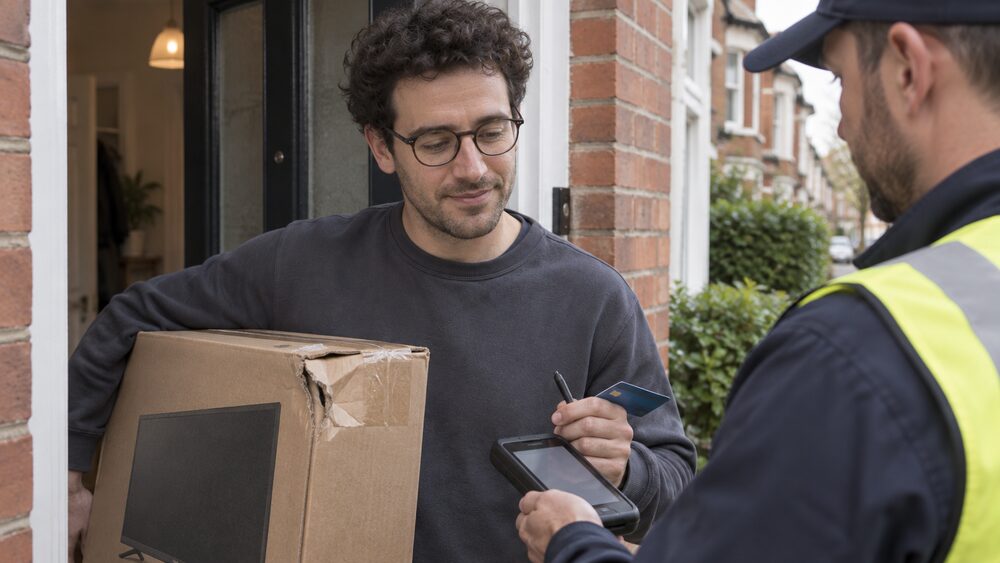
Chargeback covers the situations where a trader has, in effect, broken its side of the bargain. The Consumer Council for Northern Ireland lists the classic triggers: if goods are not delivered, arrive damaged or not as described, or the trader goes out of business, you may be able to use the card provider's chargeback process12. Trading standards guidance makes the same point from the evidence angle: if you can provide evidence of a breach of contract, for example goods that are not delivered or a service that was not carried out, you can ask your card provider to attempt to recover the payment13.
Common situations where people use chargeback include:
- Goods you paid for that never arrived
- Items that turn up damaged, faulty or not as described
- A service that was never carried out, or carried out badly
- Fake or counterfeit goods, where guidance is to contact your bank and say you want to use the chargeback scheme14
- A trader that stops trading or goes out of business before supplying what you paid for15
- Payments to a scam website or a fake trader, where the same route is suggested alongside other options2
The faulty goods case is worth spelling out, because people often assume a faulty item is purely a matter for the retailer. Under Section 75, a credit card provider is jointly liable with the retailer if something goes wrong, meaning you can claim a refund if you get faulty goods or your item never arrives16. Chargeback extends a similar idea to debit cards and to credit card purchases that fall outside Section 75's limits: it applies if you paid by debit card, or on a credit card for an item costing less than £100, provided it is less than 120 days since the purchase17. Which? guidance on orders that do not turn up or are not as expected likewise points to Section 75 or chargeback schemes as the routes to money back18.
One limit to hold in mind throughout: with a chargeback claim, a consumer can only reclaim the amount paid on the debit or credit card, and not any other consequential losses3. If a missing part caused you to spend more money elsewhere, or a cancelled event cost you travel you had already booked, chargeback does not reach those amounts. It reverses the card payment, nothing more.
Chargeback or Section 75: which one to use
If you paid by credit card and the purchase was for more than £100 and up to £30,000, Section 75 is usually the stronger claim, because it is a legal one. Citizens Advice sets out the split plainly: ask for your money back using chargeback if you paid with a debit card or charge card, or with a credit card and you cannot use Section 7519. Section 75 does not apply to charge cards or debit cards20, and it does not include cases where the goods or services were bought with a debit card, charge card or prepaid card3. Chargeback fills that gap, and it also applies to credit card transactions where goods cost less than £100, so Section 75 does not apply11.
The two protections differ in almost every dimension that matters:
| Chargeback | Section 75 | |
|---|---|---|
| Legal basis | Card scheme rules, not law3 | Consumer Credit Act 1974, joint liability16 |
| Cards covered | Credit and debit cards4 | Credit cards only, not debit or charge cards20 |
| Amount | No upper or lower limit7 | £100 to £30,00021 |
| What you can recover | The amount paid on the card only3 | Not limited to the amount paid on the card10 |
| Guarantee | Voluntary, not guaranteed to work8 | A statutory right3 |
The deposit rule shows why the distinction can be worth real money. Chargeback rights only apply to the amount of the transaction made on the credit or debit card, so only the deposit would be returned10. Section 75 works differently: if it applies, it does not matter that the transaction was only partly financed by credit and recovery is not limited to the deposit10. Someone who paid a £50 deposit on a credit card for a £2,000 sofa that never arrived could claim the full loss under Section 75, but only the £50 through chargeback.
For credit card purchases inside the £100 to £30,000 range, official travel guidance puts the position simply: you may be able to get a refund for credit card payments between £100 and £30,00021. For everything else, debit cards, cheap credit card purchases and items above £30,000, chargeback is the card route. The dedicated comparison page on Section 75 versus chargeback works through the choice in more detail, and the step-by-step guide to making a Section 75 claim covers the statutory route.
Time limits: usually 120 days
The chargeback clock is the rule that catches most people out. You usually have around 120 days to raise a chargeback about goods or services5. MoneyHelper's guidance is to claim as soon as you realise there is a problem, because you will usually need to claim within 120 days22. The Consumer Council for Northern Ireland gives the same figure for its chargeback process, within 120 days12.
When the 120 days start depends on what went wrong. The FCA's guidance states that consumers normally have 120 days to raise a chargeback claim with their card issuer from the expected delivery date of the goods or services not being provided3. Which? guidance on building work disputes describes the same two possible starting points: a 120-day time limit from the transaction processing date, or from when you expected to receive the service23. For flights, the Consumer Council says you usually must make a chargeback claim within 120 days, including where the airline goes out of business24.
The practical point is not to wait for the trader to sort things out indefinitely. If a delivery is weeks late and the 120-day mark is approaching, raising the claim with the card provider protects the position, and the claim can always be dropped if the goods turn up. It is free to apply for a chargeback6, so there is no cost to claiming early.
There is a second clock to know about. Once a chargeback is raised and the transaction reversed, companies have 45 days to challenge a chargeback6. During that window the refund is provisional in nature, and the money can be clawed back if the merchant successfully disputes your right to it10. Guidance on holiday refunds suggests you keep the money aside for those 45 days6.
How to make a chargeback claim
The process starts with your own bank or card company, not with the trader's. Citizens Advice's route is to contact your bank and say you want to use the chargeback scheme14, and its general guidance is to ask for your money back using chargeback where you paid with a debit card or charge card, or with a credit card and Section 75 is unavailable19. For a debit card payment, you may be able to make a chargeback claim, which enables you to dispute a card transaction and request your money back for something you have paid for25.
A claim in outline:
- Complain to the trader first and give it a chance to put things right, keeping copies of everything.
- Contact the bank or card company that issued your card and say you want to make a chargeback claim14.
- Explain what went wrong and provide your evidence of the breach of contract, such as goods not delivered or a service not carried out13.
- Ask the provider to attempt to recover the payment from the trader's bank13.
- Keep an eye on the time limit, since you will usually need to claim within 120 days22.
- Keep the refunded money aside for the 45 days companies have to challenge a chargeback6.
Some banks and credit card companies offer a chargeback service, which means they will reverse your transaction and you will get your money back unless the seller can successfully dispute it26. For a debit card payment you can claim under the chargeback scheme for the total payment, the FCA confirms27. If you used a debit or credit card to make payments to a buy now, pay later account, you might be able to start a chargeback on that card, although your bank or credit provider might not agree to it19. Where a company has stopped trading or gone out of business, you can still ask for chargeback if you paid with a debit or credit card, but again your provider might not agree15.
Evidence your card provider will ask for
A chargeback claim stands or falls on what you can show. Trading standards guidance frames the test directly: if you can provide evidence of a breach of contract, goods not delivered or a service not carried out for example, you can ask your card provider to attempt to recover the payment13. Your job at the point of claiming is to give the provider what it needs to put a case to the trader's bank.
What that looks like in practice:
- Proof of what you ordered: the order confirmation, advert or listing showing what was promised
- Proof of what happened: photos of damaged or faulty goods, correspondence with the trader, a delivery note showing nothing arrived
- A record of your attempts to resolve it: emails, chat logs and the trader's responses, or lack of them
- The card statement or receipt showing the transaction, its date and the amount
- Any cancellation or refund policy the trader published
The provider's side of the process is also governed by expectations. The FCA expects credit and debit card providers to handle Section 75 and chargeback claims in a reasonable timescale and to explain any delays or a declined claim clearly3. UK Finance, the banking industry body, adds that if a claim is declined, the reasons should be explained clearly and fairly, along with any further options you might have, such as travel insurance or cover held as part of a packaged bank account10.
Remember that the merchant gets a say. Card issuers seek to claim back, from the merchant, the amounts you are claiming, and merchants can dispute your right to chargeback10. The stronger and more complete your evidence, the harder it is for a merchant to rebut the claim, and the easier it is for your provider to defend its decision if the case is later reviewed by the ombudsman.
Travel, vouchers and cancelled bookings
Travel is where chargeback questions come up most often, because trips are expensive, paid for in advance and prone to collapse. The rules have some sharp edges here. The first is about who cancelled. A chargeback claim can only be made where the travel company is the one who has failed to supply you with services, not where you choose not to travel or are unable to travel10. If you simply decide not to go, chargeback is not available, whatever the card provider says about the weather or your plans.
The second edge is about what you can claim. UK Finance gives a worked example: if a cardholder paid £1000.00 and the travel company did not supply the services, the cardholder could raise a chargeback claim for the full £1000.00 to their issuing bank10. But if only part of the holiday went through the card, only that part can be reclaimed, since chargeback rights apply only to the amount of the transaction made on the card10.
Vouchers and credit notes need care. If you accept a replacement flight, package holiday, voucher or credit note, that may settle the current claim. If the provider then fails to honour the alternative booking, or you are unable to use the voucher while it is still in date, chargeback and Section 75 rights may become available again10. But if you use a voucher to book a new trip and something goes wrong with that new trip, and none of the price of the new trip was paid on a card, you will not have Section 75 or chargeback rights10. During the pandemic era, some tour operators offered up to 25% above the original cost of the booking as an incentive to accept credit notes instead of cash28, and the government confirmed financial protection for package holiday refund credit notes, but the underlying rule has not changed: a voucher spent without a card payment behind it leaves you without either card protection.
Where an airline goes out of business, the Consumer Council advises that if the flight was cheaper, or you used a Visa debit card, you may be able to use the chargeback scheme that card issuers are signed up to, usually within 120 days24. Official guidance on travel also recommends booking travel and holidays with a credit card where possible, as this should give some protection if your travel firm goes bust21.
On insurance: you cannot claim the same loss twice. It is up to you to decide where to make the claim, and travel insurers and card issuers must help you and not automatically refer you to someone else10. A declined claim should come with an explanation of the other options, such as travel insurance or packaged bank account cover10.
PayPal, wallets and third-party sellers
Paying through an intermediary can quietly remove both card protections. Trading standards guidance is blunt: in the event of a dispute, if you used a debit card or a credit card to service an online payment method such as PayPal, it is unlikely you will be able to use either the Consumer Credit Act 1974 or the chargeback scheme to claim from your card provider1. The card payment in that case was to PayPal, not to the seller, and the protections look at who was paid.
The Financial Ombudsman Service has warned about the same trap in the context of festival tickets: you will not automatically be protected by either Section 75 or chargeback if you purchase through a third-party website7. Its guidance on e-money services draws the line in similar terms, noting that Section 75 might not apply if a customer used a credit card to put funds into a standard e-money account and then used that account to buy something29. Which? reporting on PayPal and fraud victims has highlighted the practical consequences for people who funded purchases that way18.
There are still things to try. Citizens Advice notes that you can still ask to use chargeback if you did not buy directly from the trader19, and if you used a debit or credit card to make payments to a buy now, pay later account, you might be able to start a chargeback on that card, though your bank or credit provider might not agree to it19. If the provider refuses on these grounds, that refusal can be taken to the ombudsman like any other. The narrow page on PayPal and Section 75 covers the statutory side of the same problem.
If your card provider says no: complaining to the Financial Ombudsman
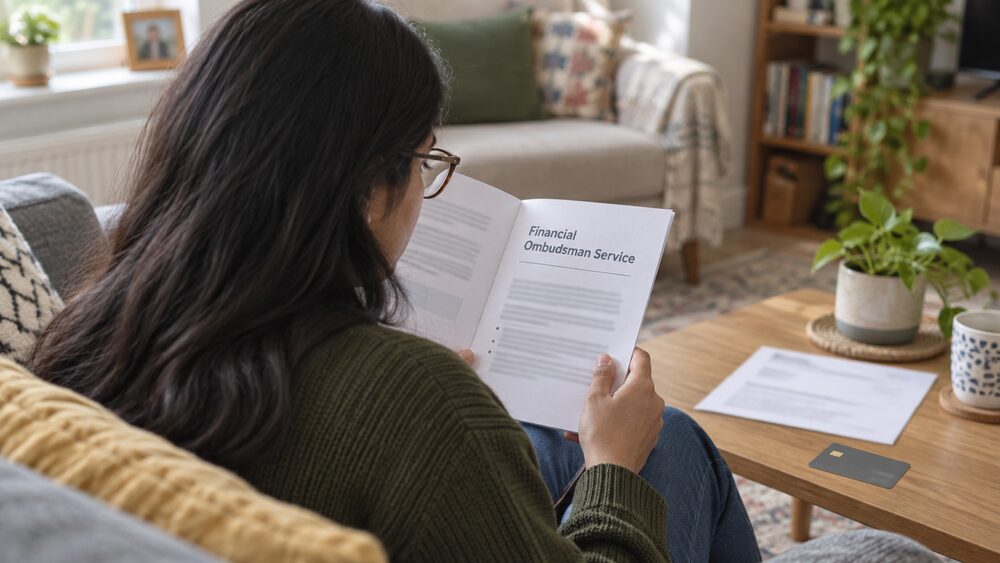
A refused chargeback is not the end of the road. Citizens Advice sets out the next step: if you try to use chargeback and you do not get your money back, you can complain to the Financial Ombudsman Service if your card provider says it will not appeal to the trader's bank19. Trading standards guidance agrees: if you are unhappy with the credit card provider's response, you can complain to the Financial Ombudsman Service1. The same escalation is recommended where a credit card company declines a claim, or where a card provider or car finance provider is not helping with a dispute26.
The order of operations matters. The ombudsman's own guidance is to make a formal complaint to the company involved first; if it does not send a final response letter within eight weeks, or you are unhappy with its response, you can bring the complaint to the ombudsman via its complaint form31. The FCA Handbook confirms the underlying right: consumers may complain to the firm and seek redress, and refer the complaint to the Financial Ombudsman Service if the firm does not satisfy the complaint32. The service is free to use.
What the ombudsman can do is look at whether the provider handled the claim fairly, not re-run the card scheme's decision from scratch. Its published decisions show it engaging with how a provider treated a customer, for example finding that a credit card provider should increase its offer, though not to the full level the complainant sought, where the provider's conduct fell short33. A provider that failed to explain a refusal clearly, missed the expected timescales, or wrongly told a customer that chargeback was legally impossible are all the kinds of handling failures the ombudsman can consider. The page on complaining about a credit card provider covers the process in detail.
Paying the card while a dispute is open
A chargeback claim does not pause your credit card bill. The disputed amount stays on the account unless and until the claim succeeds, and the interest rules apply as normal: if you do not pay off the full amount every month on a credit card, you will be charged interest on the whole lot, not just the unpaid amount34. Someone who stops paying a £400 disputed purchase and carries a £1,000 balance runs up interest on the full balance, not just the £400.
That creates a genuine tension, and the practical answer is to talk to the provider before changing anything. Some providers will agree to freeze interest or accept reduced payments while a chargeback is investigated, but that is an agreement to be sought and recorded, not an automatic right. If you do arrange a payment break or reduced payments, be aware that they can affect your credit score35. Missing payments altogether is worse still, and the consequences of missing a credit card payment are a separate problem from the dispute itself.
Two further points of hygiene while the claim runs. First, keep the refunded money aside for the 45 days companies have to challenge a chargeback6, because the merchant can dispute your right to it and the money can be reclaimed10. Second, if the claim succeeds, check that the refund is applied correctly to the account, and that any interest wrongly charged on the disputed amount is also returned. Where a provider refuses to put that right, the complaint and ombudsman route above applies to that refusal too.
Sources35 cited
- Chargeback and consumer advice Anglesey County Council Trading Standards, 2025-03
- Advance loan fee fraud and scams Which?, 2026-09-27
- Cancellations, refunds and helping consumers understand their rights and routes to refunds Financial Conduct Authority, 2020-10
- Staying safe online: seven ways to spot a scam website Which?, 2023-11-29
- Goods and services bought on credit Financial Ombudsman Service, 2026-09-25
- Can I get a holiday refund? Which?, 2021-02-04
- Festival refunds not guaranteed, know your rights, warns Financial Ombudsman Service Financial Ombudsman Service, 2026-06-04
- Is there a 14-day cooling off period when buying a car? Which?, 2026-09-27
- How to get your money back after a scam Which?, 2026-09-27
- Chargeback rights and Section 75 UK Finance, 2026
- How to get your money back after a scam Which?, 2026-09-26
- Safer ways to pay Consumer Council for Northern Ireland, 2026
- Consumer advice: chargeback and card payments Anglesey County Council Trading Standards, 2025-10
- Report fake or counterfeit goods Citizens Advice, 2026-09-25
- If a company stops trading or goes out of business Citizens Advice, 2026-09-25
- Should I get a credit card? Which?, 2026-09-18
- What do I do if I have a faulty product? Which?, 2026-09-01
- How PayPal fails fraud victims Which?, 2020-12-07
- Getting your money back if you paid by card or PayPal Citizens Advice, 2026-09-25
- Consumer advice: Section 75 and card protection Anglesey County Council Trading Standards, 2025-10
- Passenger consumer rights when travelling to the EU GOV.UK, 2020-12-31
- Shop safely online MoneyHelper, 2026-09-25
- How to complain if you're unhappy with building work Which?, 2025-12-08
- Air travel Consumer Council for Northern Ireland, 2026
- How to complain about a takeaway and get your money back Which?, 2026-06-30
- Section 75 and chargeback Which? Legal Service, 2026-09-25
- Fraudulent payments Financial Conduct Authority, 2016-04-16
- Government confirms financial protection for package holiday refund credit notes Which?, 2020-10-23
- Electronic money services Financial Ombudsman Service, 2026-09-27
- How to complain if you've been mis-sold car finance Which?, 2026-03-10
- Private medical insurance complaints Financial Ombudsman Service, 2026-09-26
- FCA Handbook UNFCOG 1.6 Financial Conduct Authority, 2026
- Consumer complains about distress from credit company over outstanding balance Financial Ombudsman Service, 2026-09-26
- Credit cards and debt nidirect, 2025-11-06
- How does debt affect a credit file StepChange Debt Charity, 2026-09-25


 MoneyHelperFree, impartial money and pensions guidance, set up by government
 StepChangeFree debt advice and solutions from a charity
 National DebtlineFree debt advice by phone, webchat and online
 Financial Ombudsman ServiceFree, independent help when a complaint about a firm is not put right
 Citizens AdviceFree advice on money, consumer and legal problems in England and Wales