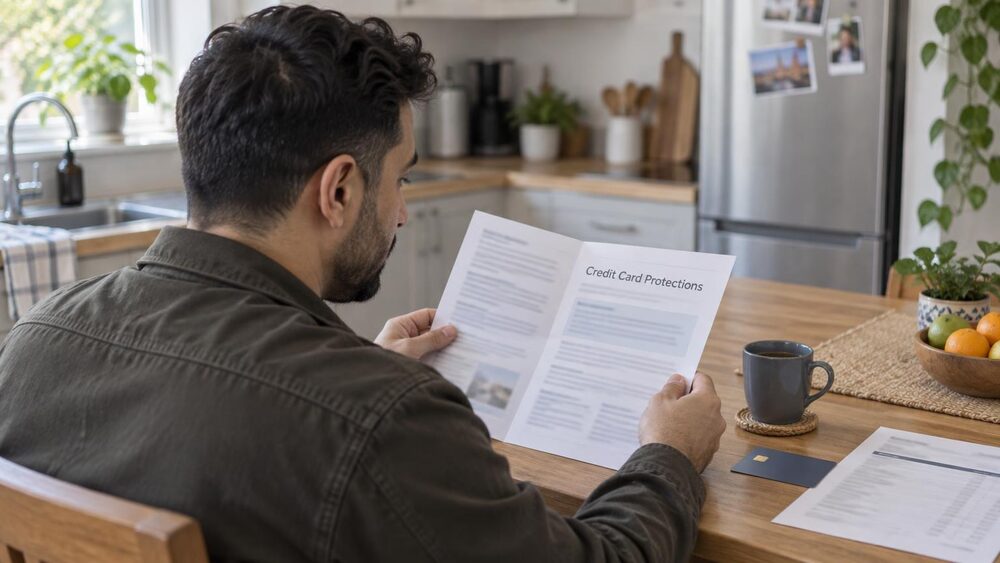
Every credit card has a minimum payment: the smallest amount you must pay each month to keep the account in good standing. It is usually worked out as a percentage of what you owe, often between 1% and 3%, plus interest and charges, and many cards apply a fixed floor of around £5 if the percentage works out lower1. Your statement shows the exact amount and the date it is due1.
The catch is what the minimum is designed to do. It is set at a level that keeps the account ticking over, not one that clears the debt quickly. Most of a minimum payment goes towards interest, and only a small portion reduces the balance itself3. In an example cited by Which?, paying the minimum 1% repayment (or £5 if higher) on a card with a £3,000 balance at 18.9% interest would take 27 years to repay4.
What a credit card minimum payment is
The minimum payment is the least you can pay each month without falling behind on your credit card agreement. Pay it by the due date and your account stays in good standing; pay less, or miss the date, and you are in arrears, which can bring fees, damage to your credit record and the loss of promotional offers1.
Your credit card statement shows your minimum payment and when it is due1. The amount changes from month to month because it is tied to your balance: spend more and the minimum usually rises, pay the debt down and it falls. If your balance is low, you may instead have to pay a fixed amount, if that fixed amount is greater1.
Paying the minimum is not the same as paying off the card. Interest is added to any balance you do not clear, and the only ways to avoid paying interest are to have an interest-free card or to pay the bill off in full1. The rules also require that your payments clear the most expensive debt on your card first, so any amount above the minimum goes towards the costliest part of what you owe before the cheaper parts1.
Providers also have a duty to warn customers who get stuck in the pattern. Your credit card company should contact you to warn you of what might happen if you only make minimum payments7. A Financial Conduct Authority (FCA) review found that all the credit card providers it looked at issued "minimum payment" letters to customers who regularly made only minimum payments, in line with voluntary industry commitments in the Lending Code8.
How the minimum payment is calculated: usually 1% to 3% of the balance plus interest
Each card provider sets its own formula, but the shape is broadly the same across the market. The minimum is usually calculated as a percentage of your balance plus interest, fees and charges1. StepChange puts the typical percentage at between 1% and 3% of what you owe in total2, while Citizens Advice describes the typical minimum as around 3% of the balance due or £5, whichever is higher9. Experian's guide gives a similar range: usually 1% to 2.5% of the outstanding debt plus interest and fees, or £5 to £25, whichever is the higher1.
A worked example shows how the maths feels in practice. If you owe £1,000 and your minimum payment is 3%, you will be asked to pay back at least £30 a month2. On a card using a 1% minimum, the same balance would produce a much smaller required payment, which is one reason payoff times vary so widely between cards.
| How the minimum is described | The figure | Who says it |
|---|---|---|
| Percentage of what you owe in total | often 1% to 3% | StepChange2 |
| Percentage of the balance due, or a floor | around 3% or £5, whichever is higher | Citizens Advice9 |
| Percentage of outstanding debt, or a floor | 1% to 2.5%, or £5 to £25, whichever is higher | Experian1 |
| Student credit cards | 1% to 3% of what you owe, or a set minimum, whichever is higher | Which?10 |
The same structure applies across card types. Which?'s review of student credit cards found minimum repayments usually range between 1% and 3% of what you owe, or a set minimum, whichever is higher, depending on the bank10. Cards with long introductory 0% periods or low interest rates usually require a minimum yearly income of £5,00010, so the cards with the cheapest borrowing terms tend to sit with people whose incomes make larger payments more feasible.
One point worth checking on your own statement: whether the percentage is applied to your whole balance or only to part of it, and whether interest is added on top or included. Experian notes the minimum is usually a percentage of your balance plus interest, fees and charges1, so a card advertising "1% minimum" can still ask for noticeably more than 1% of your balance once interest is counted in.
The legal floor: interest, fees and at least 1% of the balance, or £5
There is a regulatory minimum below which a card provider cannot set the minimum payment. The FCA requires firms to set the minimum required repayment under a regulated credit agreement for a credit card or store card at a level that covers at least the interest, fees and charges applied to the account, plus one percentage of the amount outstanding5. The rule applies to credit cards entered into since 1 April 201111.
The FCA summarised the effect plainly when it tested ways to help card users repay their debts: "The minimum amount covers fees, interest and at least one percent of the balance, or £5, whichever is larger"3. In other words, the floor has two parts: everything the account has charged you that month, and a slice of the debt itself, with £5 as the smallest acceptable cash amount.
"The minimum amount covers fees, interest and at least one percent of the balance, or £5, whichever is larger."
The detail behind the rule matters for how fast a debt shrinks. An FCA instrument clarifies that "principal" comprises only the amount of credit drawn down by the customer under the credit card agreement, and does not include any interest, fees or charges added to the account12. So the 1% that must go towards the balance is 1% of what you borrowed, not 1% of the swollen total, and the interest and charges are collected separately on top.
The FCA has also consulted on going further. A 2017 consultation on persistent debt proposed that the minimum repayment must be at least 1% of the balance plus any interest and charges incurred that month, or £5, whichever is greater13. That consultation fed into the persistent debt rules, which require firms to intervene when customers pay more in interest, fees and charges than they repay off the balance over a sustained period. The dedicated page on persistent credit card debt rules explains how those interventions work.
For cards taken out before April 2011, the contractual minimum may be lower, because the floor applies to agreements entered into from that date11. If you have held the same card for a very long time, your statement is the place to check what your provider actually requires.
Paying only the minimum mostly covers interest, not the debt
The minimum payment is designed to keep the account running, not to clear it. StepChange is blunt about the effect: minimum payments usually only cover the interest and charges on a debt, which means the balance does not go down much14. On a credit card specifically, your payment mainly goes towards your interest, and only a small portion goes towards the balance15.
This is the mechanism behind "persistent debt", the situation the FCA's rules target. A customer ends up in persistent debt when the minimum payment is less than the added interest, so the debt barely moves even though payments are made every month16. It applies to credit card, store card and catalogue accounts16.
The timescales involved can be startling. Which? calculated that making the minimum 1% repayment (or £5 if higher) on a credit card with a balance of £3,000 and an interest rate of 18.9% would take 27 years to repay4. National Debtline's worked example is shorter but makes the same point: a £3,200 credit card debt at 28% interest, with a minimum payment of £99, would take around four and a half years to clear if you paid only the minimum17.
The difference between the two examples comes from the size of the minimum relative to the debt. A £99 minimum on a £3,200 balance is a much bigger proportion than a 1% minimum on £3,000, so it eats into the balance faster. This is also why the same card can feel very different at different stages: the higher the percentage minimum, the faster the debt clears, all else being equal.
The pattern also undermines some common debt strategies. StepChange warns that consolidating credit card debt by moving balances onto a low interest credit card can often take longer to pay off and can actually add to your debt, especially if you only pay the minimum repayment amounts each month18. A cheaper interest rate saves money only if the balance is actually being repaid.
Payment breaks have a similar effect. If you take a payment holiday, your minimum payments will rise afterwards, because interest added during the break increases the balance the minimum is calculated on19. StepChange makes the same point about payment holidays generally: your monthly minimum payments rise to cover the extra interest that was not paid20. The page on coronavirus payment deferrals on credit cards covers the legacy of the deferrals offered during the pandemic.
Why the minimum falls as your balance falls
Because the minimum is a percentage of what you owe, it shrinks automatically as the debt shrinks. Which? explains that the minimum payment is usually charged as a percentage of your remaining debt, which means it reduces as your balance goes down21. Its example: a minimum repayment of at least 2% on a debt of £500 is £10, but once your debt gets to £400 your minimum repayment falls to £821.
This is worth understanding clearly, because it cuts both ways. On one hand, the required payment becomes more affordable as the debt falls, which reduces the risk of missing a payment. On the other hand, a shrinking payment means a shrinking amount of debt cleared each month, which stretches the payoff over years more than many people expect. The interest charged each month also falls as the balance falls, but the effect on the timescale is dominated by the shrinking repayment itself.
"As the balance falls, so does the percentage-based minimum, which is why minimum-only repayments take so long to finish."
There is a floor to this slide. If your balance is low, you may have to pay a fixed amount instead, if this is greater1. That is why the last stretch of a minimum-only repayment plan often involves fixed £5 payments rather than ever-smaller percentages.
The shrinking minimum also interacts with your credit record in a way that is easy to miss. Experian notes that lenders may see only ever making minimum repayments while using a large proportion of your credit card limit as a sign you are struggling, which could negatively impact your credit score1. A lower credit score can mean not qualifying for introductory offers and 0% balance transfers, and it can mean a smaller credit limit or a simple rejection22. The page on how credit cards affect your credit file goes into this in more depth.
Minimum Payment Plus and other higher suggested payments
Because the contractual minimum clears debt so slowly, some statements and calculators suggest a higher amount, sometimes labelled Minimum Payment Plus. This is a suggested payment, not a required one. Which?'s repayment calculator notes that you may have opted to only pay the minimum repayment rather than a set amount, which can impact the time it will take you to repay what you owe23. The comparison between the two approaches, and how much faster a fixed payment clears a balance, is set out on the page Minimum Payment or Fixed Amount: What Clears Debt Faster.
The idea behind a suggested higher payment is simple: any amount above the minimum goes straight to work reducing the balance, and because the minimum includes that month's interest and charges in full, every extra pound reduces what interest is charged on next month. The rules also ensure your payments clear the most expensive debt on your card first1, so extra payments attack the costliest part of the balance.
There have been calls to change the system more fundamentally. Which? has reported on the question of whether the credit card minimum repayment option could be scrapped altogether, noting that the minimum is typically expressed as a percentage of your balance, typically 1%4. StepChange, the debt charity, published a report in July 2026 calling for reforms to the credit card regulatory framework, including stronger rules on affordability checks, minimum repayments and earlier support for people in persistent debt24.
For someone deciding what to pay, the practical position is this: the contractual minimum is the floor, not a target. Any stable amount above it shortens the payoff and cuts the total interest, and the difference between paying the minimum and paying a fixed amount can be measured in years, not months4.
Missing the minimum: late fees, lost offers and your credit record
Falling below the minimum, or missing the due date, triggers a chain of consequences. Experian lists the immediate effects: you could incur late payment fees, damage your credit score and lose any promotional offers you have1. StepChange confirms that extra charges are added if you miss payments14. The FCA's rules on pre-contract information require firms to disclose the circumstances in which charges for late or missed payment or underpayment will be applied, the amount of those charges, and the risk of an impaired credit rating25.
The loss of promotional offers deserves particular attention if you are on a 0% deal. A missed payment can end an interest-free period, moving the whole balance onto the card's standard rate at a stroke. The page on missing a payment on a 0% deal covers this, and the page on late payment and over-limit charges sets out what providers may charge.
The credit record consequences last longer than the fees. Credit reference agencies note every time you miss a payment, take an agreed payment holiday, or pay less than the minimum on a debt26. Missed payments go on your credit file and can make it harder to get credit in future and to remortgage27. Business Debtline adds that if you start paying less than your original minimum payment, for example under a reduced arrangement, this could be reported to credit reference agencies28.
The timescale is fixed. Late payments, missed payments and defaults stay on your credit history for six years6. StepChange gives the same figure: some information stays on your credit file for six years, including missed payments, defaults and court judgments, with defaults recorded for six years from the date they are recorded29. The Financial Ombudsman Service has likewise noted that a default will stay on the consumer's credit file for six years30. During that time, a lower credit score can mean not qualifying for introductory offers and 0% balance transfers22.
If you cannot pay the minimum at all, the position is different from paying it late. Missing payments to credit cards, unsecured loans, catalogues, overdrafts and store cards can affect your credit rating, which would make it harder to get credit in the future, and guidance for people who do not have enough money to pay their important bills or the minimum payments to their debts is to seek advice from a money adviser31. The page on missing a credit card payment covers the immediate steps, and when you cannot afford to pay more covers your rights to forbearance.
Where to get free help if you can only afford the minimum
Only ever affording the minimum is a signal to get advice rather than a situation to sit in. It is the defining feature of persistent debt, which applies to credit card, store card and catalogue accounts, and charities that help with persistent debt explicitly invite people making minimum payments to these accounts to contact them16. StepChange's persistent debt pages offer the same invitation and set out the options, including repayment plans32.
Free, independent help is available from several sources:
- StepChange Debt Charity and National Debtline offer free debt advice, including on credit card debt and repayment strategies2
- Citizens Advice covers credit card costs, charges and your options, including in Scotland where some debt rules differ7
- Business Debtline covers persistent debt rules for England and Wales and for Scotland28
A money adviser can look at the whole picture, not just the card. Mental Health and Money Advice sets out which bills are most important to pay first, and its guidance for people who do not have enough money to pay their important bills or the minimum payments to their debts is to seek advice from a money adviser31. The section page on debt gathers the full range of options, from informal repayment plans to formal solutions, and the credit card section's page on help with credit card debt covers the card-specific ones.
There are also practical steps short of a formal debt solution. Paying a fixed amount above the minimum each month, by direct debit, removes the temptation to pay less when the minimum falls1. A balance transfer to a 0% card can pause interest, though StepChange warns that consolidation can add to debt if you then only pay the minimum on the new card18. And if you are struggling with a specific month, talking to the provider before the payment is due, rather than after, protects your record and your promotional offers.
Sources32 cited
- Minimum payments on credit cards, Experian guide Experian, 2026
- Credit card debt, how minimum payments work StepChange Debt Charity, 2026-09-25
- Research note: helping credit card users repay their debt Financial Conduct Authority, 2018-07
- Will the credit card minimum repayment option be scrapped? Which?, 2018-07-31
- CONC 6.7: minimum repayments rule Financial Conduct Authority, 2021-10-01
- Getting a mortgage with late payments and defaults Which?, 2025-08-20
- The costs and charges of credit cards, Scotland Citizens Advice Scotland, 2026-09-25
- Thematic review TR16/10: credit card minimum payment letters Financial Conduct Authority, 2016-12
- Choosing and applying for a credit card Citizens Advice, 2026-09-25
- Student credit cards: are they ever a good idea? Which?, 2020-03-08
- Credit card market study: final findings report Financial Conduct Authority, 2014-11
- FCA 2018/7: definition of principal for minimum repayments Financial Conduct Authority, 2018-02-22
- CP17/10: persistent debt consultation proposals Financial Conduct Authority, 2017-04
- Paying off credit card debt StepChange Debt Charity, 2026-09-25
- Persistent credit card debt StepChange Debt Charity, 2026-09-25
- Persistent debt: what it is and who it applies to StepChange Debt Charity, 2026-09-25
- What is the debt avalanche method? National Debtline, 2026-09-25
- Debt consolidation calculator and guidance StepChange Debt Charity, 2026-09-25
- Credit card payment holidays StepChange Debt Charity, 2026-09-25
- Payment holiday for debt repayments StepChange Debt Charity, 2026-09-25
- Credit card interest rates on the rise: 5 ways to cut the cost of your debt Which?, 2023-11-07
- Why can't I get a 0% interest credit card? Debt Advice Foundation, 2016-02-29
- Credit card repayment calculator Which?, 2026-05-11
- Credit card debts a burden: StepChange report and call for reform StepChange Debt Charity, 2026-07-29
- CONC 4: key product information, late payment disclosures Financial Conduct Authority, 2026-07-15
- Debt management plans and your credit score StepChange Debt Charity, 2026-09-25
- Mortgage payment holidays and missed payments StepChange Debt Charity, 2026-09-25
- Persistent debt guide, England and Wales Business Debtline, 2026-09-26
- How does debt affect a credit file? StepChange Debt Charity, 2026-09-25
- Payday lending report Financial Ombudsman Service, 2026-09-27
- Which bills are most important to pay first? Mental Health and Money Advice, 2025-09-08
- Persistent debt repayment help StepChange Debt Charity, 2026-09-25


 MoneyHelperFree, impartial money and pensions guidance, set up by government
 StepChangeFree debt advice and solutions from a charity
 National DebtlineFree debt advice by phone, webchat and online
 Financial Ombudsman ServiceFree, independent help when a complaint about a firm is not put right
 Citizens AdviceFree advice on money, consumer and legal problems in England and Wales