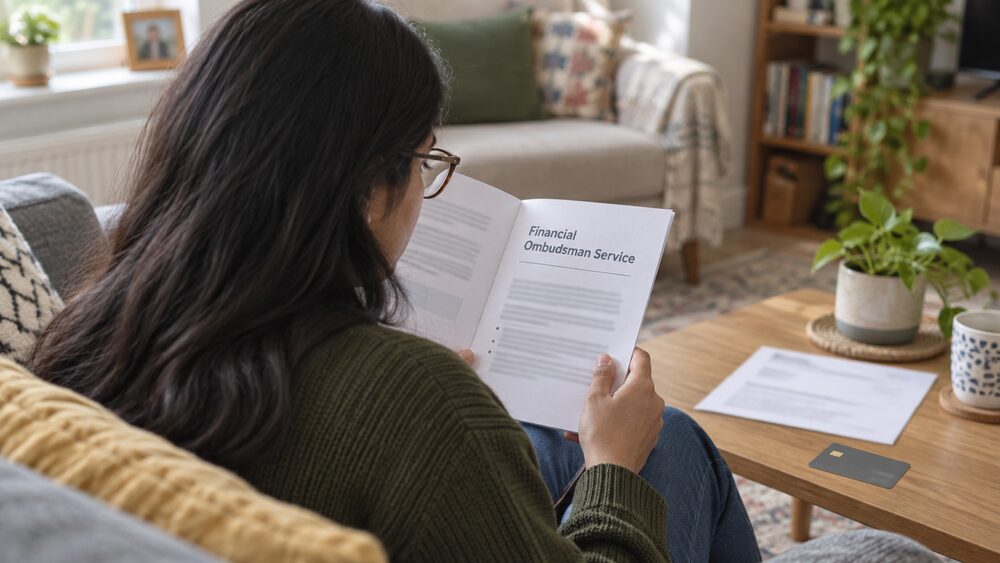
If a credit card provider has charged you wrongly, refused a refund it owes you, or treated you badly, the first step is always the same: complain to the provider itself and give it a chance to put things right. The rules set firm deadlines for that. For complaints about anything other than a card payment or a direct debit, the provider has eight weeks to investigate and give you a final response1.
If the provider says no, or simply misses the deadline, you can take the complaint to the Financial Ombudsman Service. Credit cards are one of the most complained about products: the ombudsman received around 22,800 new credit card complaints in 2025/26, making them the third most complained about product2. Many of those complaints concern unaffordable lending, and Section 75 of the Consumer Credit Act gives cardholders a separate right to claim from the card provider when a purchase goes wrong.
How to complain to your credit card provider
Complaints begin with the provider itself. FCA guidance is that where a complaint is about something the bank or card issuer has done, for example refusing to refund an unauthorised payment, the complaint is made to the bank3. This is true even when the problem feels obvious: the provider cannot put right something it has not been told about, and the ombudsman will expect the provider to have been given that chance first.
Raise the problem informally if you like, by phone or through the app, but if it is not sorted quickly, make a formal complaint. Ask the provider for its complaints procedure, and keep a record of everything you send and when you sent it. If your card was arranged through a credit broker rather than directly with the lender, the broker has a duty under the complaint handling rules: where a credit broker receives a complaint, it must forward the complaint to the lender and inform you that it has done so4. So a complaint sent to the wrong firm should still reach the right one, but it is worth confirming which firm issued your card, especially with store cards and retailer credit, where the shop and the lender are often different companies.
The deadlines the provider must meet are set out in the payment services rules as well as in consumer guidance. A payment service provider must provide its reply at the latest 15 business days after the day the complaint was received, and where a full reply cannot be given in exceptional situations, the deadline for the full reply after a holding reply must not be later than 35 business days after the day the complaint was received5.
What to put in your complaint letter
A complaint does not need legal language. It needs the facts, in order, and a clear statement of what you want to happen. The FCA publishes a template complaint letter that you can download and fill in with your details before sending it9, which shows the level of formality expected: your name and address, the name of the firm, an account or reference number, a description of what went wrong and when, and what you are asking the firm to do.
Set out the timeline plainly: what happened, when it happened, who you spoke to and what they said. Attach copies of anything that supports the complaint, such as statements, screenshots, letters or emails, and say what outcome you want, whether that is a refund of a charge, compensation for distress, or a change to how the account is being handled. The ombudsman's own guidance is to explain to your lender what you are unhappy about and the reasons why, and if you are not happy with the response, to bring the complaint to the ombudsman with as much information as possible10.
Keep the tone factual rather than angry, and keep a copy of everything. If the complaint later goes to the Financial Ombudsman Service, the person handling it will read the whole file, and a clear, dated record of what you sent and when makes that much easier. The ombudsman also has a complaint form you can fill in11, so you do not need to write from scratch if the provider rejects your complaint.
Section 75: claiming from the card provider when a purchase goes wrong
Some complaints are not about the provider's service at all, but about something you bought with the card. Section 75 of the Consumer Credit Act 1974 makes the card provider as responsible as the trader for a breach of contract or a misrepresentation12. In practical terms, the credit card provider has equal responsibility with the seller for faulty, unsatisfactory or undelivered items13. If you made the transaction using finance and the trader is in breach of contract or there has been a misrepresentation, you can pursue the claim against the finance provider14.
This matters most when the seller has disappeared, gone bust or simply ignores you. Because the card provider is equally liable, you can claim the money back from it directly, without needing the seller to cooperate. The ombudsman confirms the same route: if you bought something using credit, you may be able to complain about its quality under Section 75 of the Consumer Credit Act 197415.
The legislation also extends the principle in one direction. Under section 75A of the Act, if the debtor under a linked credit agreement has a claim against the supplier for breach of contract, the debtor may pursue that claim against the creditor where certain conditions are met16. The full detail of how Section 75 works, including the thresholds and how to make a claim step by step, is covered in the dedicated guides to Section 75 purchase protection, how to make a Section 75 claim and Section 75 versus chargeback.
Where Section 75 does not apply
Section 75 has limits, and a complaint that assumes protection which does not exist will fail. The statutory exclusions are set out in the Act itself: the protection does not apply to a claim under a non-commercial agreement, or so far as the claim relates to any single item to which the supplier has attached a cash price not exceeding £30 or more than £10,00017. The current thresholds and how they are worked out are explained in the Section 75 threshold explained.
The type of card matters too. Section 75 does not apply to charge cards or debit cards18, a point confirmed consistently in trading standards guidance across Wales19. If you paid by debit card, the equivalent route is chargeback, which is a scheme rule rather than a legal right. The differences between the two kinds of card are set out in credit card versus debit card.
There are also situations where the credit was used in a way that breaks the link between the card and the purchase. The Financial Ombudsman Service notes that Section 75 might not apply if the customer used a credit card to put funds into a standard e-money account and then used that account to buy something20. The chain between the credit and the purchase is what creates the provider's liability, and inserting another account into that chain can break it. The FCA has also told insurers that where a consumer clearly does not have the basis for a claim under Section 75, insurers should not ask the consumer to pursue one21, a reminder that firms should not use Section 75 to deflect claims that belong elsewhere. The full list of gaps is covered in when Section 75 does not protect you.
Credit cards: around 22,800 complaints a year
Credit cards have been near the top of the ombudsman's complaint tables for years. In 2025/26, credit cards were the third most complained about product, with around 22,800 new complaints22. The quarterly picture is similar: in the first quarter of 2025/26 alone the ombudsman recorded 6,600 new credit card complaints23.
The recent peak came in 2023/24, when the ombudsman received 24,402 new complaints about credit cards24. Between October and December 2023/24 it received 5,660 complaints about credit cards, the highest ever level for a three month period, and its data publication showed that perceived unaffordable lending had driven complaints relating to credit cards25.
The longer history shows how the reasons for complaining have shifted. In 2008/09 the ombudsman handled 18,590 complaints about credit cards26, and its peak year for complaints about credit card charges alone was 2008-09, with 31,325 cases26. In the year ended 31 March 2009 it recorded 18,500 complaints about credit cards, at a time when credit card companies were making substantial increases, sometimes by as much as ten percentage points, in the rate of interest charged29. Complaint volumes then ran at 17,466 in 2011 and 19,183 in 2012, a 10% rise28, and at 18,396 in 2010 and 18,590 in 200927. In 2009/2010 credit cards accounted for 25.5% of complaints by product27, and 11% of all complaints received30, while the largest percentage increase in consumer credit complaints involved credit broking, with a four fold increase in cases27. More recently, complaints about Section 75 and chargeback together rose by 72% year on year in 2020/2131.
Business credit cards are handled differently
If the card is a business credit card rather than a personal one, the complaint landscape looks quite different. In the first quarter of 2026/27 the ombudsman recorded 62 new complaints about business credit cards, against 5,783 about personal credit cards20. Other card products sat in between: 757 complaints about debit cards, 228 about credit records, 129 about store card accounts, 19 about pre paid cards and 11 about deferred payment credit20.
The small number of business card complaints partly reflects who can use the ombudsman. The service's compulsory jurisdiction centres on consumers, so a card held purely for business purposes may fall outside it, while a sole trader using a card for both business and personal spending may still be able to complain. If you are unsure, it costs nothing to ask the ombudsman directly whether it can look at your case. The practical starting point is unchanged either way: complain to the provider first, in writing, and keep the record.
If the provider says no: taking it to the Financial Ombudsman
When the provider sends a final response rejecting your complaint, or the eight week deadline passes without one, the next step is the Financial Ombudsman Service. Its guidance is consistent whatever the subject: explain to your lender what you are unhappy about, and if you are not happy with the response, bring the complaint to the ombudsman with as much information as possible10. The same pattern applies across card related problems: the Payment Systems Regulator advises contacting your financial provider by phone first, and contacting the Financial Ombudsman Service if you are still unhappy32. If you have been the victim of a scam and are unhappy with the provider's response, you can take the matter further by referring it to the ombudsman33, and if your card is retained by an ATM and the issuer does not resolve the matter, you can complain to the ombudsman34.
The ombudsman covers the full range of consumer credit complaints, including payday loans, the affordability of lending, the quality of goods bought or hired with credit, and other types of lending including mortgages35. Consumers who feel they have been given unaffordable credit, or that the lender acted irresponsibly in providing the product, may be able to complain to the Financial Ombudsman Service36. Even refusals can be challenged in some circumstances: where an application for a payment account with basic features is refused, the institution must inform the consumer in writing and free of charge of the reason, advise how to complain, and advise of the right to complain to the Financial Ombudsman Service37. The same escalation applies to newer forms of credit: with deferred payment credit agreements, such as some buy now pay later products, you can make a complaint to the Financial Ombudsman Service if you are unhappy with the lender's response38.
Complaints can lead to real redress. In one published case study, a customer named Christine complained that the way her credit card provider dealt with her on several calls about an outstanding balance had led to a severe downturn in her mental health. The provider accepted that it had not handled the situation well, agreed to shelve the debt and offered £750 in compensation39. Not every complaint ends that way, but it shows the range of outcomes the process can produce, from money back to changes in how a debt is treated.
Getting free help with your complaint
You do not have to pay anyone to complain. The Financial Ombudsman Service is free to use, and its consumer credit remit covers the complaints most cardholders want to make, from affordability to the quality of goods bought on credit35. The same route applies to credit unions: complaints can be taken to the free Financial Ombudsman Service if you are unhappy with the final response or the timeframe has passed.
Claims management companies are the paid alternative. They help you make certain types of claims against financial services providers for a fee, such as claiming for mis sold payment protection insurance40. Historically a significant share of complaints arrived that way: 26% of complaints in the year ended 31 March 2009 were made on behalf of consumers by claims management companies29. Nothing requires you to use one, and the ombudsman treats a complaint the same whether you make it yourself or through a representative. If you have used a claims company and are unhappy with its service or its fees, you can complain about the claims company to the Financial Ombudsman Service40, ask the claims company for a copy of their complaints procedure or check their website, contact them with your complaint so they have a chance to put things right, and keep a record40. If you paid the claims company's fees by credit card, guidance on claiming compensation suggests you contact your credit card provider for advice41.
Free consumer help also exists outside the financial complaints system. In Northern Ireland, Consumerline can refer your complaint to the Trading Standards Service for investigation or to the Financial Conduct Authority, which authorises lenders42. For the underlying debt rather than the complaint itself, help with credit card debt sets out the free advice options, with separate pages for debt in Scotland and debt in Northern Ireland, and the wider debt guide covers every route in one place.
Sources42 cited
- Basic bank accounts MoneyHelper, 2026-09-25
- Annual complaints data and insight 2025/26 Financial Ombudsman Service, 2025
- Account information and payment initiation services Financial Conduct Authority, 2017-12-08
- CONRED 5 complaint handling rules FCA Handbook, 2026-03-31
- Payment Services Regulations 2017, Part 7 legislation.gov.uk, 2017
- Joint accounts MoneyHelper
- IT problems at banks Financial Ombudsman Service
- Overdrafts and other bank debts NI Direct, 2025-11-07
- Car finance complaints: list of lenders Financial Conduct Authority, 2026-09
- Valuations and surveys Financial Ombudsman Service, 2026-09-26
- Vehicle valuations and write offs Financial Ombudsman Service, 2024-12-04
- Remedies and redress: an overview of your key consumer rights Trading Standards Wales, 2025-09
- Shop safely online MoneyHelper, 2026-09-25
- Insolvency: your consumer rights Trading Standards Wales, 2025-03
- Electronic money complaints Financial Ombudsman Service, 2026-09-26
- Consumer Credit Act 1974, section 75A legislation.gov.uk, 2026
- Consumer Credit Act 1974, section 75 legislation.gov.uk, 2026
- Consumer advice: other problems Anglesey County Council, 2025-10
- Consumer advice: other problems Anglesey County Council, 2025-06
- Electronic money services complaints Financial Ombudsman Service, 2026
- Cancellations, refunds and helping consumers with rights and routes to refunds Financial Conduct Authority, 2020-10
- Annual complaints data and insight 2025/26 Financial Ombudsman Service, 2025
- Quarterly complaints data Q1 2025/26 Financial Ombudsman Service, 2025-08-07
- Annual complaints data and insight 2023/24 Financial Ombudsman Service, 2023
- Ombudsman News 189 Financial Ombudsman Service, 2024-03-01
- Ombudsman News issue 2917/82 Financial Ombudsman Service, 2009-12
- Annual report 2010 Financial Ombudsman Service, 2010
- Annual report 2012 Financial Ombudsman Service, 2012-05
- Annual report 2009 Financial Ombudsman Service, 2009
- Ombudsman News 2921/86 Financial Ombudsman Service, 2009
- Annual complaints data and insight 2020/21 Financial Ombudsman Service, 2020
- When you make a payment Payment Systems Regulator, 2026-09-26
- If you have fallen victim to a scam Payment Systems Regulator, 2026-09-25
- Access to cash: frequently asked questions Payment Systems Regulator, 2026-09-26
- Consumer credit complaints Financial Ombudsman Service, 2026-09-25
- Research briefing CBP-8810 House of Commons Library, 2026-07-08
- Payment Accounts Regulations 2015, Part 4 legislation.gov.uk, 2026-04-28
- Buy now pay later Financial Conduct Authority, 2026-02-11
- Case study: consumer complains about distress from credit company over outstanding balance Financial Ombudsman Service, 2026-09-26
- Complain about a claims company GOV.UK, 2026-09-26
- Claim compensation for injury or financial loss GOV.UK, 2014-06-16
- Loans nidirect, 2025-09-30




 MoneyHelperFree, impartial money and pensions guidance, set up by government
 StepChangeFree debt advice and solutions from a charity
 National DebtlineFree debt advice by phone, webchat and online
 Financial Ombudsman ServiceFree, independent help when a complaint about a firm is not put right
 Citizens AdviceFree advice on money, consumer and legal problems in England and Wales