
A credit-builder credit card is a card aimed at helping people who need to build up a credit history from scratch or get their credit rating back on track after being refused credit1. It works like any other credit card, but the lender expects applicants with a poor record or no record at all, so acceptance is easier. In exchange, the card starts with a very low spending limit, often around £100 to £200, and charges a higher rate of interest than mainstream cards2.
The idea is simple. Every month you use the card a little and repay what you owe on time, and those payments are recorded on your credit file. Over six to 12 months of paying on time, someone who has never officially borrowed before can improve their credit score3. The card is a tool for building a record, not for borrowing large amounts, and it works best when the balance is cleared in full each month so little or no interest is paid at all.
These cards are sometimes called "low and grow" cards, because the limit starts low and is gradually raised as the borrower proves their credit-worthiness2. They are one of the few realistic credit options for people whose applications elsewhere would be refused, and they are generally cheaper than high cost credit such as payday loans4. But they come with real risks: a missed payment can dent a credit score by as much as 130 points and stay on the file for six years3, which is the opposite of what the card is for.
What a credit-builder credit card is and who it is for
A credit-builder card is an ordinary credit card in legal terms. Under the Consumer Credit Act 1974, a credit card is a "credit-token": a card given to an individual by a person carrying on a consumer credit business, who undertakes to supply cash, goods and services on credit or to pay a third party for them9. What marks it out is not the law but the market: it is designed for applicants mainstream lenders tend to refuse.
The Financial Conduct Authority (FCA) describes these as "low and grow" or credit builder cards aimed at subprime borrowers or those with little or no credit history. They start with a low limit that is gradually raised as the borrower proves their credit-worthiness2. The debt charity StepChange notes you may see a lot of advertising for such cards if you have a poor credit record or little credit history, and that companies market them as a way to better your credit score and help get your finances on track4.
Who issues them matters less than who they suit. The FCA notes that the main card issuers in the UK market are banks and building societies, mono-lines (non-banks specialising in issuing cards) and specialised lenders focusing on certain sectors, such as sub-prime borrowers10. Credit-builder cards sit in that last group, though mainstream brands also offer them: the Amazon Classic Mastercard, for example, was described as a credit-builder card11. The dedicated pages on Barclaycard Forward, Vanquis, Capital One Classic and Monzo Flex Build cover individual cards of this kind.
These cards tend to suit two groups: people who have never borrowed in the UK before, such as young adults and people who have recently moved to the country, and people whose credit history has been damaged by missed payments, defaults or other problems. They are not for someone who wants to borrow a large sum, because the limits are small, and they are not a good choice for anyone who cannot reliably make the repayments, because the consequences of slipping up are severe and long-lasting.
Credit limits: usually around £100 to £200 to start
The defining feature of a credit-builder card is the low starting limit. Which? describes the "low and grow" approach: the initial credit limit is very low, say £100 to £200, but increases as you prove you can manage it responsibly5. StepChange says cards for people with a bad credit history tend to have a low limit of around £2006. The FCA's market study found these products tend to be characterised by an initially low credit limit, often £150 to £500, which can then be increased12.
So the figures vary by source, but they all point the same way: expect a limit in the low hundreds of pounds, not thousands. For comparison, the FCA's consumer research found that many cardholders had originally requested credit limits in the hundreds of pounds, with £500 to £750 a typical range13, and where a credit limit is not known at the advertising or pre-contract stage it is assumed to be £1,200 for the purposes of showing a representative example14. A credit-builder card's limit sits well below that assumed figure.
The low limit is deliberate. It caps the lender's risk while the borrower builds a record, and it caps how much trouble the borrower can get into. It also means the card cannot carry much of a balance, which matters for the utilisation guidance in the next sections: keeping use under 25% of a £200 limit means spending no more than £50 at a time.
Lenders may raise the limit over time, and some offer automatic increases. StepChange suggests one protective habit: opt out of letting the lender offer you automatic credit limit increases4. A bigger limit is not always helpful, because it makes it easier to run up a balance that cannot be cleared. The page on credit card limits explains how limits are set, raised and lowered, and refusing a limit increase covers how to say no.
Higher interest and fewer extras: what these cards cost
The price of easier acceptance is a higher interest rate. Credit-builder cards sit at the expensive end of the market: they usually come with low spending limits and high interest rates, and StepChange notes that cards for poor credit histories often carry a high rate6. The University of Bristol's Personal Finance Research Centre put the cost of the subprime credit card premium at £199 a year in Britain in its 2026 poverty premium study15.
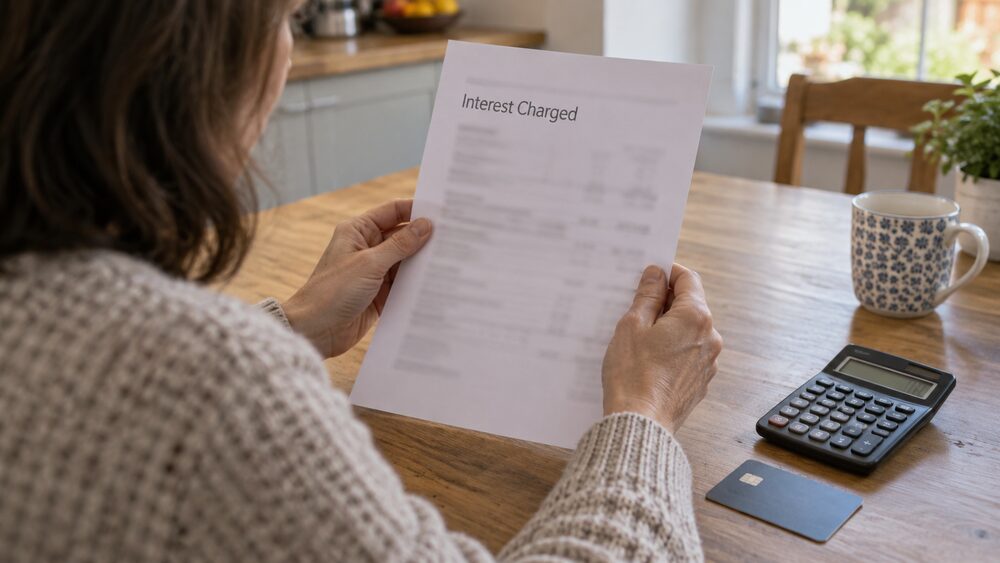
What that means in cash depends on the balance. Which? calculated that borrowing £5,000 on a credit card would cost £709 in interest over three years at the lowest rate it looked at16. A credit-builder card cannot carry a £5,000 balance, but the same arithmetic applies at a higher rate on a smaller balance: interest builds quickly on anything not cleared. The FCA estimated that consumers on accounts incurring over £100 interest a year paid on average £225 a year in interest on purchases, of which they could save over £150 by choosing a cheaper card12. The cheapest way to use any card, and especially a credit-builder card, is to clear the balance in full each month, which avoids interest on purchases altogether17. The page on how interest is charged explains the mechanics.
The other cost is what the card lacks. Experian notes that with a credit builder card you may have to do without some of the promotional features found in other credit cards, such as rewards and a 0% promotional rate on purchases and balance transfers1. That is a structural feature of the market: the FCA's research found 58% of cardholders said their card offered rewards, discounts or benefits18, but cards aimed at subprime borrowers generally compete on acceptance, not perks.
For context, the promotional features you give up are substantial. Many credit card companies offer 0% balance transfer fees to attract applicants19, and the best 0% purchase credit cards let you borrow interest-free for up to 26 months, although you need a good credit history to get them20. Neither is realistic for someone rebuilding credit. The pages on 0% purchase cards, balance transfers and rewards and cashback cover what those cards offer and who qualifies.
How a credit-builder card can improve a credit score
A credit score is a lender's summary of your credit file, and the file records what you have actually done: accounts opened, payments made, payments missed. A credit-builder card improves the score by adding a stream of on-time payments to that file. Experian explains that at first, taking a credit builder card might briefly cause your score to drop, but over time, managing your credit well can help build a positive credit history1.
The mechanism is the same one behind every way of building credit. StepChange lists the building blocks: opening a bank account, taking out a credit card and paying it off in full every month, getting a mobile phone contract and keeping up with payments, being on the electoral roll, and making sure all the information on your record is correct21. A credit-builder card is simply the version of the credit card step that is available to people other lenders would refuse.
Timing matters, and the independent guidance is consistent on it. It takes six to 12 months of paying on time for someone who has never officially borrowed before to improve their credit score3. The score may dip first: each application records a hard search on your credit report, which can temporarily lower your score1. StepChange suggests a way to track progress: use a soft search every few months to see if your card use is improving your rating4.
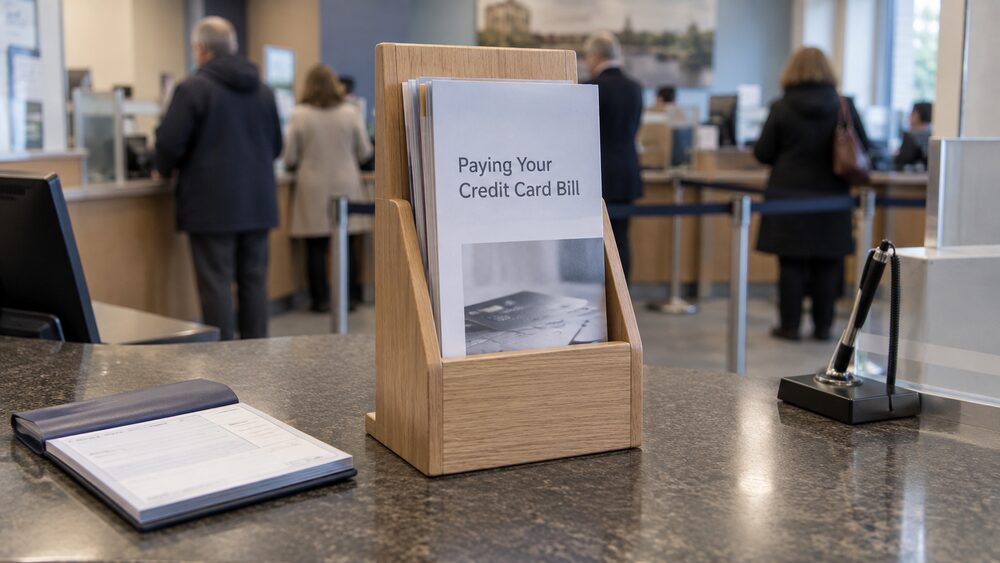
Two habits make the record build fastest. StepChange recommends setting the balance of the card to be paid in full each month, and making sure you pay on time each month to build your credit rating4. A direct debit is the usual way to do this, and Which? notes that if you don't pay a bill on time, this could affect your credit rating and will appear on your credit file23. The page on paying your credit card bill covers the payment options, and how credit cards affect your credit file explains the file itself.
Keeping use under 25% of the limit
How much of the limit you use, called credit utilisation, affects your score separately from whether you pay on time. Guidance on the exact threshold varies, and the most common advice is to aim low:
| Source | Suggested ceiling on the share of your limit in use |
|---|---|
| Experian (credit builder cards) | under 25%1 |
| Which? | below 30%3 |
| Advice NI | below 50%8 |
Experian's guidance is the strictest and the one aimed at these cards specifically: it is usually best to stay under 25% of your limit, for example if you can borrow £2,000 on your card, try not to use more than £500 at any one time1. Which? says keeping your balance below 30% of your total credit limit can boost your credit score, giving the example of a £1,000 balance on a larger limit3. Advice NI advises keeping credit usage low, ideally below 50% of your agreed credit limits8, and Which?'s mortgage guidance similarly recommends keeping your credit utilisation rate below 30 percent25.
On a £200 limit, the strictest guidance means using no more than £50 at a time. That is a small amount, but it is enough to generate a statement and a recorded payment each month, which is all the file needs. Maxing out even a small limit suggests to lenders that you are relying on the credit, and it is recorded on the file. If a limit increase would tempt more spending, opting out of automatic increases, as StepChange suggests4, keeps the utilisation calculation under your control.
What happens if you miss or pay late
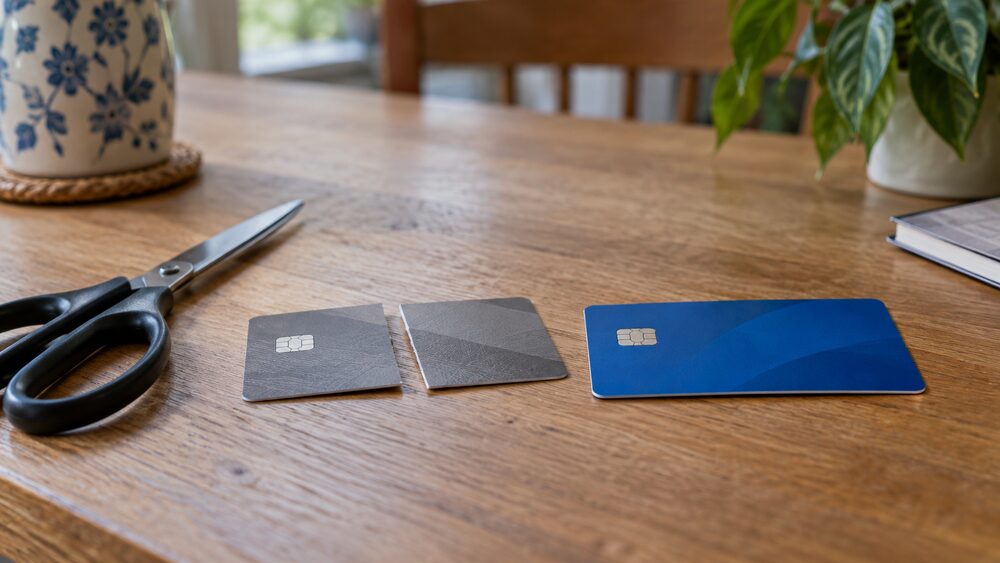
Everything a credit-builder card is for can be undone by one missed payment. One late payment on a credit card or loan can dent your score by as much as 130 points, according to Experian3. Late payments stay on your credit history for six years, as do missed payments and defaults7, and StepChange states that all missed, late or partial payments are recorded on your credit file for at least six years26. Experian warns that with late payments you may be charged a fee and your credit limit reduced1, and StepChange notes extra charges are added if you miss payments27.
The consequences escalate with the number of payments missed. StepChange describes the early stage: after one or two missed payments, reminders are sent, and if you catch up, no further action should be taken and the missed payments may not be recorded on your credit file, though interest and charges including late payment charges will be added28. A default is more serious: National Debtline explains it is generally recorded once you have missed three or more payments29, and Shelter Cymru notes that if you miss three to six payments, the credit card company may send you a default notice30.
The practical protection is a direct debit for at least the minimum amount, so a payment can never be forgotten. Which? explains how direct debits and standing orders work and warns that late bill payments appear on your credit file23. If you cannot pay, the pages on missing a credit card payment, late payment charges and help with credit card debt set out the options, and the free help listed at the end of this page is available at any point.
Applying without harming your score further
Every full application leaves a trace. Which? warns that when you apply for a credit card it will leave a mark on your credit file, so if you apply and you are rejected, it can harm your chances of getting credit in future5. Experian's guidance is the same: each time you apply for credit, a hard search will be recorded on your credit report, which can temporarily lower your score, so space out applications over several months and make as few as possible1.
The way to apply without adding damage is the soft search. Providers offer a soft search eligibility check which does not impact your credit score5, and StepChange suggests using one every few months to see whether your card use is improving your rating4. A soft search shows the likelihood of acceptance before any hard search is made. Citizens Advice adds a reality check: providers don't have to give you a credit card, and your application may be refused if your credit score is low31.
Checking your own file is always safe. You can check your score as often as you like without doing any harm32. It is worth doing before applying, because errors on the file can cause refusals, and correcting them is one of the recognised ways to improve a score21. The page on applying for a credit card covers the process step by step.
Paying in full or paying the minimum
The repayment habit determines both the cost of the card and its effect on the file. StepChange's guidance is to set the balance of the card to be paid in full each month, and if you cannot, make sure you make the minimum payments4. Experian agrees: if you can't pay the statement in full, make at least the minimum repayment, because missing one can seriously affect your future credit applications1.
The minimum itself is small. Citizens Advice explains that if you don't pay off the balance each month, you will be asked to repay a minimum amount, typically around 3% of the balance due or £5, whichever is higher31. On a £200 balance that is £6, but paying only the minimum means interest is charged on the rest, and at credit-builder rates the debt grows rather than shrinks. The pages on minimum payments and how long paying only the minimum takes show the arithmetic.
Paying in full is the approach that builds the record at no interest cost, because purchases are interest-free if the balance is cleared each month17. A direct debit set to the full amount automates it. If the balance cannot be cleared, the persistent debt rules mean the lender must eventually contact customers who repeatedly pay more in interest, fees and charges than they repay of the balance, and ways to clear card debt sooner sets out the options.
Other ways to build a credit history
A credit-builder card is one route to a credit record, not the only one. Experian notes there are other ways to show lenders you can manage credit well, such as a mobile phone contract or household utility bills, keeping regular payments on time and in full1. StepChange's list adds opening a bank account, being on the electoral roll and making sure all the information on your record is correct21.
Some of these carry no borrowing at all. A bank account with an overdraft facility, managed well, contributes to the record, and MoneyHelper notes there are accounts that accept those with a poor credit history33. Turn2us adds that if you have a bad credit rating and have been refused bank accounts, you could ask to open a basic bank account or see if you can open an account with a credit union34. The credit unions page covers what they are and where to find them.
Other routes involve other people or other products. MoneyHelper explains guarantor loans, where someone else agrees to repay if you cannot, and notes that being a guarantor won't affect your credit rating as long as the borrower pays back the debt on time, but payments made on their behalf are added to your credit history and could reduce your credit score35. Buy now pay later agreements are another form of credit whose payment record matters: the Consumer Council for Northern Ireland warns you may be charged a penalty fee if your payments are late or missed, and your provider may pass information about the missed payment to credit reference agencies36. Quaker Social Action notes you may be able to borrow interest free, on a 0% interest credit card for example37, though such cards generally require a good history20.
Which route suits depends on circumstance. Someone who has never borrowed may find a mobile phone contract and the electoral roll enough to start. Someone with defaults may find mainstream accounts closed to them and a credit-builder card or a credit union the realistic options. StepChange's mortgage guidance is aimed at people rebuilding toward a mortgage21, and the credit scores section explains the file and the score in full.
Credit-builder cards compared with payday loans
For someone with a damaged credit history, the realistic alternatives to a credit-builder card are often forms of high cost credit. StepChange states that such cards can be cheaper than high cost credit like payday loans4. The Bristol poverty premium research found subprime credit cards and rent-to-own or catalogue credit were both relatively common and costly, at £199 and £186 respectively15, so "cheaper than a payday loan" is a low bar, not a cheap product.
The Financial Ombudsman Service has published a case study that shows the risk on the payday loan side: a borrower described as having a bad credit history had still been able to take out a payday loan he could not afford38. The ombudsman's role in such cases is to decide whether the lender carried out proper affordability checks, and complaints of this kind can be brought to it free of charge.
The comparison only holds if the card is used in the cheapest way. A credit-builder card cleared in full each month costs little or nothing in interest, because purchases are interest-free when the balance is cleared17. A balance carried over at a high rate can cost as much as any other high cost credit. The Bank of England's guidance is blunt about the underlying issue: having a bad credit rating will make it more expensive and harder to borrow money39. The loans section and the page on credit cards versus personal loans set out the alternatives side by side.
Where to get free help
Free, independent help is available at every stage, before a card is taken out and after problems begin. StepChange offers free debt advice online and by phone, including guidance on credit card debt, debt collection and what happens when payments are missed6. National Debtline publishes guides on credit card debt and your rights, including when a default is recorded29. Citizens Advice covers choosing and applying for a credit card, and what to do if an application is refused31. Advice NI provides equivalent guidance for Northern Ireland8, and Shelter Cymru covers credit card debt for people in Wales30.
For the credit file itself, your score can be checked as often as you like without doing any harm32, and errors can be corrected with the credit reference agencies21. If a complaint against a lender cannot be settled with the firm, the Financial Ombudsman Service can look at it, as its payday loan case study shows38. The debt section brings together the help options across the UK, including Scotland and Northern Ireland.
Sources39 cited
- Credit builder credit cards, Experian Experian, 2026
- Credit cards key features market study, FCA FCA, 2015
- How to improve your credit score, Which? Which?, 2025-10-24
- Credit cards if you have a bad credit score, StepChange StepChange, 2026-09-25
- Should I get a credit card?, Which? Which?, 2026-09-18
- Credit card debt, StepChange StepChange, 2026-09-25
- Getting a mortgage with late payments and defaults, Which? Which?, 2025-08-20
- Credit reports and credit reference agencies, Advice NI Advice NI, 2026
- Consumer Credit Act 1974, legislation.gov.uk legislation.gov.uk, 1974-07-31
- Credit card market research, FCA FCA, 2015
- Amazon credit card closure, Which? Which?, 2022-09-16
- Credit card market study interim report, FCA FCA, 2015-11
- Jigsaw research: overdrafts and credit cards, FCA FCA, 2014-04-07
- Credit card market study annex 2, FCA FCA, 2015-11
- Poverty Premium 2026, University of Bristol University of Bristol, 2026
- How to pay for home improvements in 2026, Which? Which?, 2026-02-14
- Credit card interest explained, Which? Which?, 2026-09-18
- Credit card market study annex 3, FCA FCA, 2015-11
- Free debt consolidation, StepChange StepChange, 2026-09-25
- Personal loans explained, Which? Which?, 2026-09-18
- Mortgage with bad credit, StepChange StepChange, 2026-09-25
- Credit scores StepChange, 2026-09-25
- Direct debits and standing orders explained, Which? Which?, 2026-03-05
- How to improve your credit score Which?, 2025-10-24
- Getting a mortgage with credit card debt, Which? Which?, 2025-08-20
- Mortgage arrears, StepChange StepChange, 2026-09-25
- Paying off credit card debt, StepChange StepChange, 2026-09-25
- Debt collection, StepChange StepChange, 2026-09-25
- Getting credit card debt written off: your rights and options, National Debtline National Debtline, 2026-09-25
- Credit card debt, Shelter Cymru Shelter Cymru, 2026-08-30
- Choosing and applying for a credit card, Citizens Advice Citizens Advice, 2026-09-25
- How to check your credit score for free, Which? Which?, 2025-10-24
- Post Office card account closing, MoneyHelper MoneyHelper, 2026-09-25
- Universal Credit: how to claim, Turn2us Turn2us, 2026-02-25
- Guarantor loans explained, MoneyHelper MoneyHelper, 2026-09-25
- Buy now pay later, Consumer Council for Northern Ireland Consumer Council for Northern Ireland, 2026
- Raising money toward a funeral, Quaker Social Action Quaker Social Action, 2026
- Given a payday loan he couldn't afford, Financial Ombudsman Service Financial Ombudsman Service, 2026-09-27
- What do I need to know about debt, Bank of England Bank of England, 2025-08-19






 MoneyHelperFree, impartial money and pensions guidance, set up by government
 StepChangeFree debt advice and solutions from a charity
 National DebtlineFree debt advice by phone, webchat and online
 Financial Ombudsman ServiceFree, independent help when a complaint about a firm is not put right
 Citizens AdviceFree advice on money, consumer and legal problems in England and Wales