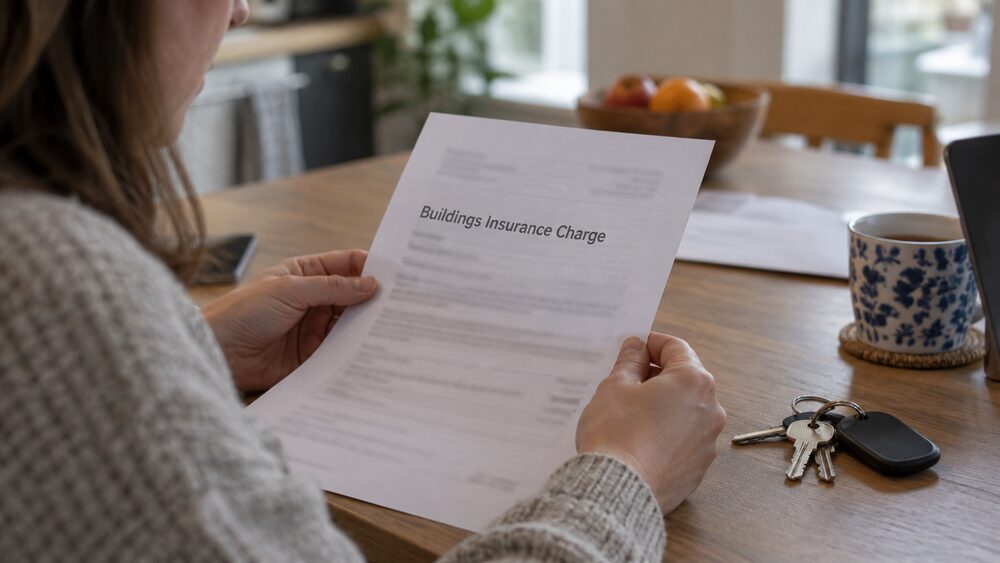
If you own a leasehold flat, the freeholder usually arranges the buildings insurance for the block, and you pay your share through the service charge1. That is normal and it is not a fee the landlord has invented. What has changed is how much you are entitled to know about it, and what can be added on top.
If you own a leasehold flat, the freeholder usually arranges the buildings insurance for the block, and you pay your share through the service charge1. That is normal and it is not a fee the landlord has invented. What has changed is how much you are entitled to know about it, and what can be added on top.
Since 31 December 2023, FCA rules require insurance firms to treat residential leaseholders in multi-occupancy buildings as customers, to act in their best interests, to provide fair value and pricing transparency, and to allow leaseholders to access details of the policy covering their property3. The freeholder is expected to share the policy schedule showing the cost of insurance for your property, plus a policy information summary3.
On fees, the Leasehold and Freehold Reform Act 2024 prohibits commissions from the placer or manager of insurance from being recovered from leaseholders through their service charge4. Before that, landlords, freeholders and managing agents were most commonly paid for arranging and managing buildings insurance through an insurance broker sharing a proportion of their commission5.
Can a landlord add fees to your buildings insurance?
The insurance premium itself is a cost of the building, and your lease normally obliges you to pay your share of it alongside maintenance fees and service charges7. What sits on top is the part to look at.
The government's own consultation on the subject describes how the money has worked in practice: landlords, freeholders and property managing agents are most commonly paid for arranging and managing buildings insurance through an insurance broker sharing a proportion of their commission5. That commission is embedded in the premium rather than shown as a separate line, which is why it has been hard for leaseholders to see.
The Leasehold and Freehold Reform Act 2024 changed that. The measures in the Act prohibit commissions from the placer or manager of insurance from being recovered from leaseholders through their service charge4. The government and the Welsh government then consulted, from 2 December 2024, on replacing those opaque commissions with a permitted insurance fee for leaseholders5.
So the position is: a landlord can recover the cost of insuring the building, but cannot recover insurance commission through the service charge. If a charge appears that looks like a fee for arranging the policy rather than the premium itself, that is the point to question.
Your right to see what the service charge covers
Leaseholders have a set of rights that make the insurance charge checkable. These include getting information about service charges or commission in relation to the freeholder's buildings insurance, seeing the landlord's buildings insurance policy documents, knowing the landlord's name and address, being consulted about certain maintenance and running costs, and challenging certain charges under some circumstances3.
The FCA rules that took effect on 31 December 2023 sit alongside those rights. Insurance firms are required to allow leaseholders to access details of the insurance policy that covers their leasehold property, and the freeholder is required to share the policy schedule detailing the cost of insurance for their property and the leaseholders' policy information summary3. The scope of these rules is limited to residential leaseholders, not commercial leaseholders3.
If you live in a block of flats, the building may already be insured and your contribution covered by your service charge8. If you own a leasehold flat, it is worth checking whether your freeholder's insurance covers repair costs, because buildings insurance should cover flood risks9.
Challenging an insurance charge you think is unreasonable
Start with the documents. Ask for information about the service charge and any commission, and for the policy schedule and policy information summary3. If the answer does not explain the figure, put the challenge in writing to the freeholder or managing agent.
There is a separate protection for people in buildings affected by the safety crisis. The Building Safety Act contains leaseholder protections which significantly limit the extent to which leaseholders can be charged for works to ensure their homes' safety10. Mortgage lenders may require evidence that the leaseholder qualifies for protections from costs set out in the Building Safety Act11.
If the dispute is not resolved, the route is a formal complaint to the freeholder or managing agent, then the redress scheme or tribunal that handles service charge disputes. Free, impartial help is available from the Leasehold Advisory Service and from Citizens Advice.
Who makes a claim on a leasehold building's insurance
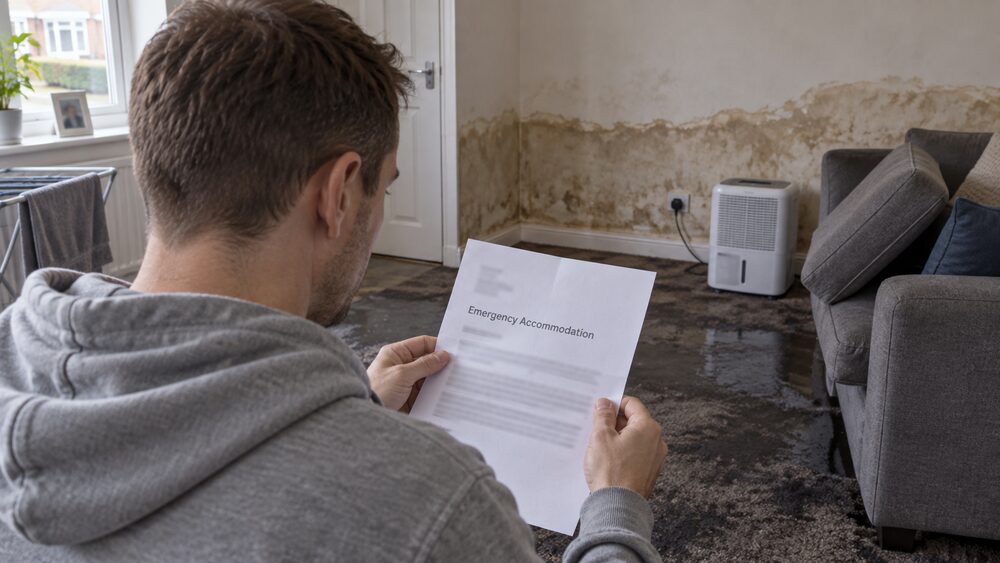
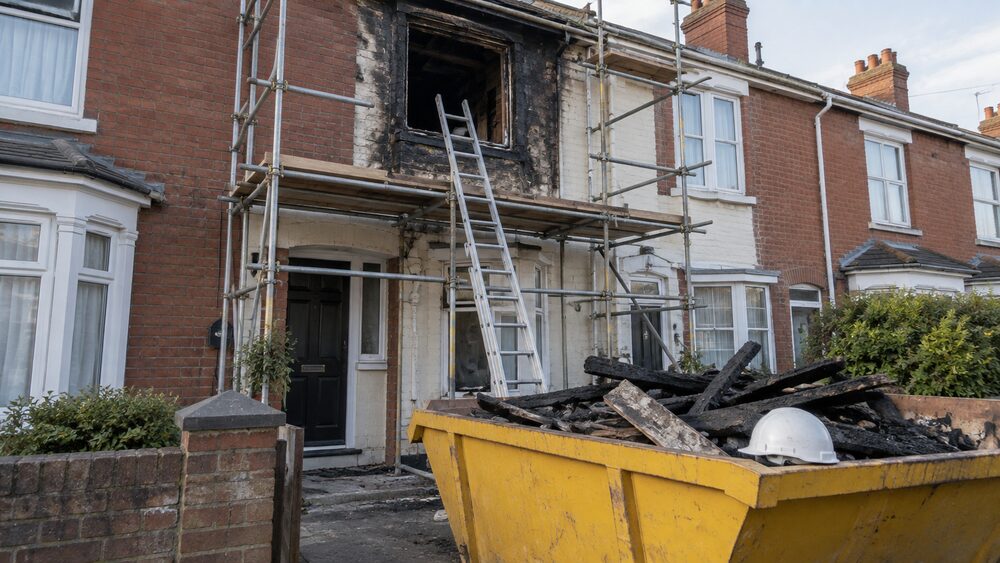
The policy is in the freeholder's name, so the claim is theirs to make. If your flat is damaged, your landlord should make an insurance claim6. If your property is leasehold it may be the freeholder's responsibility to insure the building12, and if it is a leasehold flat the freeholder is usually responsible for organising the cover2.
That matters because a leaseholder cannot simply claim on a policy they are not party to. What a leaseholder can do is press the freeholder to claim, and if that does not happen, write to the insurer directly.
If you rent rather than own, the position is different again. Renters do not need buildings insurance because this is the landlord's responsibility13, and you will not need to pay for buildings insurance as a renter14. Contents insurance for your own belongings is the cover a renter needs15.
Telling the insurer yourself: at least six months to notify in writing
Leaseholders have a right to notify a claim directly, and the deadline is generous. You have at least six months to notify a claim in writing, and the policy may allow longer6. That is a minimum, not a target: notify as soon as you can.
How to do it, in order:
- Contact the insurer as soon as possible1.
- List the damage and take photographs1.
- Keep any damaged items rather than throwing them away1.
- Explain what happened and provide receipts1.
- Do not start work or pay tradespeople before speaking to your insurer1.
If you rent your home, ask your landlord to contact the company that insures your home16. If you own the leasehold, you can write yourself, quoting the policy details you are entitled to see.
FCA rules: leaseholders count as insurance customers
The rules that took effect on 31 December 2023 changed the status of leaseholders. From that date, insurance firms are required to act in the best interests of leaseholders, treating them as customers, as well as providing fair value and pricing transparency3. Firms are also required to allow leaseholders to access details of the insurance policy that covers their leasehold property3.
In practice this means a leaseholder can ask questions about the policy and expect answers, rather than being told the policy is a matter between the freeholder and the insurer. The freeholder's side of the duty is to share the policy schedule detailing the cost of insurance for the property and the leaseholders' policy information summary3.
The rules do not set the premium, and they do not cap what insurance costs. What they do is make the arrangement visible, which is what makes a challenge possible.
Where to get help
If a complaint about an insurance charge or a claim is not resolved, the Financial Ombudsman Service can look at complaints about home insurance17. For service charge disputes, the Leasehold Advisory Service provides free advice, and Citizens Advice can point you to the right route.
MoneyHelper offers free, impartial guidance on housing costs and rent problems18. If you are behind on rent or service charge payments, that is the point to get advice early rather than waiting for the dispute to escalate.
Sources18 cited
- What is buildings insurance? Halifax, 2026-09-27
- Buildings insurance Aviva, 2026-09-26
- FCA ruling on multi-occupancy buildings: a full guide AXA, 2026-09-26
- Leasehold and Freehold Reform Act 2024 legislation.gov.uk, 2024-05-24
- Consultation on introducing permitted insurance fees for landlords, freeholders and property managing agents GOV.UK, 2024-12-02
- Buildings insurance claims Leasehold Advisory Service, 2026
- The difference between freehold and leasehold HSBC UK, 2026
- 6 questions to ask before you choose a home insurance policy Which?, 2025-10-15
- Housing help if your home is flooded Shelter England, 2025-10-27
- Information for leaseholders National Housing Federation, 2026-09-26
- Mortgages on flats affected by building safety crisis National Housing Federation, 2026-09-26
- Borrower FAQs Molo Finance, 2026
- What is buildings insurance? Lloyds Bank, 2026-09-27
- Tenants and renters Lloyds Bank, 2026-09-27
- Shopping around for insurance Independent Age, 2026-09-26
- After a flood: making an insurance claim nidirect, 2024-08-29
- Home insurance complaints Financial Ombudsman Service, 2026
- Rent arrears: problems paying your rent MoneyHelper, 2026-09-25





 MoneyHelperFree, impartial money and pensions guidance, set up by government
 Financial Ombudsman ServiceFree, independent help when a complaint about a firm is not put right
 FSCSProtects your money if a bank, insurer or investment firm fails
 Citizens AdviceFree advice on money, consumer and legal problems in England and Wales
 GOV.UKOfficial information on tax, benefits and government services