
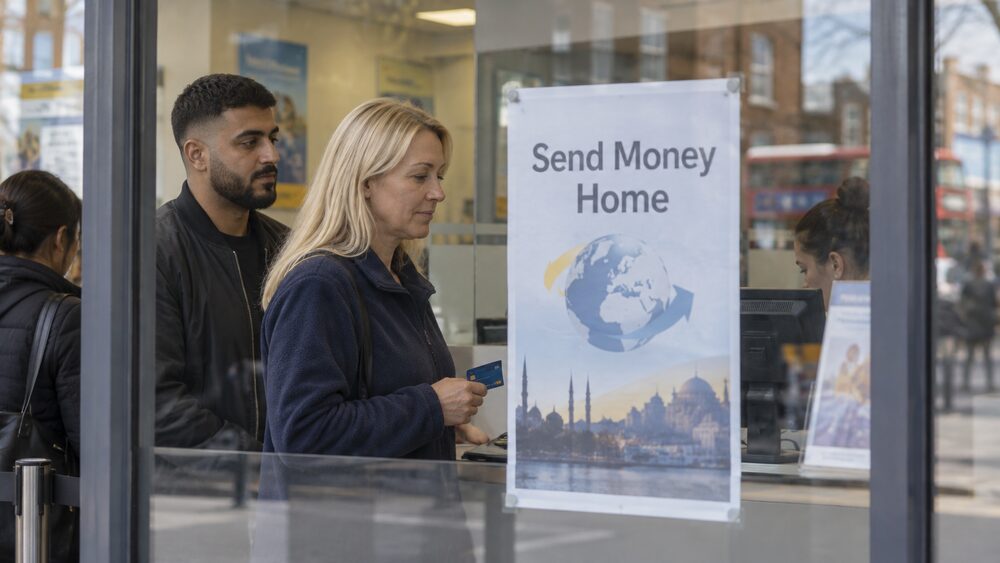
A cash pickup transfer is money you send through a provider such as Western Union, MoneyGram, Post Office or WorldRemit that a person on the other end collects in person, in cash, from a local agent, without needing a bank account. You pay the provider in the UK, online or in a branch; the provider gives you a reference number; the person you are sending to takes that number and their photo ID to a pickup point abroad and walks out with the money. Many transfers are ready for collection in as little as 15 to 30 minutes.
The great advantage of cash pickup is that it reaches people a bank transfer cannot: someone with no account, no smartphone or no fixed address can still receive money as long as there is an agent nearby and they can prove who they are. The trade-offs are cost and risk. Cross-border payments are expensive relative to domestic ones: a Treasury Committee report on cross-border transfers noted that they can take three to five days and that up to 6% of the amount can be chewed up in fees1. Cash pickup sits at the faster, more expensive end of that market, and once cash has been handed over, it is gone for good, with none of the recall options a bank account payment may have.
This page explains how the collection works, what can go wrong at the counter, and what your options are if a transfer is refused, delayed or needs to be cancelled. For how cash pickup compares with paying money straight into a foreign bank account, see cash pickup vs bank deposit, and for the wider market, ways to send money abroad.
How cash pickup transfers work
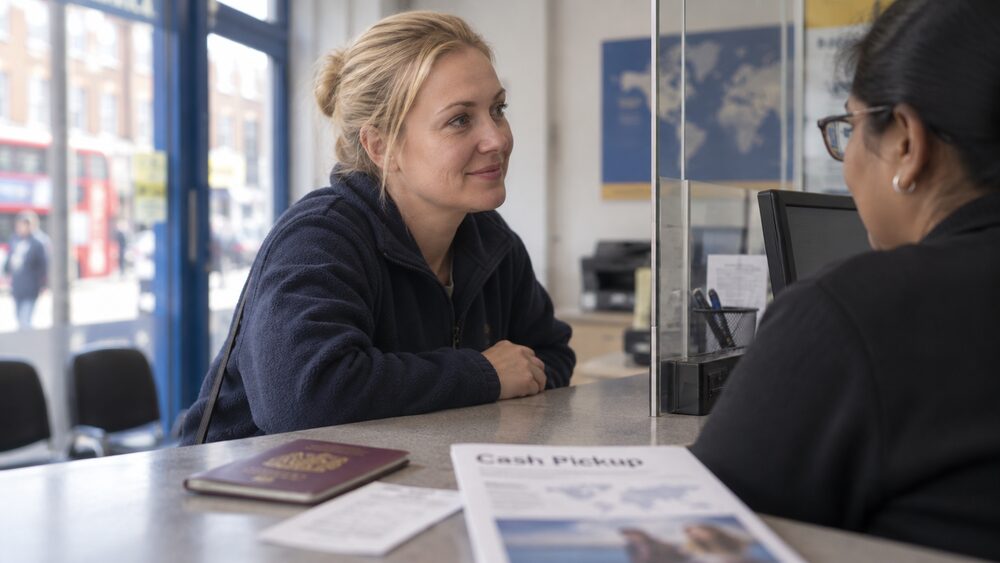
A cash pickup transfer separates the sending side from the receiving side. On the sending side, you give the provider money, by debit card, bank transfer or cash at a counter, together with the receiver's name and the destination country. On the receiving side, the person you are sending to visits one of the provider's agents, a shop, a post branch or a dedicated outlet, shows their ID and the reference number, and is handed cash in the local currency.
No money physically travels. What moves is a message through the provider's own network confirming that funds are available to pay out at that agent. This is why the transfer can be ready in minutes: the provider is not moving currency between banks but authorising a payout from its own float at the destination. It is also why the reference number matters so much. It is the only thing that connects the person at the counter with the money you paid in. A comparable UK service, the Post Office's Payout Now, works the same way in miniature: it sends a unique reference code by text, email or post, which a customer takes to a Post Office branch to withdraw cash without handing over bank details3.
The details you supply at the sending end are simpler than for a bank transfer. A bank transfer abroad needs the full name of the person you are sending to, their account details and a payment reference, and you choose whether the money goes straight away or later4. A cash pickup needs only the receiver's name as it appears on their ID and the destination country, because there is no account to credit. That simplicity is part of the appeal, and part of the risk: there is no account-name checking of the kind UK bank transfers now have, so the provider relies on the agent at the counter to match the person to the name.
Who offers cash pickup in the UK
The names most associated with cash pickup are Western Union, MoneyGram, Post Office and WorldRemit. Western Union and MoneyGram are the two long-established international networks, with agents in shops and money-service businesses across most of the world; both can be used online from the UK as well as at counters. WorldRemit is an online-first provider that offers cash collection as one of several payout options alongside bank deposits and mobile wallets. The Post Office offers international transfers and has a wide counter network of its own3.
Official guidance on paying money to people abroad names MoneyGram among the recognised transfer services, alongside PayPal's online transfer service7. The Post Office's role in cash access goes beyond international transfers: it launched a cash delivery service with the Department for Work and Pensions in April 2020, and its Payout Now service lets customers withdraw cash at a branch using a reference code3. Credit unions also use the Post Office network for cash access, with members able to cash cheques at a local Post Office or withdraw cash from a local credit union office8.
The UK also runs its own cash-collection systems for people who cannot use a bank account, which show the pattern in miniature. The Payment Exception Service, used for some benefit payments, sends people either a payment card or a voucher code by text message or email, which they show at the counter with a form of ID at any outlet displaying the PayPoint symbol9. Asylum support payments work differently again, with money loaded onto an ASPEN card that is used for purchases and cash withdrawals at a cashpoint11. None of these is a commercial cash pickup service, but they illustrate the same mechanics: a reference or card, an ID check, and a payout at a counter.
For a fuller list of providers, see the money transfer providers directory, and for the Post Office's own service, Post Office international transfers.
Transfer speed: as little as 15 to 30 minutes
Speed is the main reason people choose cash pickup. Providers quote collection in as little as 15 to 30 minutes for many destination countries, because the payout is authorised on the provider's own network rather than waiting for banks to settle with each other. For comparison, a domestic bank transfer sent using Faster Payments through a banking app reaches the recipient's account within 2 hours, and sometimes immediately4. A cross-border bank transfer is slower still: the Treasury Committee report put the typical time at three to five days1.
Not every cash pickup hits the headline speed. A transfer can be held up by:
- Identity and security checks on the sender, especially for a first transfer, a large amount or a new device. See identity and security checks when sending for what these involve.
- Agent opening hours and cash float. An agent that is shut, or that does not have enough cash on hand to pay the amount, will send the receiver away until later or the next day.
- Local holidays and weekends in the destination country.
- Payout limits. Some agents cap how much they can pay out in one transaction, so a large transfer may need to be collected in parts or at a larger agent.
Delays of this kind are normal and do not mean the money is lost. The receiver can check the transfer's status with the reference number, and the sender can contact the provider if a transfer stays unavailable for longer than the timescale quoted. For how delays arise on international payments generally, see how long an international payment takes.
Collecting the cash: reference number and photo ID
The receiver needs two things at the counter: the reference number and proof of identity. The reference number, sometimes called a tracking number, is issued to the sender as soon as the transfer is arranged, and the sender passes it on. Under the Payment Services Regulations, the receiving side of a payment chain must be given a transaction reference, the amount, the charges, the exchange rate used and the value date immediately after the payment is executed12. In practice, for cash pickup this means the sender's confirmation shows the reference and the amount the receiver can expect, and the receiver can be told both before setting out.
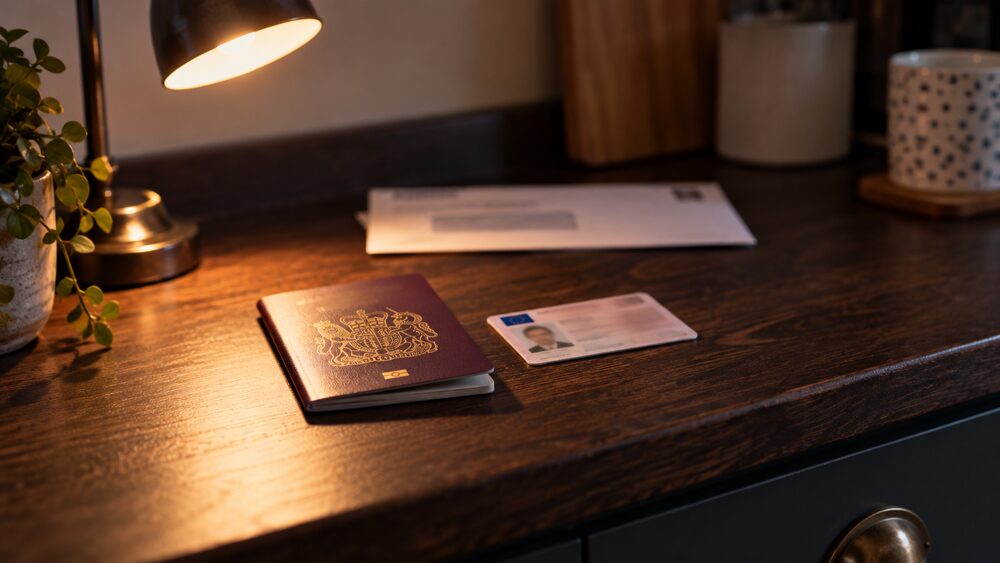
For ID, the receiver should expect to show an official document with a photo. The kinds of ID accepted for financial services in the UK, a driving licence, a passport, recent bills or official documents13, give a reasonable guide to what agents abroad will ask for, though each country and agent sets its own rules. Some agents ask for a proof of address as well, and some ask the receiver to complete a short receive form at the counter, recording who collected the money, when and how much.
Someone else can sometimes collect on the receiver's behalf, but the requirements are strict. Under the UK's Payment Exception Service, a person collecting for someone else must bring the payment card or voucher, that person's ID and their own ID10. Commercial cash pickup providers apply similar or stricter rules, and some do not allow third-party collection at all. It is worth checking with the provider before relying on it.
If the receiver cannot collect the money, the transfer does not sit at the agent indefinitely. Uncollected transfers are eventually cancelled and the money returned to the sender, less any fees the provider keeps under its terms.
The name on the transfer must match the receiver's ID
The single most common reason a collection fails is a name problem. The agent's job at the counter is to satisfy itself that the person in front of it is the person the money was sent to, and the only way it can do that is by matching the name on the transfer against the name on the photo ID. If the sender spelled the name differently from the ID, used a nickname, or gave a married name where the ID shows a maiden name, the agent can refuse the payout.
UK bank transfers have moved in the opposite direction, with name checking built into the system. Confirmation of Payee works by checking whether the name of the account the payer is sending money to matches the name entered, and alerting the payer when there is no match14. Before sending, the bank asks for the full name of the registered account holder and the type of account, personal or business15. Accounts that allow customers to transfer funds in and out are required to implement the checking16. Cash pickup has no equivalent: the check happens in person, at the counter, by the agent.
That puts the burden on the sender. Before paying, confirm the exact name as it appears on the receiver's ID, including the order of the names and any accents or hyphenation the provider's system supports. If a mistake is spotted after sending, contact the provider immediately: some will correct a name on an uncollected transfer, but they are not obliged to, and a transfer that fails the ID check may have to be cancelled and resent, with the exchange rate and fees recalculated.
Where the money can be collected
A cash pickup transfer can only be collected in the country it was sent to. The destination country is fixed at the moment of sending, and the reference number only works at that provider's agents in that country. If the receiver has travelled elsewhere, or moved abroad since the transfer was arranged, they will not be able to collect the money in the new country. The usual remedy is for the sender to cancel the uncollected transfer and send a fresh one to the correct destination.
Within the destination country, the receiver can usually choose any agent of the provider that offers cash pickup, not only the one nearest to the address given at sending. Larger amounts may narrow the choice, because small agents hold limited cash and some cap their payouts. If a particular agent cannot pay out, the receiver can try another branch of the same network.
If you are abroad yourself and something goes wrong with every other option, there is a last resort of a different kind. The government's foreign travel guidance notes that the FCDO operates a money deposit service at British embassies, high commissions and consulates, but it will only consider this if no other transfer service is available, it usually takes longer than other options, you must visit the nearest embassy, high commission or consulate in person, and a fee is charged18. It is an emergency service, not a routine way to send money.
Requirements vary by country and pickup agent
The rules at the counter are set by three layers: the provider's own terms, the laws of the destination country, and the individual agent. This is why two agents of the same provider, in the same city, can ask for different documents or pay out different maximum amounts.
Things that commonly vary include:
- Accepted ID. A passport is almost universally accepted; national ID cards, driving licences and residence permits depend on the country and the agent.
- Payout limits. Some countries cap cash payouts by law, and agents apply their own float limits on top.
- Receive forms. Some agents require a form to be completed at the counter; others pay out on the reference and ID alone.
- Currency. In some countries the payout is offered in US dollars as well as, or instead of, the local currency.
- Third-party collection. Whether someone else can collect, and what they must bring, differs by provider and country.
The UK's own counter-based payment systems show how much these rules can differ even within one country. The Payment Exception Service pays out at PayPoint outlets on sight of the card, voucher or text message plus proof of identity10. The child maintenance service's Collect and Pay route aims to pass on a payment within one week of receiving it from the paying parent19, a reminder that even official collection arrangements have their own timescales. Wages and other payments can reach people by bank transfer, cash or cheque20, and each route has its own requirements at the point of collection.
The practical lesson is to check before the receiver travels to the agent: what ID that country's agents accept, whether there is a limit that affects the amount, and which nearby locations can pay it out. The provider's own country information pages are the authoritative source for the first two.
Cancelling a cash pickup transfer and getting a refund
A cash pickup transfer can be cancelled as long as the money has not been collected. The sender contacts the provider, which checks that the funds are still available at the payout end, reverses the transaction and refunds the money. The refund goes back by the original payment method, so the timing depends on how the transfer was paid for: a card refund takes working days to reappear, and a bank transfer refund depends on the sender's bank.
General consumer rights support this where they apply. Where a deposit or part-payment has been made for goods or services not yet received, the rules entitle the payer to all of their money back on cancellation21. Where a cooling-off period applies to a service you arranged, a payment or deposit made up front is refundable in full if cancelled within that period, unless services were provided at your request during it22. A money transfer that has not been paid out is the clearest case of a service not received.
The steps are:
- Contact the provider as soon as possible, by app, online or phone, quoting the reference number.
- Ask it to confirm the money is uncollected. Only an uncollected transfer can be reversed.
- Request cancellation and a refund, and ask how long it will take and whether any fee is kept.
- Keep the confirmation of the cancellation and the refund promise.
- Check the original payment method for the refund, and chase the provider if it does not arrive within the stated time.
Refund timescales vary by product and provider. For a sense of the range: package holiday cancellations must be refunded within 14 days23; a Motability transitional support payment is sent as a cheque within 14 days of returning the vehicle24; and under the authorised push payment reimbursement rules, victims of fraud should usually get their money back within 5 working days, though it might take up to 35 working days2. A cash pickup refund sits somewhere in this spread, typically a few working days for a card refund.
Where cancellation is not possible
Once the cash has been collected, cancellation is over. The provider has paid out on the strength of a correct reference number and matching ID, and it has no way to claw money back from a person who walked out of an agent with it. This is the sharpest difference from a bank transfer, where a mistaken or fraudulent payment can sometimes be traced or recalled: see tracing, cancelling or recalling a payment sent abroad.
Other situations where reversal is limited:
- The transfer has been paid out to a third party the sender authorised, rightly or wrongly. The provider's obligation ended at the counter.
- The provider has already converted the money into the destination currency. Some providers will refund only the amount they can recover, and the exchange rate difference is lost.
- Products with no cancellation right at all. The FCA's rulebook, for example, gives consumers no right to cancel a cash deposit CTF other than a distance contract25. Money transfer terms are set by the provider, but the same principle, that some financial products carry no cancellation right once made, is worth checking in the terms before you send.
- Irreversible transfers of assets. A cash transfer of an ISA works by selling the investments and passing the proceeds to the new provider27: once done, it is done. Cash pickup shares this one-way character once the payout happens.
Protection and where to get help
Cash pickup transfers are regulated in the UK, but the protection is not the same as for a bank account payment. The mandatory reimbursement scheme for authorised push payment fraud covers only UK bank transfers, not payments to foreign accounts or other payment methods such as card payments28. A cash pickup transfer to a person abroad falls outside that scheme, so there is no automatic 50/50 split of losses and no guaranteed refund if you are tricked into sending one.
That makes prevention the whole of the protection. Fraudulent payment guidance from the FCA sets out what to do if you have paid a scammer, and notes that reimbursement under the FPS Reimbursement Rules applies to payments made using Faster Payments, with the CHAPS Reimbursement Rules covering CHAPS payments29. Some banks now show a warning when you transfer money to someone, prompting you to double-check the details and think twice about whether the person is genuine17. Treat those warnings as applying with extra force to cash pickup, where the money is untraceable the moment it is handed over.
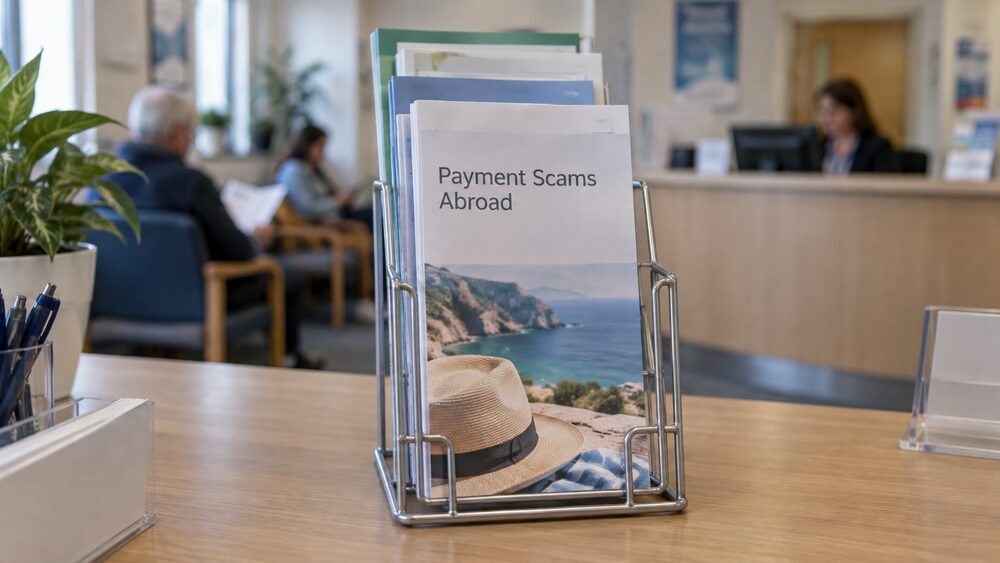
Common scams that use cash pickup include fake fee demands, romance scams, and "a relative is in trouble" calls. The pattern is always the same: urgency, secrecy and a request to send cash to a person you have not met. See scams involving payments abroad for the detail, and sending support to family abroad for cheaper, safer ways to make regular family payments.
If something goes wrong, the first step is the provider's formal complaints process. If it does not resolve the complaint within eight weeks or its answer is unsatisfactory, the Financial Ombudsman Service can look at complaints about regulated firms, including disputes over transfers and charges31. Free, independent help is available from MoneyHelper, and where a mistake or delay by a bank causes charges, the rules state that the payer does not have to pay for mistakes or delays in the transfer process that lead to bank charges32. For how your money is held by a payment firm while it is in transit, see safeguarding and the FSCS, and for your rights when a payment goes wrong, your rights under the Payment Services Regulations.
Sources32 cited
- Cross-border payments report, Treasury Committee UK Parliament, 2023-05-17
- Fraudulent payments: what to do if you have paid a scammer FCA, 2016-04-16
- Banking after lockdown: branches, cash and contacting your bank Which?, 2020-08-07
- Online money transfers guide Age UK, 2026-03-23
- Western Union money transfer Post Office
- Money transfer FAQs Post Office
- Private child maintenance arrangements nidirect, 2026-08-19
- Credit unions: consumer factsheet Building Societies Association, 2026-09-15
- What to do now your Post Office card account is closing MoneyHelper, 2026-09-25
- Payment Exception Service Turn2us, 2026-05-26
- Money and practical help for people seeking asylum Shelter England, 2024-01-16
- Payment Services Regulations 2017, Part 6 legislation.gov.uk, 2026
- Choosing a bank account for your Universal Credit payment MoneyHelper, 2026-09-25
- Confirmation of Payee consultation response Payment Systems Regulator, 2026-09-26
- Confirmation of Payee deadline and online banking Which?, 2020-06-30
- Extending Confirmation of Payee coverage Payment Systems Regulator, 2022-10
- Online banking guide Age UK, 2026-03-23
- Your finances when travelling abroad GOV.UK, 2022-08-31
- Receiving child maintenance via the Child Maintenance Service GOV.UK, 2025-10-15
- Money: paying wages and other payments Mencap, 2026
- Cancelling a loan or credit agreement Citizens Advice, 2020-12-16
- Cancelling a service you've arranged Citizens Advice, 2026-09-25
- Claiming compensation for a cancelled holiday Citizens Advice, 2018-06-29
- Transitional support grants Motability Foundation, 2026-09-26
- BCOBS 6: cancellation rights FCA Handbook, 2009-11-01
- BCOBS 6, current version FCA Handbook, 2009
- Stocks and shares ISA transfers Which?, 2026-09-25
- Santander's app blur feature and scam warnings Which?, 2025-08-28
- Dealing with fraud: reimbursement rules Business Debtline, 2026-09-26
- Dealing with fraud: FPS and CHAPS rules Business Debtline, 2026-09-26
- Financial Ombudsman Service: CHAPS and payment complaints Financial Ombudsman Service, 2004-12
- Getting a bank account Citizens Advice, 2026-09-25

 MoneyHelperFree, impartial money and pensions guidance, set up by government
 Financial Ombudsman ServiceFree, independent help when a complaint about a firm is not put right
 FCA Warning ListCheck whether a firm is authorised before you deal with it
 Citizens AdviceFree advice on money, consumer and legal problems in England and Wales