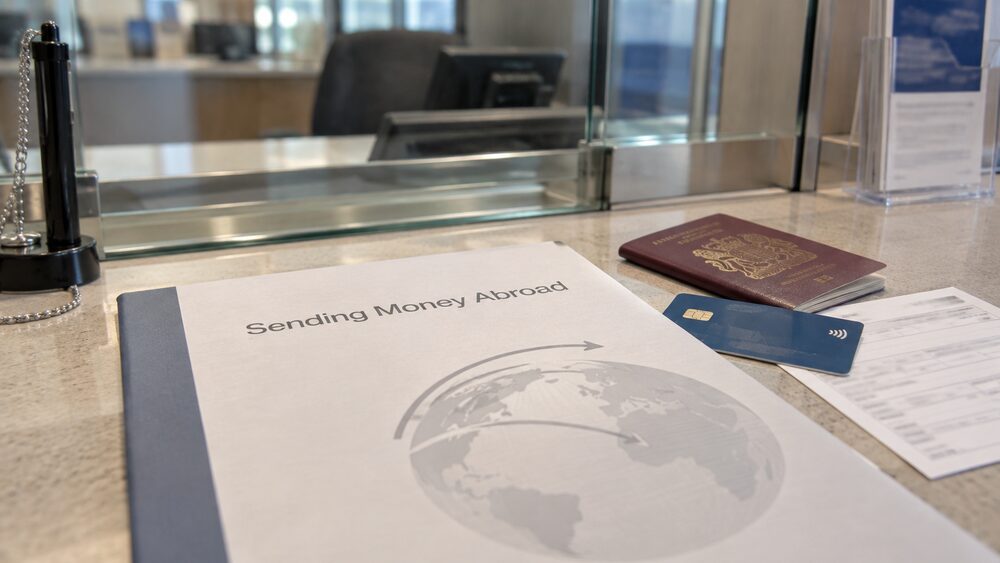
A cheque drawn on a bank abroad, whether it is written in dollars, euros or any other currency, cannot simply be cleared the way a UK cheque is. Your bank has to get the money from the overseas bank first, and that shapes everything about the process: the cost, the wait and the risk. Banks charge for the work, typically a flat fee of £7.50 to £28 per cheque or a percentage of the cheque's value, and clearing can take anything from a few days to as long as 20 weeks1.
The biggest thing to understand is that a foreign cheque is not "cleared" in the way a UK cheque is. Even after the money appears in your account, the cheque can still be returned unpaid, and banks state this can happen up to 7 years later if the issuing bank identifies signs of fraud2. That makes a foreign cheque very different from a bank transfer, where the money, once received, is yours.
Banks handle foreign cheques in one of two ways, called negotiation and collection. Which one your bank uses decides how quickly you see the money and how certain you can be that it is finally yours.
Negotiation or collection: how each one behaves
When you hand a foreign cheque to your bank, it will process it by negotiation or by collection, and the difference matters.
Negotiation means your bank advances you the money before it has finally collected it from the overseas bank. Santander, which uses this route, states that with negotiation "You'll usually get the money in your account around 6 working days after we have the cheque"1. The catch is that the bank is effectively lending you the money in the meantime: if the overseas bank later refuses to pay, your bank takes the money back from your account.
Collection means the bank sends the cheque to the foreign bank and waits for the funds to arrive before crediting you. Santander states that with collection "this usually takes 2-8 weeks"1. Danske Bank describes the same mechanism: "payment is made when Danske Bank receives the funds from the foreign bank (this can take up to 6 weeks or longer)"2. Collection is slower but safer in one sense: you are not credited until the money has actually moved, so there is no advance that can later be clawed back, although the cheque can still be returned unpaid later where fraud is involved2.
Both routes are recognised in the Financial Conduct Authority's banking conduct rules, which list "make a deposit by cheque (paying in a cheque)" among the payment services a bank can provide3. Which route your bank uses is generally its choice, not yours, and some banks use both depending on the currency, the amount or the country the cheque is drawn on. Ask before you pay it in, because the answer tells you how long you will wait and when you can treat the money as yours.
Clearing time: up to 20 weeks
A UK cheque paid into a UK account clears under the domestic cheque clearing scheme, usually within a handful of working days. Metro Bank, for example, notes that domestic cheques "can take up to a week to be cleared"10, and North Tyneside Credit Union tells savers its cheques "sometimes take upto 10 days to clear"11. Foreign cheques sit outside that scheme entirely.
Because the money has to be physically or electronically retrieved from a bank in another country, the timescales are far longer and vary by bank:
| Bank | Stated time for a foreign cheque |
|---|---|
| Santander (collection) | usually 2 to 8 weeks1 |
| Cater Allen (collection) | usually 2 to 8 weeks, but can be more or less5 |
| Metro Bank | allow 6 to 8 weeks for cheques drawn on a non-UK bank12 |
| Lloyds International | 6 to 8 weeks, depending on the paying bank or its country13 |
| Danske Bank (collection) | up to 6 weeks or longer2 |
| Ulster Bank (collection) | up to 12 weeks to clear9 |
| Ulster Bank (overall) | up to 20 weeks4 |
The longest stated figure comes from Ulster Bank, which says plainly: "Foreign cheques are not part of this scheme and can take up to 20 weeks to clear"4. The variation between banks reflects the same underlying reality: the speed depends on the paying bank and its country, as Lloyds International notes13. A cheque drawn on a bank in a country with slow postal systems or heavy checking processes will take longer than one from a major financial centre.
In practice, treat the money as unavailable until the bank confirms the cheque has been finally paid, not merely credited. If you have a bill or deadline tied to the cheque, the wait itself is a cost of accepting one. For anything time-sensitive, a transfer sent abroad is normally the faster route.
Fees and charges: flat fees of £7.50 to £28, or a percentage
Banks charge for foreign cheques because processing one involves real work by an overseas bank or agent, and the fee structures vary widely. Some charge a flat amount per cheque, others a percentage of its value.
Flat fees at the lower end include Cater Allen, which charges "£7.50, €8.50 or US$12" for collection and negotiation of foreign cheques, depending on the currency of the account the cheque is paid into6. Santander charges £10 to pay in a foreign-currency cheque1. At the upper end, first direct charges £28 for "Cheques issued by banks outside the UK and/or in a foreign currency... that we collect for you", and also charges £28 for returned cheques7.
Percentage-based fees are common too. Virgin Money's M Plus Account charges 0.25% of the cheque's value, with a £7 minimum and a £40 maximum, plus agent fees where applicable, for cheques drawn on a non-UK account over £100 or the equivalent8. Its Flexible Repay Account charges the same 0.25% (£7 minimum, £40 maximum) for cheques over the £100 equivalent, and a flat £5 for cheques of £100 or less, plus agent charges in each case14. SBI UK charges 2 per 1,000 of the cheque's value, with a minimum of £25 and a maximum of £50 per drawee bank15.
| Fee type | Example | Amount |
|---|---|---|
| Flat fee | Cater Allen | £7.50, €8.50 or US$12 per cheque6 |
| Flat fee | Santander | £10 per cheque1 |
| Flat fee | first direct | £28 per collected cheque; £28 for a returned cheque7 |
| Percentage | Virgin Money M Plus | 0.25%, £7 minimum to £40 maximum, plus agent fees8 |
| Percentage | SBI UK | 2 per 1,000, minimum £25, maximum £50 per drawee bank15 |
Two extra costs can catch people out. First, Ulster Bank notes that cheque collection "is subject to additional fees levied by the overseas bank"9, meaning the foreign bank may take its own cut before the money moves. Second, if the cheque is returned unpaid, you may face a returned cheque fee on top of losing the money itself, as first direct's £28 returned cheque charge shows7.
For context, cheque cashing services have long charged far more: an independent study found they typically charge "a flat fee of around £2 plus 7-9% of the face value of the cheque"16. A bank's foreign cheque fee is usually much better value than that, but for large cheques a percentage fee adds up quickly, and a transfer may cost less overall.
A foreign cheque can bounce up to seven years later
This is the risk that most separates a foreign cheque from every other way of receiving money. With a UK cheque, once the clearing period passes, the money is yours. With a foreign cheque, the paying bank abroad can return it unpaid long after you have spent it.
Santander states: "Up to 7 years after you've put in a foreign-currency cheque, we can return it to you"1. Danske Bank says the same of both its routes: "Foreign cheques can be returned unpaid up to 7 years after they have been paid into your account if signs of fraud have been identified by the issuing bank"2. Cater Allen's terms likewise warn that a foreign currency cheque that bounces or involves fraud can be reclaimed, and "this could be up to 7 years after we make the payment"5.
What this means in practice is set out plainly by Handelsbanken's postal cheque service: "If a cheque paid into your account is returned unpaid, we'll let you know by post and deduct the value of the cheque from your account"17. If you have already spent the money, that deduction can push your account overdrawn, and you would owe the bank.
There are some protections, but they are narrow. The Payment Services Regulations require a bank, where an executed payment transaction was not authorised, to "refund the amount of the unauthorised payment transaction to the payer" and restore the debited account18. That rule covers unauthorised transactions, such as a payment you never approved, not a cheque that was genuinely paid in and later bounced. Open banking payments carry a similar rule: "Your bank must refund you immediately, unless it has grounds to suspect fraud or negligence"19, but again that applies to unauthorised payments through a third-party provider, not to a returned foreign cheque.
If you believe your bank has handled a cheque badly, for example by telling you it had cleared when it had not, or by failing to warn you of the return risk, you can complain to the bank and then to the Financial and Ombudsman Service. The ombudsman lists cheque complaints it can look at, including where "a banker's draft turned out to be fake or went missing, and the bank wouldn't refund you"20. More on that in the help section below.
Currencies some banks no longer accept
Do not assume any bank will take any cheque. Acceptance varies by currency, by bank and by account type, and the list has been shrinking.
The clearest example is Ulster Bank, which states: "We no longer accept New Zealand (NZD) cheques"9. Lloyds Bank and Halifax both hedge more generally: "We may not be able to accept cheques in all foreign currencies"21. If you have been sent a cheque in an unusual currency, ask your bank before paying it in, because a refusal after the fact wastes more of your time.
Some accounts refuse foreign cheques altogether. The credit union current account terms from CUCA state: "We cannot accept a foreign currency cheque or a sterling cheque where the paying bank is not in the UK"23. Nationwide, for transfers between a current account and an overseas bank account, states: "We only accept Sterling as a currency and don't accept cheques from foreign banks"24. Some lenders have stopped taking cheques entirely: Together tells customers "We no longer accept cheques as payment towards your account"25.
Digital-only accounts are often the strictest. Chase's account terms state: "You can only pay money into your account by making a payment from another account you have with us or directly from another UK bank in pounds sterling", with no cheque paying-in at all26. If your only account is with a bank like that, a foreign cheque may simply have nowhere to go, and you may need to open an account that accepts them first.
One related rule is worth knowing: it is "no longer legal for credit card providers to send out cheques that you can use to withdraw money or to pay for goods or services, unless you have asked them to send these cheques"27. See the guide to scams involving payments for the wider warning signs.
Sending a sterling cheque abroad
The reverse situation also comes up: you want to send money to someone abroad, and a cheque feels like the simple answer. A sterling cheque sent overseas has its own problems, because the person receiving it faces exactly the process described above, in reverse.
If you write a UK sterling cheque to someone abroad, their bank abroad will treat it as a foreign cheque: slow to collect, subject to fees from their bank and possibly agent banks, and in some countries simply not processable. Some overseas banks do not accept them at all. The recipient may wait weeks and lose a slice of the value to charges.
Where a payment to a UK official body from abroad is concerned, the direction of travel is clear. Your bank may charge you if you use any other currency"28. The same logic applies in the other direction: paying in the currency the recipient's account actually holds avoids conversion charges at their end.
The currency question also matters for regular payments received from the UK. Which? notes that if you have a UK state pension paid into an overseas account, "you'll get paid in the local currency so the amount you get may change depending on the exchange rate"29. A cheque is a fixed amount in one currency, and whoever converts it, the sender or the receiver, bears the exchange rate and the fees. The guide to exchange rates on international payments explains how those margins work.
The FCA's conduct rules frame sending money abroad as a distinct banking service: initiating "a payment in a currency other than a currency of the United Kingdom to a payee outside the United Kingdom (sending money outside the UK)"3. In other words, a cheque is only one way of doing what is fundamentally an international payment, and it is usually the slowest and least certain way of doing it. The alternatives are covered in ways to send money abroad.
Cheque or transfer: what changes
Cheques have not vanished from everyday life. Mencap's money guidance notes that wages can still be paid "by: Bank transfer, Cash, Cheque"30, and EU air passenger rules allow compensation to be paid "by cash, bank transfer or cheque", with travel vouchers only if the passenger agrees31. But for money crossing a border, the choice between a cheque and a transfer changes almost every outcome that matters.
| Foreign cheque | Bank transfer | |
|---|---|---|
| Speed | days to 20 weeks1 | usually much faster, see how long international payments take |
| Cost | flat fee of £7.50 to £28, or a percentage, plus possible overseas bank fees6 | transfer fees and exchange rate margin, shown up front |
| Certainty | can be returned unpaid up to 7 years later1 | once received, the money is yours |
| Effort | recipient may need to visit a branch and wait | recipient needs account details, see details needed to pay someone abroad |
The fee comparison is not always one-sided. MoneyHelper notes that using a debit card abroad typically carries "a foreign exchange fee, often around 3% of the transaction amount" plus "a spending or cash machine charge, typically between £1-£3 each time you use your card"32, and credit card use abroad can add a foreign transaction fee on top of cash advance charges27. Card and transfer fees are percentage-based and can be significant on large amounts. But a cheque's percentage fees can be significant too, and a cheque adds the wait and the return risk on top.
Who tends to prefer which? A cheque suits a sender who cannot easily make a transfer, or a recipient with no bank account in the relevant country, and small one-off amounts where the fixed hassle is tolerable. A transfer suits almost everyone else: anyone with a bank account, anyone sending a large sum, and anyone who needs the money by a particular date. For receiving money from abroad, the guide to receiving a payment from abroad sets out what to give the sender so the money arrives directly and in full.
Where to get help
If a foreign cheque goes wrong, there is a defined route to follow, and it is free.
- Complain to your bank first. Set out what happened: the cheque, the fees, the timing, and any loss you suffered when it was returned unpaid. The bank has to consider your complaint formally.
- Take it to the Financial Ombudsman Service if the bank does not resolve it. The ombudsman can look at cheque and bankers' draft complaints, including where a cheque bounced after being paid in, where a bank paid a written cheque after cancellation, and where "a banker's draft turned out to be fake or went missing, and the bank wouldn't refund you"20.
- Get free guidance before you commit. MoneyHelper, the free government-backed money guidance service, covers everyday banking questions including account charges and how accounts work32.
If you are deciding how to receive money from abroad in the first place, the section guide to sending money in the UK and abroad brings together the transfer options, the costs and the protections that apply, and your rights under the Payment Services Regulations explains what a bank must do when a payment goes wrong.
Sources32 cited
- Making international payments, Santander, 2026 santander.co.uk
- Payments help, Danske Bank, 2026 danskebank.co.uk
- BCOBS 7.5 permitted payments, FCA Handbook, 2018 handbook.fca.org.uk
- How long does it take for a cheque to clear in my account, Ulster Bank, 2026 ulsterbank.co.uk
- Personal terms and conditions, Cater Allen, 2026 caterallen.co.uk
- Banking tariff, Cater Allen, 2026 caterallen.co.uk
- Account terms and conditions, first direct, 2026 firstdirect.com
- Rates, fees and charges, Virgin Money, 2026 uk.virginmoney.com
- How long does it take for foreign cheques to clear, Ulster Bank, 2026 ulsterbank.co.uk
- Types of borrowing, Metro Bank, 2026 metrobankonline.co.uk
- Savings, North Tyneside Credit Union northtynesidecu.co.uk
- IBAN and BIC code questions, Metro Bank, 2026 metrobankonline.co.uk
- Money transfers, Lloyds International, 2026 lloydsbank.com
- Flexible Repay fee information document, Virgin Money, 2025 uk.virginmoney.com
- Current account overview, SBI UK, 2026 sbiuk.statebank
- Paying with cheques in the UK, University of Bristol PFRC, 1999 bristol.ac.uk
- Postal cheque service, Handelsbanken, 2026 handelsbanken.co.uk
- Payment Services Regulations 2017, legislation.gov.uk, 2017 legislation.gov.uk
- Open banking: sharing your financial data, Which?, 2026 which.co.uk
- Cheques and bankers' drafts complaints, Financial Ombudsman Service, 2026 financial-ombudsman.org.uk
- Receiving a payment, Halifax, 2026 halifax.co.uk
- Receive an international payment, Lloyds Bank, 2026 lloydsbank.com
- Current account terms and conditions, Credit Union Current Account, 2025 creditunion.co.uk
- Living and working abroad, Nationwide, 2026 nationwide.co.uk
- Make a payment, Together, 2026 togethermoney.com
- General account terms and conditions, Chase, 2026 static.chase.co.uk
- The costs and charges of credit cards, Citizens Advice, 2026 citizensadvice.org.uk
- Repay Child Benefit overpayments, HMRC, 2026 gov.uk
- Six things to know about your state pension if you want to retire abroad, Which?, 2022 which.co.uk
- Money guidance, Mencap, 2026 mencap.org.uk
- Denied boarding compensation: Regulation 261/2004, Which?, 2025 which.co.uk
- How to open, switch or close your bank account, MoneyHelper, 2026 moneyhelper.org.uk
 MoneyHelperFree, impartial money and pensions guidance, set up by government
 Financial Ombudsman ServiceFree, independent help when a complaint about a firm is not put right
 FCA Warning ListCheck whether a firm is authorised before you deal with it
 Citizens AdviceFree advice on money, consumer and legal problems in England and Wales