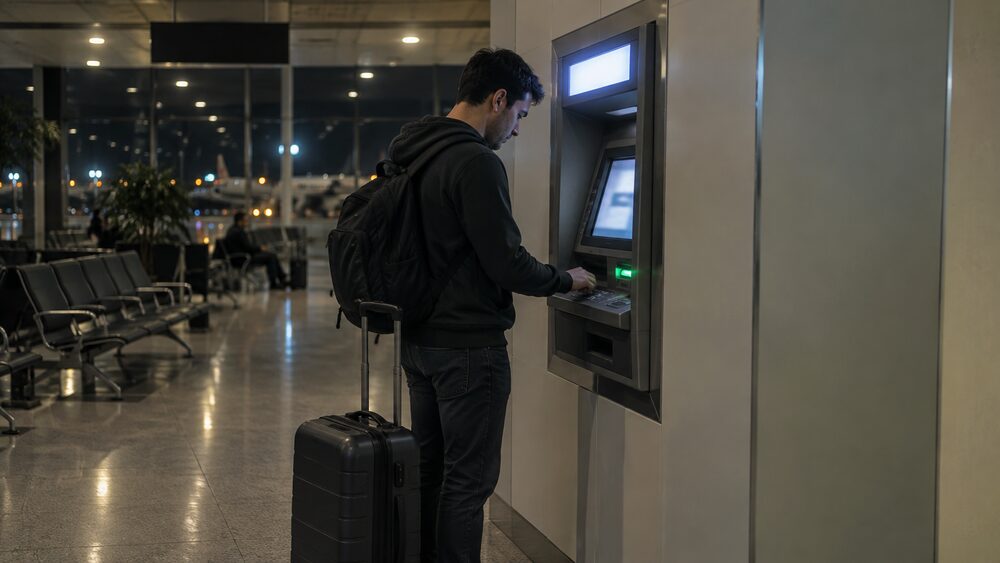
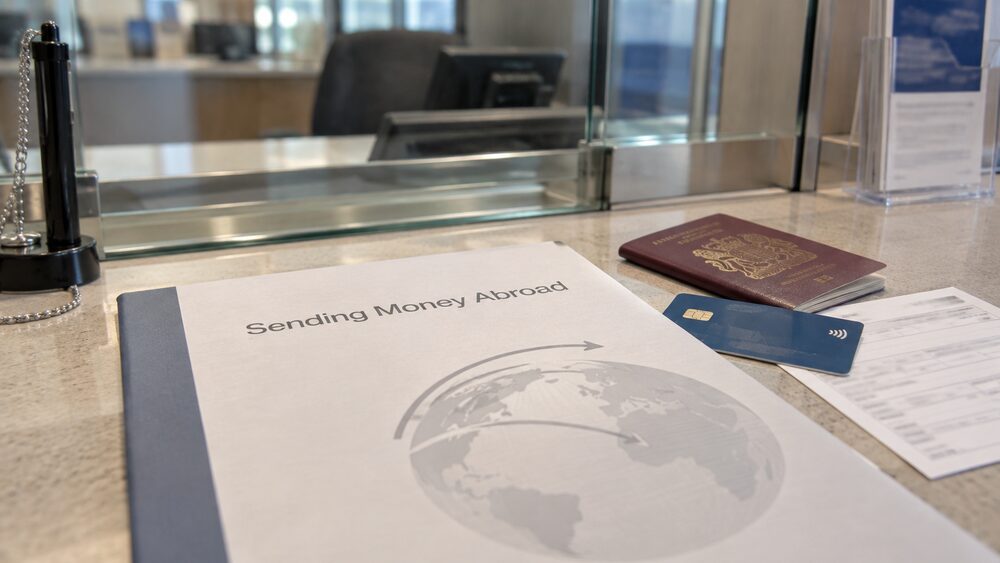
If you carry cash of £10,000 or more into or out of Great Britain, you must declare it, whatever currency it is in and whether it belongs to you or to someone else. The declaration tells the authorities how much you are carrying, where it came from and where it is going. It does not stop you taking the money: most declarations end there, and the cash travels with you. What the rule targets is cash that moves silently, because unexplained movements of large sums are one way criminal money and terrorist financing travel.
The threshold is a single figure, not one per currency. Euros, dollars, yen and pounds all count towards the same £10,000 once converted into sterling, and the conversion is done after any banking charge or commission is deducted1. A family pooling cash in different currencies, or one person carrying money for another, is still under the same duty. Below £10,000 there is nothing to declare for the cash itself, though other declarations at the border are separate and still apply.
Declaring cash and the other declarations travellers meet
The cash declaration is one of several disclosures a traveller can face, and they are easy to confuse because they use different thresholds and go to different people. The £10,000 rule is about money itself. It applies when you carry cash into or out of Great Britain, and it covers notes and coins in any currency, not just sterling. The duty falls on the person carrying the cash, which includes carrying it on behalf of someone else, so a person moving money for a relative is caught by the same rule as the owner would be.
Other declarations work differently. Under the Montreal Convention framework that governs air travel, if the value of your luggage is greater than £1,300 you need to declare the value to the airline when checking in4. That declaration goes to the airline, not to a border authority, and it is about the value of your belongings rather than money you are carrying. Separately, if you are sending gifts or any other items to Europe or elsewhere by post, you have to attach customs declaration forms to the parcel; letters, postcards and documents are exempt5. A parcel of goods and a pocket of banknotes are treated by entirely different rules, and meeting one duty does not discharge the other.
The wider policy backdrop matters too. The government's cash access policy statement sets out its policy on access to cash deposit and withdrawal services for relevant personal and business current accounts across the UK6, which is the commitment that keeps cash usable at all, in every nation, while the declaration rule polices its movement across borders. In practice, the two work together: cash remains a legal and widely supported way to pay, and the border rule is a transparency requirement on large movements rather than a ban.
Carrying cash or withdrawing it abroad: how each one works
There are two ways to end up with foreign banknotes in your pocket, and they behave differently at the border and on your bank statement. Carrying cash means taking notes out of the UK and exchanging them, or exchanging them before you go. Withdrawing abroad means taking money out of your account in foreign currency at a cash machine or, where available, at a bank outside the UK7. The declaration rule bites on the first route: physical notes crossing the border. A withdrawal from your own account abroad is an electronic movement that never becomes a cross-border cash movement in the same sense, so the £10,000 duty does not attach to it in the way it does to notes in a bag.
Both routes have their own mechanics. A basic payment account, the type banks must offer to people who might struggle to open a standard account, comes with the right to withdraw cash within the European Union in sterling or in the currency of the member state where the withdrawal is made, at counters and at cash machines8. That right matters for people who bank simply and travel within the EU: the account travels with them, and the withdrawal is made in whichever currency suits, sterling or local. For everyone else, the same practical choice exists at most machines, and the difference between the two routes is largely one of timing, cost and paperwork. Carried cash is exchanged before travel at whatever rate the exchange service offers; withdrawn cash is converted by your own bank at its own rate and fees, which are disclosed under rules covered later on this page.
The government's cash access policy statement covers deposit and withdrawal services for relevant personal and business current accounts across the UK6, so the domestic side of cash access is protected by policy, while the cross-border side is a matter for your bank's terms and the card schemes. Neither route is inherently cheaper: it depends on the fees attached to your account and card, which the next sections set out.
Fees for taking out cash in a foreign currency
The headline cost of using a UK debit card abroad is a spending or cash machine charge, typically between £1 and £3 each time you use your card, except for euros in the EU2. That charge is per use, not per trip, so a week of small purchases and machine withdrawals can add up to more than the exchange rate margin ever would. Some accounts charge nothing; some charge on every tap. The only way to know is your own account's terms, and the rules covered in the disclosure section below mean the bank has to tell you.
On top of the per-use charge sits the conversion. When a payment or withdrawal is made in a currency other than sterling, its value in sterling is determined after conversion by the Bank of England or any authorised deposit-taker, and after any banking charge or commission is deducted1. That is the same conversion principle that applies to the £10,000 threshold: the sterling figure is what the bank actually converts, net of its own costs, not a notional mid-market rate. In practice it means the rate you see on a currency chart is never the rate you get, and the gap is where part of the cost lives.
The scale of these costs is not trivial for small transactions. Spending just £5 with a card that charges fees could set you back £1.15, an additional 23%3. The smaller the transaction, the more a fixed per-use fee dominates: a £1 to £3 charge on a £5 purchase is a far bigger percentage than the same charge on a £100 one. For cash machine withdrawals the same arithmetic applies, which is why withdrawing one large sum rather than several small ones usually costs less in per-use fees, whatever the rate margin.
Credit card cash abroad: two fees can apply at once
Credit cards treat cash differently from purchases, and abroad the difference sharpens. If you withdraw cash on your credit card abroad you may be charged a foreign transaction fee on top of the usual cash advance fee9. Two charges stack: one for the withdrawal itself, one for it being in a foreign currency. You can also expect to pay a fee of around 3%, with a minimum of £3, when you take money out of an ATM with a credit card3. On a small withdrawal the £3 minimum is the figure that bites: Nationwide, for example, charges 2.5% of the amount or £3, whichever is greater, on cash machine withdrawals in sterling or foreign currency9, so a modest withdrawal can cost far more than the headline percentage suggests.
The third cost is the one people miss. With a credit card, you are charged interest on cash withdrawals straight away3. Purchases usually enjoy an interest-free period if the balance is cleared; cash does not. Interest starts from the day of the withdrawal, so even a withdrawal repaid in full at the end of the month costs something. The Financial Conduct Authority's work on the credit card market lists the fees cards can charge, including annual fees, balance transfer fees, default fees, fees for cash withdrawals and foreign transaction fees10, which is the full menu a card can draw on.
Each layer adds to the cost of the same withdrawal.
There is also a limit to plan around. first direct, for example, applies a daily cash withdrawal limit of £500, or the foreign currency equivalent3. Daily limits vary by bank, but the principle is the same: a card will not produce unlimited cash in a day, which matters if you were planning to fund a large purchase abroad with card withdrawals rather than a transfer.
Is it cheaper to use a card abroad than to take cash?
There is no single answer, because it depends entirely on the fees attached to your particular card and account. The comparison that matters is between the total cost of each route: for cash, the exchange service's rate and fees plus the border declaration if the sum is large; for cards, the per-use charge, the conversion margin and, with credit cards, the cash advance fee and immediate interest.
The figures already set out give the shape of it. A debit card charging £1 to £3 per use2 is poor value for small transactions but reasonable for a few large ones. A credit card charging around 3% with a £3 minimum plus a foreign transaction fee plus interest from day one3 is the most expensive route to cash, and the £1.15 on £5 example shows how badly fee-charging cards behave on small amounts3. An account with no foreign transaction fees and no per-use charge will usually beat exchanging physical notes, because bank conversion rates are typically closer to the market rate than tourist exchange rates, though the margin varies by provider.
For large sums, neither route is the main option. Carrying £10,000 or more triggers the declaration, and withdrawing large amounts hits daily limits such as first direct's £5003. For sums of that size, an international payment from account to account is the usual route, and the guides on how international payments work, ways to send money abroad and sending a large sum overseas cover it, including the source of funds checks that apply.
Withdrawing pounds, in the UK and outside it
The domestic case is straightforward: withdrawing cash in pounds means taking cash out of your account at a cash machine, bank or Post Office in the UK7. The government's cash access policy statement exists to keep that network working, setting out policy on access to cash deposit and withdrawal services for relevant personal and business current accounts across the UK6. That commitment covers all four nations, so the practical answer to "where can I get cash out" does not depend on which country of the UK you are in.
Outside the UK, withdrawing pounds is a different transaction. A basic payment account gives the right to withdraw cash within the European Union in sterling or in the currency of the member state where the withdrawal is made8, so sterling withdrawals in the EU are possible on that account type. On ordinary accounts, whether you can take pounds out abroad depends on the machine and your bank: most machines abroad dispense local currency, and a sterling withdrawal outside the UK is converted in the opposite direction, with the same charges and disclosure rules applying as for any foreign currency transaction. The FCA's banking conduct rules treat a use of a debit card to withdraw money in a currency other than sterling, at a machine or establishment outside the UK, as a specific regulated event that banks must handle under set standards11.
The practical point is not to assume pounds are available everywhere. In the EU, sterling withdrawals are supported on basic accounts8; elsewhere, the local currency is what machines dispense, and planning around that, rather than around finding pounds, avoids paying twice to convert the same money.
What your bank must tell you about foreign currency charges
The rules here are on your side, and they are specific. Where a party offers a currency conversion service at an ATM, at a point of sale or by the payee, it must disclose to the payer all charges as well as the exchange rate to be used12. This is the rule behind the "pay in pounds or pay in euros?" screen on foreign cash machines: the machine is offering you a conversion service, and before you accept it, it has to show you the total charges and the rate. Choosing the machine's conversion instead of your own bank's is often the more expensive option, and the disclosure rule exists so you can see that before committing.
Your bank's own charges are also regulated. The FCA's banking conduct rules identify the key foreign currency events, including using a debit card to withdraw money in a currency other than sterling outside the UK, and initiating a payment in a currency other than sterling to a payee outside the UK11. Banks must apply set standards to these transactions, which is the hook for a complaint if a charge appears that was never disclosed. The same logic runs through official payment guidance elsewhere: HMRC, for instance, tells people making overseas payments to it that payments should be made in sterling and that the bank may charge for using any other currency13, a plain acknowledgement that transacting in the wrong currency carries a cost.
Behind the scenes, some of the cost of card use abroad is set by the card schemes rather than your bank. Cross-border interchange fees are paid by acquirers to issuers every time consumers use Mastercard or Visa debit or credit cards for online transactions between the UK and the EEA14. Since the UK left the EU, Visa and Mastercard have increased these fees five-fold15, from 0.2% for consumer debit and 0.3% for consumer credit cards before the increases16. The Payment Systems Regulator estimates that in 2022 alone UK businesses paid an extra £150 to £200 million due to the fee increases17, and its final report in December 2024 confirmed the concerns and consulted on a price cap remedy. These fees sit in the wholesale layer, but they feed the costs that eventually appear in card terms, which is why the disclosure rules matter at the consumer end.
Moving your account to the EU instead of carrying money
For people moving abroad within the EU, or splitting their life between the UK and an EU country, there is a third route that avoids carrying cash altogether: moving the account. Where a consumer wishes to open a payment account with a payment service provider located outside the UK but within the EU, the UK provider must, by a date the consumer specifies, provide free of charge a list of all currently active standing orders and direct debit mandates, information about recurring incoming credit transfers and direct debits from the previous 13 months, transfer any positive balance to the EU provider, and close the UK account18. The same duties appear in the underlying regulations, which require the UK provider to give the switching information and move the balance without charge19.
This is a genuine alternative to the cash route for relocation money. Instead of declaring £10,000 or more at the border, the balance moves electronically between providers, with the paperwork of standing orders and recurring payments carried across with it. The duty is on the UK bank to do this by the date you set, free of charge, which is a stronger position than asking a bank for a favour. It applies to accounts with EU providers, so it does not cover moves to the United States, Australia or elsewhere outside the EU; for those, the guides on sending a large sum overseas and receiving a payment from abroad set out the alternatives.
The 13 months of payment history is worth noting: it exists so the new provider can see what regular payments you receive and make, which smooths the transition of salary, pension or bill payments. Nothing in the process requires you to carry notes, and nothing in the £10,000 rule interferes with it, because the money never becomes cash at a border.
Where protection stops and where to get help
The declaration rule protects the system rather than the traveller, and it stops protecting you the moment you cross the threshold without declaring. The documents behind this page do not set out the exact penalty for an undeclared cash movement, but the pattern in comparable duties is clear. Failing to notify an account provider about absences from the United Kingdom, a duty attached to accounts like Help-to-Save, carries a penalty which must not exceed £30020, under provisions that allow HMRC to impose a penalty of up to £300 for such a failure21. More starkly, it is a criminal offence to abscond from England or Wales, while bankrupt, with any item belonging to your trustee worth more than £1,00022. These are different duties from the cash declaration, but they show how the law treats money and property that moves without explanation.
On the banking side, your protections are concrete. The disclosure rules mean a charge for foreign currency use that was never shown to you is challengeable: the conversion provider must disclose all charges and the exchange rate before you commit12, and the FCA's conduct rules govern how banks handle foreign currency withdrawals and payments11. If a charge appears that breaches those rules, complain to the bank first, and if it does not put things right, the Financial Ombudsman Service can look at it. For free, impartial help with the underlying questions, MoneyHelper, the government-backed money guidance service, covers everyday banking including the fees charged for using cards abroad2, and Citizens Advice publishes guidance on credit card costs and charges9.
For the declaration itself, the practical rule is simple: if the sterling value of the cash you are carrying, in any currency, in any pockets, for any person, reaches £10,000, declare it before you travel or at the border. The wider subjects of moving money abroad, from exchange rates to payment limits, are covered elsewhere in the money transfers guide.
Sources22 cited
- Value Added Tax Regulations 1988, regulation 10(1): conversion of payments in foreign currency legislation.gov.uk, 1988-03-30
- How to open, switch or close your bank account MoneyHelper, 2026-09-25
- Spending abroad: the 4 dos and 5 don'ts Which?, 2024-07-26
- Air travel: your rights and what you must declare Consumer Council Northern Ireland, 2026
- Do I have to pay VAT, import and handling costs on online shopping? Which?, 2025-07-30
- Cash Access Policy Statement HM Government, 2023-08-18
- Current account glossary of terms Kroo, 2026-09-25
- Payment Accounts Regulations 2015, regulation 19 legislation.gov.uk, 2015
- The costs and charges of credit cards Citizens Advice Scotland, 2026-09-25
- Key features of the credit card market Financial Conduct Authority, 2015
- FCA Handbook BCOBS 7.5 Financial Conduct Authority, 2018
- Payment Services Regulations 2017, regulation 57: currency and currency conversion legislation.gov.uk, 2017
- Repay Child Benefit overpayments: overseas payments HMRC, 2026-09-26
- Market review into cross-border interchange fees Payment Systems Regulator, 2025-10
- MR22/21: market review of UK-EEA consumer cross-border interchange fees Payment Systems Regulator, 2026-09-26
- Impact of the UK-EEA cross-border interchange fee increases: working paper Payment Systems Regulator, 2023-01-11
- MR22/27: UK-EEA consumer cross-border interchange fees final report Payment Systems Regulator, 2024-12
- Payment Accounts Regulations 2015, part 3 legislation.gov.uk, 2015
- Payment Accounts Regulations 2015 (PDF) legislation.gov.uk, 2015-12-15
- Help-to-Save Regulations 2018 legislation.gov.uk, 2018-01-24
- Finance Act 2017, schedule 2, part 3 legislation.gov.uk, 2017
- Bankruptcy restrictions on an undischarged bankrupt HM Government, 2022-05-03

 MoneyHelperFree, impartial money and pensions guidance, set up by government
 Financial Ombudsman ServiceFree, independent help when a complaint about a firm is not put right
 FCA Warning ListCheck whether a firm is authorised before you deal with it
 Citizens AdviceFree advice on money, consumer and legal problems in England and Wales