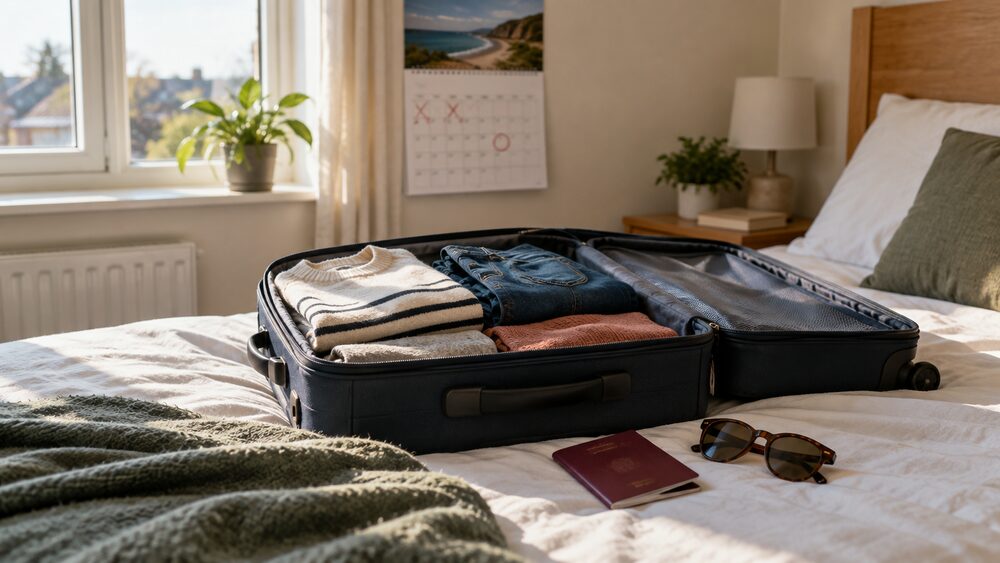
Travel insurance is not usually compulsory, although some countries may require it as a condition of entry1. What decides whether it is worth having, and when, is the gap between booking a trip and taking it. Travel bodies and insurers give the same answer: buy at the time of booking, so the money you have already paid is protected if you have to cancel2.
Travel insurance is not usually compulsory, although some countries may require it as a condition of entry1. What decides whether it is worth having, and when, is the gap between booking a trip and taking it. Travel bodies and insurers give the same answer: buy at the time of booking, so the money you have already paid is protected if you have to cancel2.
The reason is that cancellation cover only responds to events that happen after the policy starts. Buy the policy the day you book and a fall, a diagnosis or a bereavement in the months before departure can be claimed for. Buy it the week before you fly and everything that happened in between sits outside the cover. Buying at the last minute can also strip out cancellation cover altogether, and policies bought after you have left the UK are likely to be void3.
There is no single deadline, and nothing prevents you buying cover after you have booked. What changes is what the policy will pay for. This page sets out what starts when, what can happen between booking and departure, and what your options are if something has already gone wrong.
Buy travel insurance as soon as you book
The practical rule is simple. Buy appropriate insurance at the time of booking, so your money is protected if you have to cancel2. That covers the deposit immediately and the balance when you pay it, without a gap in between.
Cover usually starts as soon as the purchase is confirmed, provided you have not already left the UK5. Some providers go further and describe cover running from the moment you book your holiday to when you return6. Others start cover from the date the application is accepted, and let you apply at any time after opening the account rather than only at account opening7. A single-trip policy generally starts when you buy it, while multi-trip cover starts from a date you choose8.
Two conditions catch people out. The first is location: the vast majority of providers require you to be in the UK when you buy, and buying while already overseas invalidates the policy1. The second is awareness: cover applies provided you are not already aware of a reason to claim, so a policy bought after a cancellation reason has arisen will not respond9.
Cancellation cover: why the gap before you travel matters
Cancellation cover is the part of a travel policy that pays out before you go anywhere. It usually pays if you have to cancel or cut short your trip because of illness or the death of a close relative10. The events policies commonly list include accident, illness, family bereavement, pregnancy that was unknown when the policy was bought, jury service or witness summons, redundancy and bad weather1.
The cover is event-based, not open-ended. Cover is usually provided only if a cancellation or missed flight is caused by a specific event, and changing your mind about travelling or missing your flight may not be covered11. That is why the timing of purchase matters more than the level of cover: a generous policy bought after the triggering event still pays nothing.
There is a second timing trap in annual policies. Where an annual policy starts on the first day of a trip, the policyholder is not covered for cancellation of that holiday, because the cover has not yet started12. An annual policy bought to cover a holiday already booked needs to start before the cancellation risk begins, not on departure day.
Cancellation cover also interacts with medical disclosure. In most policies, pre-existing medical conditions are not covered unless they have been declared13. Failure to declare pre-existing conditions can void a policy, or mean a claim is not settled or not settled in full1. Where a medical condition pushes the premium up by £100 or more, the signposting rule requires the customer to be pointed towards a specialist provider who may cover the condition4.
What can happen between booking and departure
The months between booking and flying are exactly the period cancellation cover exists for, and the events that trigger it are ordinary ones. Illness, a family bereavement, redundancy, jury service and pregnancy unknown at the time of purchase are all commonly listed1. Some policies extend to cancellation if you, a travelling companion, a family member, a close business colleague, or the person you were going to stay with became ill before you leave the UK15.
Disruption cover can also respond before departure. Where the Foreign Office changes its advice to recommend against all travel or all but essential travel to the country you are due to visit after you booked, policies may cover costs from cutting the trip short, including additional accommodation and travel expenses to get home safely16. Trip disruption cover may respond where a natural catastrophe or terrorist event happens within 20km of pre-booked accommodation and within 14 days before departure17.
Some events are excluded whatever the timing. Common exclusions include incidents after drinking too much or taking drugs, theft of unattended possessions, sports and extreme sports, undeclared medical conditions, medical costs if you stay abroad after being fit to return, strikes known when you booked, rescheduled flights, and travel to destinations the Foreign Office advises against all but essential travel1.
Does travel insurance cover me if I have to cancel before the trip?
Usually yes, if the policy was in force before the event. Policies typically pay out if you have to cancel or cut short your trip because of illness or the death of a close relative10. Cancellation is also likely to be covered where a medical professional deems you unfit to travel owing to anxiety, or in circumstances such as an unexpected medical emergency that stops you travelling18.
The limits are as important as the cover. Cancellation cover is unlikely to be included if you are buying a policy just hours before your flight3. Cover is usually tied to specific events, so a change of mind is not a claim11. And where a condition was not declared, the claim can fail even if the cancellation itself was genuine13.
For package holidays, insurance is not the only route. Travel insurance will usually pay out for illness or bereavement, but the booking itself carries rights. You can cancel a package holiday at any time before you go away, though a cancellation fee is expected, the amount varying with when you cancel and set out in the booking conditions10. If you are going into hospital and need to cancel, the same fee structure applies14.
"It's down to you to buy appropriate insurance at the time of booking. This ensures that your money is protected if you have to cancel."
Is it too late to buy travel insurance a few days before I go?
It is not automatically too late, but the cover is thinner. Single-trip policies generally must be bought before your trip has started19. Most insurers require you to be in the UK at the point of purchase, and buying once you are overseas can invalidate the policy1. Policies bought after departure are likely to be void, so a claim would not be paid3.
Where a policy is bought after departure, there may also be a waiting period: cover may not begin for 24, 48 or 72 hours3. That leaves the first days of a trip uninsured, which is when medical costs abroad can be at their highest.
The practical effect is that a last-minute policy is mostly medical and baggage cover. Cancellation cover is unlikely to be included if you buy just hours before your flight3, because the cancellation risk has already passed. If the trip is still some way off, buying now rather than later still captures the remaining run-up to departure.
Should I buy travel insurance before paying the balance on a package holiday?
Buying at booking, rather than at the balance date, is the position travel bodies take. Buy appropriate insurance at the time of booking so your money is protected if you have to cancel2. The balance is usually the largest single payment, and a policy bought earlier covers the deposit and the balance together.
Package holidays carry their own legal protection, which is separate from insurance. The law requires tour operators to put in place financial security to protect money paid for package holidays sold in the UK if the operator goes out of business20. For packages that do not include a flight and are sold to UK customers, companies may provide a bond to ABTA or another approved organisation, take out financial failure insurance, or deposit money in a trust account20.
That protection covers the operator failing, not your own change of circumstances. If you fall ill, the operator is entitled to charge a cancellation fee under the booking conditions10. Insurance bought at booking is what covers that fee. Where a flight is delayed and you have booked a package holiday, you benefit from the usual rights plus additional protection for the rest of the holiday21.
What happens if something goes wrong before I have bought cover
Without a policy in force, there is no insurance claim. What remains is the protection attached to the booking and, in some cases, the law.
For package holidays, the operator must hold financial security for money paid, so a failure of the operator is covered even without travel insurance20. If an airline fails and you booked a package, contact the travel agent or tour operator who made the booking; they will help with alternative arrangements and bring you home if you are already in resort23. If you booked flights directly with an airline that has gone out of business, the position is different and depends on how you paid.
Cancelling a package holiday is possible at any time before departure, but a cancellation fee is expected and varies with how close to departure you cancel10. A travel company may also charge a fee when you cancel, and the booking conditions set out how it is calculated24. If you are going into hospital and need to cancel, the same applies14.
Where a holiday is cancelled, delayed or substantially changed, the Package Travel and Linked Travel Arrangements Regulations 2018 give the right to claim for loss of value, out-of-pocket expenses, loss of enjoyment, inconvenience or disappointment, for packages where flight and accommodation were booked at the same time through the same travel company25.
Where protection stops, and where to get help
Travel insurance is not usually compulsory, although some countries may require it as a condition of entry1. Where a policy is bought, the protection has edges. Pre-existing medical conditions are not covered unless declared and added to the policy26. Once a policy is bought, changes in health or condition must be reported to the insurer27. The same duty covers new medical conditions, changes to medication, amended travel dates, different accommodation or extra travellers; if the insurer is not informed, a claim could be rejected even if the issue seems unrelated28.
Some cover is narrower than the name suggests. Cruise cover, for example, may provide a benefit only while the policyholder is actually travelling, rather than for cancellation of the holiday29. Missed departure cover for a cruise typically requires a minimum six-hour gap between arrival at the foreign airport and embarkation at the foreign port30. About 93% of policies allow claims for missing a flight because of unexpected transport delays, which means some do not31.
If a complaint about a claim and a complaint about a mis-sale are both made, the ombudsman usually looks into the complaint about the claim first before considering any complaint about a mis-sale12. Free, impartial help is available from the Financial Ombudsman Service if a complaint cannot be resolved with the insurer, and from MoneyHelper for general guidance. Where a medical condition makes cover hard to find, the signposting rule requires a referral to a specialist provider once the extra premium reaches £100 or more4.
Sources31 cited
- Travel insurance ABTA, 2026
- I have to cancel my travel arrangements but I don't have travel insurance ABTA, 2026
- 7 common travel insurance mistakes to avoid when holidaying abroad Which?, 2024-04-27
- Signposting access to insurance BIBA, 2026-03-25
- Travel insurance frequently asked questions Virgin Money, 2026
- Club M account insurance Virgin Money, 2026
- Private Banking Worldwide Travel Insurance HSBC UK, 2026
- Travel insurance guides: children Post Office, 2026-01-06
- Chase Protect terms and conditions Chase, 2026
- I have to cancel my package holiday: what are my rights Which?, 2026-03-10
- Travel insurance Financial Ombudsman Service, 2025-03-14
- Mis-sold travel insurance Financial Ombudsman Service, 2026-09-26
- Most travel insurers say you need to declare weight loss jabs Which?, 2026-07-16
- I'm going into hospital, need to cancel my holiday, will I be charged ABTA, 2026
- Coronavirus travel FAQs esure, 2026
- Will travel insurance cover a summer holiday to Cyprus or Dubai Which?, 2025-07-04
- Travel disruption Post Office, 2026
- Travel insurance for people with mental health conditions BIBA, 2026-09-26
- Single trip travel insurance Virgin Money, 2026
- Is my money protected ABTA, 2026
- My flight's been delayed, what are my rights ABTA, 2026
- Travel company I'm planning to use insists I buy their insurance ABTA, 2026
- My airline has gone out of business, what do I do ABTA, 2026
- I have to cancel my booking, why is the travel company charging me a fee ABTA, 2026
- How to complain about your holiday booking Which?, 2026-05-19
- How to claim on your travel insurance Which?, 2026-05-21
- Insurance Scope, 2025-10-14
- 7 costly travel insurance mistakes and how to avoid them Which?, 2025-12-07
- Amin wanted an insurance refund for a cancelled cruise Financial Ombudsman Service, 2026-09-26
- Cruise insurance BIBA, 2022-10-28
- 7 questions to ask yourself when buying travel insurance Which?, 2024-06-18




 MoneyHelperFree, impartial money and pensions guidance, set up by government
 Financial Ombudsman ServiceFree, independent help when a complaint about a firm is not put right
 FSCSProtects your money if a bank, insurer or investment firm fails
 Citizens AdviceFree advice on money, consumer and legal problems in England and Wales
 GOV.UKOfficial information on tax, benefits and government services