
Buying a home in Scotland follows a different process from buying in England, Wales or Northern Ireland, and the differences start before you even view a property. In Scotland the seller must commission a Home Report, a pack containing a survey, a valuation and an energy report, and make it available to buyers up front. Most homes are advertised as "offers over" a price, which usually means paying more than the figure on the listing, and the legal work is handled by solicitors from an early stage1.
The market is also cheaper than England's on average. The average house price in Scotland was £195,000 in June 2026, up 2.3% (£4,000) from a year earlier2, and the median home sold for £185,000 in the financial year ending 2024, compared with £290,000 in England, £200,000 in Wales and £168,000 in Northern Ireland3. The average price paid by first-time buyers in Scotland is around £157,500, against £245,000 in England4.
This page walks through the Scottish process from Home Report to registration with Registers of Scotland, including new builds, the help available to first-time buyers, and the costs you will face, which include Land and Buildings Transaction Tax (LBTT) rather than the Stamp Duty charged in England and Northern Ireland.
How buying a home in Scotland differs from the rest of the UK
The Scottish process is built around information being provided early and the buyer's solicitor being involved from the start. Before a home is marketed, the seller must commission a Home Report and make it available to prospective buyers, so you can read a survey and valuation before deciding whether to view or offer5. In England and Wales there is no equivalent: buyers typically commission their own surveys after an offer is accepted.
Most existing homes in Scotland are advertised as "offers over", which means buyers usually have to offer more than the amount listed1. When you find a home you are interested in and are happy with its Home Report, you tell your solicitor, who will formally "note" your interest with the seller7. If several buyers are interested, the seller may set a closing date, and all offers are then submitted at once. The dedicated guide to closing dates in Scotland explains how that works.
Your offer itself is more than a price. It contains a brief description of the home, the date you want to collect the keys and move in, the price you want to pay, any items you want to buy from the seller, and any other conditions you have7. Once an offer is accepted, the two solicitors negotiate the missives, the series of letters that forms the legally binding contract. The guide to when an offer on a Scottish home becomes binding covers this in detail.
Some properties are sold at auction, which can sometimes be a faster way to buy, but it can also be riskier1. The tax side differs too: Scotland has its own property tax, LBTT, and a review for the Scottish Government noted that when the tax was introduced, a buyer purchasing an average-priced home in Scotland (£162,000 at the time) would either pay less tax or be exempt compared with the previous system6. The rules on repossession also differ: the law for home repossession in Scotland is different from the rest of the UK8.
House prices in Scotland have been rising steadily through 2026. The average was £188,000 in January 2026, up 1.3% (£3,000) from a year earlier11, £192,000 in April 2026, up 2.8% (£5,000)2, and £195,000 in June 2026, up 2.3% (£4,000)2. The UK House Price Index covers England, Northern Ireland, Scotland and Wales, so you can compare movements across the four nations12.
The Home Report: survey, valuation, property questionnaire and energy report
The Home Report is the document pack a seller must prepare before putting a home on the market. It is split into three parts: a single survey and valuation, a property questionnaire and an energy report5.
The single survey is carried out by a surveyor and gives an assessment of the condition of the home, together with a valuation and an accessibility section. The property questionnaire is completed by the seller and covers practical matters such as the property's council tax band, any alterations that have been made, and details of services such as heating and drainage. The energy report sets out the home's energy efficiency. Official guidance on the Open Market Shared Equity scheme confirms the basic position for every buyer: before you buy a house, the seller will give you a Home Report13.
Because the same report is shown to every prospective buyer, it removes the need for each interested party to pay for their own basic survey before offering. It also means the valuation is public, which matters when homes are advertised "offers over": the valuation in the Home Report is often the reference point buyers and their solicitors use when deciding how much to offer. The narrow guide to what a Home Report is goes further into how to read one.
The seller pays for the Home Report, not the buyer
The cost of preparing the Home Report falls on the seller, not on you as the buyer. This is one of the most practical differences between Scotland and England: in Scotland the survey information arrives free to the buyer, whereas south of the border each buyer typically pays for their own survey after their offer is accepted.
The obligation sits with whoever is selling. Guidance for shared owners confirms the same rule applies to them: before you can sell your home you need to get a Home Report, and you might be responsible for paying for it14. If you later sell a home you bought in Scotland, you will be in the seller's position and will need to budget for the report yourself.
For buyers, the practical effect is that you can read the survey, valuation and energy report for several homes before spending anything on surveys, and can rule out properties with serious defects before paying for a viewing trip, a mortgage valuation or legal work. The trade-off is that the survey is commissioned by someone with an interest in the sale proceeding, which is covered in the next section.
What the Home Report survey checks, and where it stops
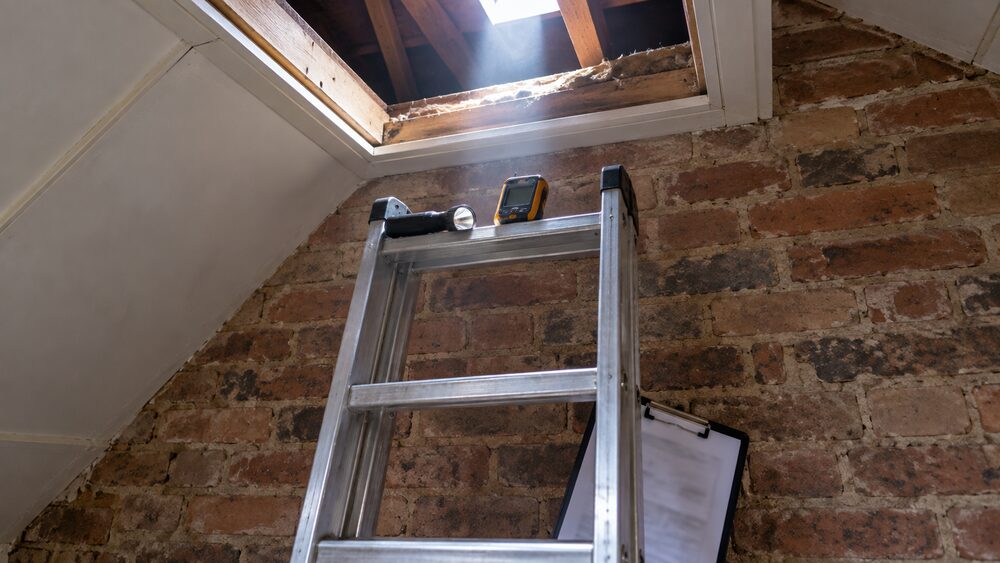
The home report includes a basic visual survey1. That means the surveyor inspects what can be seen without opening up floors, lifting carpets or moving furniture, and reports on the condition of the visible parts of the building. It is a broad assessment of the home's condition and value, not a detailed structural investigation.
Where it stops matters. A visual survey will not detect hidden defects such as rot in concealed timbers, problems under floors, or issues behind walls and ceilings. If the home you want to buy is old, of unusual construction, or the survey flags anything that needs investigation, you can instruct your own surveyor to carry out a more detailed inspection before you offer. You would pay for that yourself. The comparison of a HomeBuyer Report versus a building survey explains the levels of survey available, and the general guide to buying a house covers how the process works in England.
The valuation in the single survey also has a role beyond the sale. Your mortgage lender will want to know the property is worth what you are paying, and the Home Report valuation is normally the starting point. If the price you agree is well above the valuation, the lender's decision on how much to lend may be affected.
Reading the energy report and EPC
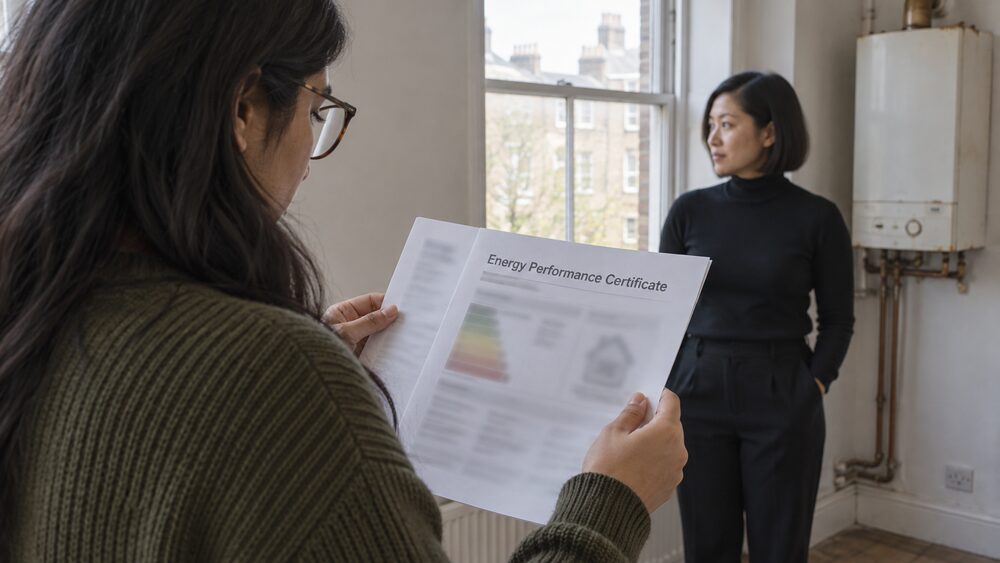
The third part of the Home Report is the energy report, which contains the property's energy performance certificate (EPC). The EPC rates the home's energy efficiency and shows its environmental impact, along with recommendations for improvements such as insulation or a more efficient heating system. For a buyer, it is a guide to likely running costs as well as to the work you might want to plan.
Energy standards are rising across the UK, which makes the EPC worth reading closely. In Wales, homes sold through the Help to Buy shared equity scheme had to meet a minimum of Energy Performance Certificate (EPC) B15, an example of how new-build standards are being used to push efficiency up. The full guide to Energy Performance Certificates explains the ratings and what they mean for running costs.
For new builds, the position is different: new build homes in Scotland do not need a home report, but the property still comes with an energy performance certificate16. A newly built home will normally score well, but the certificate also records details you will want to keep, such as the heating system and any renewable technologies installed.
Buying a new build: completed, under construction or off-plan
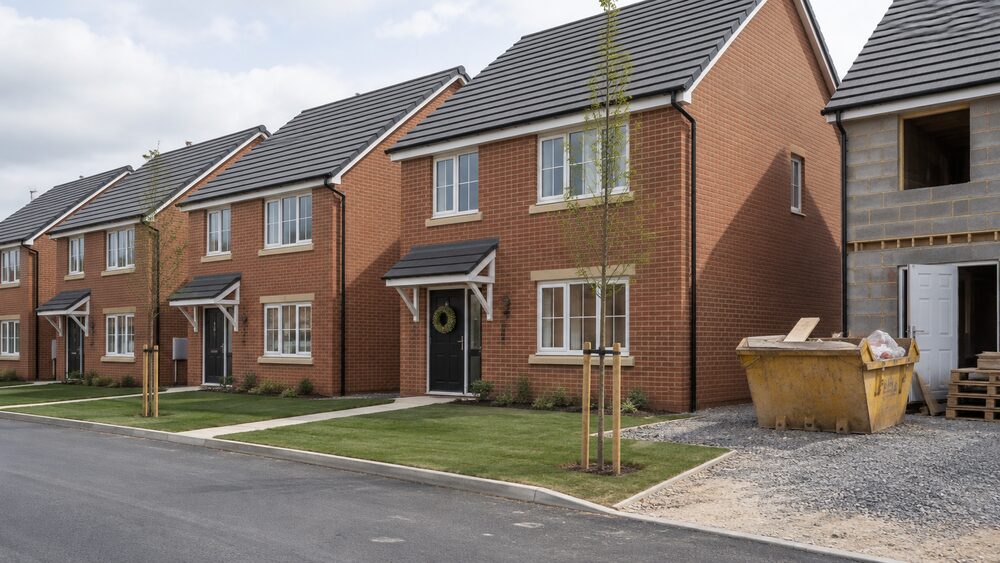
You can buy a home that is completed, currently being built, or yet to be built (off-plan)16. New build homes in Scotland are usually sold at a fixed price16, which removes the "offers over" negotiation that applies to most existing homes.
The legal flow is reversed too. Instead of you having to make an offer, the builder makes an offer to sell to you, and most builders have a standard form of offer laying out a list of conditions that you will need to agree to if you want the home16. Official Scottish guidance is direct about the next step:
mygov.scot, on buying a newly built home16
The reason is that once you accept the builder's offer it becomes a legally binding contract16. That is a firmer commitment than noting interest on an existing home, where the binding point comes later in the missives. If you are buying off-plan, you are committing to a home that may not yet exist, so the builder's timescales, specifications and warranty terms all matter. The guides to buying a new build home, new home warranties and snagging a new build cover what to check.
Two Scottish shared equity schemes exist specifically for new builds. If you want to buy a brand new house that's being built, the New Supply Shared Equity scheme applies, under which the buyer takes a 60-80% share of the cost17. The same guidance notes that if you want to buy an existing home that's on sale, the Open Market Shared Equity scheme is the relevant route, with a buyer share of 60-90% of the cost17. The comparison of OMSE and NSSE sets out the differences.
Help for first-time buyers in Scotland
Scotland runs its own buyer support schemes, separate from anything in England. The First Homes Fund is a Scottish Government scheme that helps first-time buyers in Scotland buy a home18. You can get up to £10,000 towards the cost of a property worth up to £300,00018, and the fund is open to all first-time buyers in Scotland19. To be eligible, you must be buying the property as your main and only home in Scotland20.
The money comes from the Scottish Government, which means it will own a share of your home21. The fund cannot be used together with other schemes that help you buy a home, although a Help to Buy ISA or Lifetime ISA can be used for the deposit19. The full guide to the First Home Fund covers how it works. An evaluation found the average price of a property purchased through the fund was £147,600, higher than the average first-time buyer price across Scotland of £124,000 at that time22.
The Open Market Shared Equity scheme helps buyers of existing homes. When you are ready to buy, you will need a solicitor to act on your behalf, and the Scottish Government has its own solicitor who will handle work involving its equity share23. Although you will own the property outright, the interests of the Scottish Government will be secured by a standard security on your property24. If you ever choose to sell the home, the Scottish Government will get a share of the money13. The guides to shared equity schemes in Scotland and increasing your share in an OMSE home explain the mechanics.
Help to Buy (Scotland), for new builds, works on similar principles: you own at least 85% of your home's equity when you first buy it using the scheme25. A Scottish Government consultation describes the wider LIFT schemes, which support first time buyers on lower incomes as well as a limited range of other specified priority groups26.
Historically, Scotland has used guarantee schemes too. Between October 2013 and June 2017 there were 14,284 Help to Buy mortgage guarantee completions in Scotland, 14% of the UK total, with a mean property value of £125,584 and 11,012 of those completions by first-time buyers27. The current mortgage guarantee scheme page covers how guarantees work today.
Registers of Scotland: where your ownership becomes official
Ownership of land and property in Scotland is recorded in the Land Register, which is maintained by Registers of Scotland. Official guidance describes it plainly:
"This is a register of who owns land and property in Scotland."
mygov.scot, on settlement10
Your purchase is not finished when you get the keys. After settlement, your solicitor submits the deed to Registers of Scotland, which registers your title and records you as the owner. Until that happens, the official record still shows the seller. The general guide to land registration covers how the registers work across the three UK jurisdictions, and the narrow answer on who keeps the title deeds in Scotland deals with the documents themselves.
Registers of Scotland also has a role in the tax system. It carries out functions delegated by Revenue Scotland under section 4 of the RSTPA 201428, which is why some payments connected with your purchase go to Registers of Scotland rather than to Revenue Scotland. You can search the Land Register to look up who owns a property, which is useful if you are trying to establish boundaries, rights of access or who is responsible for common areas. If your home has shared parts looked after by a property factor, all property factors in Scotland must be registered on the Scottish Property Factor Register29.
Registration fees and other costs of buying
The costs of buying in Scotland fall into three broad groups: the tax, the legal fees and outlays, and the registration fees. The tax is Land and Buildings Transaction Tax, which replaced Stamp Duty in Scotland. Guidance for the Scottish Government's LBTT review noted that a buyer purchasing an average-priced home in Scotland (£162,000 at the time the tax was introduced) would either pay less tax or be exempt6. The full guide to LBTT covers the rates, reliefs and how to submit a return.
Outlays are costs in addition to solicitor fees and your contribution to the cost of the home. They include fees and taxes payable to the government, like fees due to the Registers of Scotland, search fees, and Land and Buildings Transaction Tax10. General guidance on buying a home lists the one-off costs you may need to pay: a solicitor, an independent surveyor, a mortgage arrangement fee, a registration fee and the property tax30.
One practical rule: registration payments to Registers of Scotland must be paid separately to Registers of Scotland and not to Revenue Scotland30. Your solicitor normally handles both the LBTT return and the registration, but the two payments go to different bodies.
| Cost | What it is | Who it goes to |
|---|---|---|
| LBTT | Property tax on the purchase | Revenue Scotland30 |
| Registration fee | Recording your title in the Land Register | Registers of Scotland30 |
| Outlays | Search fees and other government charges | Various, via your solicitor10 |
| Solicitor's fee | Legal work, missives, settlement | Your solicitor30 |
| Survey costs | Only if you commission your own extra survey | Your surveyor30 |
For most buyers the mortgage deposit remains the largest single cost. The guide to how much deposit you need and the full breakdown of the costs of buying a house cover this in more detail.
Protection and where to get help
The protections around home buying in Scotland are mostly the same in substance as elsewhere in the UK, but the process points differ. Because the Home Report is provided up front, you have survey information before committing money, and because missives are negotiated by solicitors on both sides, the binding contract is formed deliberately rather than at a fixed "exchange" event as in England. The law for home repossession in Scotland is different from the rest of the UK8, so if you fall behind on your mortgage the procedures and the help available are Scottish ones.
If you are struggling to keep your home, Scotland has schemes designed to prevent repossession. Under the Mortgage to Rent scheme, your home is valued at its current market value by a surveyor appointed by the Scottish Government, and the values are not negotiable31. The Home Owners' Support Fund is run by the Scottish Government32, and under its schemes the survey report is the property of the Scottish Government and has no purpose outside the scheme33. Guidance on the fund's property thresholds sets out which homes qualify34.
Free help is available. You can call Shelter Scotland's free helpline for housing advice35, and the Scottish Welfare Fund page signposts more help with money problems35. MoneyHelper offers free, impartial guidance, including on dividing the family home and mortgage during divorce or dissolution, where a home bought after you married or became civil partners, or bought before the marriage specifically for use as a family home, is considered matrimonial property36. If a death is involved, the grant of representation needed to deal with a deceased person's estate is called a grant of confirmation in Scotland37.
For buyers in shared equity homes, the Scottish Government publishes post-sale information covering what happens when you want to change your arrangements: the administrative agent will charge you an appropriate administrative fee for arranging new documentation, and you will also pay the costs of Scottish Ministers' solicitors, any registration costs, any lender fee and your own solicitor's costs and outlays38. If you are buying with someone else, the guide to buying a home jointly and the comparison of joint tenants or tenants in common explain how ownership can be structured.
Sources38 cited
- Finding properties to buy in Scotland Shelter Scotland, July 2024
- Private rent and house prices, UK: June 2026 ONS, June 2026
- Housing purchase affordability, Great Britain: 2024 ONS, 2024
- Review of Land and Buildings Transaction Tax, page 7 Scottish Government, March 2026
- The Home Report mygov.scot, August 2020
- Review of Land and Buildings Transaction Tax, page 2 Scottish Government, March 2026
- Making an offer on a home in Scotland mygov.scot, August 2020
- Repossession of your home GOV.UK, September 2026
- Conveyancing mygov.scot, 2020-08-12
- Settlement when buying a home in Scotland mygov.scot, August 2020
- Private rent and house prices, UK: March 2026 ONS, March 2026
- UK House Price Index for March 2026 HM Land Registry, May 2026
- Open Market Shared Equity scheme: how it works mygov.scot, March 2026
- Shared ownership: after buying mygov.scot, May 2018
- Help to Buy Wales shared equity loan scheme, April 2023 to March 2024 Welsh Government, June 2024
- Buying a newly built home in Scotland mygov.scot, August 2020
- Help to buy a home in Scotland mygov.scot, June 2026
- First Homes Fund policy Scottish Government, September 2026
- First Homes Fund: before you apply mygov.scot, August 2026
- First Homes Fund: how to apply, eligibility Scottish Government, June 2026
- First Homes Fund mygov.scot, August 2026
- First Home Fund evaluation Scottish Government, February 2021
- Open Market Shared Equity scheme: how to apply mygov.scot, March 2026
- Open Market Shared Equity scheme buyer information Scottish Government, September 2025
- Help to Buy (Scotland): after you buy mygov.scot, April 2022
- Consultation on proposed LBTT first-time buyers relief Scottish Government, February 2018
- Help to Buy: Mortgage Guarantee Scheme official statistics HM Treasury, September 2017
- LBTT legislation and guidance Revenue Scotland, September 2026
- Property factors: responsibilities mygov.scot, February 2026
- How to pay LBTT Revenue Scotland, September 2024
- Mortgage to Rent scheme guidance Scottish Government, June 2010
- Home Owners' Support Fund information booklet Scottish Government, April 2015
- Home Owners' Support Fund property thresholds guidance Scottish Government, October 2024
- Home Owners' Support Fund: if you're separated from your partner mygov.scot, July 2026
- Scottish Welfare Fund: more help with money problems mygov.scot, June 2025
- Dividing the family home and mortgage during divorce or dissolution MoneyHelper, September 2026
- IHT400 notes HMRC, 2026
- Shared equity post-sale information for buyers Scottish Government, December 2017

 MoneyHelperFree, impartial money and pensions guidance, set up by government
 Citizens AdviceFree advice on money, consumer and legal problems in England and Wales
 ShelterFree housing advice from a charity
 GOV.UKOfficial information on tax, benefits and government services
 Financial Ombudsman ServiceFree, independent help when a complaint about a firm is not put right