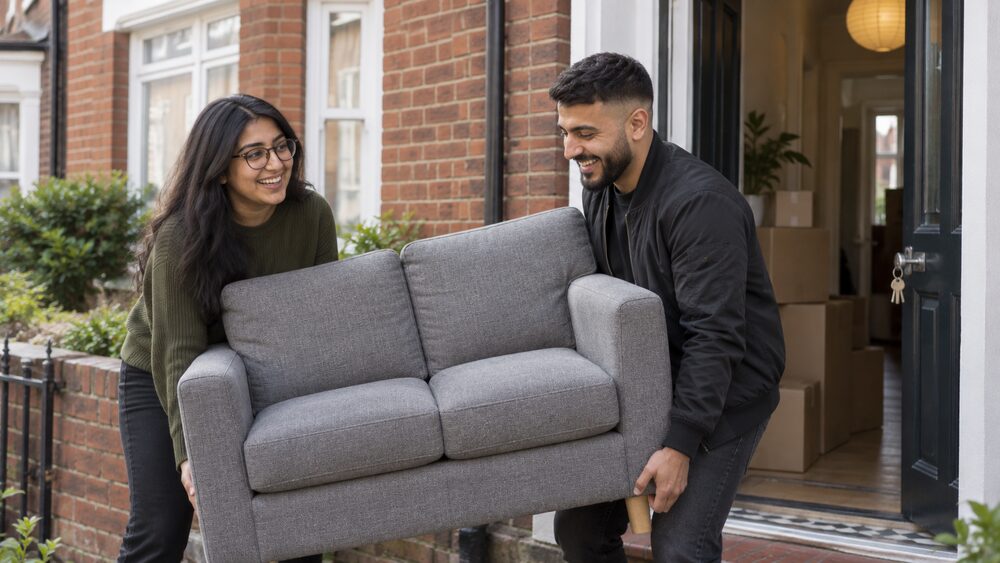
Buying a home with another person, whether a partner, a friend or a relative, is one of the biggest financial commitments you can make together. In England and Wales you can own a home with up to 3 other people, and it is possible for up to four people to be legal co-owners of a property even if they are not related1. Most joint mortgages are shared by two people, but some lenders will allow up to four borrowers2.
What makes buying together different from buying alone is that the ownership, the mortgage and the money are all shared, and each of those can be split in different ways. You can own a property equally as joint tenants, or in separate shares as tenants in common, which is the arrangement typically used by friends or relatives buying together2. You can also get help from family without them living in the property, through a gifted deposit, a guarantor arrangement or an equity loan scheme.
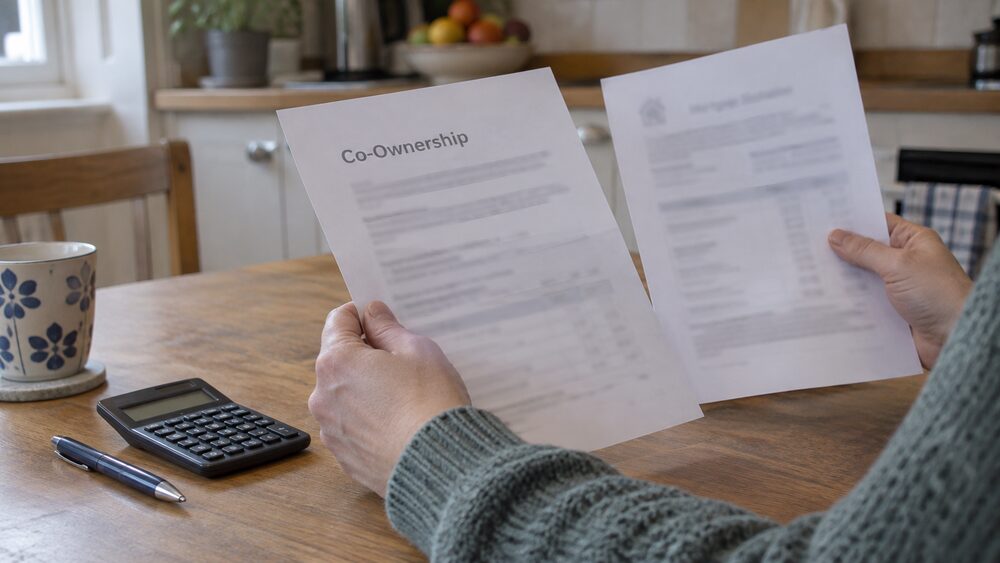
The decisions you make at the start, especially how you hold the property and whether you put anything in writing, determine what happens if things go wrong later. All joint owners must agree before the property can be sold, and if you cannot agree, the courts can order a sale2. This page explains the options, the costs and the risks, so you know what to sort out before you commit.
Who you can buy a home with: a partner, friends or relatives
There is no rule that says a home has to be bought by a couple. Joint ownership works for married couples, civil partners, unmarried partners, friends, siblings, parents and children, or any mix of them. In England and Wales, you can own a home with up to 3 other people1, and independent guidance confirms it is possible for up to four people to be legal co-owners even if they are not related2.
Who you buy with matters for two reasons. First, some schemes and tax reliefs define "family" or "partner" in their own way. For example, for the purposes of Right to Buy, partners who are not civil partners, in-laws and cousins do not count as family members7. For benefits purposes, a partner is generally someone you live with as a couple, whether married, in a civil partnership or not8. Second, who you buy with affects how the property is held. Couples often buy as joint tenants, which means you both own the property equally and there are no separate, identifiable shares9. Friends or relatives buying together typically use a tenancy in common, where each person owns a distinct share that can reflect what they put in2.
Buying with help from family is now common rather than unusual. Among first-time buyers in England in 2024/25, 31% reported receiving help from family or friends, either exclusively or in addition to other sources, towards their deposit10. That help can take several forms, from a cash gift towards the deposit to a parent being named on the mortgage or the deeds, and each has different consequences for tax, ownership and what happens if you later separate. The sections below cover each arrangement in turn.
How a joint mortgage works when you buy with others
If you are buying a property with someone else, you will need a joint mortgage11. A joint mortgage is one loan taken out in the names of all the buyers, and the key feature is that each borrower is responsible for the whole mortgage, not just "their share" of it. If one of you stops contributing, the lender can pursue the others for the full monthly payment, and ultimately for the whole debt.
Lenders assess a joint application on the combined circumstances of everyone named on it. Joint mortgages are usually shared by two people, but some lenders will allow up to four borrowers to share a mortgage2. All applicants' incomes, outgoings, debts and credit histories are taken into account, which can work in your favour if two or more incomes are being counted, but also means one applicant's poor credit history or heavy debts can weaken the whole application.
That financial link is the single most under-appreciated part of buying together. It does not end when the relationship or the friendship does: it ends when the name comes off the mortgage, which normally requires the lender's agreement and often a formal transfer of the property. Guidance on divorce and dissolution notes that the person whose name is taken off the mortgage should be able to borrow more to buy themselves a home than if their name was still on their ex-partner's mortgage12, which shows how much a lingering joint mortgage can hold someone back.
Before you commit, independent guidance also recommends checking the legal difference between buying with a joint tenancy and a tenancy in common11, because the mortgage and the ownership are two separate things that can be structured differently. The dedicated comparisons of joint tenants or tenants in common and declarations of trust cover those choices in detail.
Up to three friends or relatives you plan to live with
Friends buying a home together is a small but real part of the market. An evaluation of Scotland's First Home Fund found that 1.5% of its buyers had previously been living with friends where they were not renting13. The law allows it: in England and Wales you can own a home with up to 3 other people1, and some lenders will allow up to four borrowers on one mortgage2. In Northern Ireland, the House Sales Scheme similarly allows a maximum of four buyers to apply to jointly buy a property, provided at least one buyer is the legal tenant14.
If you are buying with friends and hoping to use a first-time buyer relief or scheme, check the rules carefully, because they usually test every purchaser, not just one of you:
- For the Stamp Duty first-time buyer relief in England and Northern Ireland, the purchaser, or if there is more than one, each of the purchasers, must be a first-time buyer who intends to occupy the home as their only or main residence15.
- Scotland's equivalent relief defines a first-time buyer as a person who does not own and has never owned a dwelling in Scotland, the rest of the UK or anywhere else in the world16.
- Scotland's First Home Fund, where it applies, requires that if you are buying with someone else, at least one of you must be a first-time buyer, and if one of you currently owns a property it must be sold before the purchase completes17.
So a group of friends where one member has previously owned a flat could lose first-time buyer relief on the whole purchase in England, while some schemes, like the First Home Fund, only need one qualifying first-time buyer. The rules on who counts as a first-time buyer for property tax are worth reading before you apply.
Friends buying together should also think about what happens to the money as well as the property. A tenancy in common lets each person hold a distinct share, and a declaration of trust can record who paid what deposit, how the mortgage is split and how proceeds are divided on a sale2. Without something in writing, contributions that felt obvious at the time can become disputed later. The comparison of co-owning versus a standard mortgage sets out the practical differences.
Family and friends who help you buy without living there
Not everyone who helps you buy moves in with you. The most common arrangement is money towards the deposit: as noted above, 31% of first-time buyers in England in 2024/25 reported help from family or friends10. A gift is usually the simplest route, and the page on gifted deposits explains what evidence lenders want and how a gift differs from a loan.
If the helper is instead added to the ownership or the mortgage, tax consequences can follow. In Scotland, the Additional Dwelling Supplement, the extra charge on additional dwellings, will not apply where the helper does not jointly own the dwelling and the buyer owns one dwelling18. In other words, a parent helping with the deposit without going on the deeds avoids the surcharge, while a parent taking joint ownership of what is their second property may trigger it. The details are on the page about the Additional Dwelling Supplement.
Lifetime ISA savings bring their own restriction on help from relatives. You cannot use your Lifetime ISA savings to buy a home if you are getting a private mortgage from a relative, such as a parent, grandparent, child, grandchild or sibling, from someone married to or in a civil partnership with your relative, from your spouse or civil partner, or from a relative of your spouse or civil partner6. Legislation puts the same point in formal terms: a first-time residential purchase will not qualify if it is funded by a loan from a person connected to the account investor19. A normal mortgage from a regulated lender is fine; a private family loan is not.
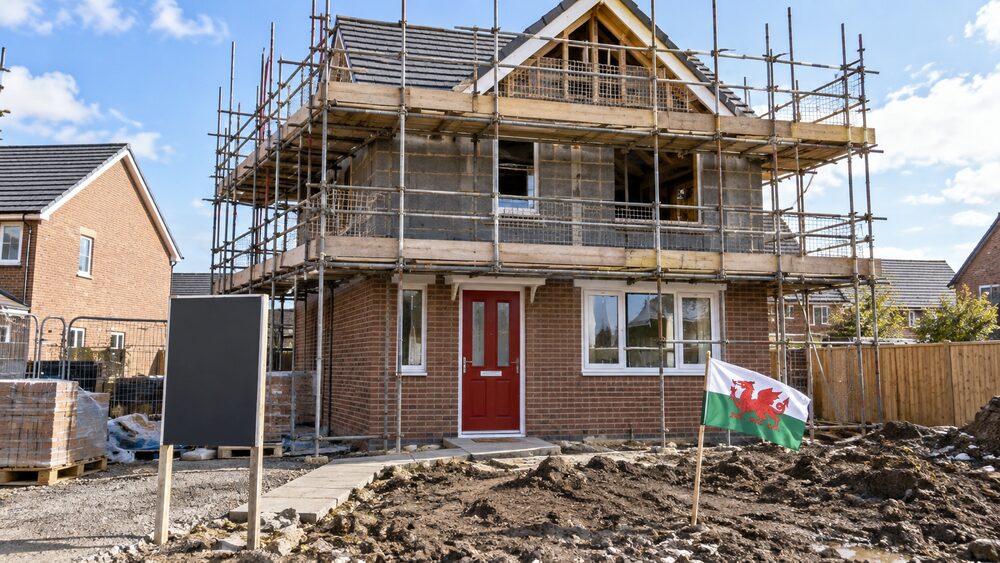
Government schemes can also stand in for family help. Help to Buy Wales support is available to all home buyers, not just first-time buyers, who wish to purchase a new home but may be constrained in doing so20, and to access a Help to Buy Wales loan customers must instruct a conveyancer from the scheme's approved list21. The pages on Help to Buy Wales and on family help buying a home cover these routes, and the comparison of a gifted deposit versus a joint borrower mortgage sets out the trade-offs.
Costs of buying together: average moving cost £13,018
The headline figure for 2026 is that the average cost of moving is £13,018, based on buying and selling an averagely priced house in the UK of £292,0004. That total splits into roughly £7,519 for the buying side and £4,910 for the selling side4. If you are a first-time buyer buying together, you will only face the buying costs, and research from Reallymoving put the average cost of buying a first home, excluding the deposit, at £2,31522.
The main components of the £13,018 figure are:
| Cost | Amount |
|---|---|
| Estate agents (selling) | £4,150 |
| Conveyancing | £1,050 |
| Mortgage fees | £1,000 |
| Building survey | £650 |
| Removals | £550 |
| Mortgage valuation fees | £150 |
| Homebuyers protection insurance | £78 |
| General moving costs total | £589.50 |
All figures are for buying and selling an averagely priced property in 20264. Separate guidance puts average conveyancing fees when buying a house at around £500 to £1,150 plus disbursements23, and the average cost of buying a house in 2026 at £8,108 for an averagely priced property23.
Other estimates of moving costs run higher. Research from Reallymoving found the average cost of moving house rose by 27% in the past year, from £14,045 to £17,83124, and separate reporting of the same research put the typical cost of moving at almost £18,00022. The difference between the £13,018 and £17,831 figures comes from what each estimate includes and the property price it assumes, so treat both as broad indicators rather than a quote for your own purchase.
For co-buyers, two points follow. First, some costs are fixed regardless of how many of you there are: there is one conveyancing file, one survey and one set of removals, so buying together can reduce the cost per person compared with buying alone. Second, the deposit is the biggest variable. Lenders will want a deposit from the group, and how the group documents who contributed what, and whether any part was gifted by family, affects both the mortgage application and who owns what share afterwards. The full breakdown is on the page about the costs of buying a house.
Shared ownership as another way to buy with help
Shared ownership is a different way of buying with help: instead of sharing the home with other people, you share it with a housing association. It gives first-time buyers and people who do not currently own a home the opportunity to purchase a share in a property25. Buyers choose a share, officially reported as between 10% and 75% of the home, and pay rent on the remainder5. In Scotland, the equivalent scheme lets you buy a 25%, 50% or 75% share if your income is low26.
The deposit requirement is lower because it applies only to your share: shared ownership homes can be purchased with a deposit of at least 5% of your share of the property, with a mortgage to cover the rest27. Someone buying a 25% share therefore needs a deposit based on that 25%, not on the whole property value.
Shared ownership can also be combined with other circumstances:
- If you live in a shared ownership property, you could get Support for Mortgage Interest alongside help with your rent, if you qualify for certain benefits28.
- Right to Shared Ownership allows eligible social housing tenants to purchase their social or affordable rented home by buying a percentage of the property and paying a reduced rent on the rest to a housing association27.
For a group of friends or relatives, shared ownership does not remove the need to agree between yourselves: you can still hold your share as joint tenants or tenants in common, and the same rules about all owners agreeing to a sale apply. The pages on shared ownership in England, staircasing and selling a shared ownership home cover the scheme in detail, and the comparison of shared ownership versus shared equity explains how the models differ.
When co-owners fall out or one wants to sell
Disagreements between co-owners are the main risk of buying together, and the rules are unforgiving if nothing was written down. As with any joint ownership, you must all agree if you want to sell the property2. If joint owners cannot agree a sale, the courts can order a sale3. That means one owner who wants out cannot simply list the property: either the others agree, or the matter goes to court.
For separating couples, official guidance sets out the main options: sell the home and both move out; one partner buys the other out; keep the home without changing ownership; or transfer part of the property's value from one partner to the other12. If you are married or in a civil partnership and you think your ex-partner will try to sell or give away property or things you own together, you can apply to the court for an injunction to stop them30, and if your partner owns the property you may need to apply for home rights to help stop a sale30.
Money problems change the picture again. If the money from a sale is not likely to pay off your mortgage, you normally need your lender's permission to sell your home, and you may need the lender's agreement if you have negative equity29. Missed payments are the most serious risk of all: if you don't make payments on a mortgage supported by a guarantee scheme, you could lose your home31. And debt can follow one owner beyond the grave: if you jointly owned your home and there is not enough money elsewhere in the deceased person's estate to pay off their debts, the home may have to be sold32.
A further warning applies where an older co-owner takes out equity release in one name only: unless the mortgage can be repaid in full, the property will have to be sold and the partner must find somewhere else to live33. Equity release providers will also want to make sure a friend or tenant living in the home has no rights to continue living there when the borrower dies or moves out33.
If you are selling as a group, the process itself has its own hazards. A buyer may try to reduce their offer late in the process, which is legal but can risk the sale altogether34, and sellers may only provisionally accept an offer from a buyer who has not yet sold their own home34. The pages on making an offer and exchange and completion explain the stages at which the deal becomes binding.
Where to get help before you buy together
The right help depends on what stage you are at. Before you buy, a solicitor or conveyancer is the person to advise on how you hold the property and to draw up a declaration of trust or cohabitation agreement. If you are using a scheme, the scheme's own rules may dictate who you can instruct: to access a Help to Buy Wales loan, customers must instruct a conveyancer who is on the scheme's approved list21.
If money is the problem, free debt advice is available. Help to Buy Wales works closely with the debt advice agency PayPlan, but you can use any free debt advice agency35. National Debtline and Business Debtline both publish guidance on mortgage arrears, including the rights of an entitled resident: if you are the husband, wife, civil partner or partner of the mortgage borrower, you can ask the court not to grant the lender the right to sell your home36. If you claim certain benefits, Support for Mortgage Interest can help with interest payments, and if you leave your home to a partner who lives with you, they will usually be able to inherit the loan with your home and will not need to repay immediately38.
For separating couples, MoneyHelper, the government-backed money guidance service, sets out how to divide the family home and mortgage during divorce or dissolution12, and the charity Gingerbread publishes step-by-step guidance on separating, including protecting your rights in the home30. Housing charities such as Shelter Cymru publish advice on joint mortgages and on selling voluntarily when the sale will not clear the mortgage11.
Finally, if you are saving towards a joint purchase, note that the Lifetime ISA landscape may change: the government has said it will consult on introducing a new, first-time-buyer-only product that would provide the bonus when a person uses it to buy a house, removing the need for a withdrawal charge39. Until any change, the current rules on the £450,000 price cap and on buying with a relative's private mortgage apply6.
Sources39 cited
- Buying a home GOV.UK
- Joint tenants vs tenants in common Which?, 2026-06-08
- Why protect your right to return Shelter Cymru, 2026-09-18
- Cost of moving calculator HomeOwners Alliance, 2026
- Evaluation of the Help to Buy scheme: evaluation findings report GOV.UK, 2026-09-16
- Withdrawing money from your Lifetime ISA GOV.UK, 2026-09-28
- Your right to buy your home: a guide GOV.UK, 2026-04-08
- Funeral Support Payment eligibility Social Security Scotland, 2026-09-26
- Home buying and selling jargon HomeOwners Alliance, 2026-07-31
- Home ownership in England House of Lords Library, 2024
- Joint mortgages Shelter Cymru, 2026-08-28
- Dividing the family home and mortgage during divorce or dissolution MoneyHelper, 2026-09-25
- First Home Fund evaluation Scottish Government, 2021-02-24
- House Sales Scheme nidirect, 2026-02-18
- Stamp Duty first-time buyer relief: Schedule 6ZA Legislation.gov.uk, 2018-03-15
- LBTT first-time buyer relief Revenue Scotland, 2025-11-19
- First Homes Fund: before you apply mygov.scot, 2026-08-31
- Additional Dwelling Supplement: rules for particular transactions and buyers Revenue Scotland, 2026-09-26
- Lifetime ISA regulations 2024 Legislation.gov.uk, 2024-04-06
- Help to Buy Wales shared equity loan scheme: quality report Welsh Government, 2024-06-04
- Help to Buy Wales trained conveyancers Welsh Government, 2025-03-18
- 7 mistakes to avoid with your mortgage application Which?, 2026-06-05
- Cost of buying house calculator HomeOwners Alliance, 2026-06-11
- The cost of selling a house Which?, 2025
- Shared ownership guidance UK Parliament, 2025
- Help to buy a home mygov.scot, 2026-06-24
- Shared ownership National Housing Federation, 2026-09-26
- Universal Credit payments: housing nidirect, 2026-09-01
- Selling your home voluntarily Shelter Cymru, 2026-08
- Steps when separating Gingerbread, 2025-10-17
- Help to Buy mortgage guarantee scheme nidirect, 2025-08-26
- Debt when someone dies nidirect, 2026-06-26
- Equity release: impact on other people Equity Release Council, 2026-09-26
- Making an offer on a house or flat Which?, 2026-05-29
- Cost of living help in Wales Welsh Government, 2026
- Mortgage arrears National Debtline, 2026-09-25
- Mortgage arrears Business Debtline, 2026-09-26
- Repaying your mortgage: interest on low income nidirect, 2026-09-01
- Tax-free savings newsletter 19 GOV.UK, 2025-11




 MoneyHelperFree, impartial money and pensions guidance, set up by government
 Citizens AdviceFree advice on money, consumer and legal problems in England and Wales
 ShelterFree housing advice from a charity
 GOV.UKOfficial information on tax, benefits and government services
 Financial Ombudsman ServiceFree, independent help when a complaint about a firm is not put right