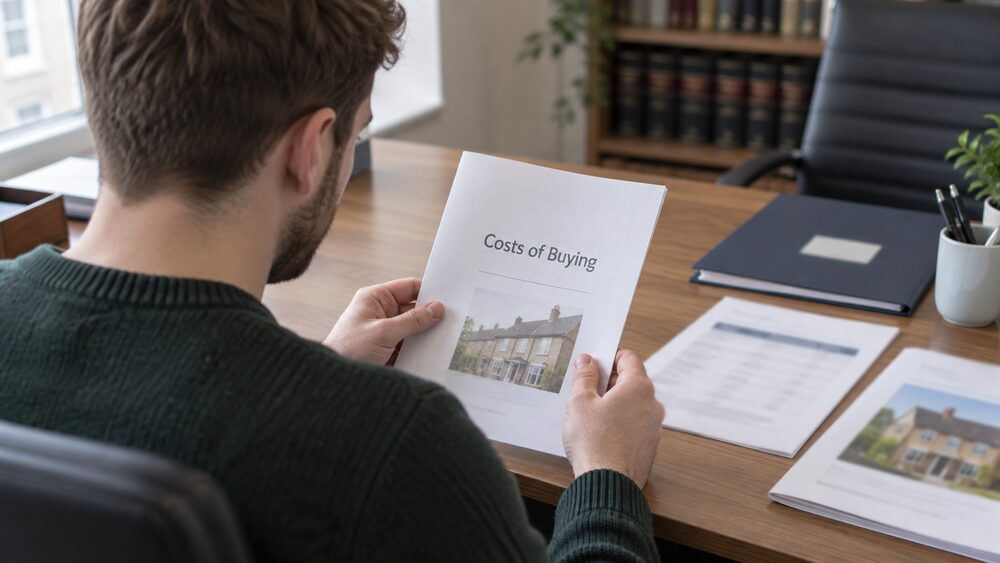
Buying a home costs more than the price on the advert. In 2026, the average cost of buying a house is £8,108, based on an averagely priced property1. That figure covers the buying side of the transaction only: the deposit is separate, and so are the general costs of physically moving yourself and your belongings. If you are selling one home and buying another at the same time, the average combined cost of moving is £13,018, based on buying and selling an averagely priced UK house of £292,000, split between £7,519 to buy and £4,910 to sell2.
The biggest single item for most buyers is the deposit. You will usually need to pay a deposit of at least five per cent of the house price to the seller3. On top of that come the one-off purchase costs: stamp duty, conveyancing, a mortgage valuation, a survey and the mortgage's own arrangement fee. Then there are the costs that only start once you own the place: mortgage payments, rates, repairs and service charges4.
This page sets out each of those costs in turn: what it is, roughly what it costs, how the amount is worked out and when it has to be paid. The tax rules differ between England, Northern Ireland, Scotland and Wales, so the page shows where each one applies.
The main costs when you buy a house
The costs of buying fall into two groups: the one-off costs of the transaction itself, and the ongoing costs of living in the home once it is yours. Official guidance is blunt about both: buying a home is a major financial commitment involving immediate costs such as legal fees and Stamp Duty Land Tax, as well as new and ongoing costs such as paying the mortgage, rates, repairs and service charges4.
The one-off costs stack up like this on an averagely priced purchase:
| Cost | Typical amount |
|---|---|
| Deposit | at least 5% of the house price3 |
| Stamp duty | £4,600 on a £292,000 house1 |
| Conveyancing | £1,0502 |
| Mortgage fees | £1,0002 |
| Mortgage valuation | £1502 |
| Building survey | £6502 |
| Homebuyers protection insurance | £782 |
Those figures are averages for an averagely priced property, and several of them move with the price of the house. Stamp duty is charged in slices of the price, so a more expensive home pays a higher rate on the upper slices. Conveyancing legal fees are usually linked to the value of the property1. The deposit is a straight percentage of the price, so on a £292,000 house a 5% deposit would be £14,600 before anything else is paid.
The averages also hide the spread. Conveyancing legal fees for a purchase run between £300 and £1,500 depending on the property1, and mortgage arrangement fees range from £500 to £1,5001. Two buyers on the same street can therefore face quite different bills for the same legal and lending work.
If you are buying through a shared equity scheme, the same categories apply but scaled to your share. Under Scotland's Open Market Shared Equity scheme you pay for the biggest share of the home's cost, usually between 60% and 90%, and you also pay the other costs of purchase such as legal costs, registration fees and any stamp duty6. The closed First Home Fund worked similarly: buyers paid their share of the property's price plus legal costs to their solicitor and registration fees8.
Stamp Duty Land Tax is charged in slices of the price
Stamp Duty Land Tax (SDLT) is the property tax on buying a home in England and Northern Ireland9. HMRC charges it on property transactions where the property value is more than the set SDLT thresholds10. It is not a flat percentage of the whole price: SDLT is charged on a "slice" basis, meaning rates are graduated so that more expensive properties face progressively higher rates on the upper portions of their price11. A buyer pays one rate on the first slice of the price, a higher rate on the next slice, and so on.
For a standard main-home purchase in England or Northern Ireland, the bands work like this:
| Purchase price band | Main residence rate | Additional property rate |
|---|---|---|
| £250,001 to £925,000 | 5% | 10% |
| £925,001 to £1.5 million | 10% | 15% |
| Over £1.5 million | 12% | 17% |
The table above shows the rates charged on the bands where Stamp Duty Land Tax applies. Stamp Duty Land Tax applies in England and Northern Ireland only12, so the rates and bands shown here do not apply to property purchases in Scotland or Wales, which have their own land transaction taxes.
The main-residence figures come from published rate tables1, and the 12% top rate is confirmed in official statistics11. The additional-property column is explained in the section on higher rates below. Because the tax is charged in slices, moving into a higher band only raises the rate on the portion of the price above the band's threshold, not on the whole amount.
To see what that means in practice: on a house at the average UK price of £292,000, the stamp duty bill would be £4,6001. The same house bought as an additional property, such as a buy to let, would attract £19,200 in stamp duty1. A first-time buyer purchasing a house of that value would pay zero1.
First-time buyer relief and who qualifies
First-time buyers in England and Northern Ireland can qualify for relief that reduces their stamp duty bill, and the maximum purchase price at which a buyer can still be eligible has been increased from £500,00011. The relief only applies to purchases of entirely residential property13.
The qualifying conditions are set in legislation. The purchaser, or if there is more than one, each of the purchasers, must be a first-time buyer who intends to occupy the purchased dwelling as their only or main residence12. In other words, on a joint purchase every buyer must qualify individually: there is no relief if one of you has owned a home before.
Scotland runs its own version. First-time buyers there do not pay Land and Buildings Transaction Tax on the first £175,000 of the property's purchase price, subject to conditions14. The conditions mirror the English ones: the property must be residential and include a dwelling, the buyer must have never previously owned a residential property anywhere in the world, the buyer must intend to occupy it as their only or main residence, and the transaction must not be a linked transaction or one attracting the Additional Dwelling Supplement14. Where there is more than one buyer, the relief is available only if each buyer meets all the relevant criteria16.
The relief is capped. Revenue Scotland's worked examples show the maximum relief that can be claimed is £600, so all first-time buyers who meet the qualifying conditions benefit from relief of up to £60017. Other first-time buyers have seen savings of £600 in their tax payments13. A return must still be filed even where the relief wipes out the tax entirely14.
The rules for joint purchases differ between stamp duty relief and some shared equity schemes. For the tax relief, both buyers must qualify. For the First Home Fund in Scotland, only one of the purchasers needed to be a first-time buyer for a joint purchase to qualify18, and the scheme's own guidance said that if you were buying with someone else, at least one of you had to be a first-time buyer19.
Higher rates for additional homes and buyers from abroad
Buy a second home, a holiday home or a buy-to-let, and the stamp duty bill rises sharply. In England and Northern Ireland there is a 5% stamp duty surcharge on buy-to-let, holiday or second homes20. Official guidance describes it as an extra 5% on top of the residential rates for a single property transaction21, and the equivalent SDLT higher rates for additional dwellings are currently five percentage points above the standard residential rates13.
The surcharge is charged in slices like the main tax. On an additional property, the rates are 5% on the first £125,000, 7% on the next £125,000 and 10% above that21.
There is a floor below which the surcharge does not apply: if the total price paid for the property is up to £40,000, no stamp duty is due at all on an additional property purchase20. The same £40,000 threshold applies to Scotland's equivalent, the Additional Dwelling Supplement, which is charged at 8% of the relevant consideration where the total purchase price of the additional dwelling is £40,000 or more22. The Scottish rate has risen over time, from 3% of the purchase price in 2019 to 8% as of 202513.
The surcharge can catch buyers who do not think of themselves as landlords. With a let-to-buy arrangement, where you rent out your old home and buy a new one to live in, the surcharge kicks in because you are technically buying a second home, even though it is one you will be living in20. The rules around replacing a main residence still apply, and a refund may be possible, which the next sections cover.
Buyers from abroad pay more in England and Northern Ireland. Non-UK residents buying a residential property on or after 1 April 2021 usually have to pay a 2% surcharge on top of the SDLT rates10. Overseas-based buyers have been required to pay this since April 202123, and it stacks with the buy-to-let surcharge: overseas residents buying an investment property pay stamp duty at 7% more than the standard rates for home movers, since the 2% sits on top of the 5% surcharge23.
There are exceptions in the legislation. A transaction between spouses or civil partners living together, with one purchaser and one vendor, is not a higher rates transaction24.
Scotland and Wales have their own property taxes
Stamp duty is not a UK-wide tax: it applies in England and Northern Ireland only11. Scotland collects Land and Buildings Transaction Tax through Revenue Scotland, and Wales collects Land Transaction Tax, with the revenues feeding separately into official measures of housing costs9. The Scottish Parliament and Senedd Cymru set their own property rates13.
The surcharges differ too. In Scotland and Wales, surcharges for additional properties differ from the English ones, although the rules around replacing a main residence still apply25. Scotland's Additional Dwelling Supplement is covered above. Overseas-based buyers of residential properties in Wales and Scotland do not pay a surcharge equivalent to the English 2%20.
House prices, and therefore tax bills, differ across the nations. The average UK house price was £270,000 in April 2026, a provisional estimate, having increased by 3.8% in the 12 months to April26. In Wales, an annual price increase of 3.5% took the average property value to £212,000 in April 202627; an earlier release put the Welsh average at £210,000 in February 2026, an annual increase of 2.5%28. The two official releases measure different months, which explains the difference. In England, the average price for a mortgaged purchase was £299,000 in July 202629.
Paying stamp duty: 14 days from completion
The deadline is short. You must send the SDLT return and pay any tax within 14 days of the effective date of the transaction, which is usually completion5. Stamp duty is payable at the point of completion30, and in practice it will usually be handled by your solicitor as part of the conveyancing2.
Miss the deadline and there are consequences. HMRC charges a late filing penalty and interest if your SDLT return is not filed on time5. Although your solicitor normally files the return, the tax liability is yours as the buyer, so it is worth confirming the return has been submitted and the tax paid within the window.
Not every property transfer needs a return. You do not have to send one where, for example, the property was left to you in a will33. So inheriting a home does not trigger stamp duty, though the estate's other costs may still apply.
If you paid the higher rates because you had not yet sold your previous main home, you can get that money back. If you sell or give away your previous main home in the three years after you buy your new home, you can apply for a refund of the higher-rate part of your SDLT bill32. The legislation sets the claim window: the application must be made within the period of 12 months beginning with the effective date of the transaction disposing of the previous dwelling, and HMRC can permit a longer period in exceptional circumstances24. The three-year window itself runs from the day after the effective date of the purchase24.
The refund claim, made on form SDLT16, needs specific details: your details, the main buyer's details if not your own, details of the property that attracted the higher rates including the effective date of purchase and the SDLT unique transaction reference number, details of the previous main home sold including the effective date of sale, address and buyer's name, the amount of tax paid, the amount to be repaid, and the bank account details of the payment recipient34.
Conveyancing fees: around £500 to £1,150 plus disbursements
Conveyancing is the legal process involved in property transactions30: the searches, checks and registration that transfer the property into your name. Average conveyancing fees when buying a house range from around £500 to £1,150, plus disbursements1. Looked at another way, conveyancing legal fees for a purchase cost between £300 and £1,500 and are usually linked to the value of the property1. A separate measure put the average cost of conveyancing in England at £2,182 as of November 202535, which shows how much the averages depend on what is included and where the property is.
Disbursements are the third-party charges your solicitor pays on your behalf and passes on: local authority searches, Land Registry registration and similar items. These could add up to £700 or even more2. The main components are:
- Local searches: from £250 to £450, so your solicitor can flag up any issues you need to be aware of2
- Land Registry registration: £200 to £300 to register the change of ownership2
- Other third-party fees: making up the balance of the disbursements, up to £700 in total1
Leasehold properties cost more, because there is extra legal work. Expect to pay around £300 more if you are buying a leasehold property1; on the selling side, the additional charge for leasehold work is usually between £100 and £30035.
Some purchases have their own fee levels. Under Right to Buy, legal costs for a solicitor or licensed conveyancer are typically £500 to £70036. And if you are selling as well as buying, expect to pay between £600 and £800 in legal fees on the sale2.
Valuation fees: often free, otherwise around £100 to £300
Your lender will want a valuation of the property before it agrees the mortgage, to confirm the home is worth what you are paying. The good news is that most lenders offer a free basic property valuation on new mortgage applications37. Where a fee is charged, valuation fees are typically around £100 to £3001, and in the average buying cost breakdown the mortgage valuation comes out at £1501.
A basic mortgage valuation is for the lender's benefit, not yours: it tells the lender the property is adequate security for the loan, but it is not a survey of its condition. That is why many buyers also pay for a survey. In the average moving cost breakdown, a building survey comes out at £6502. Some buyers also take out homebuyers protection insurance, which averaged £78 in the same breakdown2; this kind of policy can cover some costs if the purchase falls through.
If you already own a home and borrow more against it later, note that there is often a fee for further advance applications, where the free basic valuation does not apply37.
Mortgage fees: arrangement fees of £500 to £1,500
The mortgage itself carries fees. Mortgage arrangement fees are typically between £500 and £1,500, and you can usually choose between paying the arrangement fee upfront or adding it to the mortgage1. Adding it to the loan spreads the cost but means paying interest on it for the life of the mortgage, so the upfront option works out cheaper in total.
Market data shows what lenders actually charge on their headline deals. The average fee on leading first-time buyer two-year fixed-rate deals was £1,079 in January 2026, and the most common mortgage fee for a leading first-time buyer or home mover deal was £99938. In the average moving cost breakdown, mortgage fees come out at £1,0002.
Moving costs and the running costs of owning a home
The figures at the top of this page cover the purchase itself. Physically moving your belongings is extra, and the £8,108 average buying cost is based on the purchase costs rather than general moving costs1. When the buying and selling sides are combined, the average cost of moving house comes to £13,0182.
Once you own the home, a new set of costs begins. Official guidance lists the ongoing costs of home ownership as paying the mortgage, rates, repairs and service charges4, and the same budgeting advice appears in the step-by-step buying guide: one-off costs like a deposit and stamp duty, then ongoing costs like mortgage payments, rates and utilities3. In Northern Ireland, domestic rates are billed separately, and if you delay contacting Land and Property Services after moving in, you will receive a backdated rate bill39.
Housing costs have been rising for owners as well as renters. Official statistics show housing costs have increased for those with variable rate mortgages and for private renters40. For mortgage holders, the interest portion of the payment is one of the housing costs counted in official affordability measures, alongside water rates, structural insurance premiums, ground rent and service charges4.
If the running costs become a problem, free help exists. The debt charity StepChange offers free mortgage debt help, including advice on arrears and the options for keeping or selling a home37. Budgeting organisations also warn that being late with returns or payments to HMRC can trigger penalties, which applies to household tax bills as much as property ones3.
Where to get help if something goes wrong
Several things can go wrong with the costs of buying, and each has a route for redress. If your solicitor or conveyancer fails to pay the property tax owed, or pays the wrong amount, the responsibility still sits with you as the buyer, and there are steps to take: see what to do if your conveyancer fails to pay property tax. Complaints about the legal work itself are covered in complaining when buying a home goes wrong.
For the tax itself, HMRC's guidance covers how to send a Stamp Duty Land Tax return and the refund process for those who paid the higher rates32. If mortgage costs become unmanageable after you move in, free debt help is available, and StepChange provides specific support with mortgage arrears37.
For the wider process, the section guide at buying a home covers each stage, and how to buy a house in England sets out the steps in order. Buyers in the other nations have their own guides: buying a home in Scotland, buying a home in Wales and buying a home in Northern Ireland.
Sources40 cited
- Cost of buying a house calculator HomeOwners Alliance, 2026
- Cost of moving house calculator HomeOwners Alliance, 2026
- Buying a home: a step by step guide nidirect, 2025
- Low cost home ownership schemes nidirect, 2026
- How to send a Stamp Duty Land Tax return HM Revenue and Customs, 2026
- Open Market Shared Equity scheme: how it works mygov.scot, 2026
- Open Market Shared Equity scheme: how to apply mygov.scot, 2026
- First Home Fund: apply mygov.scot, 2026
- Quarterly Stamp Duty Land Tax statistics commentary HM Revenue and Customs, 2025
- Stamp Duty Land Tax relief for land or property transactions HM Revenue and Customs, 2021
- Stamp Duty Land Tax: recent developments House of Commons Library, 2026
- Finance Act 2003, Schedule 6ZA: first-time buyers relief legislation.gov.uk, 2026
- Review of Land and Buildings Transaction Tax: independent external policy analysis 2025-26 Scottish Government, 2026
- LBTT first-time buyer relief Revenue Scotland, 2025
- Annual Summary of Trends in the Devolved Taxes 2023-24 Revenue Scotland, 2024
- First-time buyer relief worked examples Revenue Scotland, 2025
- LBTT updates Revenue Scotland, 2026
- First Home Fund evaluation Scottish Government, 2021
- First Homes Fund: how to apply, eligibility Scottish Government, 2026
- Buy-to-let stamp duty Which?, 2026
- SDLT linked purchases or transfers HM Revenue and Customs, 2025
- Additional Dwelling Supplement: overview and aims Revenue Scotland, 2024
- Tax on overseas property Which?, 2026
- Finance Act 2003, Schedule 4ZA: higher rates for additional dwellings legislation.gov.uk, 2026
- Will I have to pay extra stamp duty on my new home? Which?, 2026
- Private rent and house prices, UK: June 2026 Office for National Statistics, 2026
- UK house price index for April 2026 HM Land Registry, 2026
- UK house price index for February 2026 HM Land Registry, 2026
- UK house price index for July 2026 HM Land Registry, 2026
- Home buying and selling jargon HomeOwners Alliance, 2026
- The most unexpected moving costs Which?, 2025-11-02
- Apply for a refund of Stamp Duty Land Tax HM Revenue and Customs, 2026
- Check if you need to send a Stamp Duty Land Tax return HM Revenue and Customs, 2026
- Apply for a refund of the higher rates of Stamp Duty Land Tax HM Revenue and Customs, 2024
- The cost of selling a house Which?, 2026
- Your Right to Buy your home: a guide HM Government, 2026
- Mortgages: how StepChange helps StepChange Debt Charity, 2026
- Are mortgage fees worth paying to secure the best rates? Which?, 2026
- Buying a home: things to consider nidirect, 2026
- How are changes in housing costs impacting households HM Government, 2022



 MoneyHelperFree, impartial money and pensions guidance, set up by government
 Citizens AdviceFree advice on money, consumer and legal problems in England and Wales
 ShelterFree housing advice from a charity
 GOV.UKOfficial information on tax, benefits and government services
 Financial Ombudsman ServiceFree, independent help when a complaint about a firm is not put right