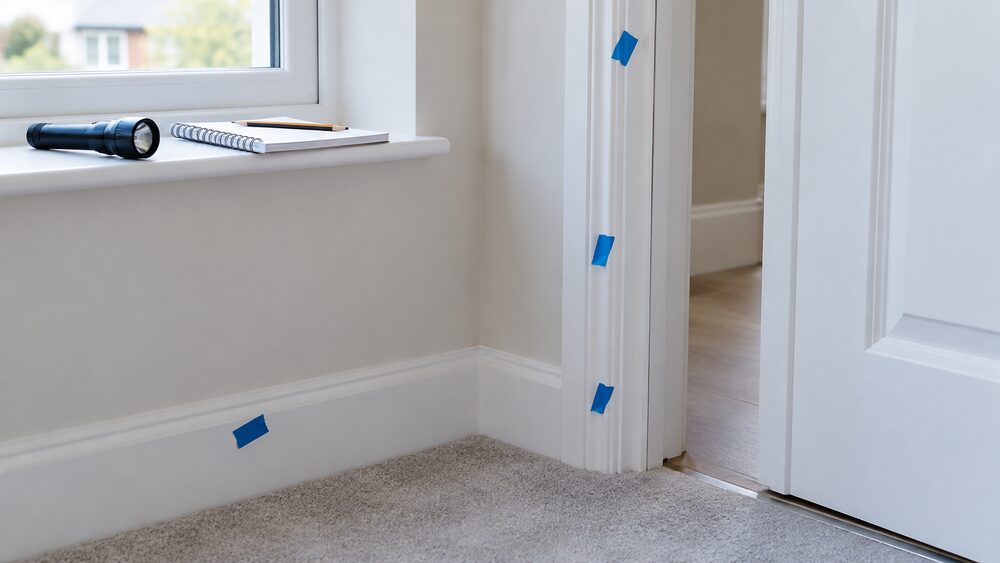
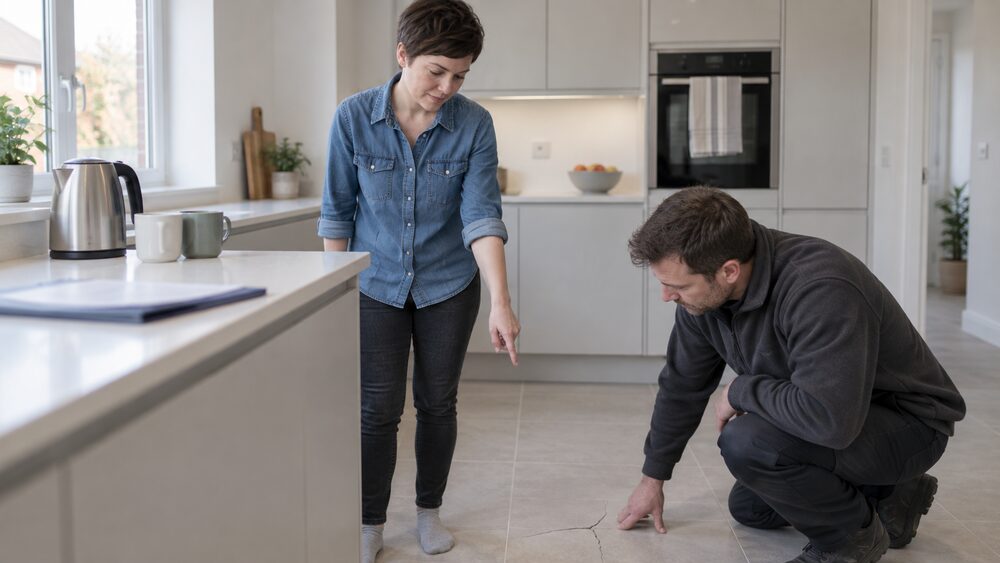
A snagging inspection is an independent check of a newly built home that identifies the small faults, known as snags, that need putting right. It covers things such as poorly finished plaster, doors that do not close properly, uneven tiling and gaps around fittings. The developer is responsible for fixing snags, and it is up to the buyer to report defects within the first two years1.
A snagging inspection is an independent check of a newly built home that identifies the small faults, known as snags, that need putting right. It covers things such as poorly finished plaster, doors that do not close properly, uneven tiling and gaps around fittings. The developer is responsible for fixing snags, and it is up to the buyer to report defects within the first two years1.
A professional snagging survey typically costs from £320, and one provider puts the range at around £300 to £6003. That is a separate cost from your mortgage valuation and from a fuller building survey, and it is not the same thing as either.
The important limit is what happens after the first two years. New build warranties cover major problems with newly built or converted homes, but they exclude snagging damage that is purely cosmetic and does not impair the structural stability or weather tightness of the home5. Many buyers expect more from a warranty than it delivers, so it pays to know where the cover stops before you need it.
What a snagging inspection is and what it covers
A snagging survey is an independent inspection of a new build property to highlight any issues or snags that need fixing7. The point of the word independent is that the inspection is carried out separately from the builder or developer, so the person checking the home is not the person who built it4.
What gets checked is the finish and the fittings: the things a buyer notices in the first weeks of living somewhere. That is a narrower job than a full building survey, which thoroughly examines the structural integrity, roof, chimney, external elements such as gutters and windows, services and systems such as heating, plumbing and electrical, insulation, outbuildings and drainage8. A snagging inspection is not trying to do that work.
It is also worth knowing how any survey is limited. The Financial Ombudsman Service notes that with a HomeBuyer's Report or Structural Survey, the inspection is usually limited to looking for existing or potential defects with things that are immediately visible or reasonably accessible9. A snagging inspection works on the same principle: it reports what can be seen and reached.
When to snag: before completion and after moving in
There are two windows, and they do different things. Before completion, a snagging inspection can identify issues that need fixing before the buyer moves in4. After moving in, the buyer has a period in which to report defects, and it is up to the buyer to report defects within the first two years2.
Completion timing is usually flexible. Completion often takes place around two weeks after exchange, but this is flexible and a convenient date can be agreed with the seller10. Whether an unfinished snagging list can hold up completion is a question about the contract, not a general rule, so it is one for a conveyancer.
In practice, most snags surface once the home is lived in. Doors swell, heating behaves differently under load, and small cracks can appear. On that last point, one insurer's guidance is reassuring: occasionally, small cracks will appear in the walls of newly-built houses, but these are just a result of the house settling under its own weight and should not necessarily be cause for concern11.
Doing it yourself or hiring a snagging inspector
There are two routes, and the trade-off is time against money.
Doing it yourself costs nothing but your own time. It means working through the home room by room, testing every door, window, tap, socket and appliance, and photographing anything that is wrong. The advantage is that you are the one who will live there, so you notice things a visitor might not.
Hiring a specialist company means paying for the inspection. Shelter Scotland's guidance is direct on this: a snagging inspection can be done by a specialist company, and you will need to pay for an inspection1. The advantage is a trained eye and a formatted list that is harder for a developer to dispute.
| Route | What it costs | What you get |
|---|---|---|
| DIY snagging list | Nothing beyond your time | Your own room-by-room record, with photos |
| Professional snagging survey | Typically from £320; one provider quotes around £300 to £6003 | An independent inspection and a written list of issues to fix7 |
For comparison, other surveys sit in a different price band. A building survey may start at about £400 but could be considerably more, and may not be available if the home is a flat12. One building society puts a Building Survey (Level 3) at typically £800 or more8. A basic valuation survey can cost between £400 and £1,50012.
The new build warranty covers less than many buyers expect
This is the part that catches people out. A new build comes with a warranty, but that only covers the work completed by the developer13. It is not a maintenance policy for the whole house.
Building warranties cover major problems with newly built or converted homes5. In the later years, typically years 3 to 10, cover applies to structural problems where the builder has not complied with technical requirements, described in the rules as breach of technical requirements5. Before the build is finished, there is separate protection: a buyer is covered if the builder is insolvent or commits fraud and does not complete the build, and the insurer should refund money, part-refund, or arrange for the building to be finished5.
What is excluded matters just as much. A structural warranty only protects against major defects resulting in damage to the actual structure of the building, not general wear and tear14. One warranty provider lists its structural cover exclusions as general wear and tear, cosmetic or non-structural issues, issues caused by lack of maintenance, weather or natural disaster-related damage, appliances, fixtures and fittings, alterations or additions made after completion, homeowner-installed items, non-structural components, and snagging15.
The warranty documents themselves say the same thing in plain terms: snagging damage which is purely cosmetic and does not impair the structural stability or weather tightness of the home is excluded6.
Getting the builder to fix snags and where to complain
The starting point is simple: the developer is responsible for fixing snags1. Put the list in writing, keep a dated copy, and give the developer a clear chance to respond.
If that does not work, the route depends on what the problem is. For a warranty claim, the Financial Ombudsman Service can step in. It may ask an insurer to deal with a claim they have rejected, take over from the builder if the builder is insolvent, add interest, pay for more work, or pay compensation for loss or inconvenience5. Building guarantee complaints are a small but real category: 100 were opened in Q1 2026/2716.
Where a claim has already been dealt with by a contractor, evidence matters. The Ombudsman's guidance on drainage disputes is a useful illustration of the standard: it will check that a report has enough detail to understand the condition of the pipe, a diagram of the pipework, a list of problems showing where they are, and information about what the pipe is made of17. Photographs, a detailed report and an itemised invoice all help17.
If the complaint is about a firm rather than a warranty, the usual complaint rules apply. Banks and building societies are required by law to have a written complaints process which tells customers how to make a complaint, and must investigate and give a clear answer within eight weeks18. The Ombudsman can only look at a complaint once the firm has had at least eight weeks to sort it out, unless it sends a letter of deadlock earlier18.
Sources18 cited
- After you buy Shelter Scotland, 2024-07-25
- 9 tips for buying a new build property in 2025 Which?, 2025-11-15
- Cost of buying house calculator HomeOwners Alliance, 2026-06-11
- Mortgage valuations and surveys Cambridge Building Society, 2026-09-26
- Building warranties Financial Ombudsman Service, 2026-09-26
- New Homes Policy IPID V15 Premier Guarantee, 2025
- Survey fees Lloyds Bank, 2026-09-27
- Homebuyer surveys and reports Family Building Society, 2026-09-26
- Valuations and surveys Financial Ombudsman Service, 2026-09-26
- How to buy a house Which?, 2026-05-29
- Subsidence insurance esure, 2026
- Your right to buy your home: a guide GOV.UK, 2026-04-08
- New build mortgages Coventry Building Society, 2026
- About structural warranties LABC Warranty, 2026
- Understand your cover Premier Guarantee, 2026
- Quarterly complaints data Q1 2026/27 Financial Ombudsman Service, 2026
- Storm damage Financial Ombudsman Service, 2026-09-27
- Complaints about banks and building societies Citizens Advice, 2026-09-25








 MoneyHelperFree, impartial money and pensions guidance, set up by government
 Citizens AdviceFree advice on money, consumer and legal problems in England and Wales
 ShelterFree housing advice from a charity
 GOV.UKOfficial information on tax, benefits and government services
 Financial Ombudsman ServiceFree, independent help when a complaint about a firm is not put right