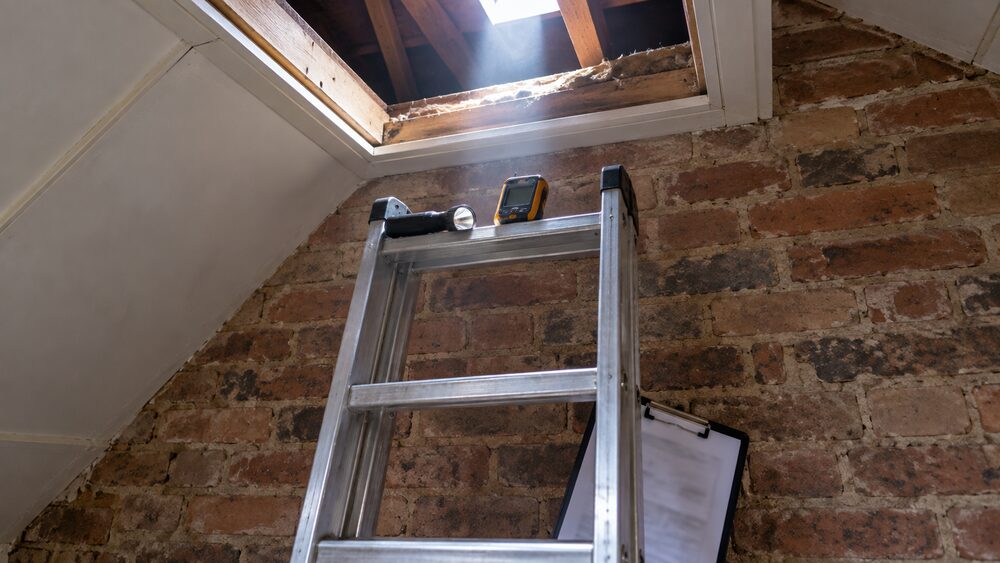
A HomeBuyer Report and a Building Survey are two different levels of the same thing: a survey you arrange yourself to find out what is wrong with a property before you buy it. The HomeBuyer Report is the mid-level option, now called the RICS Home Survey Level 2, and it was formerly known as the HomeBuyer Report1. The Building Survey is the top level, now the RICS Home Survey Level 3, and it was formerly known as a Building Survey or Structural Survey1. That is the answer to the question people search for: a full structural survey and a Building Survey are the same thing under a newer name.
The choice between them is not about price alone. A HomeBuyer Report is suitable for properties which are of standard type and construction and appear to be in reasonable condition2. A Building Survey is suitable for all residential properties including listed buildings, those that have been extended or altered significantly or are in a state of disrepair3. If the property is old, unusual, has been knocked about, or is clearly run down, the Level 2 report is the wrong tool.
Neither is the mortgage valuation. A valuation is commissioned by your lender to assess whether the house is worth what you are planning to pay for it4. It is not a survey, it gives no indication of the condition of the property, and it is not a document to rely on to confirm whether the property is in good enough condition to buy5. A house survey is arranged separately by the buyer5.
The main survey types: Condition Report, HomeBuyer Report and Building Survey
There are typically three types of survey available: a standard valuation, a homebuyers report and a full building survey8. The three most common reports are a basic valuation, to work out the property's value; a homebuyers report; and a structural survey9. Lenders and surveyors describe the same three levels in slightly different words, which is where most of the confusion comes from.
The Condition Report is the most basic type of survey10. It is aimed at conventional and newer properties and assesses the condition of key parts of the property10. It is a visual check, not an investigation, and it suits a modern home that appears to be in good order where the main question is reassurance about the principal elements.
The HomeBuyer Report sits in the middle. It is a mid-level survey popular with most people buying a conventional property in reasonable condition4. As well as giving a basic overview, it goes into more detail on the quality and condition of the property, including maintenance advice, though it is not as in-depth as a structural survey7. It is conducted by a Royal Institute of Chartered Surveyors (RICS) professional3.
The Building Survey is the most detailed of the three. It provides a very comprehensive report on the structural integrity of the property, and a technical inspection may include tests on services and underfloor and concealed areas where the seller grants permission11. It is suitable for all residential properties including listed buildings, those significantly extended or altered, or in disrepair11.
| Survey | Former name | Best suited to | What it covers |
|---|---|---|---|
| Condition Report (Level 1) | Condition Report | Conventional and newer properties | Condition of key parts of the property10 |
| HomeBuyer Report (Level 2) | HomeBuyer Report | Standard construction in reasonable condition2 | Quality and condition, with maintenance advice7 |
| Building Survey (Level 3) | Building Survey or Structural Survey1 | Listed, extended, altered or run-down homes3 | Structural integrity, with tests where permitted11 |
A Building Survey is what used to be called a full structural survey
The phrase full structural survey still appears in guides and in conversation, and it describes the same level of inspection as a Building Survey. The RICS Home Survey Level 3 was formerly known as a Building Survey or Structural Survey1. So if a lender, a surveyor or an older guide refers to a full structural survey, they mean the top-level report, not a separate product.
What that report gives you is a much more detailed report by the surveyor which, in addition to the valuation, gives greater information about the condition of the property and might recommend repairs or specific reports to be carried out7. That is likely to be of use if you want to know about possible future expense, you want to negotiate a lower purchase price, or you are deciding whether to go ahead with the purchase at all7.
The scope is wider than a Level 2 report. A Building Survey provides a very comprehensive report on the structural integrity of the property, and a technical inspection may include tests on services and underfloor and concealed areas where the seller grants permission11. That permission matters: without it, the surveyor cannot open up or test what is hidden, and the report will say so.
The trade-off is cost and time. There is no standard or scale fee for a Building Survey, and the cost can be significantly higher than it is for a HomeBuyer Report12. Where a lender arranges it, the client pays the standard mortgage valuation fee to the lender and pays the Building Survey cost direct to the valuer12. The extra cost buys a report that is more likely to surface the expensive problems before you are committed.
"A much more detailed report by the surveyor, which, in addition to the valuation, gives greater information about the condition of the property and might recommend repairs or specific reports to be carried out."
Where a HomeBuyer Report may not be enough
A HomeBuyer Report is not as thorough as a full Building Survey (Level 3)13. That single difference decides most cases. The inspection is usually limited to looking for existing or potential defects with things that are immediately visible or reasonably accessible7. Anything behind a wall, under a floor or inside a sealed service is outside what the surveyor can see without permission and without opening the property up.
That limitation matters most in four situations. The first is age: older properties are more likely to have defects that a visual inspection cannot reach. The second is alteration: a home that has been extended or significantly altered may have work that is not visible and not documented. The third is condition: a property in a state of disrepair needs the deeper inspection a Building Survey provides11. The fourth is construction type: a non-standard build may need more than a standard report.
There is also a practical point about what you do with the findings. A Building Survey is likely to be of use if you want to know about possible future expense, negotiate a lower purchase price, or decide whether to go ahead7. A HomeBuyer Report gives you maintenance advice and a view of condition, but it is not designed to give you the same depth of forward cost planning.
If a surveyor's findings are later disputed, the record matters. In one ombudsman case, the finding was that the firm's reply had not fairly represented the true picture and had made no reference to the findings of the surveyor the buyer consulted before he bought the house14. Keeping the report, and any advice you were given about it, is worth doing.
Survey options offered alongside a mortgage
Some lenders and building societies offer surveys as part of the mortgage process, and some do not. Accord Mortgages, for example, offers two types of detailed inspection: a HomeBuyer Report and a Building Survey2. Its buy to let range offers a Mortgage Valuation, a Home Buyers Survey and Valuation (HBSV), or a Building Survey, and when you apply you are asked to choose what type of inspection and report you want15.
Where a lender arranges the survey, the cost often bundles the valuation. The cost of a Homebuyer Survey or a Building Survey includes the Standard Valuation the lender needs for the mortgage3. That does not make the survey compulsory, and it does not make it the lender's report: the report is solely for your use3.
In Scotland the position is different because the seller provides a Home Report. A Home Report is split into three parts: a single survey and valuation, a property questionnaire and an energy report16. It includes a basic visual survey17. That means a Scottish buyer starts with some information the rest of the UK does not get, but a basic visual survey is not the same as a Level 2 or Level 3 report, and a buyer who wants more depth still arranges their own.
What each option costs and how the cost is worked out
Survey fees are not set by a single scale. A Building Survey has no standard or scale fee, and the cost can be significantly higher than a HomeBuyer Report12. The fee reflects the size, age and complexity of the property and the amount of inspection involved, which is why two buyers on the same street can be quoted different amounts.
Where a lender arranges the work, the money is split. The client pays the lender the standard mortgage valuation fee and pays the Building Survey cost direct to the valuer12. That split matters if you are comparing quotes, because a survey quote that includes the valuation is not directly comparable with one that does not.
The valuation itself is the lender's requirement, not yours. A mortgage valuation is a valuation commissioned by your lender to assess whether the house is worth what you are planning to pay for it4. It is a basic property survey for mortgage purposes, less comprehensive than both a Homebuyers Report and a Full Structural Survey18. It is not a survey, and it does not give any indication as to whether the property is worth what is being paid for it, nor does it provide a list of any repairs that may be needed2.
There is also an access point that catches people out. Even if you pay for the mortgage valuation, you might not ever see the valuation report or find out what the surveyor has told the lender5. If you want information you can read and act on, that is the survey, not the valuation.
| What you are paying for | Who it is for | What you get |
|---|---|---|
| Mortgage valuation | The lender | Basic information and likely value; no condition report7 |
| HomeBuyer Report (Level 2) | You | Quality and condition, with maintenance advice7 |
| Building Survey (Level 3) | You | Structural integrity, with tests where permitted11 |
Do you have to get a survey before buying a home?
No. More in-depth reports are generally optional, so it is up to you whether to get them carried out7. The only report the lender requires is the valuation, and that is for the lender's own lending decision. A survey is a choice you make about how much you want to know before you are committed.
Lenders nonetheless recommend one. Accord states that it strongly recommends obtaining either a Homebuyer Survey or a Building Survey to give a more detailed inspection of the property than a valuation20. Nationwide describes Home Surveys as a check on the condition of the home before you buy it, finding defects and repair work21. The recommendation is consistent across the market even where the survey is not compulsory.
If you are buying through a shared equity scheme, the same principle applies. Under the Open Market Shared Equity scheme, before you buy a house the seller will give you a Home Report22. Under Shared Ownership, before you can sell your home you will need to get a Home Report, and you might be responsible for paying for it, which is worth discussing with your housing association23.
There are also cases where a specialist report replaces a standard survey. A houseboat bought in Scotland is covered by a marine surveyors' report, which addresses whether the boat is in good condition and ready to live in24. That is a different discipline from a building survey and is arranged separately.
Arranging a survey and what to do with the report
You can instruct a surveyor directly, or a lender can arrange it for you. Some lenders will arrange to carry out a HomeBuyer Report by forwarding your details to a survey panel, which then contacts you to discuss fees and arrange the appointment2. Others leave the choice entirely to you. Either way, the report is for your use, and the surveyor is working for you, not for the lender.
If you are using a government scheme, the guidance is explicit about who arranges what. For a Help to Buy equity loan valuation, you need to choose a surveyor, and arrange and pay for the report yourself25. That is a useful default assumption for any survey you commission: you pick the surveyor, you pay, and you own the report.
Once you have the report, read it for the things that change your decision. A Building Survey might recommend repairs or specific reports to be carried out7. Those recommendations are the practical output: they tell you what to budget for, what to ask the seller about, and where a specialist (an electrician, a damp specialist, a structural engineer) may need to look before you exchange contracts.
If something goes wrong with a valuation or survey
Complaints about valuations and surveys go to the Financial Ombudsman Service, which can look at what a firm told a buyer and whether it was fair. In one published case, the ombudsman found that the firm's reply had not fairly represented the true picture and had made no reference to the findings of the surveyor the buyer consulted before he bought the house14. That is the kind of issue the service deals with: not the surveyor's professional judgement, but whether the buyer was given a fair and complete account.
The distinction between the valuation and the survey matters here too. A valuation is a basic property survey for mortgage purposes, less comprehensive than both a Homebuyers Report and a Full Structural Survey18. A buyer who relied on a valuation to learn about condition relied on the wrong document, and the ombudsman's guidance is clear that a valuation is not something to rely on to confirm whether the property is in good enough condition to buy5.
If you are unhappy with how a survey was arranged or described, the first step is the firm's own complaints procedure, and then the ombudsman if that does not resolve it. Our guide to complaining when buying a home goes wrong sets out the routes.
Choosing between the two
The decision comes down to the property and what you need to know. A HomeBuyer Report is suitable for properties which are of standard type and construction and appear to be in reasonable condition2. A Building Survey is suitable for all residential properties including listed buildings, those that have been extended or altered significantly or are in a state of disrepair3. If the property falls into the second group, the Level 2 report will not answer the questions you have.
Cost is a real factor, and a Building Survey can be significantly more expensive than a HomeBuyer Report12. But the comparison is not the survey fee against nothing; it is the survey fee against the cost of the repairs a shallower report might miss. A Building Survey is likely to be of use if you want to know about possible future expense, negotiate a lower purchase price, or decide whether to go ahead7.
There is a middle path in the market. The L&G SmartrSurvey was created as a digital, photo-based alternative to the traditional HomeBuyer survey, with results ranked in order of severity with clear photographs, viewable on a mobile, tablet or desktop and shareable with tradespeople and your conveyancer1. It is benchmarked as a Home Survey Level 21. It is a different format for the same level of inspection, not a substitute for a Level 3 report.
Whichever you choose, the survey is separate from the valuation, and the valuation is not a survey. If you take one thing from this page, take that.
Sources25 cited
- Mortgage valuations and surveys Cambridge Building Society
- Which inspection Accord Mortgages
- Buying your home step by step Cambridge Building Society
- Home buying and selling jargon HomeOwners Alliance
- Mortgage valuations explained Which?, 2025-12-18
- Switching mortgage West Brom Building Society
- Valuations and surveys Financial Ombudsman Service, 2026-09-26
- First time buyer guide West Brom Building Society
- Mortgages help StepChange
- Valuations Metro Bank
- Get a property valuation and survey Cambridge Building Society
- Fees and charges Accord Mortgages
- Homebuyer surveys and reports Family Building Society
- Ombudsman news, case 25/18 Financial Ombudsman Service, 2003-02
- Buy to Let mortgage guide Accord Mortgages
- Home Report mygov.scot, 2020-08-12
- The cost of selling a house Which?
- Mortgage jargon buster Teachers Building Society
- How long does it take to get a mortgage Newcastle Building Society
- Mortgage valuations Accord Mortgages
- Home survey report fees Nationwide
- Open Market Shared Equity scheme: how it works mygov.scot, 2026-03-17
- Shared ownership: after buying mygov.scot, 2018-05-25
- Houseboats Shelter Scotland, 2024-07-24
- How to get a valuation of your Help to Buy home GOV.UK, 2025-08-18




 MoneyHelperFree, impartial money and pensions guidance, set up by government
 Citizens AdviceFree advice on money, consumer and legal problems in England and Wales
 ShelterFree housing advice from a charity
 GOV.UKOfficial information on tax, benefits and government services
 Financial Ombudsman ServiceFree, independent help when a complaint about a firm is not put right